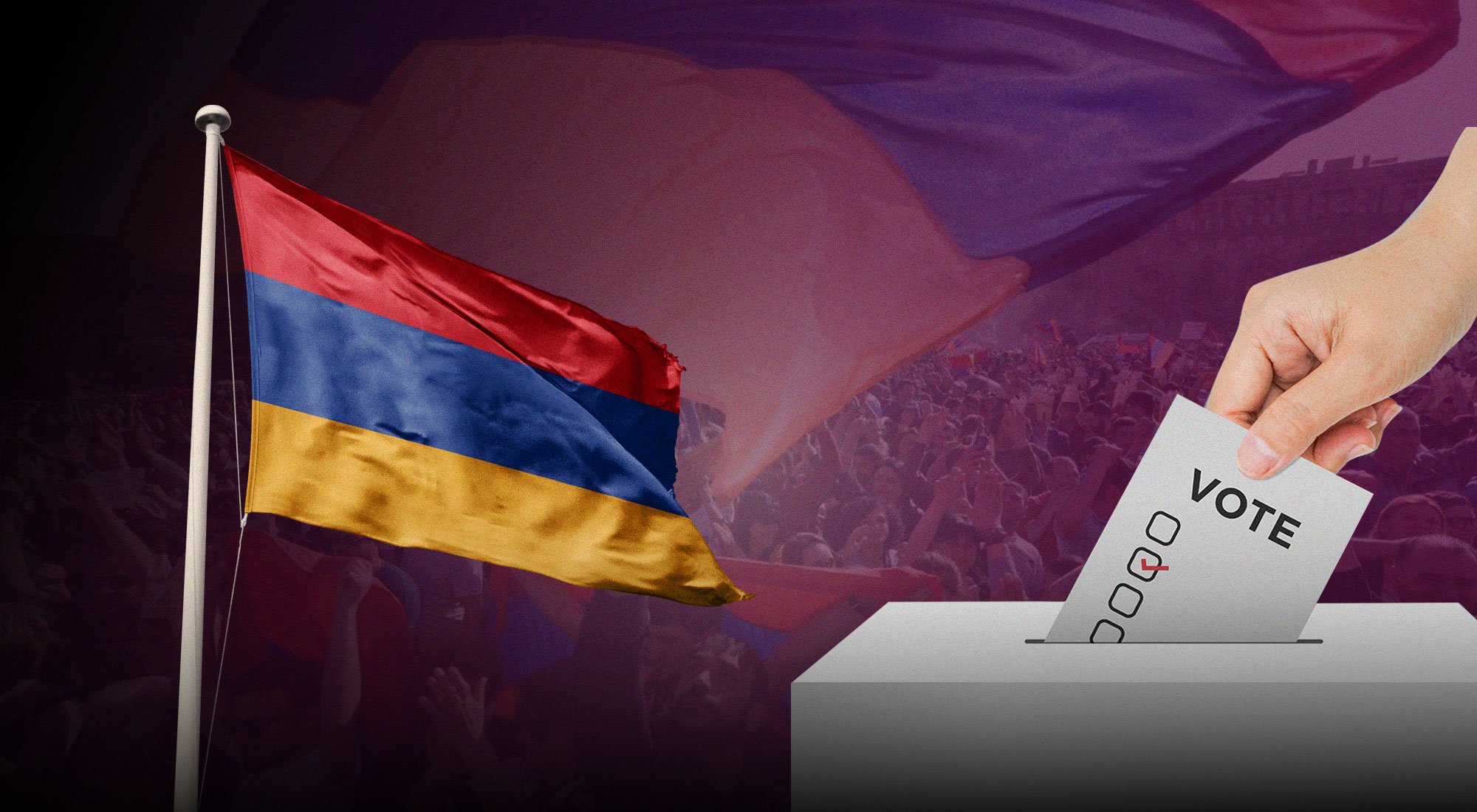
The upcoming elections in Armenia, scheduled for June 7, are being viewed as a kind of stress test for the system of power established by Nikol Pashinyan following the 2018 “Velvet Revolution.” Despite criticism and the absence of consistent public support at various stages of his rule, he has managed to consolidate power and weaken the opposition. However, his approval ratings are declining, while the political system remains unstable and largely dependent on voter turnout.
THE ELECTIONS HAVE AN EXISTENTIAL CHARACTER
The outcome of the elections will directly affect the regional security of the South Caucasus. These are the first elections since Yerevan completely lost control over the unrecognized Nagorno-Karabakh Republic in 2023, an event that fundamentally altered the political reality of the region. Today, Armenia has become an arena of competition among Russia, the West, Turkey, and Azerbaijan. At the same time, Yerevan’s gradual foreign-policy distancing from Russia continues, although official channels of dialogue remain intact.
These elections have an existential character: the question is what kind of Armenia will emerge — the “historical” Armenia or the “real” Armenia, as Pashinyan describes it. His concept of “Real Armenia” implies abandoning maximalist historical claims, redefining the role of Karabakh, and placing emphasis on the state within its current borders, without war. This has generated conflict between different interpretations within Armenian society, as well as between the diaspora and the state.
The opposition remains fragmented and, for now, is unable to form a unified alternative center of power. Various coalition scenarios are possible, but there is a lack of lasting strategic unity. The outcome of the election will largely depend on voter turnout and on the ability of competing forces to mobilize their supporters.
NO FINAL ANSWER ABOUT THE COUNTRY’S POLITICAL FUTURE
Armenia’s European integration, in its current form, does not represent a realistic path toward membership in the European Union. Key parameters are missing: there is no visa-free regime, nor is there a clearly defined membership horizon. It is more a matter of fitting into a certain ideological framework than a practical economic project.
At the same time, Russia already provides a range of essential, everyday opportunities for the population — labor mobility, employment without additional barriers, remittances, and socio-economic stability for a significant portion of Armenian households.
Therefore, the opposition between the European Union and the Eurasian Economic Union is somewhat artificial. There is no genuine “either-or” choice, because the European perspective remains vague and long-term, whereas cooperation with Russia is already functioning in practice.
In this context, the need is emphasized for a more pragmatic approach to relations, abandoning public polemics and focusing instead on concrete problems and mutual shortcomings.
The elections do not provide a final answer regarding Armenia’s political future. Regardless of who emerges victorious, long-term internal polarization and competition among external powers will remain. The main conclusion is that the situation will not be resolved by the elections themselves: political struggle and debates over Armenia’s strategic course will continue, and for Russia it will be important to maintain a pragmatic dialogue regardless of the outcome.
EURASIAN FORMAT VERSUS THE EU FORMAT
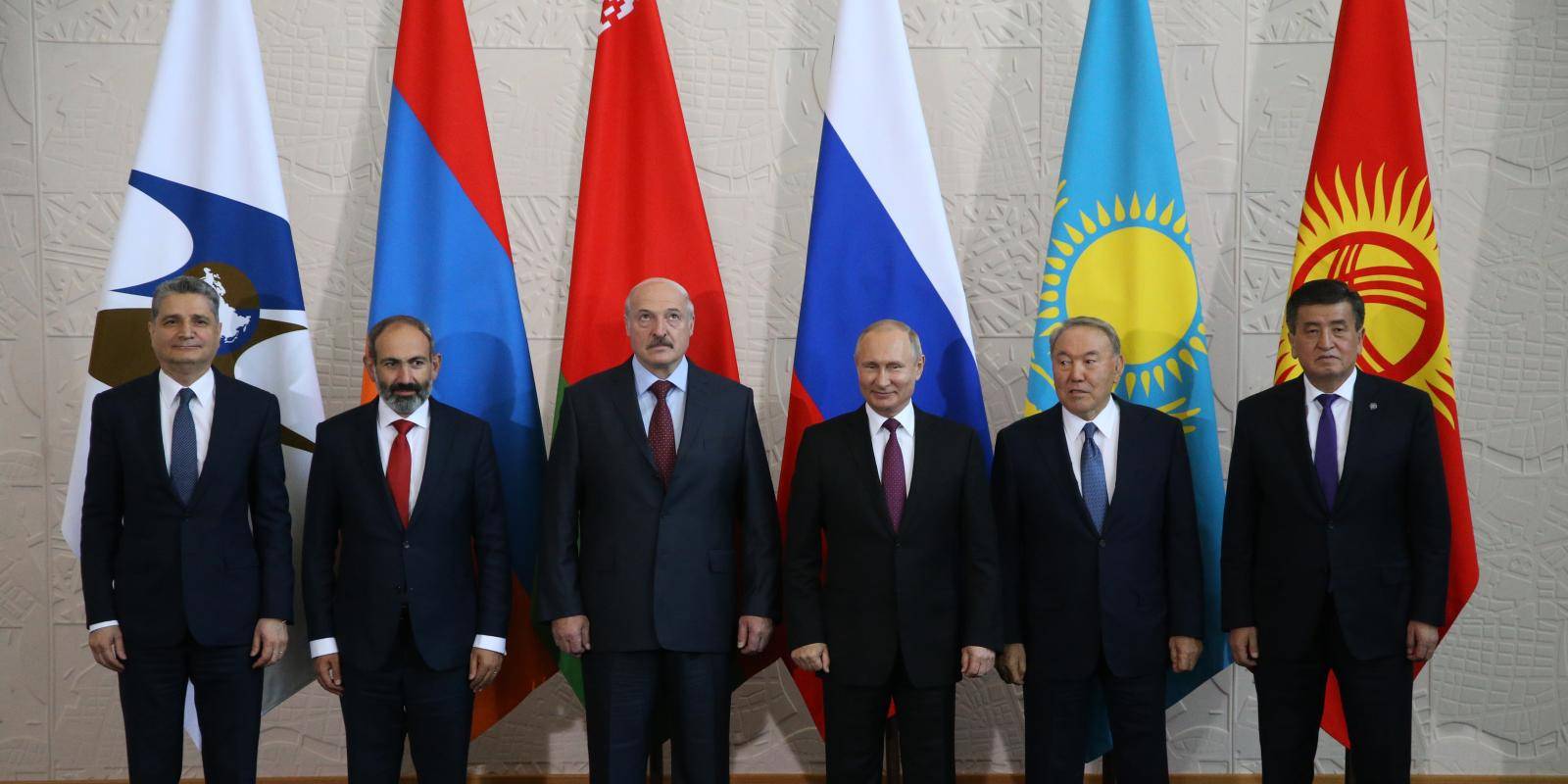
Armenia’s participation in the Eurasian Economic Union remains a key factor in its economic development and provides the country with the most tangible and concrete benefits compared to alternative integration paths. A significant share of Armenia’s foreign trade is conducted with Russia, while ties with Kazakhstan and Belarus continue to develop actively. Stable production chains are being formed within the Eurasian economic space.
Within the Eurasian Economic Union, unified customs and regulatory conditions provide Armenian businesses with what is effectively direct, duty-free access to the markets of member states.
By contrast, European integration is largely political, rhetorical, and media-driven in nature, while from an economic standpoint it is accompanied by significantly higher barriers to market access due to strict technical and regulatory requirements. From a practical perspective, the Eurasian format remains more favorable for the structure of Armenian exports and business operations.
Assessments of a potential Armenian withdrawal from the Eurasian Economic Union point to substantial negative consequences: a decline in exports, increased costs for producers—particularly in the agro-industrial sector and alcoholic beverage production—a reduction in the number of logistics companies, and additional pressure on the services sector.
At the same time, experts continue to discuss the theoretical possibility of combining different integration vectors. If Armenia were to redirect its course toward the European Union and potentially alter its integration choice, discussions within expert circles could intensify regarding Azerbaijan’s possible participation in Eurasian integration processes. Even in that case, however, no immediate or rapid accession would be expected.
The most realistic scenario mentioned involves flexible forms of cooperation—primarily a deepened free trade area (“FTA+”), expanded cooperation in investment, public procurement, and selected sectoral agreements—considering that Azerbaijan is already a member of the Commonwealth of Independent States and possesses a specific foreign-trade structure.
In this context, access to the Eurasian Economic Union market is viewed as a potentially positive economic factor.
PEACE AGENDA OF NIKOL PASHINYAN
The results of the parliamentary elections in Armenia will be viewed as a key factor in the further transformation of regional security and the dynamics of the Armenian-Azerbaijani normalization process.
Prime Minister Nikol Pashinyan is relying on a peace agenda that includes border delimitation and the reduction of tensions with neighboring states. Alternative political scenarios associated with a possible opposition victory could be accompanied by harsher rhetoric and attempts to revise the current course. However, the fragmentation of the opposition, the absence of a unified center, and limited resources reduce the likelihood of any radical escalation.
In the event of the formation of a coalition government, a third scenario is also possible, under which Yerevan’s key negotiation processes with its neighbors could be placed on hold until the issue of government formation within the country is fully resolved.
Russia continues to play a significant role in the region and acts as one of the key mediators, maintaining dialogue with both Armenia and Azerbaijan.
In this context, it would be inaccurate to speak of a Russian “withdrawal” from the South Caucasus; rather, the region itself is undergoing transformation. At the same time, Moscow continues to maintain its involvement in regional affairs.
OPPOSITION PARTIES FAR AHEAD OF THE RULING PARTY?
It should be noted that this analysis was completed before journalists met with Aram Navasardyan, head of the Armenian office of Gallup International Association, who presented the latest public opinion survey results on May 22 of this year.
According to the survey, if elections had been held in the week following May 22, the ruling Civil Contract party would have received 28.8 percent of the vote, the Strong Armenia bloc 14.9 percent, the Armenia bloc 12.1 percent, the Prosperous Armenia party 8.7 percent, and the Wings of Unity party 5.8 percent.
This means that the four opposition political forces exceeding the electoral threshold would collectively win 41.5 percent of the vote, while the ruling party would secure 28.8 percent.
The Democracy, Law and Discipline party would receive 3.4 percent, Bright Armenia 2.9 percent, Shnorhapatakan 2.8 percent, New Force 2.7 percent, the “Against All” option 1.9 percent, the Republic party 1.3 percent, the In the Name of the Republic party 0.5 percent, the Kochari party 0.4 percent, the Armenian National Congress 0.3 percent, the Christian Democratic Party 0.2 percent, the National Democratic Pole party 0.2 percent, the Democratic Consolidation party 0.1 percent, the Alliance party 0.1 percent, and the Reformist Party 0.1 percent.
Invalid ballots would account for 0.9 percent of respondents, 8.6 percent refused to answer the question, while 3.4 percent remained undecided.
The telephone survey, conducted between May 19 and May 21, included 1,102 respondents.