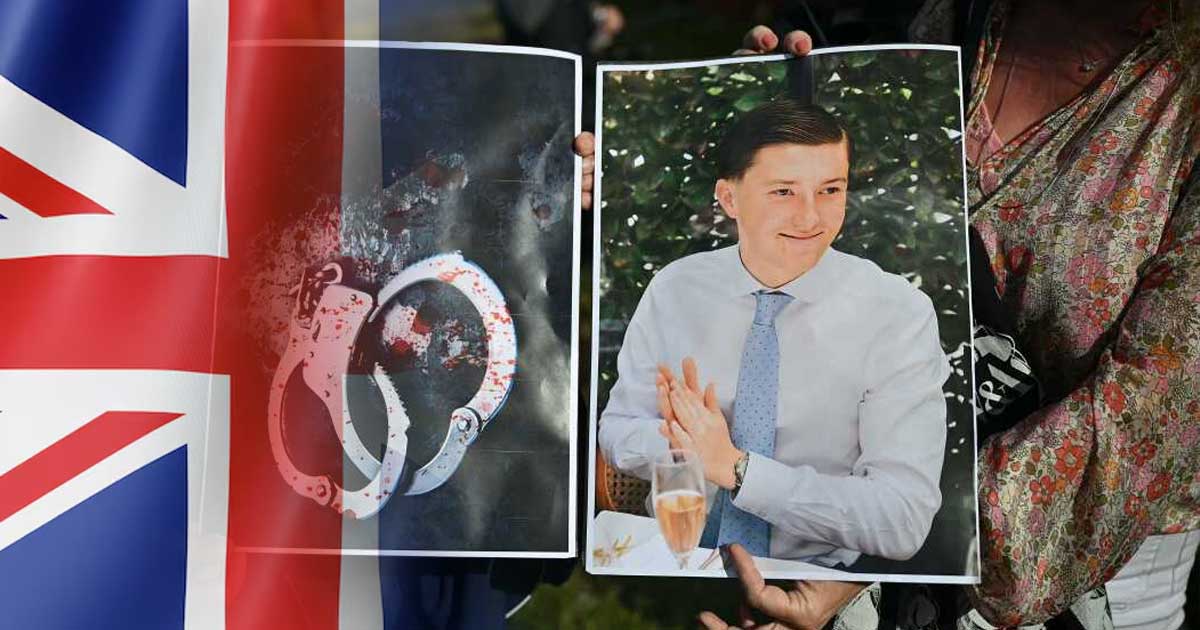
On the 3rd December 2025, in the English port city of Southampton, a young university student, named Henry Nowak, was stabbed during a confrontation with a Sikh man, called Vickrum Digwa. Upon arrival of the police to the scene, Digwa had claimed that he had been racially abused and even physically assaulted by Nowak, and that he was forced to act in “self-defence”. When the police then proceeded to arrest and handcuff Nowak, Nowak, struggling to speak, told the police that he had been stabbed and couldn’t breathe. His words going unheeded, and the police outright not believing him, Nowak died at the scene, succumbing to his grievous wounds.
Later, Vickrum Digwa was arrested and charged with the murder of Henry Nowak, following a lengthy investigation and trial in which it had been discovered that Digwa had not only lied about the events that took place on that early December night, but also that he had been supported by members of his own family in his attempts to lie to the British authorities and escape justice. On the 28th May 2026, Digwa was found guilty of murder and sentenced to life in prison, with a minimum term of 21 years.
Although such cases of stabbings are, unfortunately, extremely common across the United Kingdom, the case of Henry Nowak in particular has led to national outrage across the UK – outrage that has even started to rapidly spread across Europe, with people across Europe expressing solidarity with Nowak.
But why has Henry Nowak’s killing in particular sparked so much vocal outrage, compared to many other publicised killings in Europe? In order to answer this question in detail, we must first go back to the very beginning – the night when Henry was killed.
THE ATTACK ON HENRY NOWAK
Henry Nowak was an 18-year-old British student of Polish ethnicity who had been in his first year of his Accounting degree at the University of Southampton in Southern England. Late evening on the 3rd December 2025, after leaving the Hobbit Pub, Nowak, walking through a local suburban area of the city, encountered Vickrum Digwa. Although videos taken from both Nowak and Digwa’s phones showed some footage of the altercation between the two, it still wasn’t clear exactly how the confrontation initially began (there were no reported eyewitnesses to the incident). In the time following the end of the footage taken from Nowak’s phone, Digwa had produced a large 21cm (8 inch) knife – a traditional blade according to Sikh religious customs – and stabbed Nowak multiple times. Police reports stated that Nowak had suffered multiple wounds around the legs and a fatal wound in the chest.
Following the attack, residents in the area had called the police after hearing Nowak calling out that he had been stabbed. Blood trails found at the scene showed that Nowak had attempted to climb over a fence in order to escape Digwa, who had also proceeded to film Nowak’s escaping and then lying on the ground, bleeding out from his wounds. This video proved to be highly incriminating evidence against Digwa’s initial testimonies during his trial. Digwa then proceeded to call his parents, who themselves had arrived at the scene even before the police had. Digwa’s mother, Kiran Kaur, took Digwa’s knife – the one used in the murder, as he also had a traditional Sikh kirpan blade with him – and hid it at their family home.
Upon the arrival of the police at the scene, this moment and the events that followed over the course of the next few minutes would ultimately lead to the eventual eruption of international outrage and mass media reports on the case by the end of May 2026 – the turning on of the police bodycam.
THE DEATH OF HENRY NOWAK & THE POLICE BODYCAM FOOTAGE
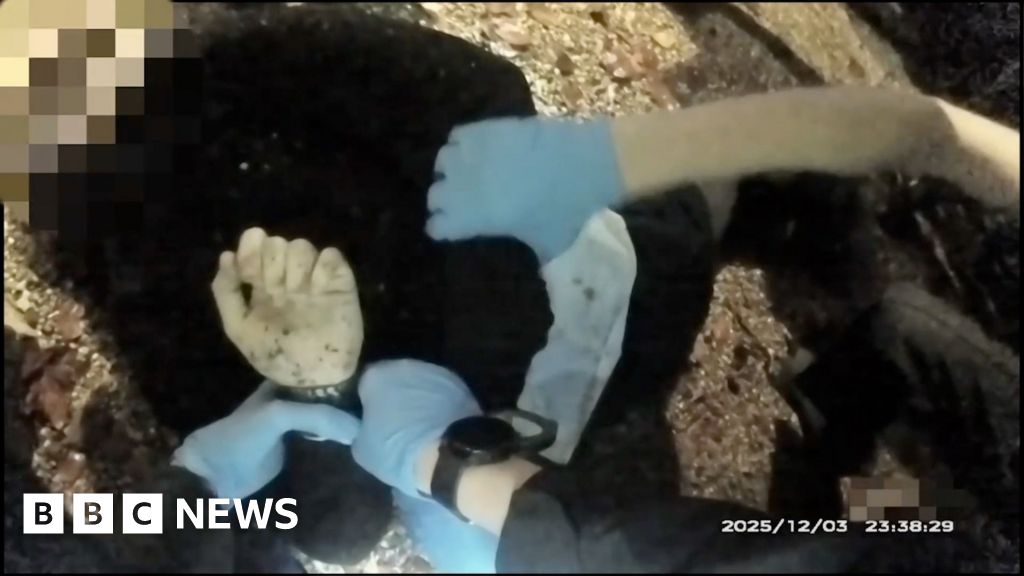
The footage captured from the bodycam of one police officer at the scene has since been released online and has been circulated not only on British media, but globally across social media as well.
The footage shows police officers approaching Henry Novak, who is lying on the ground outside a house, while members of the household and the killer, Vikrum Digwa, stand around him. The officer whose body camera recorded the footage speaks to Digwa and asks him what happened. Digwa claims that Novak was drunk—although it was later established that this was not true, as only a small amount of alcohol was found in Novak’s blood—that Novak had racially abused him, physically attacked him by punching him, and pulled off his turban.
The officer recording the footage then turns to Novak and asks him his name. Novak can be heard weakly saying that he had been stabbed. Ignoring his words, the officers lift him up, turn him over, place him back on the ground, and handcuff him for the alleged assault, relying on Digwa’s false claims.
In a moment that would become one of the most harrowing parts of the entire case during the police response, Novak again says that he has been stabbed, to which the officer recording the footage replies:
“I don’t think you have, mate.”
At that moment, Novak was already rapidly losing blood from the wound Digwa had inflicted on him earlier, something that is clearly visible in the body camera footage—his hand was extremely pale due to the severe blood loss. Novak’s words, “I’ve been stabbed,” were then followed by three more words that became well known to everyone familiar with the case:
“I can’t breathe.”
Those words also received no response from the police officers. Before an ambulance was even called for him, Henry Novak stopped moving and lost consciousness. He was pronounced dead at the scene at 00:37, during the first hour of December 4, 2025.
THE TRIAL OF VICKRUM DIGWA
Following the incident, Vickrum Digwa had spoken to his brother about what had happened. Their conversation was recorded and served as crucial evidence against Digwa. Speaking in their native Punjabi, Digwa’s brother had advised him to claim that he had acted in self-defence against Nowak during the confrontation. Digwa himself had then stated that pleading self-defence in court would not be enough if there were security cameras in the area which may have recorded the entire incident. Digwa himself was subsequently arrested for the death of Henry Nowak.
Standing trial at Southampton Crown Court, Digwa had pleaded not guilty to counts which included murder, manslaughter and being in possession of a knife. The judge overseeing the trial, William Mousley, had considered that Digwa could be found guilty of manslaughter instead of outright murder, claiming that a murder charge could not be valid if the suspect did not intend to actually kill his victim. Digwa’s mother, Kiran Kaur, also stood accused of aiding Digwa to escape justice, due to her hiding the murder weapon in the family home. She too pleaded not guilty.
When it came to Digwa himself providing his own testimony regarding the incident, he claimed that he had not told the police that he had stabbed Henry Nowak due to his stabbing of Henry being “the first time anything like this had ever happened”. Digwa then proceeded once again to claim that Nowak had racially abused him, which then led to the initial violent confrontation. In Nowak’s phone footage of the incident, the video cuts off abruptly. According to Digwa, he had grabbed Nowak’s phone, after which Nowak had allegedly shouted, “I’m going to kill you”. It was with this claim that Digwa had attempted to plead self-defence in his actions against Nowak, despite no evidence suggesting that Nowak had actually initiated a physical confrontation with Digwa himself.
The two knives that Digwa had possessed on the night of the killing were two traditional Sikh ceremonial knives. According to Prof. Gurnam Singh, an academic of sociology at the University of Warwick, the smaller blade – known as a kirpan – is traditionally carried by adherents of the Sikh faith as part of their religion and culture. However, the second, larger blade that Digwa carried – and used to attack and kill Henry Nowak – was not a required item to be carried by Digwa. Instead, this larger blade signified that the owner belonged to the Nihang, a Sikh warrior order.
On the 28th May 2026, the court had rejected earlier claims of self-defence and subsequently found Digwa guilty of the murder of Henry Nowak. On the 1st June, the judge had declared that Digwa had fabricated a “convincing, but wholly false narrative of the incident”, that Henry Nowak did not racially nor physically attack Digwa, and that Digwa had brought shame to his own family and the Sikh community, and that the murder and subsequent trial could risk leading to increased racial tensions within the UK. This last declaration and prediction would very quickly become a reality.
Vickrum Digwa was sentenced to life imprisonment, with a minimum term of 21 years.
Digwa’s mother, Kiran Kaur, is herself currently due to be sentenced on the 17th July, after being found guilty of attempting to aid Digwa in escaping justice.
THE PUBLIC OUTCRY
Almost immediately after the news of Vickrum Digwa’s sentencing was made public, mass outrage from the British political right had erupted. Public discussion both online and offline revolved around multiple issues relating to the case of Henry Nowak’s murder, including the nature of tense race relations between native British people and ethnic minority groups, the legality of Sikhs carrying even their own ceremonial weapons around in public, when other members of the public cannot, even for self-defence purposes, and the ongoing issue of what is known as “two-tier policing” in the UK – when the British justice system is more lenient towards crimes committed by ethnic minorities, but harsher towards crimes committed by native British people. In many cases, even if a native British person has not committed any crime, they are still investigated by the British authorities for other “potential crimes”, such as so-called “hate speech”.
However, following the public release of the police bodycam footage of Henry Nowak’s death, the public outrage of the British people – specifically the British right – erupted exponentially more. Not only were the aforementioned factors fresh in everybody’s minds, but now the factor of police negligence was added into the volatile situation. Had the police on scene believed Henry Nowak and tended to his grievous wounds, he could potentially have been saved with swift medical action and treatment. However, this was not the case, and with the police continuing to manhandle Nowak and place him in handcuffs in an uncomfortable position, as he lay on the gravel, bleeding out, struggling to breathe, all of these factors combined had only further contributed to Nowak’s death. Now it was no longer exclusively a case of ethnic tensions in the UK, but also a case of rising tensions between the British public and the British justice system.
Public statements issued by the British police did not offer very much comfort to anybody. According to Temporary Deputy Chief Constable Robert France:
“The facts heard in court should leave no doubt in anyone’s mind who was lying to officers that night, and why we didn’t immediately understand what had happened.”
This statement did not satisfy the public, with many highlighting the obvious fact that, mere minutes before he died, Henry Nowak had repeatedly told the attending police officers that he had been stabbed and could not breathe, yet was still completely ignored, despite bearing deep wounds and rapidly losing blood. Nowak’s own family had referred to the (lack of) actions of the police on the scene as “inhumane and degrading”. Despite this, Nowak’s father had stated that he only blamed Vickrum Digwa for the death of his son, not the police.
Politician Robert Jenrick of the right-wing Reform UK party had stated in the British Parliament itself that a deep investigation into the misconduct of the police officers at the scene was necessary, and also brought to Parliament’s attention the controversy over “two-tier policing”. Jenrick had also stated that Reform UK would seek to formally ban the carrying of all Sikh ceremonial knives if the party ever came to power.
British Prime Minister Kier Starmer had described the murder of Henry Nowak as an “awful, shocking case”, and after himself viewing the police bodycam footage, described it as “harrowing” and that it made him “feel sick”.
As for the Sikh community itself, the Supreme Sikh Council in the UK had stated that it would formally convene at an undisclosed date to discuss the future of the carrying of their ceremonial knives in public. The UK Sikh Federation had reported to the British Government a sharp rise in anti-Sikh racial incidents. On social media, many members of the Sikh community in the UK had posted content ranging from condemning the murder of Henry Nowak to calling for public calm and reassurance that Sikhism is a religion of peace and cannot be collectively held responsible for the actions of one killer. However, in 2020s Britain, race relations have been increasingly tense, with ethnic nationalism rapidly on the rise across the country. Such instances of violence by ethnic minorities against white people in Britain have, over the past couple of years, led to growing public calls for remigration – a term used to refer to mass deportations of all illegal immigrants and criminals of foreign descent, regardless of citizenship status.
The outrage following Henry Nowak’s death also very quickly spread internationally. Elon Musk himself had expressed his anger over the case, even going so far as to call the police officers at the scene of the murder “disgusting”, called for their suspension from their jobs and even personally offered to fund any lawsuits against the police officers in question.
FUEL TO THE RISING FIRE
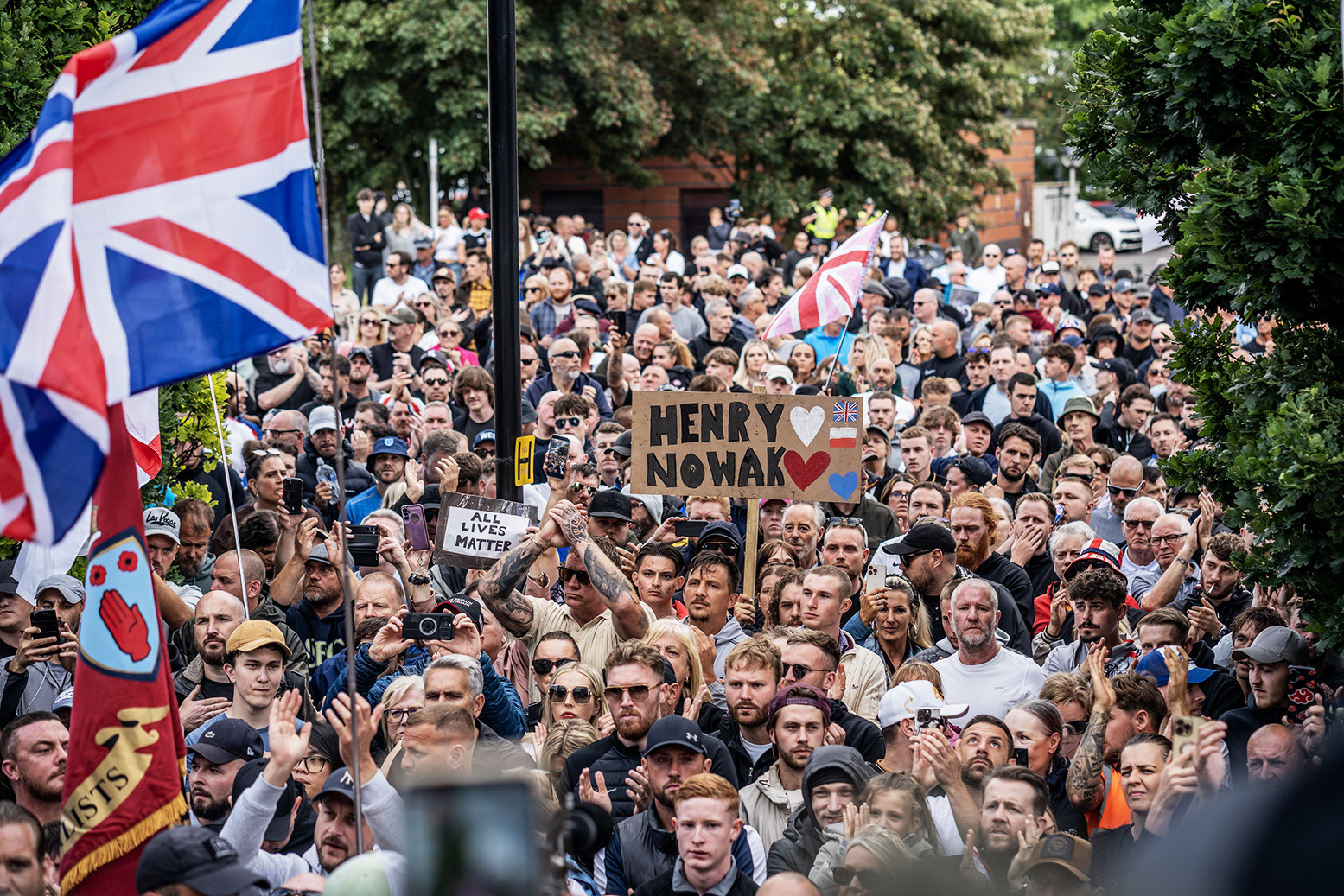
The death of 18-year-old Henry Nowak at the hands of both a Sikh man and police negligence had sparked a wave of rage that rippled across Europe for weeks, bringing back to the fore the crucial matter that is ever-increasing racial tensions between native white European people and public distrust in the police and justice system. So severe had the situation become, even politicians from parties which are not ideologically rooted in ethnic politics had made public statements which revealed that there is an ongoing sense of gradual realisation coming over the political establishment. Politician from the centre-right Conservative Party, Chris Philip, stated in the House of Commons in Parliament that the “police appeared more concerned with the accusation of racism than they were with helping Henry”. This statement brought back memories to the public of the cases of the Asian grooming gangs across Britain, where predominantly white British children were abducted by grooming gangs of Asian racial and ethnic origins, and were forced into sex slavery. Despite many branches of the police being fully aware of such horrific crimes, very little was done to address them, as many in the police and in Government had been too afraid of damaging relations between the native British and ethnic minority communities.
In a swift change in rhetoric from previous statements made denouncing ethnic nationalism and Britishness on ethnicity-based identity, leader of Reform UK Nigel Farage had released a video in which he stated that Britain currently suffers from a “two-tier culture, where the rights and privileges of white people matter less than those of ethnic minorities”.
Outside of the UK, across the European continent, right-wing and nationalist figures had also publicly expressed their anger over Henry Nowak’s murder and stood in solidarity with his memory. Nationalist parties and movements across the continent have also posted tributes to Nowak on social media and in public statements, with some groups having even organised small public vigils for him. However, as expected with such tragic events, there are almost always those who seek to disrupt such expressions of solidarity for victims. During a public vigil for Nowak in the English coastal city of Southampton, a group representing the Stand Up to Racism organisation gathered to counter-protest the vigil, accusing the attendees of “racism” and “fascism”, and even going so far as to vocally disrupt a silent vigil and moment of remembrance for Nowak. Other high-profile left-wing and liberal figures, while also paying tribute to Nowak, had attempted to use their respective platforms to call for peace and unity against what they referred to as “division” and “hate”. Many right-wing and nationalist figures were quick to point out that these same left-wing and liberal circles did not preach such things during the Black Lives Matter protests and riots, which themselves were explicitly racial in nature, openly calling for “action against white supremacy and racism”.
The ever-growing divide in European societies between native Europeans and ethnic minority communities is often made worse in the aftermath of incidents such as the murder of Henry Nowak. Especially in Western Europe, where anti-white rhetoric has been effectively normalised over the past decade or so, it was inevitable that even in countries were left-wing and liberal governments dominate, the ideological right and nationalist groups will not remain silent, if they feel that their homelands and the very fabric of their societies and communities are under threat from those they see as external threats. However, the contributing factor that is police negligence and state oppression against nativist interests, in favour of safeguarding the interests of ethnic minority communities, has proven to be one that has led to so much pain and anguish over the past several years, with cases such as the grooming gangs and now the avoidable death of Henry Nowak.
With the British and international outrage that followed the release of the police bodycam footage of Henry Nowak’s tragic death, if recent trends are to maintain their current course and momentum, we can only expect this outrage to increase in intensity across Europe, as people gather in memory of not only Henry Nowak, but countless other white European victims of crimes committed by foreign criminals.