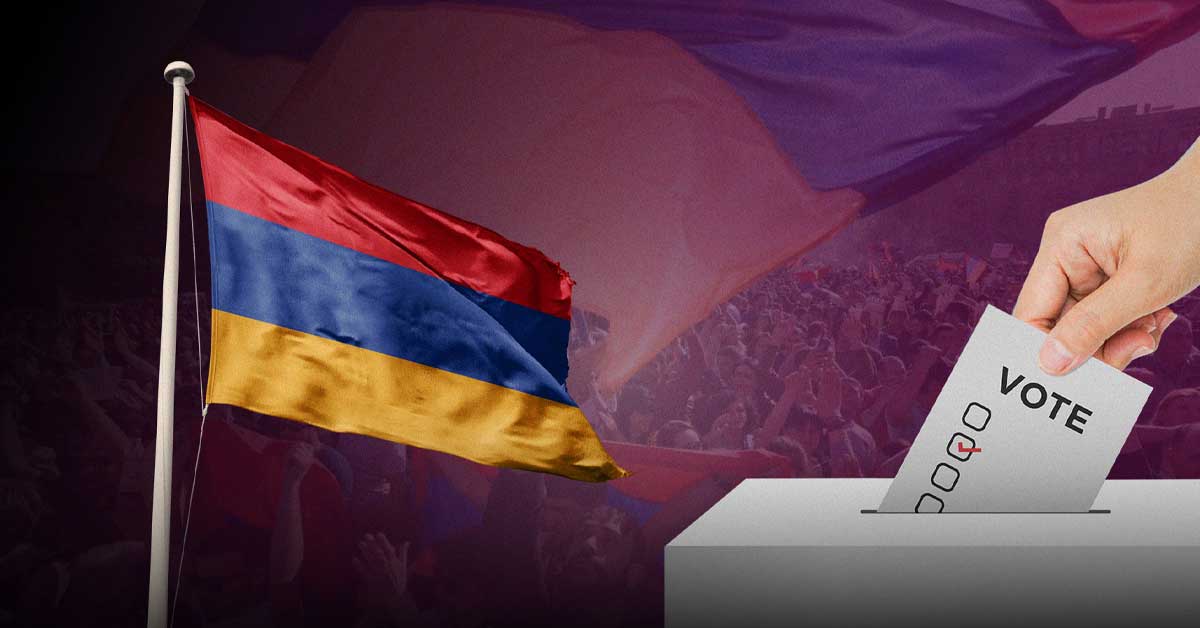
Ahead of the parliamentary elections in Armenia, scheduled for June 7, the approval rating of Prime Minister Nikol Pashinyan’s party has fallen below 18 percent. Even the summit of the European Political Community, which brought the leaders of 50 countries to Yerevan, proved to be of little help. The ruling “Civil Contract” party is now trailing behind the “Strong Armenia” bloc, led by businessman Samvel Karapetyan. Against this backdrop, Pashinyan’s own words carry additional risk: during a meeting with voters, he stated that Karabakh had never been Armenian. What consequences could the prime minister face, and will he manage to remain in power?
POLLING COLLAPSE
A total of 17 parties and two blocs have registered to participate in the elections. Forces advocating closer cooperation with Russia are playing a significant role in the campaign. The leader of the “Armenia” alliance, former President Robert Kocharyan, previously described the government’s course aimed at damaging relations between Yerevan and Moscow as an adventure. The head of the “Strong Armenia” bloc, billionaire Samvel Karapetyan, has also repeatedly emphasized that Russia remains a “friendly” state for the republic.
According to a survey conducted by another sociological center — SAEAS “Focus” — less than a month before the elections, only 17.8 percent of respondents are prepared to vote for “Civil Contract,” while the “Strong Armenia” bloc enjoys the support of 20.6 percent of those surveyed.
Even more unfavorable for the authorities is the distribution of support among voters who stated that they definitely intend to go to the polls: in that case, the united opposition wins 46 percent, while Pashinyan’s party receives only 18 percent.
It is noteworthy that the survey was conducted almost immediately after the European Political Community summit held in Yerevan on May 4 and 5. The forum was supposed to demonstrate international support for Pashinyan’s political course. Its main outcome was a joint declaration describing the meeting as a historic turning point in deepening relations between the republic and Brussels.
THE UNRESOLVED KARABAKH QUESTION
At the same time, Armenian society continues to strongly feel that the Karabakh issue remains unresolved. According to last year’s survey by the Yerevan-based “Arar” foundation, 62.8 percent of respondents believed the issue had not yet been settled. As many as 87.5 percent agreed with the statement: “The loss of Artsakh is temporary; we must strengthen our army and regain what was lost.”
Despite public opinion polls, it would be misleading to say that “Civil Contract” is currently weaker than most of its competitors. The reason lies in the fact that Pashinyan is directing enormous financial resources into promoting his party. Other parties compensate for their lack of resources through the personal authority of their leaders, but for now they can count on only 8 to 10 percent public support.
According to experts, it is still too early to speak about Pashinyan’s failure, especially since polling results differ significantly. Sociologists closer to the authorities give “Civil Contract” around 35 percent support or more, while polls cited by the opposition estimate support at approximately 18 to 20 percent.
Even according to those polls, “Civil Contract” remains one of the most popular political forces in the country.
The opposition’s main problem is that none of its parties currently appears capable of forming a government independently. The “Strong Armenia” bloc is either approaching the ruling party or trailing it by 10 to 15 percent. But even in the most favorable scenario, this points more toward strengthening the opposition in parliament than toward an inevitable change of power. Ahead of the elections, Pashinyan is also deepening the atmosphere of fear, calculating that voters, afraid of the consequences, may simply prefer not to go to the polls.
“WRONG” INTERPRETATIONS OF PUTIN’S MESSAGES
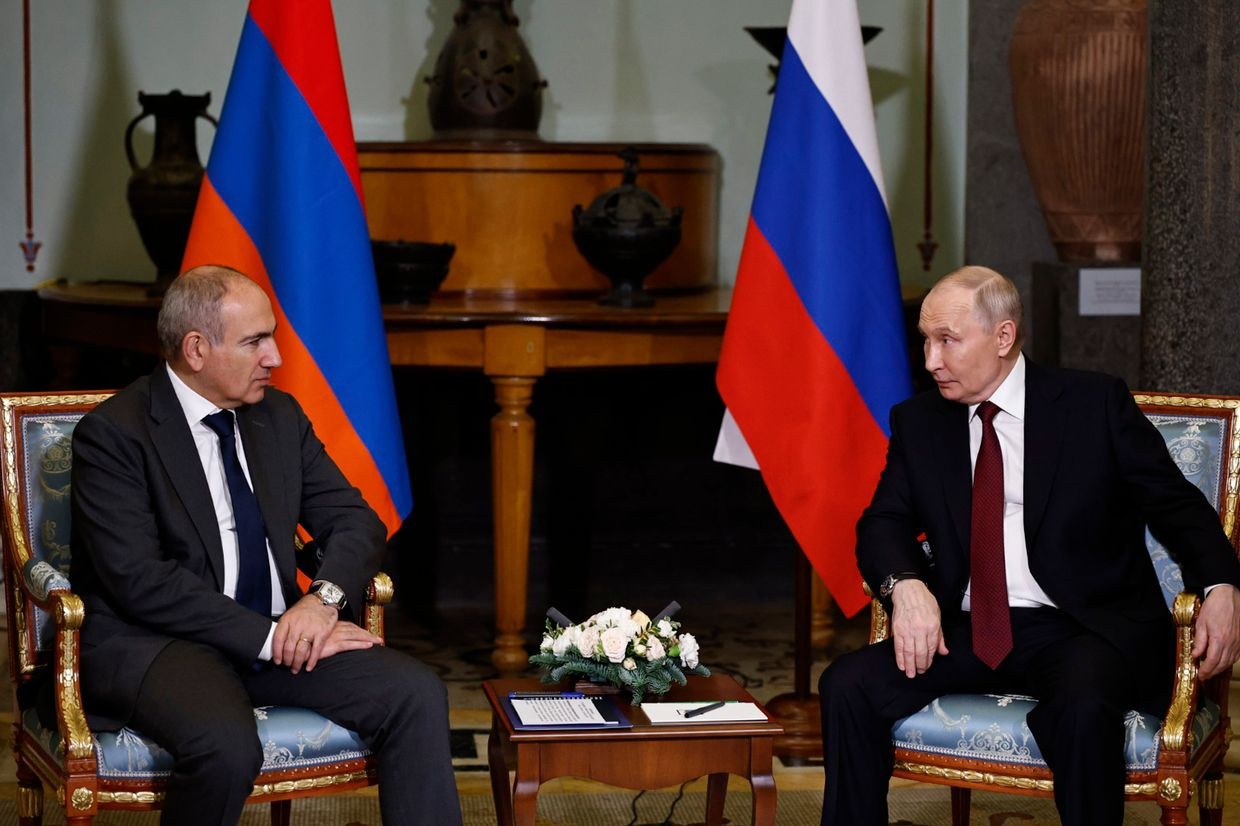
At the meeting in Moscow, Putin stated that in Armenia “some people, as far as I know, are currently being held in places of detention despite holding Russian passports. That is your decision, we do not interfere, but we would nevertheless like all of them to be able to participate in this domestic political process.” Putin was referring to the arrested Samvel Karapetyan. True, the fact that Russia does not interfere in decisions regarding the unlawful arrest of Russian citizens is not entirely clear.
Pashinyan also stated that there are no political prisoners in Armenia, while many within the country are calling on him to become even harsher and strengthen the mechanisms of repression. Although it is no secret that political prisoners exist in Armenia, especially Church hierarchs, Putin did not react.
As for Artsakh, Putin had already clearly stated on December 17, 2020, that Pashinyan had surrendered it, and he repeated this again at the meeting. Putin also added that the Karabakh wars emerged as a response to genocide committed against Armenians in Azerbaijan. In other words, Armenians took up arms in order to protect themselves from genocide. This is something that previously had not been openly stated.
Putin also pointed out the undeniable advantages of Armenia’s membership in the Eurasian Economic Union — preferential gas prices and access to a vast market — and said that Armenia would lose all of this if it chose to withdraw, especially considering that the country’s course toward the EU has already been adopted at the legislative level.
Pashinyan, however, drew different conclusions from the conversation with Putin. People around him began praising how he had supposedly “defeated Putin,” while Pashinyan himself expressed confidence that by the end of the year Samvel Karapetyan would become homeless, meaning that all of his property scattered around the world, including his home, would be confiscated.
That is to say, not only would all of his worldwide assets be seized, but he would also be stripped of a roof over his head. Roughly in the same way his colleague Trump threatens to return Iran to the Stone Age. At the same time, it would be inaccurate to claim that Pashinyan does not fully understand what is happening.
“NOBODY MENTIONS THE ‘TRUMP CORRIDOR’ ANYMORE”
Over the past month, Pashinyan has stopped mentioning the “Trump corridor” in Syunik, although he had previously tried to present the agreement regarding that route — which is essentially a step toward realizing the Turanist project — as part of his foreign policy success.
As for the parliamentary elections on June 7, it can be said with certainty that Pashinyan is currently not a focus for Trump. Britain, meanwhile, has enough problems of its own and additionally avoids interfering in American internal affairs so as not to cast a shadow over Anglo-Saxon brotherhood. The EU is losing both power and influence.
That leaves Turkey and Azerbaijan, while Russia and Iran are also entering the stage. In general, elections in countries such as Armenia essentially implement decisions that have already been made, while preserving the appearance of an electoral process — rallies, fiery speeches, and similar spectacles.
Many in Armenia, however, believe that these elections carry the significance of the Battle of Sardarapat, in which Armenia managed to save itself from a Turkish invasion. That is precisely the idea the opposition must impose on voters — retreat will not be an option.
External actors can generally be divided into two groups: immediate neighbors (Russia, Turkey, Iran), whose relations with the region are complex and strategically significant, and outside powers (the United States, the EU, India, China), for whom the South Caucasus remains a relatively small and secondary region, where activity is often reduced to demonstrating presence and exercising limited influence.
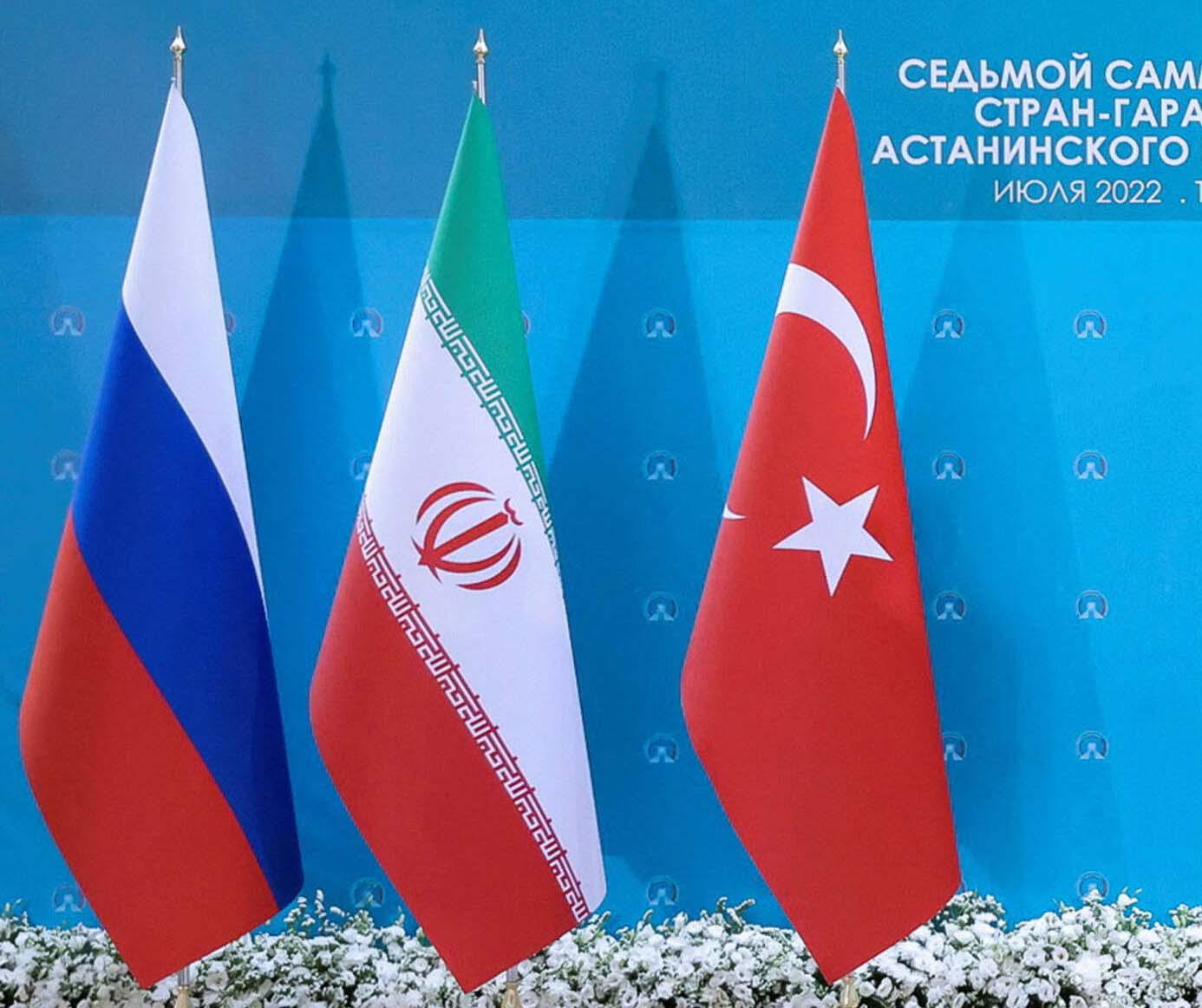
KEY ACTORS — RUSSIA, TURKEY, AND IRAN
Among the external actors, India is intensifying military and political cooperation with Armenia in the context of the Pakistani-Azerbaijani factor. China is taking a pragmatic approach, limited to assessing trade and logistical opportunities, and does not view the South Caucasus as a priority region.
The European Union is seen as an actor attempting to use political and economic instruments to deepen its influence and “drive a wedge” into relations between Russia and Armenia, but its real capabilities are limited: the volume of trade and investment is small, while infrastructure and logistics with the EU are poorly developed and would require construction almost from scratch.
Prospects for closer integration with the European Union are primarily electoral in nature and do not go beyond the framework of political rhetoric, considering that the EU enlargement process is effectively frozen. The United States views the South Caucasus as a potential area for expanding its influence, but its economic initiatives and infrastructure projects appear poorly prepared; the implementation of major transit projects, including the “Trump corridor,” is considered unlikely.
The greatest real influence in the South Caucasus continues to belong to Turkey, Iran, and Russia: Turkey is consolidating its role as a regional superpower, Iran is capable of influencing transport and logistics routes, while Russia, despite the external impression of weakening influence, maintains stable bilateral relations with the states of the region and remains an important balancing factor.
(To be continued)