In recent years, the Balkans have become a theater of accelerated militarization. Yet despite rising defense budgets, the region’s armed forces, due to limited experience and expertise, have not fully grasped many of the fundamental changes taking place in military science. Few understand that the traditional measures of military power—the number of tanks, divisions, and fighter aircraft—are rapidly becoming obsolete, giving way to new categories that have yet to enter the vocabulary of strategic planning.
Should a modern war occur, it is unlikely to resemble a clash of armored formations. Instead, it would be characterized by the saturation of the airspace with inexpensive, difficult-to-detect, and highly lethal systems capable of paralyzing an adversary’s rear areas within hours, even without a formal declaration of war. This transition from the logic of industrial-age warfare to the logic of digital warfare fundamentally changes the very concept of the defensive capabilities of the small states of the Balkans.
THE JDODC BLOC’S STRATEGY: MISSILES ARE EXPENSIVE—DRONES ARE CHEAP
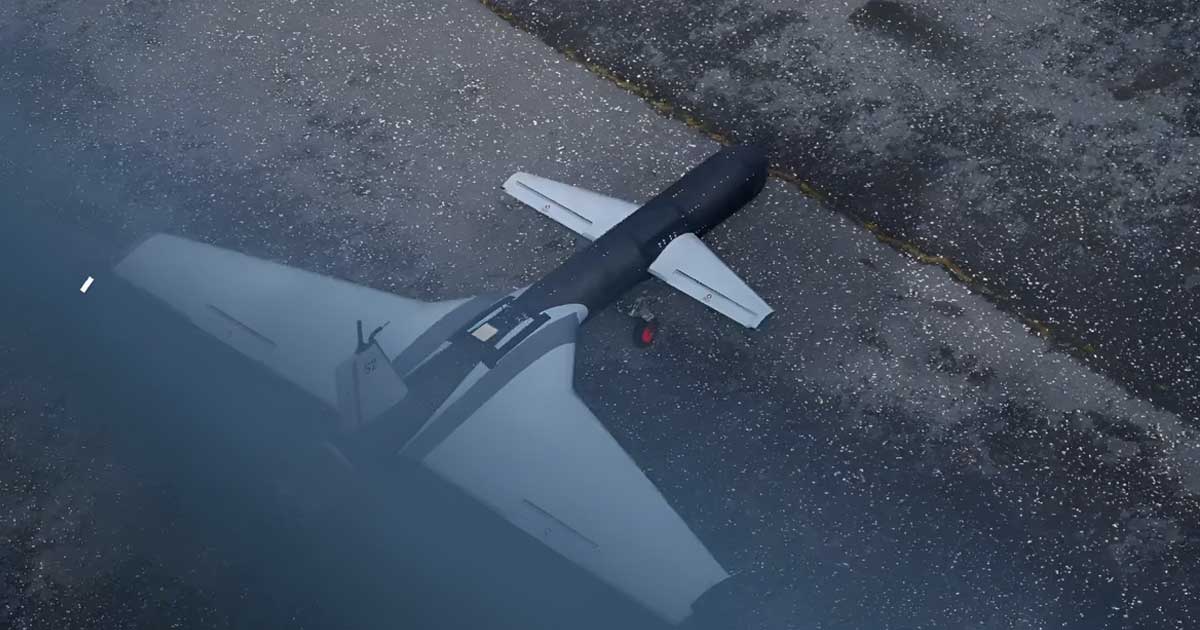
The experience of conflicts over the past decade—from Nagorno-Karabakh to Ukraine—has shown that the decisive factor today is often not the front line itself, but strikes carried out deep inside an adversary’s territory from the air. In the past, such operations required a well-developed air force or expensive missile systems. Today, that role is increasingly being assumed by unmanned aerial vehicles. They are inexpensive, can be deployed in large numbers, and stopping them with traditional means can impose an unsustainable burden on a country’s defense budget.
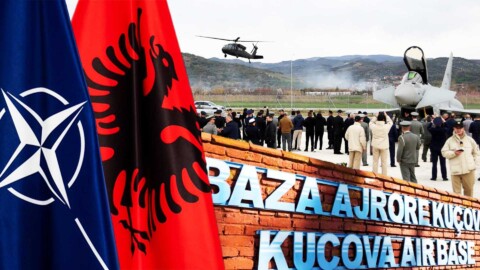
It is precisely on this logic that the strategy of the JDODC bloc—Croatia, Albania, and the so-called Kosovo—formed with the active support of Turkey, is based. Relying on Turkish technology and Ukrainian wartime experience, these actors are deliberately building military capabilities focused not on heavy armored equipment, but on thousands of loitering munitions, strike drones, and reconnaissance unmanned aerial vehicles.
For Serbia, this represents a direct and serious military challenge. Croatia lies only a few hundred kilometers from Belgrade, Albania is positioned along Serbia’s southern approaches, while Kosovo is located directly adjacent to Serbia’s administrative boundary. At a time when even relatively simple loitering munitions can reach ranges of 150 to 200 kilometers, and strike drones can patrol the airspace for hours, such distances no longer provide meaningful protection.
Every major logistics center, air base, or fuel depot on Serbian territory can become a target without the need to cross the state border using conventional means of attack.
As a result, Serbia faces a situation in which its traditional air defense system—regardless of the extent of its modernization—is confronted with a challenge for which it was never designed. Missiles are expensive; drones are cheap. Unless an asymmetric response is found, the first hours of any future conflict could very quickly turn into a war against Serbia’s own economy.
A WAY OUT OF THE ECONOMIC DEAD END
Since the very emergence of aerial warfare, air defense systems have been based on a simple principle: the interceptor must be more effective than the target it is intended to destroy. This meant that the means of protecting the skies—first heavy anti-aircraft artillery and later missiles—cost at least as much as the aircraft or cruise missiles they were designed to intercept. However, the emergence of mass-produced unmanned systems has overturned that logic just as fundamentally as the advent of ironclad warships once rendered wooden fleets obsolete.
Today, military analysts examining the cost relationship between offensive and defensive systems are confronted with a troubling reality. A modern reconnaissance drone or kamikaze strike drone may cost anywhere from a few thousand to several tens of thousands of dollars. A guided surface-to-air missile—even one intended for short-range air defense against tactical targets—costs hundreds of thousands of dollars, while missiles for systems such as the Patriot can cost several million dollars each. When a protected facility is attacked not by a single drone but by dozens or even hundreds of them, every launch of an expensive interceptor missile becomes an act of economic self-exhaustion.
This asymmetry has two dimensions. The first is financial: the defending side inevitably loses the cost-exchange battle between the target and the means used to destroy it. The second is industrial: stocks of surface-to-air missiles are limited, their production is complex and time-consuming, whereas drones can be manufactured in the thousands through decentralized production lines. Even if an air defense system successfully intercepts 90 percent of incoming targets, the remaining 10 percent may still inflict critical damage, while replenishing depleted missile stockpiles may require months, if not years.
AN ARCHITECTURE BASED ON UNMANNED PLATFORMS
For Serbia, this issue is particularly sensitive. The country’s arsenal of surface-to-air missile systems, inherited from the Yugoslav era and supplemented in recent years by Russian and Chinese deliveries, represents a limited resource that cannot be rapidly expanded under conditions of potential sanctions and logistical constraints. In the event of the large-scale deployment of drones by the JDODC military bloc, which deliberately relies on the numerical superiority of robotic systems and a strategy of attrition, these resources could be exhausted within only a few days of intensive combat operations.
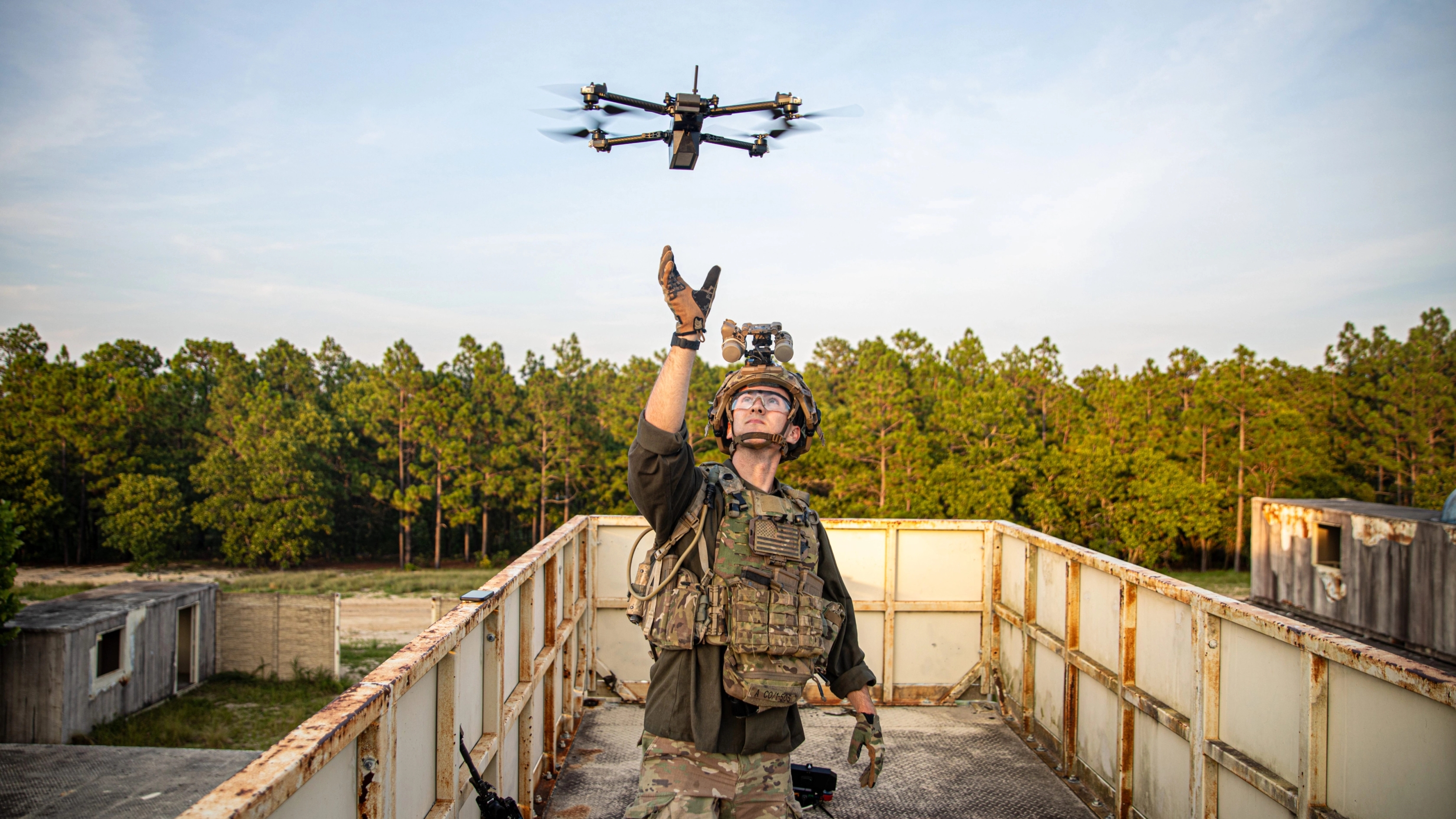
The way out of this dead end does not lie in further improving surface-to-air missiles, but in fundamentally changing the very model of air defense. If the threat has become massive, inexpensive, and decentralized, then the response must also be symmetrical. The only economically sustainable solution is to build an air defense architecture based on unmanned platforms capable of intercepting and destroying hostile drones.
In other words, drones should not be fought with missiles, but with other drones. It is precisely this approach—refined under the conditions of the most intense aerial conflict of the modern era—that today represents one of the most compelling models for any state facing a similar threat.
FROM A TEMPORARY SOLUTION TO AN EFFECTIVE CONCEPT
Initially, unmanned interceptor drones were viewed by military circles around the world merely as an improvised substitute for conventional air defense systems, born out of the difficult situation faced by the Ukrainian military. However, the experience of recent years has demonstrated the opposite. Rather than serving as a temporary solution, these systems have proven to be a well-conceived and effective concept that naturally integrates into the existing air defense architecture, taking over tasks that conventional air defense systems are increasingly unable to perform efficiently.
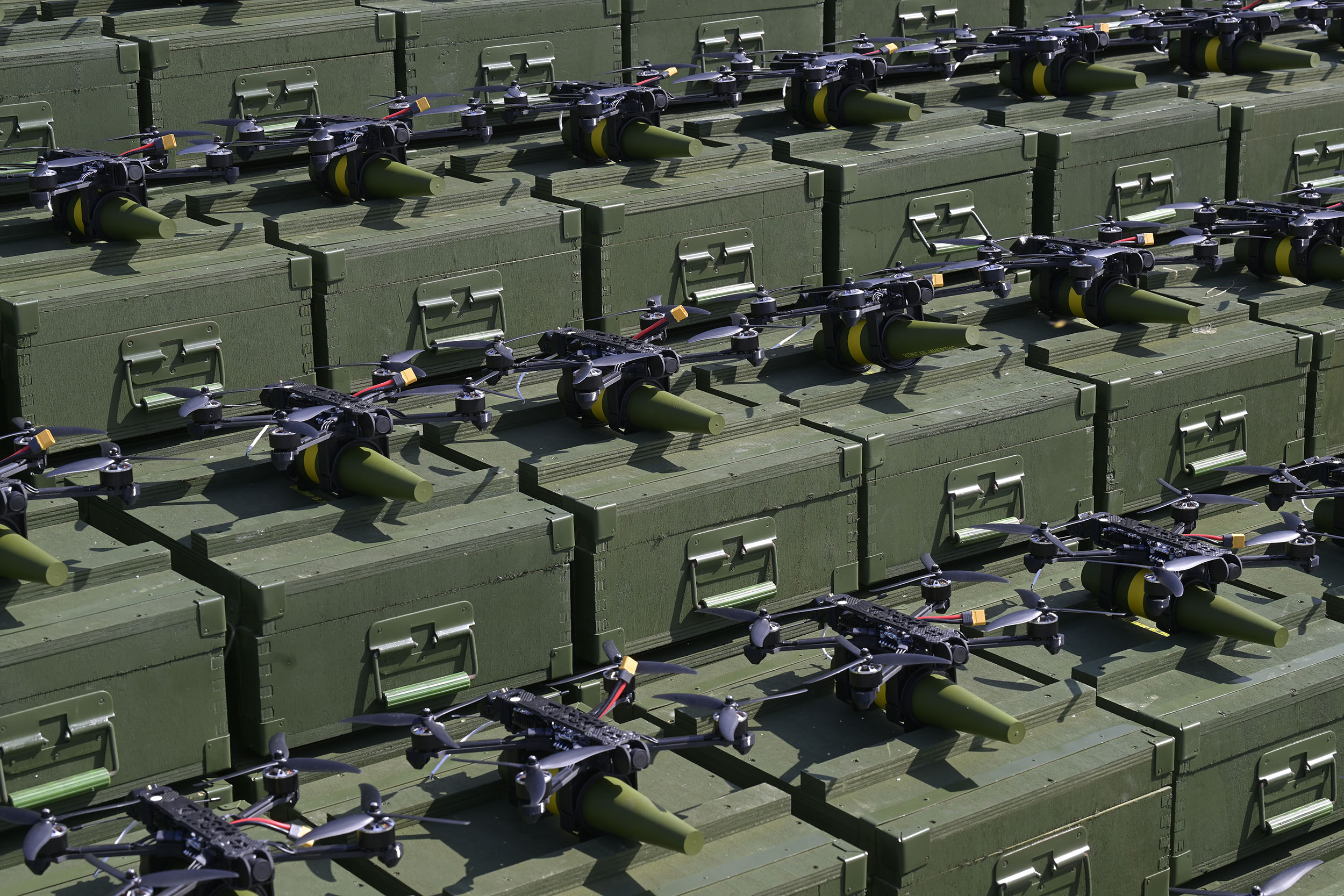
At the core of this concept is a small interceptor drone built on a racing quadcopter platform—an exceptionally fast and highly maneuverable aircraft originally developed for competitive racing, where high speeds and abrupt changes in direction are of decisive importance. The production cost of such systems typically ranges between one and five thousand dollars, making them inexpensive enough for mass deployment. Equipped with a warhead weighing up to half a kilogram, these interceptors are capable of destroying not only reconnaissance drones but also larger strike UAVs, including loitering munitions.
However, the effectiveness of this weapon depends less on the drone itself than on the system into which it is integrated. The key prerequisite for successful operation is the existence of an external target detection network. The interceptor itself carries no onboard radar and relies entirely on data received from a network of ground-based radar stations, acoustic sensors, and electro-optical observation posts. It is this distributed system that detects approaching enemy drones, determines their coordinates, altitude, and direction of flight, and then relays this information to the crew operating the interceptor. Without such a system—without an integrated airspace surveillance network—an FPV interceptor becomes effectively blind, capable only of encountering a target by chance.
FROM TARGET DETECTION TO DESTRUCTION—ONLY A FEW MINUTES
The interception process itself is relatively straightforward. Once the operator receives the target’s precise coordinates, the interceptor drone is launched and rapidly heads toward the hostile UAV. Thanks to its exceptional maneuverability and speeds of up to 280 kilometers per hour, the interceptor quickly closes the distance to its target. The final phase of the engagement is carried out based on visual contact established by the operator through FPV goggles. The target may be destroyed either by direct impact or by detonating the warhead in close proximity, depending on the interceptor’s design and the specific tactical situation. The entire process—from target detection to destruction—takes only a few minutes, which is a critical advantage since many enemy drones remain airborne for only a relatively short period before carrying out reconnaissance or strike missions.
Ukrainian experience has shown that this model is not only viable but has become an integral component of a layered air defense system. Heavy missile systems continue to perform their traditional role and remain prepared to engage ballistic missiles, cruise missiles, and manned aircraft. However, the interception of small and inexpensive aerial targets is increasingly being carried out by unmanned systems. They are not intended to replace conventional air defense capabilities but to complement them, relieving costly interceptor missiles of economically inefficient missions and preserving them for genuinely strategic threats.
For Serbia, which currently possesses neither mass production capabilities for such interceptor drones nor a developed radar network capable of guiding them, this experience represents more of a challenge than a ready-made solution. At the same time, however, it presents a significant opportunity: rather than spending years developing an entirely new concept from scratch, Serbia could rely on a technological approach that has already been tested and refined under combat conditions, adapting it to its own geographical characteristics and existing military infrastructure.
LESSONS FOR SERBIA
Ukraine’s experience in developing and deploying FPV interceptor drones for air defense should not be viewed as an exotic solution created solely under the extreme conditions of large-scale war. On the contrary, it represents a natural stage in the evolution of air defense—one that all countries confronted with the mass use of unmanned systems will reach sooner or later. The only question is whether this transition will occur consciously, by learning from the experiences of others, or under the pressure of an actual conflict, when the cost of mistakes is measured not in budgetary losses but in destroyed infrastructure and human lives.
At present, Serbia, like most countries on the Balkan Peninsula, possesses neither the capacity for the mass production of specialized interceptor drones nor a developed network of short-range radars capable of detecting small aerial targets flying at low altitudes. Its existing air defense structure was designed for a different set of threats. It is primarily oriented toward defending against manned aircraft and larger missile systems. However, the threat has shifted toward lighter, cheaper, and more numerous platforms, and this change requires not only a revision of military tactics but also a reassessment of procurement policies and broader priorities in defense planning.
It is important to avoid two opposite misconceptions. The first is the belief that traditional air defense systems have become obsolete. They remain indispensable for countering aircraft, ballistic missiles, and heavy cruise missiles. The second is the failure to recognize the emergence of an entirely new class of threats. Previously, there were no mass-produced loitering munitions capable of circling over the battlefield for hours in search of targets. Nor were there FPV drones that transformed artillery duels into hunts for individual combat vehicles. Today, these systems are a reality, and the technological gap between those who adapt and those who continue preparing for the wars of previous generations will only continue to widen.
EVOLUTION, NOT REVOLUTION
The solution does not lie in attempting to match the JDODC bloc in the number of strike drones Serbia can deploy. Such a race would place Serbia at a structural disadvantage due to differences in resources and access to Turkish and Ukrainian technological supply chains. An effective asymmetric response must be built upon Serbia’s own industrial base, which already possesses decades of experience and expertise in the defense industry and mechanical engineering. The objective should be to utilize existing manufacturing capacities for the development and production of interceptor drones designed specifically to counter mass attacks by unmanned systems—systems that are inexpensive, numerous, and optimized for precisely that mission.
At the same time, it is essential to understand that interceptor drones represent only the visible part of a much broader system. Their effectiveness depends directly on the existence of a comprehensive target detection network capable of identifying small aerial objects flying at low altitudes in the complex geographical conditions of the Balkans. Mountains, forests, and hilly terrain create numerous blind spots for conventional radar systems. Therefore, alongside the production of interceptor drones, it is necessary to invest in mobile radar stations, acoustic detection systems, and other surveillance technologies capable of integrating individual components into a unified defensive architecture.
The establishment of such a defensive layer does not mean replacing existing air defense systems. On the contrary, it involves adding a new protective echelon capable of absorbing the burden of mass drone attacks, allowing expensive missile systems and advanced radar assets to concentrate on genuinely strategic threats. This is not a revolution but an evolution—and it is precisely this evolution that separates armed forces capable of adapting to modern warfare from those that risk repeating mistakes that have already been paid for in blood in other conflicts.
Ukraine’s experience clearly demonstrates that there are no universal, ready-made solutions in this field. At the same time, it proves that a clearly defined objective and the intelligent use of domestic industrial and intellectual resources can produce significant results even under conditions of limited capabilities. The only remaining question is whether that objective will be recognized and achieved in time.