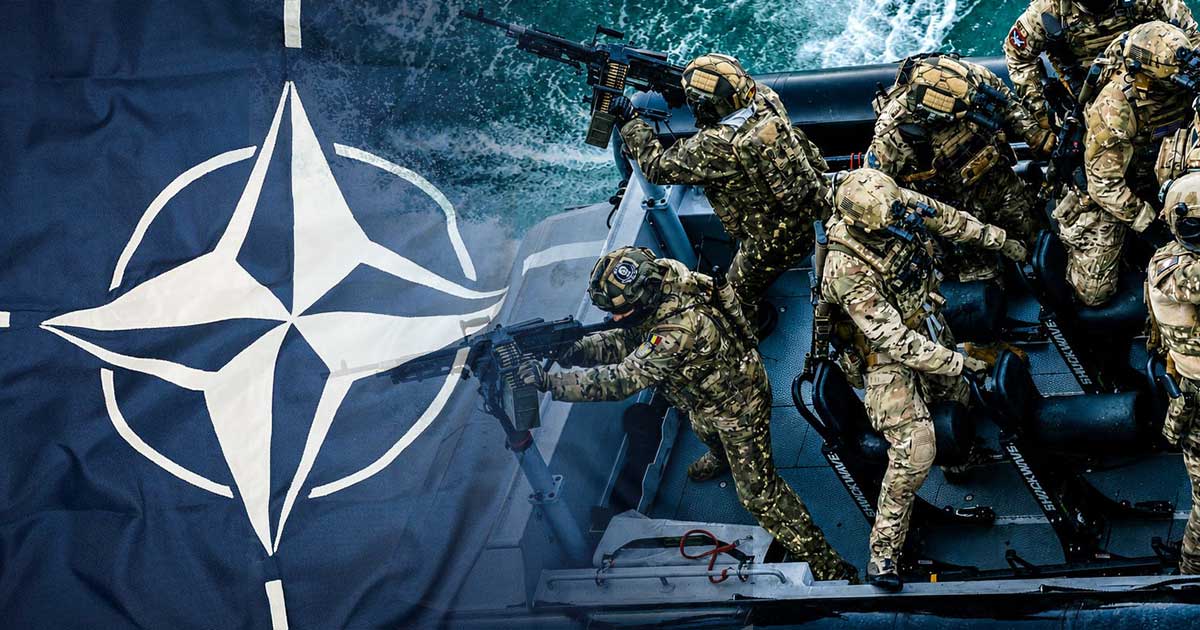
Over the course of May 2026, NATO member states, individually and collectively, had conducted a series of military exercises for the purpose of ensuring that the alliance remains ready in the event of any potential clash with Russia. While most NATO training exercises remain deliberately vague over exactly which hypothetical military force NATO personnel are training to fight against (although most correctly assume that it is Russia anyway), this time, it has been made public that NATO is indeed dedicating its May training exercises to the purpose of ensuring that the alliance is ready to counter any and all military actions by Russia, regardless whether the respective Russian actions are offensive or defensive in nature.
Three exercises in particular that took place earlier in the month have provided a clear picture regarding the new forms of both conventional and hybrid warfare that the NATO alliance is expected to engage in over the next decade or so – special forces exercises, “shadow fleet” naval battles and hybrid warfare waged from underground.
TROJAN FOOTPRINT 2026: NATO’S SPECIAL FORCES EXERCISES
Following US President Donald Trump’s declaration that he intends to withdraw US military support from Europe, 24 countries, which include the US and the UK, collectively launched the single biggest training exercise of special forces personnel in the NATO’s 77-year-long history, codenamed Trojan Footprint 2026 (such exercises take place every two years). In total, over 3,000 NATO special forces personnel were deployed for the exercise. The participation of the US in these exercises, despite Donald Trump’s threats to withdraw US military personnel from Europe, served as a stark reminder to the rest of the NATO alliance that if Trump does indeed follow through with his threats to withdraw US forces from Europe, NATO would indeed be far more exposed to any external threats to the alliance in Europe. Considering Trump’s habit of bluffing with his opponents, it could also be argued that his threats of withdrawal could also be a bluff in itself, in order to remind NATO allies in Europe that if they wish to continue benefiting from American military presence on the continent, then the rest of the alliance should ensure that they continue to “respect” Trump and the United States. In other words, geopolitical blackmail.
As for the NATO exercises themselves, the nature of the exercises involved the combined branches of NATO’s land, sea and air forces, and took place between the 11th – 21st May. Taking place around the Baltic Sea, Black Sea and the Mediterranean Sea, the exercises were intended to prepare NATO special forces for any and all potential scenarios which involve an attack by an “unnamed enemy” against the alliance. However, it was no secret that the “unnamed enemy” in question was Russia, given the three primary locations of the exercises as well. The exercise not only involved preparing for conventional armed warfare, but it also prepared the participating NATO member states for other scenarios, such as sabotage and cyber-attacks.
The Trojan Footprint exercises were also notable for including military personnel from nations which are not members of the NATO alliance. Switzerland and Georgia, for example, had also contributed troops to the exercise.
A STRIKING DETAIL FROM A SKY NEWS REPORT
The United Kingdom, a founding member state of NATO, had also deployed personnel from the relatively new British Ranger Regiment. Established in 2021, the British Ranger Regiment operates in a similar manner to US special forces – such as the “Green Berets” – but while it is still considered to be a special operations force, it is not considered to be as elite as the British Special Air Service (SAS) and the Special Boat Service (SBS).
British news outlet Sky News had recently reported on the exercises from one particular training location in Greece, where Sky’s Security & Defence Editor, Deborah Haynes, had interviewed an anonymous soldier of the Greek Special Forces, following an exercise involving the deployment of paratroopers. After stating that such joint-exercises with other special forces from the NATO alliance were “helpful”, the anonymous Greek soldier also stated that despite the ongoing inter-alliance tensions with the United States, training with American forces was “just like working with any other people. I feel very close to them.” Such an attitude is but one example that highlights the difference in mentality between politicians and soldiers – where the concept of partnership and brotherhood appears to be largely absent among the political leaders and officials of the NATO alliance, between the collaborating soldiers themselves, partnership and brotherhood still remains one of the core characteristics of a soldier, regardless of where they hail from. However, when asked by Deborah Haynes whether he feels that NATO would still be able to defend itself without the involvement of the United States, the Greek soldier’s answer was short and simple: “Yes, of course.”

NATO’S BLACK SEA “SHADOW FLEET”
Another key part of the NATO exercises of May 2026 were the naval exercises on the western part of the Black Sea – an especially dangerous zone for NATO military training, considering the exercises’ proximity to the ongoing war in Ukraine, where much of the Black Sea has served as a naval battleground between the Ukrainian and Russian navies.
NATO special forces personnel from Romania, Spain, Portugal and the United States, alongside members of the British Royal Marines, collectively trained together in several exercises which largely involved the boarding of ships, neutralising armed hostiles and securing hostages. Such exercises are not without very real precedents. Russia, also acting in response to large-scale NATO exercises, have carried out their own naval exercises over the years, seeking to prepare their own forces for any potential future clash with NATO. NATO and other Western powers have also in turn cited “Russian hybrid warfare” and Russian “shadow fleets” as causes for concern and the planning of May’s Black Sea “Shadow Fleet” exercises.

A NETWORK OF CABLES – TARGETS OF STRATEGIC IMPORTANCE
Beneath the seabed of much of Europe’s territorial waters lies a vast network of electricity, fuel and telecommunications cables and links that provide Europe with its natural resource and economic lifeblood. If such cables and links were damaged or destroyed, the consequences – both short-term and long-term – could be catastrophic. According to the European Union Agency for Cybersecurity – and as reported by Newsweek – approximately 97% of global telecommunications traffic traverses through underwater cables, responsible for approximately $10 trillion worth of financial transactions each and every day. As stated above, any damage or destruction of such cables could result in devastating consequences for the global economy. However, it is precisely because of the extremely high risks associated with the damaging of these underwater cables that makes these cables such high-value targets for any international power that seeks to effectively threaten the global economy in a gamble for the sake of its own respective interests.
Instances of suspected – but not proven – cases of Russian “shadow fleet” activity include a December 2024 incident in which a Russian ship, the Eagle S, had cut an electricity cable link between Finland and Estonia. The case, however, was dismissed by a Finnish court. In January 2025, Sweden had seized a Russian cargo ship, Vezhen, on suspicion of severing a telecommunications cable linking Sweden and Latvia. However, a Swedish court ruled the incident as an accident. In May 2025, Polish patrols had observed a Russian tanker, Sun, circling the surface above an underwater cable linking Sweden and Poland, before it was escorted away by a Polish air patrol.
Although the likelihood of all-out naval warfare between NATO and Russia remains – for now – distant, as is the case on land, hybrid and “shadow” warfare remains an ever-present threat for all sides, reminiscent of Cold War-era covert warfare. Arguably, this form of warfare could pose to be an even greater threat than conventional ship-to-ship warfare in the long-term. With the global economy already suffering on a scale not seen in years, due to the ongoing Iran War and the Strait of Hormuz crisis, the scenario of underwater electricity, gas and telecommunications cables being damaged or destroyed would likely lead to an even greater and long-term global crisis than even a conventional war would result in (usage of nuclear weapons aside, of course).
GOING UNDERGROUND: WAR FROM BELOW
In an abandoned part of Charing Cross Tube Station in London, British military personnel, joined by a number of their American counterparts, converted an underground train platform into a mock-up of an underground military communications and intelligence facility. The exercise was intended to simulate a scenario, taking place in 2030, in which Russia has invaded the Baltic states, with the underground mock-up in question serving as a British-led underground military bunker in Tallinn, the capital city of Estonia, where a significant NATO presence continues to operate. The exercise also serves as an example of how rapidly NATO personnel can requisition civilian infrastructure to convert it into military infrastructure in times of war.
This exercise in particular is notable for the extensive use of artificial intelligence (AI). Controversial enough when used in the civilian world, the usage of AI in the military has proved equally – if not more so – controversial, given the extremely sensitive nature of military operations, and just how accurate and meticulous military intelligence has to be before any and all military actions can be carried out. AI today is largely still considered to be in its experimental stages, but these British and American soldiers operating in this exercise beneath the city of London are operating with AI systems that could, theoretically, help speed up the gathering and processing of military intelligence in a matter of hours, rather than days. Of course, it is unlikely that such AI systems would be used in a real war anytime soon, considering how unreliable AI currently is. Another planned use of these AI systems would be to aid in the identification of enemy targets and the locating of them, before launching drones and missiles to intercept and destroy said targets.
There are, however, ongoing problems that have been brought to light following these exercises beneath London. Firstly, much of the software, AI systems and equipment that are being used as part of the training have not yet been rolled out for common use across the British Armed Forces and British Intelligence in general. Much of these underground exercises are still considered to be experimental in nature, preparing for a new era of warfare that is still in its infancy. Secondly, the British Armed Forces still requires a significant rise in government funding in order to acquire these new systems and equipment in numbers which would effectively prepare Britain for any future large-scale conflict, let alone one against Russia. British Prime Minister Keir Starmer and his Labour government have been heavily criticised for neglecting the Armed Forces in terms of state funding, with many pointing out that the pace of the British Armed Forces’ rearmament is far too slow to keep up with the growing instability of the modern world. Currently, the British Government is expected to give the Ministry of Defence over £18 billion in funding over the next four years, up until 2030. However, analysts and commentators have stated that such a government budget is far too small to effectively prepare the UK militarily for any potential war against Russia – or many other potential enemies – by 2030, when Russia is predicted to be at its most dangerous for NATO.
LONDON LEFT EMPTY-HANDED – STOCKPILES SENT TO UKRAINE
Another problem that the UK alone faces is its shortage of military equipment. With much of its military stockpile having been donated to Ukraine since early 2022 – and which have been expended just as quickly – only with the collective aid of other NATO member states and their ammunition and equipment can the UK even hope to endure in such a large-scale conflict against Russia. The exercises beneath London have shown that over 5,000 drones would have to be deployed daily, for both surveillance and combat operations in any hypothetical war against Russia – which itself has a vastly superior number of drones, compared to the UK. Currently, the UK is only capable of producing drones daily numbering in the hundreds – far short of the required 5,000 drones per day in a war against Russia. Such a shortage of drones for the UK alone would mean that not only would it require multiple drone-manufacturing facilities to provide a steady and reliable number of drones for use in a war, but effective logistical hubs and routes would also have to be established across Europe in order to deliver such crucial drone supplies to British military personnel in the Baltic region. As we have seen throughout the course of the Russo-Ukrainian War, even now, NATO-aided supply lines and logistical hubs within Ukraine itself are often the target of large-scale Russian drone and missile attacks. In the case of a full-scale NATO vs. Russia war, such hubs and supply lines would be among the first to be attacked by Russia in the early days of such a war.
In a video message that was played to journalists reporting on the exercise, British Lieutenant-General Mike Elviss stated the following:
The scenario you are about to see is very deliberately set in 2030 because that is where we see the threat from Russia to be at its most acute. It’s also when we could realistically deliver the modernised technology and increased readiness required to meet that threat, but only with the right investment now, and with the support of industry to build a national arsenal – not just of munitions stockpiles (although that’s critical) – but also of the national means of production that can scale in wartime. There is huge opportunity here, but peril if we ignore the risk.
NATO WITHOUT THE USA & A FUTURE EUROPEAN ARMED FORCES?
The NATO exercises of May 2026 have proven to be some of the most crucial for the alliance in recent memory, but no longer for the sole reason of the collapse of the old world order, following the outbreak of the full-scale Russo-Ukrainian War in February 2022. For NATO now, in mid-2026, the new threat is the threat from within – the prospect of the United States of America formally withdrawing from a military alliance which most believe is de facto led by the United States itself. Without the leading role of the US in what many label as “the most successful military alliance in human history” – debatable as that label may seem – the future of NATO itself looks more uncertain than ever. While US withdrawal may simply mean, on the surface, one less member state in the alliance, with NATO then officially being a primarily European military alliance, there are two ways one can look at NATO’s path in a post-American future. The first path is that NATO itself may find itself too weak to function properly without American support, and in the event of full-scale war with another powerful nation – most likely Russia – NATO itself as an alliance may run the risk of total collapse, if it fails to win such a hypothetical war against Russia and any allies that may join it. The other path is the path of the total conversion of NATO from the North Atlantic Treaty Organisation into a full-fledged European Armed Forces – which many predict would be de facto led by the European Union, effectively paving the way for the bloc to turn from a political and economic union into a federalised superstate with its very own armed forces. For some, such as the most ardent of European federalists, this would be a most welcome scenario. For others, the prospect of a European Armed Forces rising from the ashes of a dissolved NATO could pose a new threat to the global order. While NATO itself remains a military alliance, a European Armed Forces would effectively function much like a conventional national armed forces, but subsuming the national armed forces of all EU member states into one command structure. For nations which are not in the European Union – and perhaps for those who are already member states, but reluctant ones – perhaps it will not be Russia, China or the United States who will pose a new threat to Europe, but a potential new and militarily unpredictable post-NATO European Armed Forces.