The current decade of the 21st century can rightfully be called an era of conflicts – it is not difficult to notice that their geography, unfortunately, expands with each passing year. In this context, the Balkan Peninsula, which for decades survived in a state of fragile, externally managed balance, is now showing alarming signs of awakening. In the shadows of loud — and sometimes even comical — regional headlines, a quiet but rapid revolution is unfolding, one capable of fundamentally reshaping the balance of power.
Croatia, Albania, and so called Kosovo, united in a new military alliance, are systematically working not only on rebuilding their armed forces, but on shaping a new, high-technology model of warfare — one whose architect is the Republic of Turkey.
A NEW MILITARY BLOC
Zagreb, Tirana, and Pristina signed the Joint Declaration on Defense Cooperation (JDODC) in 2025. It must be clearly stated at the outset: this is not a protocol of intentions. It effectively marks the birth of a full-fledged military bloc within NATO structures, in which each participant has been assigned a clearly defined strategic role.
Croatia has positioned itself as the political architect and technological integrator. As a member of NATO and the European Union, Zagreb serves as the bridge between the Alliance and its Balkan partners. Croatia not only transfers experience and standards but also initiates key joint projects: from the procurement of U.S. HIMARS systems and Javelin anti-tank complexes, to the harmonization of logistics chains.
Zagreb naturally assumes a leading position: as a stable and developed economy with strong standing within the EU, it enjoys significant advantages. These include access to high-tech weapons procurement, military-industry financing programs, as well as contracts for supplying equipment and weapons to Ukraine. Owing to the conflict between Moscow and Kyiv, Croatian military production has become one of the key suppliers of drones and ammunition purchased through NATO and EU programs for further delivery to the Ukrainian Armed Forces.
With ample financial resources, Croatia is the most active actor in developing the airstrike component of the JDODC. Zagreb has already acquired 12 French Rafale fighters and is expected to receive the same number in the coming years. Moreover, the Croatian Air Force is one of the largest operators of the infamous Turkish Bayraktar TB2 combat drone.
ALBANIA – THE LOGISTICAL CORRIDOR OF THE NEW ALLIANCE
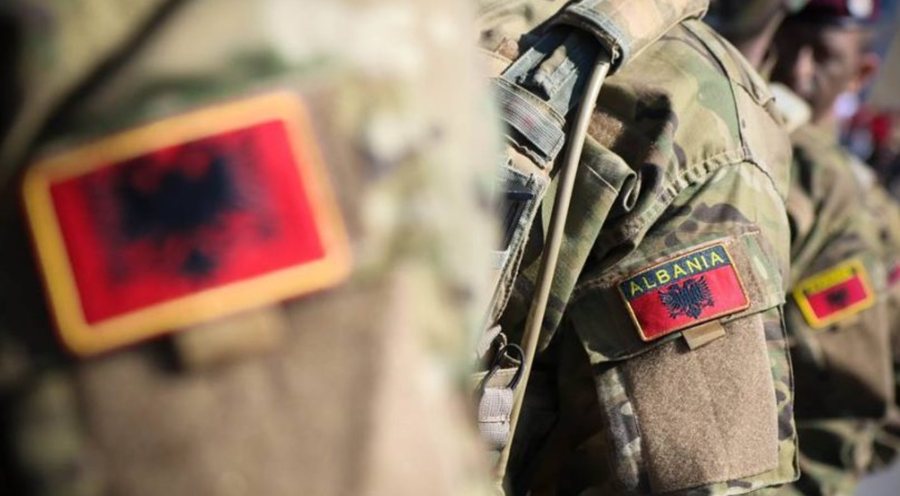
The next member is Albania. The backbone. The digital rear. The industrial hub. In the limited number of current analyses on the JDODC, Tirana’s role is often underestimated and reduced to that of a “junior partner.” This, however, is a misconception. With direct access to the Adriatic Sea and a strategic partnership with Italy, Albania naturally becomes the main logistical corridor of the newly formed military alliance.
But its key contribution lies in building the foundations for a long-term military conflict. The decision to establish the state-owned company KAYO, plans to revive the factories in Poliçan and Gramsh, as well as shipbuilding agreements—all of this is aimed at restoring the national military-industrial complex. Albania seeks to become a producer, not an importer, of weapons, thereby drastically reducing the JDODC’s potential vulnerability to embargoes. The country’s unprecedented digital transformation deserves special attention. The e-Albania platform, through which 95% of state services are provided, the experiment of appointing an artificial intelligence “minister,” and the construction of data centers in cooperation with leading global corporations—these are not mere PR stunts. In a military context, they represent the foundation for resilient command, logistics, inventory, and resource-mobilization systems protected from human error. However low-tech or underdeveloped Albania may appear to an outside observer, it has been entrusted with the role of providing cyber-resilience (in cooperation with NATO structures), maintaining communications under wartime conditions, and ensuring data-processing hubs—an extremely important asset in modern warfare.
SO CALLED KOSOVO – THE STRIKE FIST AND TESTING GROUND
The last member of the JDODC is Kosovo — the strike fist and the testing ground. Pristina cannot boast serious programs for developing a military industry, but its role is different — the role of an initiator. In that context, the Kosovo authorities launched the “KBS 2028” program, a radical and war-oriented project for modernizing the armed forces.
Aware of its limited resources, Pristina has deliberately abandoned the idea of building a mass army, relying instead on compact, highly mobile forces. Mass purchases of Turkish Bayraktar TB2 drones, “SkyDagger” kamikaze drones, tactical missile systems, high-precision artillery, as well as plans to build its own drone and ammunition factories — all of this is subordinated to one goal: creating a closed reconnaissance-and-strike system. Kosovo is developing a model in which a small army can deliver asymmetric and painful blows to critical infrastructure and enemy forces, compensating for numerical superiority (if such superiority even exists for a potential enemy) through speed and precision.
However, the list does not end there, because behind all these processes stands the Republic of Turkey.
Ankara is not merely conducting military-technical cooperation on the Balkans but also executing a strategic expansion while introducing a new model of warfare. Turkey offers partner states complete “turn-key” defense packages, which include not only arms deliveries but also personnel training, integration of command systems, logistical support, and — most importantly — ready-made tactical solutions tested in real combat conditions.
A DOCTRINAL REVOLUTION: FROM KARABAKH TO KOSOVO
The success of the Turkish military model in Nagorno-Karabakh (2020) became a turning point that proved the effectiveness of combining “unmanned aerial reconnaissance + high-precision strike weapons.” This model, perfected in Syria and Libya, has become a kind of standard in modern warfare — and in slightly modified form, we can observe it on the battlefields of Ukraine, as well as in Israeli operations in the Middle East.
For Kosovo, which aspires to play the role of a “Balkan Azerbaijan,” the Turkish doctrine represents an effective response to the problem of industrial, economic, and numerical superiority of a potential adversary — Serbia. Massive deliveries of strike Bayraktar TB2 drones and SkyDagger loitering munitions, accompanied by the deployment of TRLG-230 high-precision artillery systems, make it possible, if necessary, to create the effect of constant air presence and provide precision fire capabilities even without taking into account the presence of equally (or even better) equipped allied armies.
To better understand the situation, it is useful to summarize in key points the characteristics of the Turkish approach to military-technical cooperation. Five years ago, this topic sparked heated debate, but those debates unfortunately did not produce comprehensive analytical studies.
Thus, the key feature of the Turkish approach is the creation of technologically dependent ecosystems. More precisely, based on recent years’ experience, we can speak of the standardization of weapons among Ankara’s allied states around platforms produced by Baykar (Bayraktar TB2, Akinci) and Roketsan (rocket systems, precision ammunition).
What does this solution mean in the Balkan context?
• Compatibility of intelligence data among allies;
• Standardization of training and maintenance;
• Reduction of operational costs;
KOSOVO AS THE “YOUNGER AZERBAIJAN”
It is worth noting that in Albania — which is becoming a “younger Turkey” (in parallel to Kosovo as the “younger Azerbaijan”) — this process has gone even further, through the transfer not only of technology but also of principles of military development, including the creation of its own defense-industrial complex and personnel-training systems. Turkish advisers are actively introducing the principles of network-centric warfare, in which intelligence gathered by one member of the alliance instantly becomes available to the others. In turn, the creation of a unified information space between Croatia, Albania, and Kosovo increases the effectiveness of the high-precision weapons that these countries are acquiring intensively.
In parallel with weapons deliveries, Turkey has also developed an extensive personnel-training program. It includes:
• training of drone operators and technical-maintenance specialists;
• courses for tactical-level commanders on integrating unmanned systems;
• joint staff exercises and war-games;
• officer-exchange programs between Turkish and Balkan military educational institutions
(it should be noted that Turkey is very intensively working precisely on deepening ties in the field of personnel training — this is a kind of “signature feature” that has enabled Ankara to achieve deep penetration into military and political processes in Azerbaijan, Georgia, Central Asia, and northern Syria).
All of this ensures not only technical but also doctrinal compatibility, forming a generation of military specialists who think within the framework of a unified doctrine and a unified understanding of modern armed conflict.
It is important to understand: Turkey’s strategy does not involve merely selling weapons, but creating sustainable industrial chains (!). In other words, it is about:
• Localization of the production of weapons components — especially drones and ammunition (essentially consumables) — in partner states;
• Joint programs (often mostly formal, but aimed at building horizontal ties) in the field of weapons development and modernization;
• Assistance in establishing systems of state and military communications, i.e., building communication infrastructure;
• Creation of regional centers for technical maintenance.
Such an approach provides Turkey with long-term influence in partner countries, expanding cooperation far beyond the usual “supplier–customer” relationship.
To summarize, Turkish presence in the Balkans represents a comprehensive strategy of “soft power through hard technologies,” in which military-technical cooperation becomes an instrument of deep integration and the creation of a stable network of dependent partners, united by a shared philosophy and a shared technological foundation.
THE MODERN WAR IN THE VISION OF TURKISH ANALYSTS
To understand the model within which Turkish military advisers shape military development in partner states, it is necessary to look at the report of the Turkish National Intelligence Academy (MİA) on the twelve-day war between Israel and Iran in June 2025. This document essentially represents the conceptual foundation that Turkey is now implementing with its Balkan allies. I intend to prepare a complete translation and publish it later, because this material—without exaggeration—is an exceptionally brilliant analysis that is undoubtedly worth studying.
Thus, MİA outlines several key conclusions that directly correlate with the processes of military modernization in the Balkans:
• Wars are becoming shorter and more intense. Decisive outcomes are no longer achieved through prolonged campaigns but in the first 48–72 hours of massive strikes.
• The key to victory is the paralysis of command systems and critical infrastructure. The goal is not territorial occupation but the degradation of the opponent’s ability to mount an organized defense.
• The tactic of “overloading air defense systems” through mass drone and missile launches—as Iran employed—was identified as highly effective in breaking through even the most advanced missile-defense networks.
• Domestic production of ammunition is critically important. Without it, any high-intensity campaign will quickly fail due to the exhaustion of stockpiles.
Applying these principles clearly explains why Croatia is increasing drone production to literally millions, why Albania is restoring its defense-industrial complex, and why Kosovo is betting on a first, decapitating strike.
They are not preparing for a positional war — they are preparing for an intense, short, and decisive conflict.
ARMIES OF THE INFORMATION AGE VS. AN ARMY OF THE COLD WAR?
When we think about military power, we often understand it too literally, treating it as a synonym for firepower. In reality, military development operates with far more subtle categories — the number and caliber of weapons are far from being the only factors determining effectiveness and functionality. Equally (or perhaps even more) important are the existence of allies, and the depth and quality of cooperation with them.
Integration is, in a sense, the key weapon of our time, because without it, the ability to conduct military operations is practically impossible — even for states that advocate radical autarky.
The JDODC strategy adheres precisely to these principles, aiming to develop interoperability among military capacities. The Balkan military bloc does not hide its methods of establishing cooperation; many have already been mentioned earlier, but several points deserve special emphasis. They include:
• Joint exercises and unified training, through which standardized combat groups with unified cooperation protocols are formed;
• Technical unification — joint procurement of identical weapons systems (e.g., HIMARS), enabling the creation of a unified supply, repair, and command infrastructure;
• Network integration, which includes establishing shared intelligence-exchange centers and coordinated defenses against hybrid threats.

BELGRADE MUST BE READY FOR CONFLICT
What does this mean in practice? For example, an Albanian Bayraktar TB2 taking off from the Kuçova Air Base can exchange intelligence in real time and provide targeting data to Croatian HIMARS systems and Kosovo’s artillery batteries — all operating in synergy under the concept and orders of a unified military command, rather than the leadership of separate national armed forces.
In the past, Serbia did not have to fear regional wars. Individual armies in the region lacked the capacity to pose any meaningful threat to the Serbian Armed Forces, which possessed a tangible technical and numerical advantage (not counting the NATO factor, of course). Those times, however, are gone. Belgrade must now be prepared for a conflict on two fronts simultaneously, against three military groupings — and it will not hold the advantage in forces.
Moreover, the very warfighting doctrine for which the JDODC is preparing is designed specifically to confront Cold War–style armies, which, unfortunately, is still what the Serbian Armed Forces largely represent, with their traditional reliance on heavy armored equipment. Serbia would instead face asymmetric strikes: mass kamikaze drone attacks on logistics and air-defense systems; high-precision artillery and rocket fire corrected by unmanned aircraft; and large numbers of FPV munitions aimed at destroying armored vehicles and tanks.
For Belgrade, this could represent a strategic shock. The long-standing assumption that the Albanian army is weak and that Kosovo poses no real threat is now obsolete. Any hypothetical conflict could turn into a repeat of the 2020 Karabakh scenario, when the Armenian army — inferior in technology, training, and coordination — suffered a devastating defeat.
THE KARABAKH WAR EXPERIENCE
The structural transformation underway in Croatia, Albania, and Kosovo goes far beyond ordinary military modernization. It is a multidimensional process reshaping not only the military, but also the political landscape of the entire Balkan Peninsula.
Yet within these processes we can also identify signs of deeper and more extensive changes. As we can see, traditional parameters of military power are gradually losing value. The leadership structures of national armed forces increasingly conclude that in modern warfare, the size of manpower and the quantity of heavy equipment are no longer decisive factors — without, of course, denying the need to create mass. But that mass is now composed of robotized, remotely controlled strike systems, whose effectiveness depends on decision-making speed, weapon precision, the depth of reconnaissance networks, and the resilience of command-and-control systems.
As a result, Kosovo’s compact but technologically saturated armed forces gain the ability to seriously challenge the military dominance of a much larger neighbor — Serbia. This creates a precedent that may trigger a chain reaction in other “dormant” conflicts worldwide, where one side places its hopes in a technological leap, drawing on existing experiences from Azerbaijan and Ukraine.
Undeniably, from a purely theoretical standpoint, the growth of military capabilities in Croatia, Albania, and Kosovo may appear to act as a stabilizing factor for regional security by raising the threshold for other states — especially Serbia, long accused of “imperial ambitions” — to enter into conflict. However, on the other hand, the very nature of their military potential — oriented toward a preventive, decapitating strike — creates a temptation for pre-emptive use of force in crisis situations.
The Karabakh war experience clearly demonstrated that an actor possessing such capabilities may be motivated to pursue a violent change of the status quo, expecting a rapid victory before external arbiters can intervene. Instead of classical deterrence, such a situation may produce the opposite effect — where the technological and organizational superiority of one regional actor does not prevent war, but actively encourages it through deliberate escalation.