Parliamentary elections held in Armenia on June 7 showed that the ruling Civil Contract party, led by Prime Minister Nikol Pashinyan, retained its constitutional majority, although it achieved a weaker result than in the previous 2021 elections. The Strong Armenia bloc, led by businessman Samvel Karapetyan, and the Armenia bloc of former President Robert Kocharyan also secured seats in parliament.
The Prosperous Armenia party of Gagik Tsarukyan, which failed to pass the electoral threshold, launched an initiative to recount the votes. The Central Electoral Commission announced its final decision on June 14: after the completion of the recount, Nikol Pashinyan’s party received 726,818 votes, representing 49.7456 percent of the total vote. Results from all 2,005 polling stations were processed.
The Strong Armenia bloc finished in second place with 23.27 percent of the vote (340,006 votes). Third place went to the Armenia bloc with 9.92 percent (144,983 votes). Fourth place was taken by Prosperous Armenia, which won 3.9 percent (58,287 votes). The top five was rounded out by the Wings of Unity party with 2.29 percent (33,537 votes).
OPPOSITION TARGETED BY THE SECURITY SERVICES
Observers have reported a large number of irregularities during the elections in the republic. The most significant among them, they say, was the extensive use of administrative resources. During the voting process, members of the security services detained a large number of opposition activists.
“About 760 representatives of Strong Armenia were detained, of whom 103 were arrested, while approximately 100 others were subjected to alternative measures requiring them to remain available to the court,” stated Samvel Karapetyan.
The issue of vote-buying, he continued, was fabricated so that the authorities could distribute bribes from the state budget at the same time. “We understand why those misguided people voted for Pashinyan.”
In addition, ahead of the elections, the Armenian authorities further strained relations with Russia. Last year, the republic’s parliament adopted a law expressing its intention to join the European Union. The Kremlin emphasized that simultaneous membership in both the EU and the Eurasian Economic Union (EAEU) is impossible. Russian officials believe that Yerevan should hold a referendum and allow the public to decide on the country’s integration path.
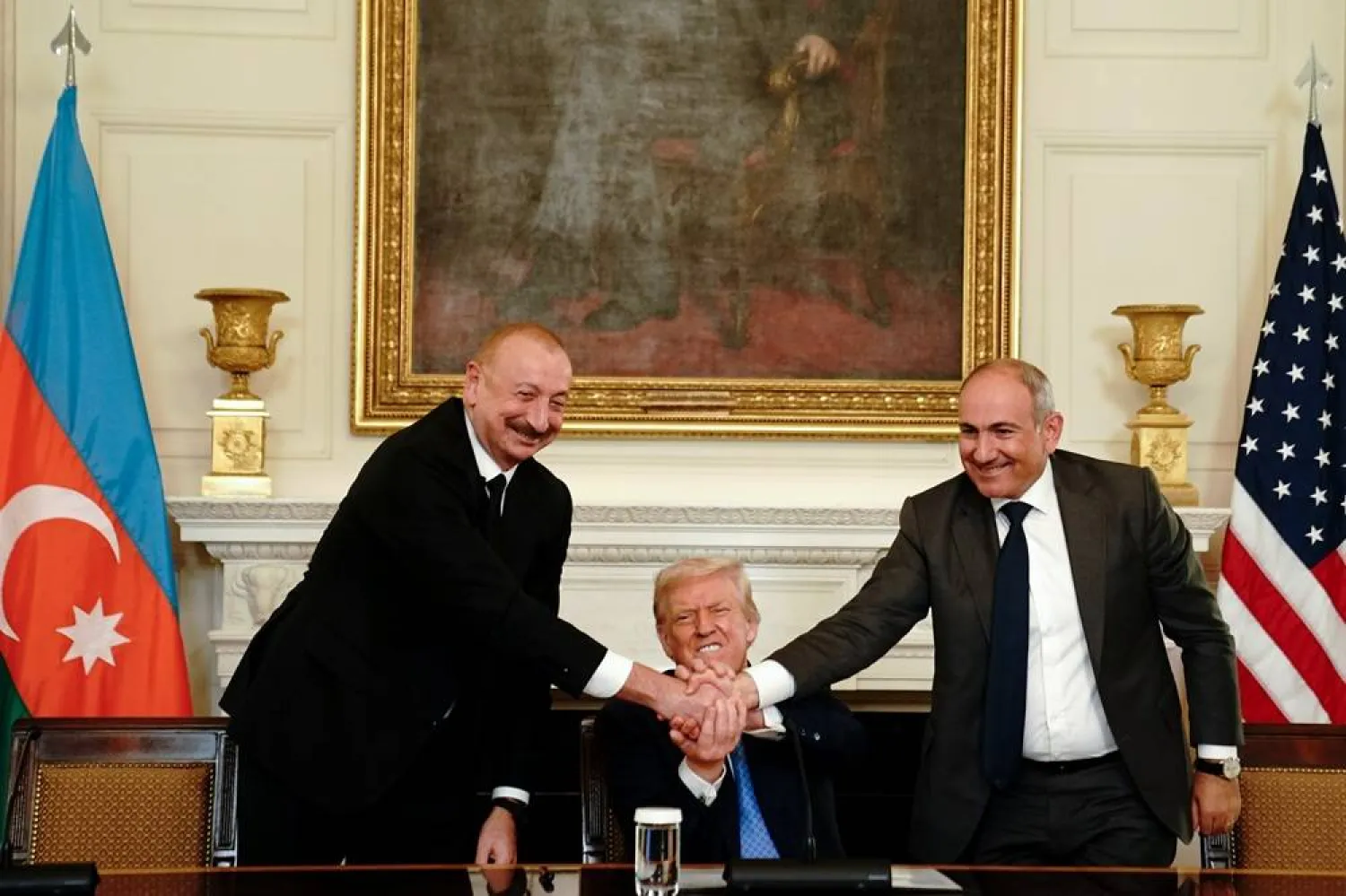
Observers believe that the elections in Armenia produced three main beneficiaries. First and foremost, they point to the United States. In August last year, Pashinyan signed a peace memorandum with Azerbaijan in Washington, brokered by President Donald Trump. The document effectively legitimized the results of the 44-day war of 2020.
Baku regained control over a significant portion of the territories in Nagorno-Karabakh and the surrounding areas, including the cities of Shusha, Hadrut, and others. Under the terms of the trilateral agreement of November 9, 2020…
TRUMP’S GAIN
Armenia transferred the Kelbajar, Aghdam, and Lachin districts to Azerbaijan—territories that had been under the control of the Nagorno-Karabakh Republic since 1994.
In 2023, Azerbaijan further consolidated the gains achieved during the Second Karabakh War. On September 19, it launched another offensive and, within a single day, secured the capitulation of the unrecognized republic. Its president, Samvel Shahramanyan, signed a decree on September 28 dissolving the NKR. After Nagorno-Karabakh came fully under Azerbaijani control, a mass exodus of Armenians from the region followed. It should be recalled that Pashinyan agreed to these developments and signed the memorandum. However, for the United States, the most important part of the document was the prospect of opening the Zangezur, or Syunik, Corridor, which was named TRIPP (Trump Route for International Peace and Prosperity). This route will connect Azerbaijan with the Nakhchivan Autonomous Republic through Armenian territory. Washington will receive the right to use the corridor for the next 99 years. Therefore, the document was clearly drafted in favor of the United States.
Shortly before the elections, on May 26 of this year, an important interstate agreement was signed in Yerevan that could significantly reshape the economic landscape of the South Caucasus. Armenian Foreign Minister Ararat Mirzoyan and U.S. Secretary of State Marco Rubio, who was visiting the region on an official trip, signed a framework agreement on cooperation in the extraction and processing of critical minerals and rare earth elements.
These mineral resources are essential for the production of high-tech goods, defense systems, and green-energy technologies. In practical terms, Armenia is handing Washington control over resources that had previously been tacitly regarded as falling within the sphere of interest of the Collective Security Treaty Organization (CSTO).
In return, the Armenian economy is likely to receive certain concessions from the United States, although the full text of the agreement has not yet been made public.
YEREVAN — BETWEEN THE EURASIAN UNION AND THE EUROPEAN UNION
The second beneficiary of Civil Contract’s victory is undoubtedly the European Union. Armenia joined the European Union’s Eastern Partnership long before Pashinyan came to power—in 2009, during the presidency of Serzh Sargsyan. At the time, Yerevan spoke of balancing between the European Union on the one hand and the Eurasian Economic Union (EAEU) and the Collective Security Treaty Organization (CSTO) on the other. However, there was no discussion then of the country leaving the latter two integration structures.
Today, however, Pashinyan has frozen Armenia’s participation in the CSTO and has stated that Armenia would rather leave the organization altogether than restore its active membership. At present, Yerevan is clearly oriented toward the West. This is particularly evident given Pashinyan’s recent declaration that “Armenia has taken a clear course toward accession to the EU.” At the end of May, Russian President Vladimir Putin proposed that Yerevan hold a referendum allowing citizens to decide whether their country should belong to the European Union or the Eurasian Economic Union. Simultaneous membership in these two organizations is impossible due to conflicting economic and customs legislation, as well as differing political systems.
From an economic standpoint, the EAEU is undoubtedly the more advantageous option for Armenia, as leaving it could cost the country as much as 23 percent of its GDP. However, as is well known, the pro-Western elites of Eastern European states once paid little attention to the economic consequences of joining the European Union. Their primary concern was personal benefit.
THE EXPECTATIONS OF THE COLLECTIVE WEST
Pashinyan has unequivocally steered the country toward the European Union, which has emerged as one of the beneficiaries of Civil Contract’s victory. In this context, one may also speak of the “collective West.” The United States and the European Union have acted in concert regarding Armenia, and their primary objective is to distance the republic from Russia and pressure Moscow into withdrawing its military base from Gyumri and the area around Yerevan.
(Under a 1995 interstate agreement with Russia, Armenia hosts the 102nd Russian military base. Units stationed there perform combat duty within the joint air defense system of the Commonwealth of Independent States. The garrisons are located in Gyumri and Yerevan. In 2010, Moscow and Yerevan extended the agreement governing the deployment of the base until 2044.)
Ahead of the elections, the European Union announced a €12 million assistance program for Armenia. Officially, the funds are intended to strengthen democratic institutions, combat disinformation, enhance cybersecurity, and support electoral processes.
Formally, the program is not aimed at supporting any particular political party. However, a logical question arises: in contemporary politics, is it really possible to separate support for a political environment from support for a specific political course?
A COUNTRY CRISSCROSSED BY WESTERN NGOs
In practice, a large portion of Western programs in recent years has been directed toward developing institutions and organizations that consistently advocate Armenia’s European integration, the strengthening of ties with the European Union, and the reduction of dependence on Russia.
Even before the start of the election campaign, various European structures openly emphasized the need to support civil society and independent media ahead of the vote.
The non-governmental sector played a particularly important role during the elections. Over the past several years, Armenia has seen the growth of an extensive network of organizations receiving financial support from the European Union, as well as from the European Endowment for Democracy, the National Endowment for Democracy, USAID, the International Republican Institute, the National Democratic Institute, and a number of European foundations and assistance programs.
In recent years, an entire infrastructure of non-governmental organizations, media projects, monitoring structures, and grant programs has been established in Armenia, closely linked to Western institutions. Formally, these organizations operate within democratic procedures. However, their influence on public opinion and political processes has become increasingly pronounced.
ANKARA ON PASHINYAN’S SIDE
Finally, the third beneficiary is, of course, Turkey, which also implies Azerbaijan. It was Turkey, as Baku’s principal ally, that helped Azerbaijan regain control of Nagorno-Karabakh, and the outcome of the conflict subsequently became part of the Washington Memorandum.
Moreover, the Zangezur Corridor is of exceptional importance to Turkey. Competing with Ankara are alternative Asia–Caucasus–Europe routes and broader Eurasian transport corridors. Turkey already has the Lapis Lazuli route, which connects it with Afghanistan, Turkmenistan, Azerbaijan, and Georgia. There is also the Bandar Abbas–Poti route, linking Iran, Armenia, and Georgia.
With the emergence of the Zangezur Corridor, Turkey, together with the Lapis Lazuli route, could effectively bypass its regional rival, the Islamic Republic of Iran. For this reason, Ankara is another stakeholder in the victory of Pashinyan and his Civil Contract party.
VICTORY BUILT ON THE FOUNDATIONS OF CAPITULATION
As for the voting process itself, Armenia uses the D’Hondt method. This means that the allocation of parliamentary seats favors the largest party, while votes cast for parties that fail to cross the electoral threshold are effectively redistributed to larger political forces. In other words, stronger initial results give major parties an advantage in the final distribution of mandates.
As a result, Civil Contract secured 64 seats and is able to form a government without the participation of other parties, despite losing seven seats compared to the previous election.
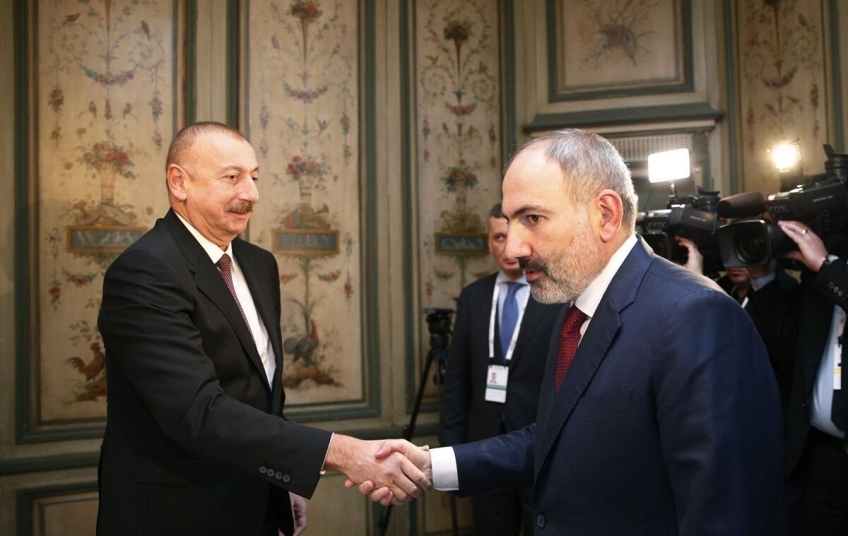
The victory of Civil Contract came despite a series of negative developments for Armenia. The same peace memorandum with Azerbaijan effectively amounted to Yerevan’s capitulation.
A strong electoral result was achieved by the newly formed Strong Armenia party of businessman Samvel Karapetyan, which won 23.29 percent of the vote and secured 29 parliamentary seats. By contrast, the Armenia bloc of former President Robert Kocharyan won only 12 seats and lost 17 mandates compared to the previous election. The bloc had originally been formed with strong support from the Armenian nationalist party Dashnaktsutyun.
An interesting situation emerged with Gagik Tsarukyan’s Prosperous Armenia party, which fell just 0.01 percent short of the 4 percent electoral threshold. A large number of irregularities were reported during the election process, particularly in rural areas.
However, it is widely understood that if such irregularities benefited pro-Western candidates, they are unlikely to attract significant attention.
THE RUSSIANS FAILED TO CAPITALIZE ON IT…
Finally, attention should be drawn to the pro-Russian opposition in Armenia. Fragmented and divided, it lost a significant share of the vote. Ideally, a single strong political party would emerge in the republic, operating with great care from a political-strategic and organizational standpoint.
In short, the 2026 parliamentary elections in Armenia demonstrated the country’s growing departure from its own national identity and religious traditions. As is well known, Catholicos of All Armenians Karekin II does not support the government of Nikol Pashinyan. Unfortunately, Russian political strategists failed to make use of this factor, despite the Armenian Apostolic Church’s enormous influence on society.
The 2026 elections showed that Armenia’s political system continues to evolve. On the one hand, the ruling authorities retained control of parliament and secured the ability to form a government. On the other hand, the campaign revealed serious concerns regarding the quality of political competition, the use of administrative resources, and the role of external actors.
It should also be said that the real losers of the election were the Armenian people themselves. Those who, according to their critics, are effectively undermining the country, surrendering its historic territories, and facilitating external control over its affairs have remained in power. This process, they argue, has been underway since 2018, when Pashinyan came to power following the so-called “color revolution.”
Ultimately, the 2026 elections were not merely a contest between political parties for parliamentary seats. They became a reflection of a deeper struggle over Armenia’s geopolitical and political future, in which competing models of state development are vying for dominance, while external centers of power play a far greater role than is publicly acknowledged.