Not long ago, the Balkans were shaken by unexpected news about—without exaggeration—the radical modernization of so called Kosovo’s armed forces. It is important to remind readers that this is not merely about the purchase of several weapons systems—primarily aircraft—but about an entire complex of processes that Pristina is implementing to re-equip its army and reform its approach to warfare within the framework of the “KSF 2028” program. Pristina is abandoning its well-known “police forces,” giving up an exclusively defensive posture, and striving to build a compact, highly mobile military structure aligned not only with NATO standards but also with the standards of its closest military partners: Turkey, Albania, and Croatia…
The latter is of particular interest.
CROATIA — THE PILLAR OF THE TRILATERAL ALLIANCE
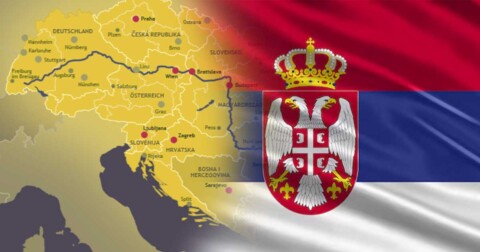
Croatia is the central element of the Joint Declaration on Defense Cooperation, formally signed by Zagreb, Tirana, and Pristina in 2025. Its role in this trilateral mechanism goes far beyond political formality: Croatia has effectively become the system-forming pillar of the entire initiative, combining the functions of initiator, technological donor, and guarantor of the region’s integration into the Euro-Atlantic security space. In this configuration, Zagreb is no longer just an intermediary between NATO and its potential future members but a practical transmitter of the standards on which Kosovo relies in the framework of the KSF 2028 program.
For Pristina, this cooperation carries strategic importance. Croatia provides not only its own experience in transforming its armed forces according to NATO standards but also access to industrial, educational, and logistical capacities that Kosovo, on its own, could never secure even in the medium term. Cooperation with Croatia’s defense industry enables the transition from isolated purchases to an integrated system of armaments: joint tenders for American weapons systems, unified training programs for operators and technicians, and the establishment of a shared supply and maintenance chain. All of this essentially creates a unified defense space in which Kosovo ceases to be an isolated actor and gains the opportunity for accelerated development.
AN ARGUMENT IN THE DIALOGUE WITH SERBIA
Even more important is another aspect: Croatia simultaneously acts as a political intermediary, linking the defense plans of Kosovo and Albania with NATO’s long-term strategy on its eastern flank. This factor deserves special attention, because it enables the formation of a new system of close coordination aimed at neutralizing the traditional weaknesses of the Balkans—fragmentation, technological backwardness, and chronic dependence on external powers. Supranational structures (NATO and the EU) are building an entirely new balance of power in the region, within which military strength becomes a significant argument in the dialogue with Serbia—an actor that is not viewed favorably by any member of this renewed “Triple Alliance.”
It is no surprise that the declaration was received so painfully in Belgrade: for the first time since the breakup of Yugoslavia, the Balkans are witnessing the emergence of a multilateral military-political mechanism that is not aimed at stabilizing the consequences of past crises but at preparing for war.
In this sense, Croatia’s role sets the tempo for the entire structure. It is precisely Zagreb that proposes expanding the initiative beyond the current trio—toward Bulgaria and potentially other regional states—thus turning the declaration from a local agreement into a prototype of a new defense bloc within NATO. Around Croatia, a kind of “inner belt” of the alliance is being formed, capable of rapidly increasing its capabilities, modernizing, and adapting both to new threats and to the active creation of such threats— including drone warfare, cyberattacks, and information-political operations.
AN ANALOGY WITH THE REFORMS IN AZERBAIJAN
Our publication has previously released a brief overview of Kosovo’s military modernization, in which a clear analogy could be seen with the reforms carried out by Azerbaijan in close cooperation with the Republic of Turkey. However, it is worth recalling the broader context. The KSF has begun extensive rearmament, relying on the most modern trends in the art of war: a foundation has been laid for an operational-tactical reconnaissance system based on unmanned aerial vehicles, as well as for a powerful strike complex built on high-precision artillery, tactical missile systems, and kamikaze drones. In addition, Pristina has shown interest in launching production lines for assembling various types of UAVs—a direct borrowing, it seems, from the experience of the Russia–Ukraine war.
Croatia’s military reforms are very similar in both content and character. They also involve large-scale modernization of the arsenal through a transition to modern types of weapons—specifically, to various means of aerial attack (drones, missiles) that can provide enormous strike potential within a short time and with relatively moderate financial investment.
Still, it is important to examine each aspect of this modernization separately.
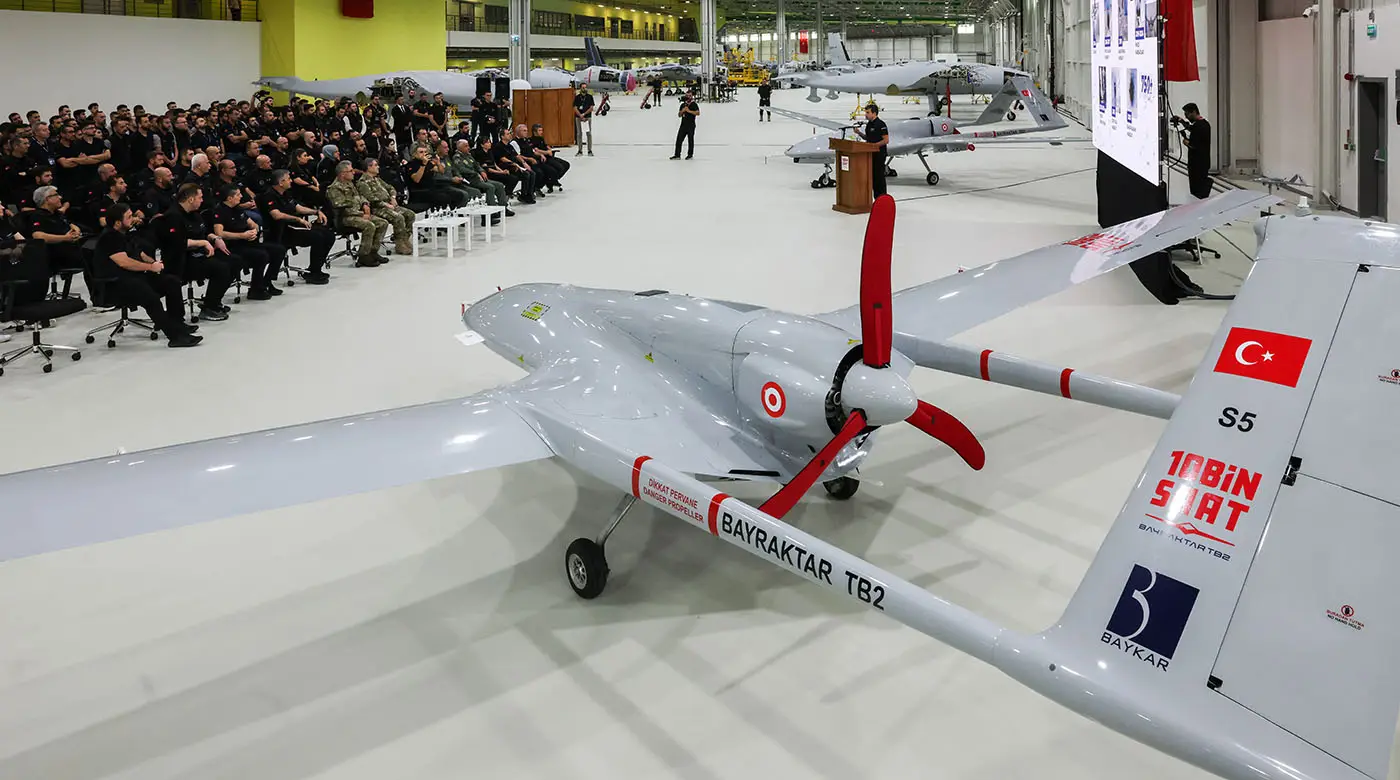
Croatia’s armed forces attach particular importance to their air component. In September of this year, the Croatian Air Force officially took delivery of the well-known Turkish MALE-class unmanned aerial vehicles, the Bayraktar TB2, along with a large quantity of high-precision air-to-ground missiles Roketsan MAM-C and MAM-L, as well as longer-range UMTAS missiles.
It should be noted that the Bayraktar TB2 proved itself in several war zones—in Syria, Libya, Ukraine, and Nagorno-Karabakh—not only as an effective instrument of aerial terror, but also as an extremely flexible tool of operational-tactical reconnaissance. These drones can monitor vast areas, search for targets, and provide target acquisition for crewed aircraft, missile systems, and artillery. (Recall that the Russian warship Moskva was destroyed in 2022 through a combination of Bayraktar TB2, which acted as maritime scouts, and anti-ship missiles—either Neptun or Harpoon.)
BAYRAKTAR — THE COMMON DENOMINATOR OF THE “TRIPLE ALLIANCE”
Of particular importance is the fact that the Bayraktar TB2 has become a universal element within the “Triple Alliance” of Croatia, Kosovo, and Albania: each of these countries possesses its own fleet of these drones. This creates a very serious challenge for any potential adversary of the JDODC: it would face an extremely dense, well-equipped network of continuous aerial surveillance and target acquisition—likely the most advanced in the region. Considering the territorial compactness of the Balkans, such an advantage could easily become decisive and ensure rapid dominance in any armed conflict.
However, the Croatian authorities did not limit themselves solely to the unmanned component of their air forces. They also purchased 24 French multirole fighters Rafale. Twelve aircraft have already been delivered to the Croatian Air Force, while the remaining twelve will arrive in the coming years. Even their current number represents substantial military power, which could be extremely dangerous when combined with the fleet of Turkish reconnaissance-strike drones. Another telling detail is the purchase of French high-precision HAMMER air-to-ground munitions. This weapon has proven highly effective in the war in Ukraine—the Ukrainian Air Force uses it actively as a strike system, with drones providing target acquisition.
BUILDING A STRONG AERIAL RECONNAISSANCE NETWORK IN THE BALKANS
Still, this does not exhaust the topic of Croatia and its aerial strike systems. Zagreb is deeply involved in cooperation with Ukraine and NATO structures, thanks to which it has already managed to establish production of FPV drones (a widely known term referring to guided improvised explosive drones assembled from commercial electronic components). They plan to further expand this program, including lobbying their capacity to supply other NATO member states. As mentioned earlier, Kosovo is developing similar initiatives; the members of the “Triple Alliance” are striving to localize the production of unmanned systems on their own territory and—what is particularly alarming—to build stockpiles of drone-based weaponry. Why this is an alarming signal will be discussed later. For now, we focus on the topic of weapons procurement.
We are talking about the possibility of very quickly raising production to half a million, or more than half a million drones per year. If the project is fully implemented as we envisioned, it will amount to several million drones annually — or as many as needed.
— Ivan Anušić, Minister of Defense of Croatia.
Croatia is also expanding its strike capabilities through classical artillery and missile systems. The country has signed a series of contracts for the procurement of German self-propelled howitzers Panzerhaubitze 2000, French Caesar self-propelled artillery systems, and American M142 HIMARS launchers. All of this weaponry has proven to be highly effective and dangerous in the war in Ukraine — and it certainly should not be underestimated, especially considering how actively the “Triple Alliance” is working on building a strong aerial reconnaissance network in the Balkans. Over the past five years, we have witnessed the use of similar systems in several conflicts — and I believe that even readers not deeply familiar with military affairs understand how deadly the combination of rocket-artillery systems and unmanned aviation truly is.
Particularly concerning is the following fact: mastering such systems and using them effectively on the battlefield does not require lengthy training or the establishment of complex military institutions. On the contrary, this is a tool that rapidly provides broad and flexible military capabilities even to relatively weak armies.
DELIBERATE PREPARATION FOR ARMED CONFLICT?
However, continuing the discussion about risks to the political and military balance in the Balkans, we must also speak about drones. What is the problem with the intense interest Croatia and Kosovo are showing in this category of weapons? The answer is simple — drones are not meant for long-term storage. This is a relatively simple type of weapon whose advantage lies in rapid production, but it is not designed to remain in reserve for many years, like artillery shells, for example.
And if a state begins to invest massively in their production and procurement, it clearly means that it is preparing for imminent combat operations in which drones will be consumed in enormous quantities. Otherwise, such investment would be meaningless and irrational. Is it really possible that the entire military leadership of three armies, supported by numerous NATO advisers, so fundamentally misunderstands the basic principles of modern warfare? Of course, any state can make mistakes, but it would be misguided to assume mere incompetence is the root of the issue.
A far more likely scenario is that the participants in the Joint Declaration on Defense Cooperation are conducting intensive and deliberate preparations for a regional armed conflict — and even if at this moment we cannot fully explain the reasons behind such determination, it would be naive to turn away and pretend nothing is happening. Before our eyes, across the entire globe, we are witnessing the reincarnation of long-forgotten — and seemingly obsolete — interstate and interethnic conflicts, conflicts that are growing into long and bloody wars.
Will the Balkan Peninsula escape such a fate? We would like to hope so. But I cannot refrain from asking this painful question — if peace truly is the goal, then why are the peoples of this region once again gathering arsenals and forging alliances?