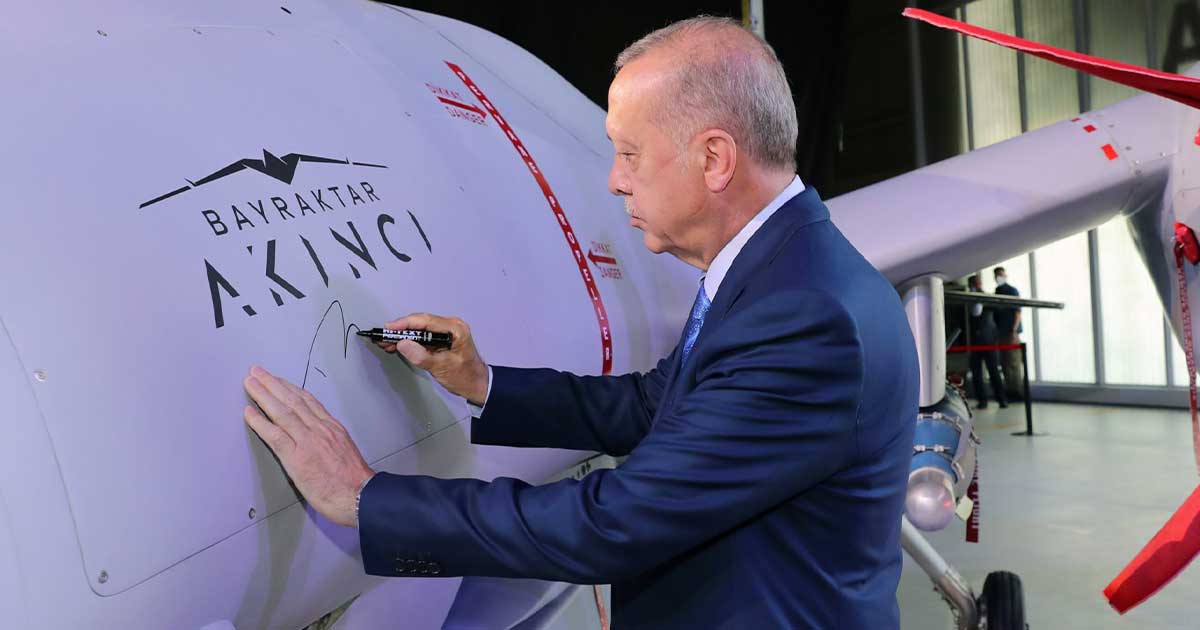
A significant portion of the materials published in recent months by EagleEyeExplore has been devoted to Turkey’s push to advance its interests on the Balkan Peninsula. The Republic of Turkey is not merely trying to influence regional processes—it is aggressively and methodically building a comprehensive military architecture through the JDODC military alliance, instilling its own philosophy of warfare into the armed forces of Croatia, Albania, and the so-called Kosovo.
Turkey’s influence is largely supported by its industrial capabilities. Ankara skillfully uses its weapons production as a tool for establishing deep relations with Balkan states, operating based on a political strategy developed through long-term cooperation with Azerbaijan.
A symbol of this military-industrial and political expansion has become the Bayraktar TB2—a small, unimpressive-looking military drone whose combat career has turned Turkey into one of the most active and fastest-growing players on the global arms market.
It would be fair to say that the emergence of this unmanned aerial vehicle can be likened to a rider of the Apocalypse—wherever it appears, it embodies war. This was true in the Middle East, the Caucasus, and Africa—and it is likely to be the case in the Balkans as well.
BAYRAKTAR TB2 – THE BACKBONE OF JDODC COMBAT AVIATION
The Bayraktar TB2 has become one of the key weapons supplied by Turkey to JDODC member states. Squadrons of these UAVs are essentially intended to form the backbone of the alliance’s combat aviation. Yet, very few military experts and analysts fully grasp the depth and danger of Baykar Makina products appearing in JDODC inventories in such significant quantities. The reason is quite straightforward: after the impressive successes of 2020–2022, the expert community stopped actively tracking the Bayraktar and effectively overlooked its radical transformation into an entirely new instrument of combat operations.
When the Bayraktar TB2 began appearing in reports from Syria, Libya, and Nagorno-Karabakh in the early 2020s, many rushed to declare it a game-changing weapon on the battlefield. Others, however, emphasized that it was merely a temporary phenomenon: “In real warfare, it’s just a toy.” Nevertheless, this inexpensive and effective Turkish drone became a true star and a terror for armored vehicles, marking the beginning of a new era of accessible strike drones.
However, large-scale war is the most ruthless test. Combat operations in Ukraine became not only the Bayraktar TB2’s moment of glory but also its most severe trial. Facing powerful electronic warfare systems, heavy SAMs, and fighter aircraft, the drone seemed to start losing ground. The information space was filled with reports of interceptions and losses; experts who had been fascinated just yesterday began to declare that the TB2’s time was over.
But the story of Turkey’s most widespread military drone did not end there. Instead of disappearing from the stage, the Bayraktar TB2 rapidly evolved and continued to conquer the international arms market. In 2025–2026, a deeply modernized version was released—the TB2T-AI. This was no longer merely a hardware upgrade; it was the result of a complete rethinking of the drone’s concept based on the colossal experience gained from combat use. From a relatively simple light strike UAV, it had transformed into a multifunctional, intelligent platform capable of operating effectively under conditions of total electronic suppression and striking deep operational targets.
In this article, we will trace the lessons learned by Turkish engineers while redesigning the structure, onboard systems, and tactical employment of the TB2. Most importantly, we will analyze what these improvements suggest about the future of unmanned aviation in general and what they specifically mean for the Balkan Peninsula.
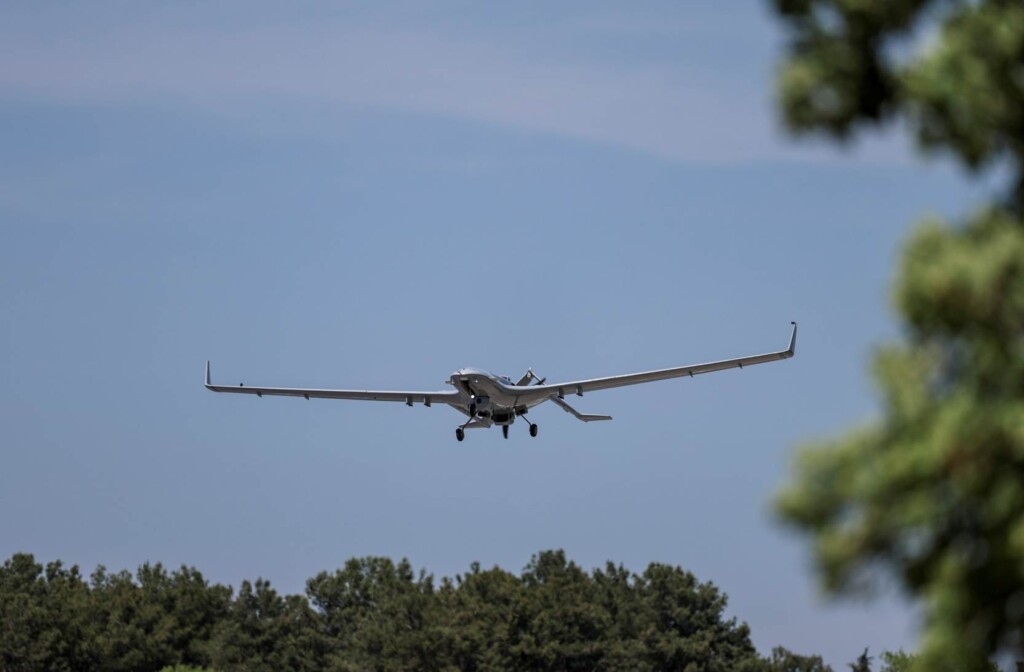
FROM TACTICAL DRONE TO MULTI-ROLE PLATFORM
When launching UAV development programs, Turkey’s military leadership aimed to obtain a tool capable of reducing the operational load on the country’s Air Force. The Turkish Republic’s fleet was formed back in the 1980s and had effectively undergone no radical modernization since, due to Ankara’s problematic foreign policy. By the 2010s, Turkey needed a new fleet of combat aircraft, but no replacement was available. The prospects were clear: either degradation and loss of military potential, or the search for radically different solutions.
Turkey chose the second path.
The Bayraktar TB2 was conceived as a robotic reconnaissance aircraft and light strike drone, capable of taking over auxiliary strike missions from the F-16 fleet while preserving their resources for air-to-air combat tasks. In this role and its corresponding technical configuration, the Bayraktar TB2 participated in a number of wars; moreover, its uniqueness lies in the fact that it was essentially the first MALE (Medium Altitude Long Endurance) UAV repeatedly used against regular armies—Syrian, Armenian, and Russian—while its predecessors and analogues had only participated in counter-insurgency operations.
The Bayraktar TB2 demonstrated extremely flexible combat capabilities that exceeded the initial expectations of both developers and operators. From a tool for advanced aerial reconnaissance and fire adjustment, it confidently moved into the “hunter-killer” niche—predetermining its future trajectory and the modernization package designed for large-scale combat operations.
Baykar engineers conducted a thorough analysis of the TB2’s combat use and reached the main conclusion, fully aligned with modern weapons development trends: the drone must be able to survive in environments where the enemy jams GPS and radio channels, which requires AI capable of independently processing reconnaissance data. The result of this work was the TB2T-AI version, which can be called not merely an upgrade, but a deep rethinking of the entire platform.
Note: The term edge computing refers to local computation—that is, processing conducted on the device itself rather than remotely. While the concept itself has existed for decades alongside the use of intelligent terminals and servers, in military applications moving the bulk of processing onto the device is a recent innovation, previously available only on the most advanced and expensive 5th-generation fighter aircraft. Today, modern drones can perform preliminary data filtering and analysis directly on the UAV’s onboard computer, instead of sending raw data to a server. Similar systems have already been implemented even in relatively older unmanned platforms, such as the MQ-9 Reaper.
One of the first important changes worth noting in the TB2T-AI is the powerplant. Instead of the standard piston engine, the TB2T-AI uses a turboprop engine. This brings two key advantages:
- Cruising Speed: Increased to 300 km/h, which is 30–40% faster than its predecessor.
- Altitude: The drone can now reach 9,000–9,200 meters in under 30 minutes. In May 2025, during testing in Qeshan, the UAV reached a record altitude of 37,096 feet (~11,300 meters), surpassing its own previous record.
Why is this critical? Flying above 9 km places the drone out of the effective engagement zone of most man-portable air-defense systems (MANPADS) and many tactical air defense systems. The UAV becomes invulnerable to weapons that could have threatened its predecessor.
Equally significant are the electronics upgrades. The TB2T-AI is equipped with three new onboard computers running local neural networks, which form a substantial part of its qualitative improvements:
- Terrain-Referenced Navigation: Allows the drone to determine its location by comparing camera video with digital maps. If GPS is jammed—which is frequent in modern warfare—the drone no longer depends on satellites. It looks down, cross-references the map, and continues its mission. While this technology is known from cruise missiles, it is a novelty for drones.
- Autonomous Takeoff and Landing: The system visually identifies the runway and lands the drone without human intervention, reducing operator workload and enabling operations from unprepared sites.
- Target Detection and Identification: Neural networks can independently detect ground objects, classify them (e.g., distinguishing a tank from a truck), and provide coordinates.
- Dynamic Route Planning: If air defense systems or SAMs are detected along the flight path, the system automatically reroutes the drone based on available enemy weapon data.
- Emergency Return: In case of contingencies (loss of connection, critical errors), the drone independently decides to return to base.
These improvements greatly simplify the UAV operator’s workload, removing most routine tasks. Moreover, automation significantly increases the drone’s survivability in modern combat, where electronic warfare saturates the battlefield.
However, advanced navigation and control capabilities are only part of the picture. The platform’s armament must also be upgraded, and here the TB2T-AI boasts, without exaggeration, an unparalleled array of weapons systems, rivaled only by the larger platforms from Baykar Makina.
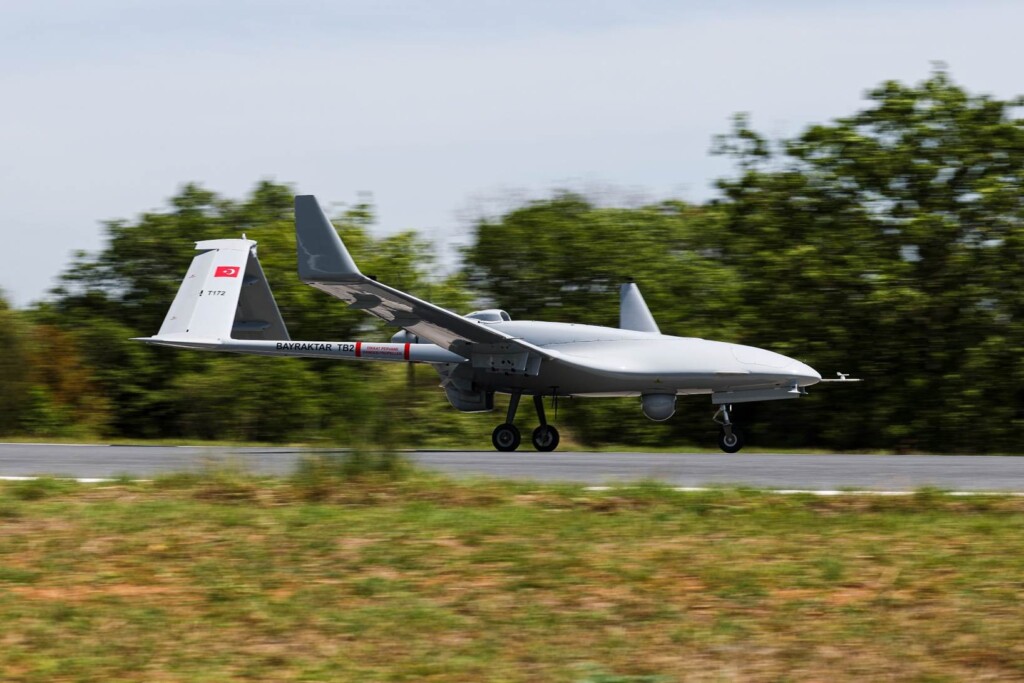
Key Technical Improvements in Table Format:
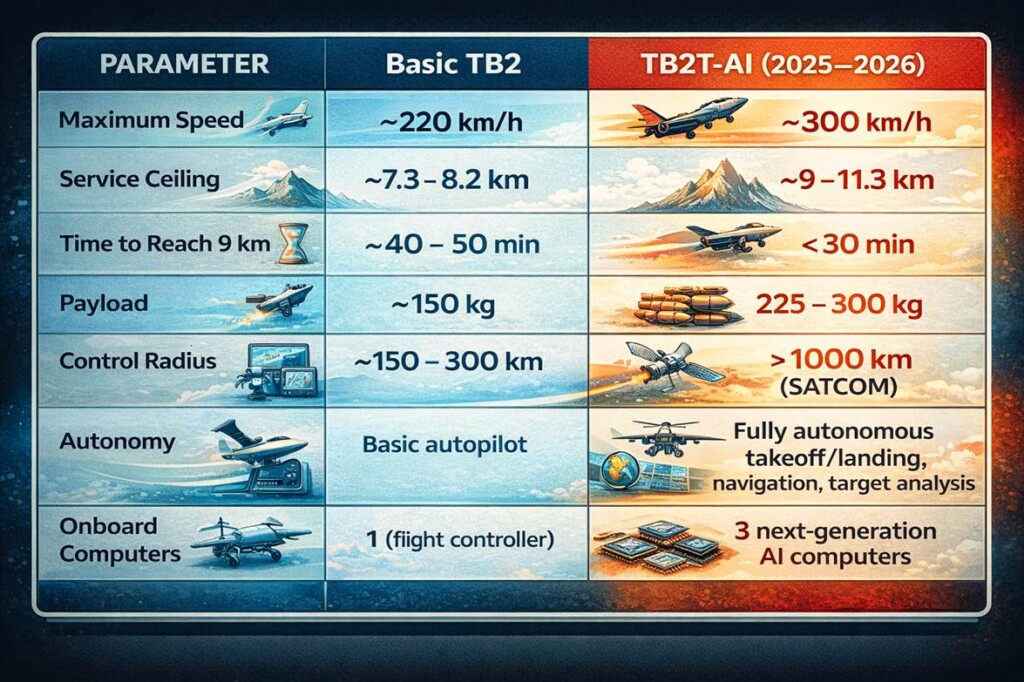
It is important to note that the TB2T-AI is currently produced with a 93% localization level, and the total flight hours of the TB2 fleet exceeded one million hours by December 2024—a record figure for Turkish aviation.
FROM RECONNAISSANCE AND STRIKE TO HUNTING AIR DEFENSE — A NEW STRIKE PHILOSOPHY
The technical improvements of the TB2T-AI—altitude, speed, autonomy—are certainly significant, but on their own they are of limited interest without capable platforms to fully utilize these weapons systems. One of the new and most interesting weapons systems of the upgraded Bayraktar is the miniature cruise missile Kemankeş, which fundamentally changes UAV employment tactics.
“Kemankeş”: Missile Profile
The Kemankeş 1 is a compact rocket designed specifically for integration with Baykar UAV platforms. Its key features include:
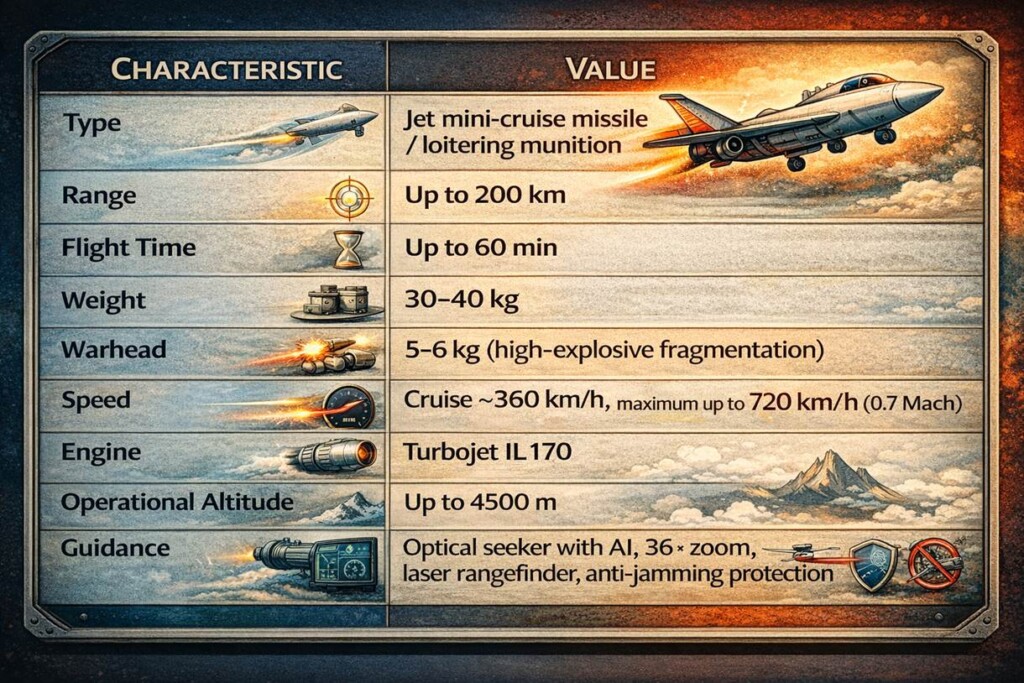
The main technical innovation of Kemankeş is the integration of AI software into the guidance system. This allows the missile a wide range of capabilities, including autonomous target detection and acquisition in the terminal phase, operation in dense electronic warfare (EW) environments, and independent object identification and selection (e.g., distinguishing a tank from a truck). At the same time, the cost per missile is less than $50,000. This is a crucial point: Kemankeş is not a specialized, single-use weapon, but intended for mass deployment.
Kemankeş is designed to destroy expensive, complex, and vulnerable systems. It is a weapon for “critical node hunting”: radars, command posts, SAM launchers, and relay stations. The missile’s warhead is sufficient to strike small surface targets (missile boats, BECs) and cause heavy damage to medium-sized assets.
Interestingly, the missile has undergone testing not only against ground and surface targets but also against aerial targets. In June 2025, Baykar successfully tested the Kemankeş 1 in an air-to-air mode: launched from a heavy Akinci drone, the missile struck a moving aerial target, autonomously identifying and engaging it. This means that Kemankeş-equipped UAVs—including mass-produced TB2T-AIs—can perform not only strike missions but also air defense tasks, intercepting enemy drones and potentially helicopters.
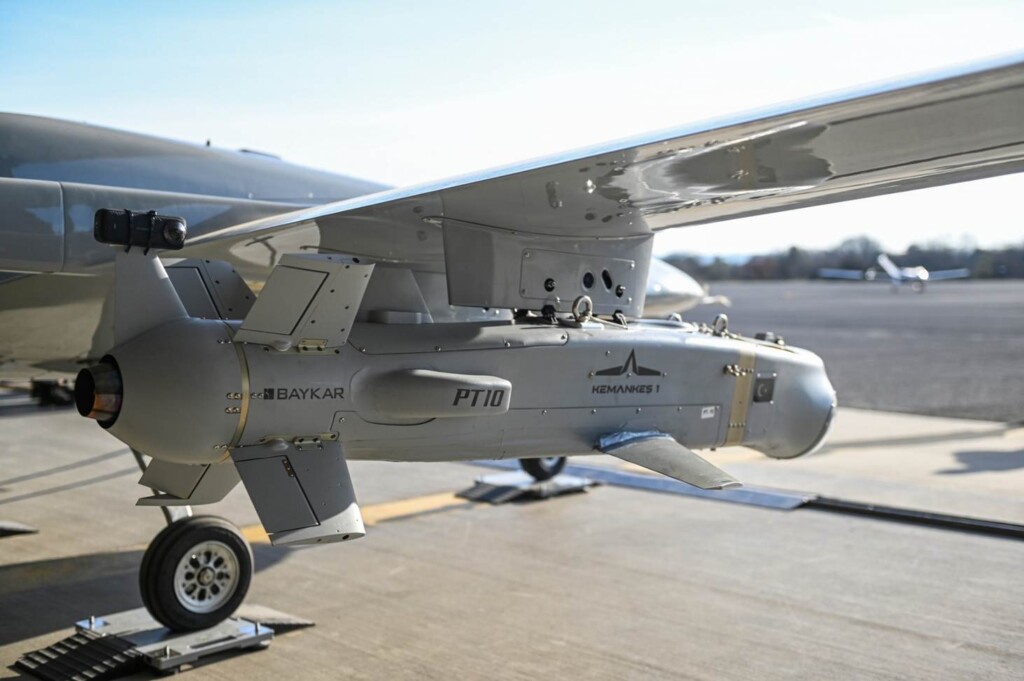
It is important to note that Kemankeş represents a radically different level of capability for MALE-class combat drones. In fact, prior to the new wave of military modernization—at the forefront of which stands Turkey—reconnaissance-strike UAVs were equipped mainly with various anti-tank missiles (most often Hellfire and their derivatives) and light glide bombs. They were not considered instruments of full-scale aerial warfare, which made them highly vulnerable when operating against an opponent possessing medium- and long-range air defense systems.
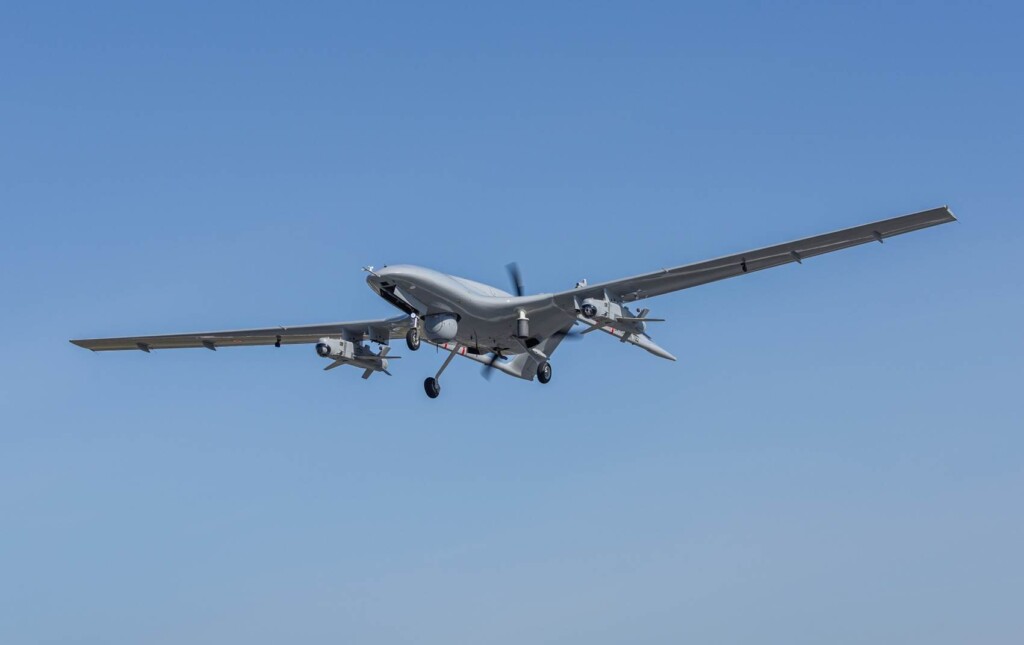
Kemankeş, however, not only allows aerial robots to operate outside the engagement range of heavy surface-to-air missile systems (such as the S-300 family and its derivatives, or the Patriot), but also provides them with broad capabilities for targeted hunting of various types of air defense systems. The TB2T-AI is neither the most expensive nor the most advanced UAV in the Turkish military arsenal—and yet even this platform, as the most mass-produced and accessible drone, can function as a full-fledged SEAD (Suppression of Enemy Air Defenses) instrument with a high level of cost asymmetry.
The design of Kemankeş itself is unique in its own way: it combines all the necessary characteristics of an operational-tactical weapon—speed, strike range, and guidance capabilities—within the dimensions of a light tactical missile (notably with loitering capability). This greatly complicates interception, while the relatively low cost of the munition allows it to be deployed in large numbers without concern for potential losses.
For Serbia, which faces the prospect of Bayraktar TB2 deployments from two directions—Croatia and the so-called Kosovo—such UAV armament could threaten the suppression of the entire national air defense system. Given the country’s constrained geography, concealing large and visible targets such as air defense systems is far from a trivial task. This creates significant security risks for Serbia: whereas previously the suppression of the country’s air defenses would have required the deployment of a substantial force of combat aircraft, this task may now be greatly simplified, providing potential adversaries with a disproportionately high level of military capability.
EREN (Roketsan)
Alongside Kemankeş, Turkish engineers are developing another family of munitions designed to fill different tactical niches. One of the most notable examples is EREN, a high-speed multi-purpose glide munition developed by Roketsan in record time.
Unlike Kemankeş, which emphasizes stealth and long range, EREN is optimized for high-speed interception. Equipped with a turbojet engine, it can reach high speeds at distances exceeding 100 km and engage both ground/sea and aerial targets (this capability was successfully demonstrated in tests conducted on February 20, 2026).
On February 20, 2026, a Bayraktar AKINCI successfully used EREN to destroy an aerial target simulating a Shahed/Geran-type drone. This event is of enormous significance: it demonstrates that Turkish UAVs are capable not only of strike missions but also of functioning as long-range interceptors within an air defense system.
Loitering at altitudes above 9 km and carrying missiles with autonomous guidance, the TB2T-AI can intercept enemy drones and cruise missiles long before they approach protected targets.
THE CONCEPT OF LAYERED ENGAGEMENT
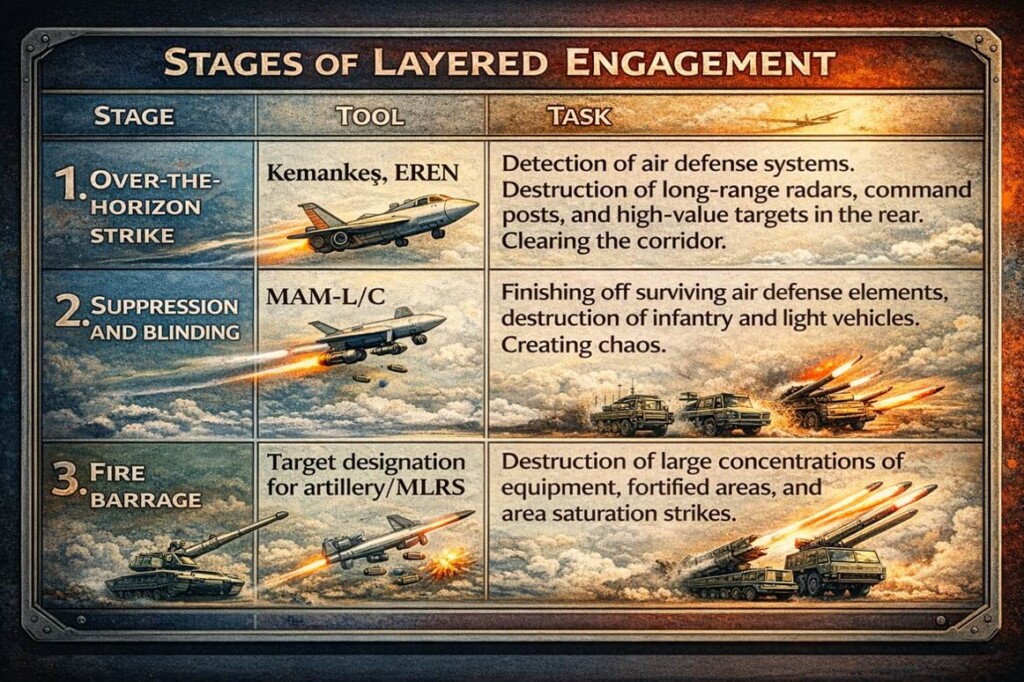
New Roles of TB2T-AI: a forward assault platform that opens corridors for other aviation assets, selectively eliminates key enemy capabilities, and provides target designation for tactical missile systems (analogous to HIMARS, which Turkey widely exports) and precision artillery. The new “Bayraktar” is designed to operate as a “hunter-killer,” remaining invulnerable to all enemy weapons except fighter aircraft or the heaviest (and most expensive—often exceeding the cost of the UAV itself) surface-to-air missiles. It no longer needs to approach targets closely, instead functioning as a remote carrier of intelligent weapons that will independently find and strike the enemy.
Evolution Completed — A New Class of Combat Systems
Summarizing everything said above, it is important to emphasize the main point: classic reconnaissance-strike UAVs are not simply maintaining their relevance—they have made a qualitative leap, transforming from a niche tool into a full-fledged operational-level factor.
Just 10–15 years ago, unmanned aerial vehicles were perceived by many military experts as an exotic technology suitable mainly for fighting insurgents in the mountains of Afghanistan. They were slow, vulnerable, and completely dependent on ground operators and satellite navigation. In a conflict with a technologically advanced opponent saturated with air defense and electronic warfare systems, they were widely believed to have little to offer.
The experience of Turkey and its engineering school Baykar has disproved this skepticism. Moreover, it did so not theoretically but in practice, having passed through the crucible of real combat. The result was not merely a deep modernization but a complete shift in the philosophy of the Turkish concept of robotic warfare.
These changes can be summarized in the following points:
1. Autonomy instead of radio control.
Thanks to three onboard computers and neural networks, the drone has ceased to be merely an extension of a ground station. Its onboard systems are capable of completing combat missions even if communication with the operator is lost or GPS is jammed.
2. Survivability instead of stealth.
Designers did not attempt to make the drone invisible to radar—this would be too expensive. Instead, they made it unreachable for the enemy. An altitude of more than 9 km and a speed of 300 km/h place it beyond the effective range of the overwhelming majority of tactical air defense systems, while the new weapons package also keeps it out of reach of operational-level air defenses.
3. Operational-strategic depth instead of tactical radius.
Satellite communication and a range exceeding 1000 km have transformed the TB2T-AI from a battlefield support tool into an instrument capable of influencing the operational depth of an enemy’s defense.
4. Intelligent weapons as a necessity.
The appearance of the Kemankeş missile, with its 200-kilometer range and its own AI-guided seeker, has closed the gap between reconnaissance and strike capabilities. Now the drone can destroy targets without even entering their engagement zone.
The TB2T-AI is not an attempt to replace a fighter-bomber. It represents a new quality of aerial warfare: an accessible, networked, robotic weapon capable of loitering for hours over enemy territory, exposing air defense systems and delivering precise strikes against the most valuable targets while remaining practically invulnerable to the enemy’s tactical weapons.
THE MAIN CONCLUSION
Turkish engineers and tacticians have demonstrated that the future does not lie in making manned aviation cheaper, nor in attempting to build massive Soviet-style missile arsenals. The future belongs to intelligent robotic systems that operate in a unified network, exchange data, and independently make decisions under conditions of intense electronic and cyber warfare.
The Bayraktar TB2T-AI is not simply an improved drone. It is the prototype of a new combat system in which the human acts not as an operator but as a mission planner, while the machine takes on all the routine work: flight, navigation, target search, engagement, and return to base.
And if UAVs were once viewed as a cheap alternative to “real” aviation for counter-insurgency operations, they now stand alongside the most advanced combat systems capable of performing missions in high-intensity conflicts against technologically advanced adversaries. It is precisely this path—the path of intellectualization and autonomy—that will shape the development of strike drones in the coming decades.