After the collapse of the Soviet Union, the Armenian authorities abandoned the idea of directly incorporating the Karabakh territories into the newly established Armenia and de jure recognition of the self-proclaimed Nagorno-Karabakh Republic. However, the struggle for a special status for Nagorno-Karabakh (as an Armenian political entity), through its self-determination on the basis of a legally binding referendum, remained a strategic objective of official Yerevan at least until 2020.
ABANDONING UNIFICATION
The military-political escalation on the Armenian-Azerbaijani border in the autumn of 2022, followed by the brief Third Karabakh War, radically changed the priorities of the Armenian authorities. They not only abandoned all territorial claims toward Nagorno-Karabakh, recognizing it as an inalienable part of Azerbaijan, but also stopped demanding guarantees for the Armenian minority that found itself under Baku’s sovereignty.
In the end, they de facto accepted the departure of ethnic Armenians from the region, which had previously been considered one of the key elements of the national-state identity of post-Soviet Armenia. As a consequence, it was not only the abandonment of the territories that took place, but also a re-examination of unification as a key concept.
In its place emerged the doctrine of “Real Armenia,” according to which the homeland is the state within the borders of the Armenian SSR. This project is sharply opposed to “Historical Armenia” and earlier traditions of national statehood.
The result was a rapid deterioration of relations between the official authorities and numerous diaspora organizations, as well as with the institutions of the Armenian Apostolic Church.
The transition to the doctrine of “Real Armenia” also entailed a correction of earlier foreign policy approaches, including the strategic relationship between Moscow and Yerevan. The prime minister called this, using a politically correct term, a “transformation.” In reality, it was a loss of Russia’s informal status as Armenia’s exclusive partner.
FROM TRUMP’S CORRIDOR TO EUROPEAN SUMMITS
The reassessment of the Russian-Armenian alliance could not help but be reflected in the strengthening of Yerevan’s cooperative ties with Washington and Brussels – ranging from the “Trump Corridor” and the intensification of the American administration’s peace efforts, to the holding of two European summits in the Armenian capital ahead of the parliamentary elections.
As a consequence, domestic political problems, compounded by social division, frustration, and the strengthening of the political monopoly of one party and one leader (which in the future carries the risk of a crisis of legitimacy for the government and Armenian statehood as a whole), have been compounded by changes in the foreign policy course. These changes have created problems with the old ally “here and now,” but do not guarantee reliable compensatory mechanisms in the future.
Let us repeat what was written in the first part of this analysis: this year’s parliamentary elections were held amid a change in Armenia’s foreign policy course – Pashinyan’s government is actively seeking to join the European Union. The authorities first presented this idea in March 2024, and a year later, in April 2025, parliament adopted a law formalizing the country’s aspiration toward the EU.
One month before the elections, three major events were held in Yerevan with the participation of European politicians. On that occasion, representatives of the Union and the republic’s authorities adopted a joint declaration in which Brussels recognized the “European aspirations of the Armenian people.”
If by European integration we mean Armenia’s membership in the EU, then it has no such prospect in the coming decades. But that does not mean that Armenia cannot expand and deepen cooperation with the EU in other areas: for example, visa liberalization and the implementation of the CEPA agreement.

THE ROAD OF SEVEN MILESTONES: BRUSSELS
Today, the basis of relations between Armenia and the European Union is the Comprehensive and Enhanced Partnership Agreement (CEPA). It was signed in 1996 in Luxembourg and entered into force in 1999.
Since 2004, Armenia has participated in the European Neighbourhood Policy (ENP) – a programme of cooperation between the EU and other countries, intended to contribute to stability and security in the regions south and east of the Union.
It has three key directions: economic development aimed at stabilization, security, free migration and mobility.
In 2009, within the framework of the ENP, the European Union launched the “Eastern Partnership” programme in order to strengthen relations with six former Soviet republics: in addition to Armenia, Azerbaijan, Georgia, Moldova and Ukraine participate in it; until 2022, Belarus also participated.
Yerevan and Brussels discussed the conclusion of an Association Agreement, which would facilitate the country’s access to the European market, but after Armenia joined the Eurasian Economic Union in 2015, the Association Agreement became impossible.
In 2017, Brussels and Yerevan signed the Comprehensive and Enhanced Partnership Agreement (CEPA), which entered into force in 2021. In 2024, the partners began negotiations on a visa-free regime.
THE KARABAKH WAR AND THE FREEZING OF MEMBERSHIP IN THE CSTO
The cooling of relations between Russia and Armenia began after 2020, when the republic lost the Second Karabakh War. The contradictions intensified after, in September 2023, as a result of the fighting, the territory of Nagorno-Karabakh came fully under the control of Azerbaijan, while more than 100,000 Karabakh Armenians were forced to leave the region; Yerevan then accused Moscow of failing to protect the local population through the Russian peacekeeping forces deployed in the region.
In parallel with Karabakh, during the escalation of the situation on the border in 2021–2022, cities on the territory of Armenia were subjected to shelling from Azerbaijan; on this occasion, Yerevan raised objections concerning the Collective Security Treaty Organization (CSTO), demanding that it condemn Baku’s actions (such condemnation did not take place).
In February 2024, Pashinyan stated that Yerevan’s participation in the CSTO had been frozen, and during the debates ahead of the elections, he allowed for the possibility of the republic withdrawing from the organization.
In Moscow, they long expressed regret over the freezing of Armenia’s CSTO membership and generally stated that problems existed in bilateral relations, but that they were being discussed and resolved.
Russian representatives also spoke cautiously about Yerevan’s aspirations toward the European Union, emphasizing only that simultaneous membership in the Eurasian Economic Union (EAEU) and the EU is not possible.
RUSSIA CHANGES ITS RHETORIC
The rhetoric of the Russian authorities changed fundamentally after Nikol Pashinyan’s talks with Vladimir Putin on April 1, 2026, in Moscow. Putin then emphasized that Yerevan should be told in advance, “on the shore,” whether it would continue to participate in the EAEU; Pashinyan responded that as long as it was possible to harmonize the agendas of the EAEU and the EU, Armenia would do so, and would then choose a solution.
In this context, in May, Moscow announced the introduction of restrictions on imports from Armenia of “Jermuk” mineral water, flowers, vegetables, strawberries, stone fruits, grapes, apples, pears, potatoes, eggplants, dried fruit, certain fish products and cognac, and also warned of a possible review of gas supply terms in favor of market-based conditions.
Pashinyan promised compensation to Armenian farmers and stated that the first shipments of roses and vegetables intended for Russia had been redirected to the European Union and other markets.
On the other hand, Brussels promised to allocate €50 million in financial support to Armenia.
Russia, and not only Armenia, is being pushed into such a choice: either you endure everything, nod your head and help us in every way, or we will condemn you, lose our sympathy for you, and set off toward the European Union.
A COMPLEX, BUT NOT INSURMOUNTABLE CHALLENGE
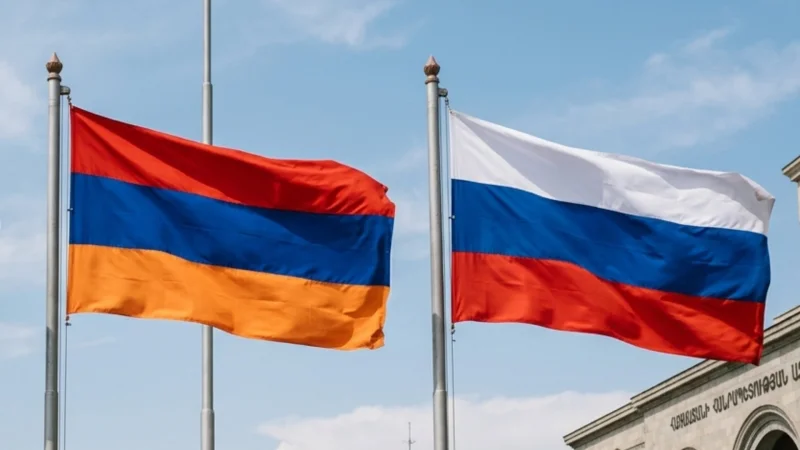
The tasks of Russian policy toward Armenia are becoming considerably more complicated for several reasons. Among the main ones are the reshaping of statehood according to Nikol Pashinyan’s standards, significant changes in society’s perception of Russia after the loss of Artsakh, and the absence of an effective and consolidated opposition ready to convey pro-Russian sentiments.
This is a complex, but not insurmountable challenge.
In this situation, Moscow could be advised, above all, to expand the circle of political contacts within the Republic of Armenia, without limiting itself to cooperation with official structures and the parliamentary opposition.
Second, there should be no rush to recognize the results of the 2026 campaign, making this conditional on the advancement of Russian interests in dialogue with the current authorities.
Finally, third, when faced with strong pressure from the West, it is important not to play into the hands of the EU and its political lobbyists within Armenia, which means that existing economic and security ties should not be deliberately severed. The vacated niches could be exploited by Russia’s competitors and opponents of the Russian-Armenian strategic alliance.
MESSAGE TO SERBS AND ARMENIANS: THE DESIRE FOR THE EU WILL DISAPPEAR
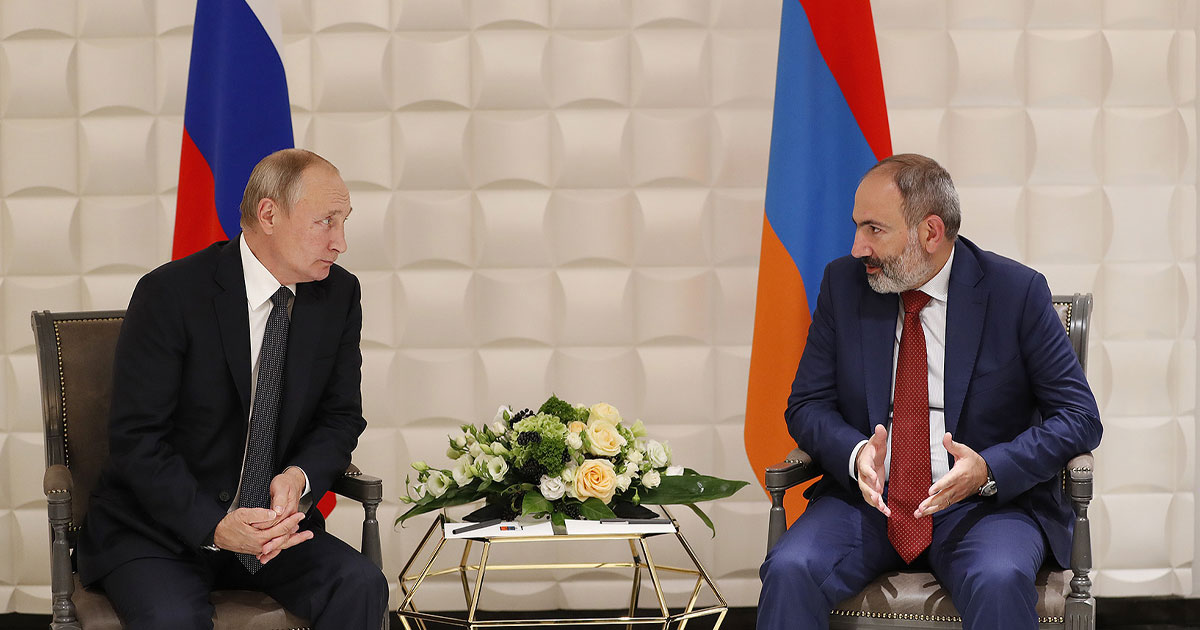
In this context, on September 1, 2026, a meeting was held between the leaders of Russia and Armenia, Vladimir Putin and Nikol Pashinyan, at the “Ala-Archa” state residence in Bishkek, on the sidelines of the SCO summit. The talks lasted about an hour, of which approximately 44 minutes were held behind closed doors.
The President of the Russian Federation stated that Moscow would respectfully accept any decision by the Armenian people regarding a Eurasian or European orientation and proposed: “Make a choice and let us close this topic.”
The fact that Armenia has embarked on a path toward severing relations with Russia, as well as the fact that the deterioration of relations between the two countries negatively affects Armenian citizens – for example, this can also be seen among those same farmers, fishermen and cheese producers who are suffering because Russian markets are closed, while European markets are in no hurry to “open their doors.”
For the Serbian reader, a statement by the head of the Russian Ministry of Foreign Affairs, Sergey Lavrov, will sound interesting. At the Eastern Economic Forum (EEF), he stated that Armenia’s desire to join the European Union would disappear “very soon,” because the European Union is losing its advantages economically, due to many factors, including its short-sightedness, not to say stupidity.
He pointed out that the desire to join the EU is still being discussed in Armenia and Serbia. I quote: “Our Serbian friends, and now our Armenian colleagues, continue to say: we want to join the European Union. I am convinced that this desire will disappear very soon.”