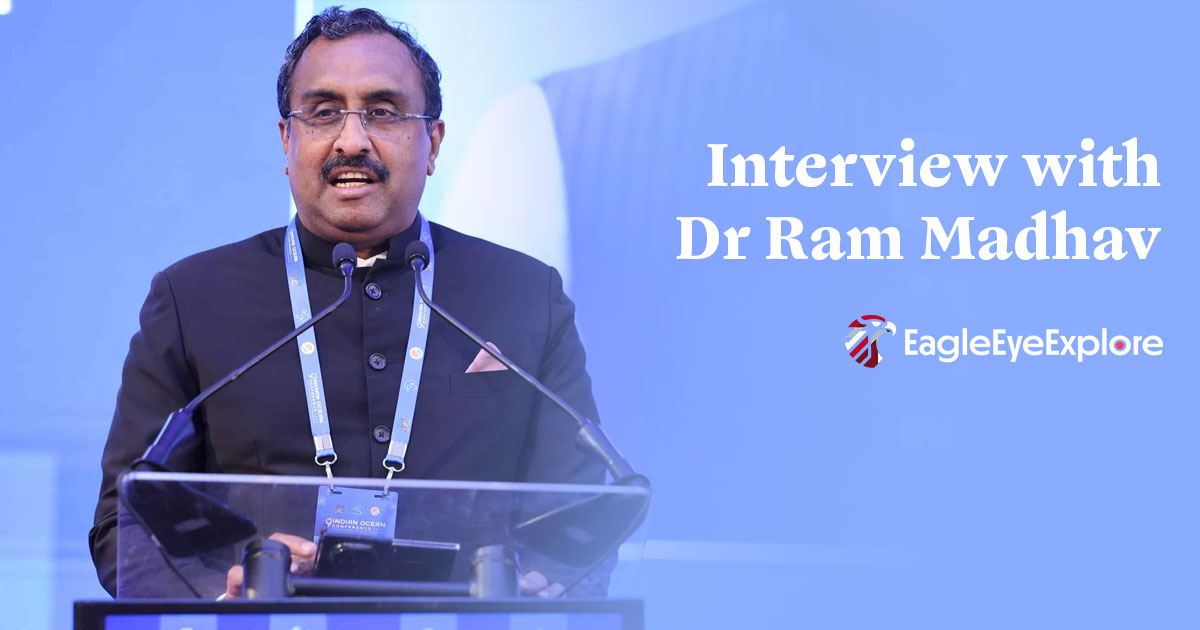
Dr Ram Madhav is one of the most influential strategists and thinkers in contemporary Indian politics. He currently serves as a national vice president of the Bharatiya Janata Party (BJP). He is also a prolific author and one of the leading voices on India’s role in the emerging world order.
Mr. Madhav, India is one of the most important countries not only in BRICS, but in the world as such. How would you assess India’s current contribution to BRICS policies and politics, and what are India’s plans for the future?
India sees BRICS as a major development in the 21st century. The global order is transforming, and India believes the BRICS—especially the expanded BRICS+ group—will play a central role in shaping what comes next. This year India chaired BRICS and host the summit in New Delhi, with the stakeholders coming from BRICS countries to India for dialogues and cooperation. India’s vision to BRICS isone centered on peace, sovereign equality, and a world free from big-power domination and interference in domestic affairs. We want a global system where even the smallest nations feel protected and treated justly. We offer this idea to all our BRICS partners, because any new world order must be built collectively. But first, we must recognize that the West-dominated world order of the last 70–80 years is ending. We need a new order grounded in a new set of values—values that Eastern civilizations can contribute.
That is very interesting. Could you explain more about this value system? Are we talking about traditional, conservative, national values? Is it a counter-model to the liberal system of the European Union and the West?
I wouldn’t frame it within the narrow liberal–conservative categories typical of Europe and the West. Our discourse is broader. In the East, we are both liberal and conservative in different ways. We value our traditions, religions, pluralism, and respect for different faiths. We value the family system. We oppose wokism. These aspects make us conservative. But we are not profit-centric; we emphasize welfare, protecting the environment, and supporting the vulnerable. We are deeply committed to democracy—these aspects make us liberal. So what we propose is a new value system drawing from the best of both—liberalism and conservatism—while rejecting authoritarianism, hegemonic politics, and domination by any power.
We believe a peaceful world must uphold five essential things: our religions, our families, our environment, our national sovereignty, our patriotism. Respect for these pillars is the foundation for the world we want, and the kind of United Nations we need—not the current UN, which has become largely an echo chamber for Western powers.
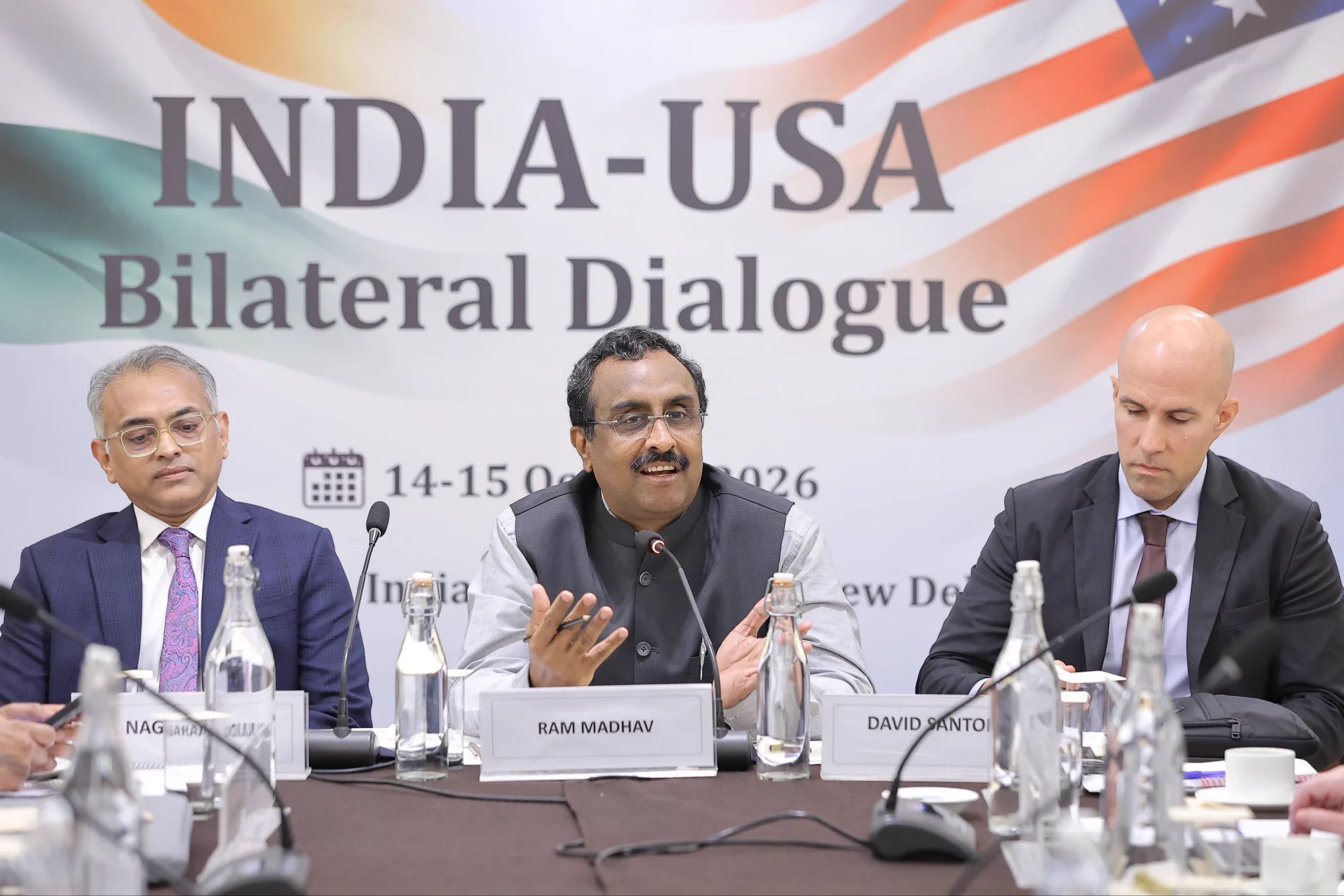
This is a new value canon. How does it fit into the emerging policies of the United States, Russia, and the European Union? Where does India position itself among these global players?
Unfortunately, the European Union is moving in a direction that most Europeans probably do not support. Yet its leadership—the EU Commission—continues pushing policies that many citizens reject. I’m not sure how long that can continue, as more and more European countries begin resisting. In the United States, the current leadership has no coherent policy except bulldozing its own interests across the world. Both the EU and the U.S. have become unpredictable and undependable partners, and their global influence is rapidly diminishing.
At the same time, new powers are rising—mostly in the East: India, China, Russia, and in the Arab world countries like the UAE, Saudi Arabia, and Turkey. In Southeast Asia: Indonesia, Malaysia. These emerging powers must come together. BRICS should become a major platform for all non-Western powers to cooperate. Our approach—India’s approach—is very different from the West’s. America thinks, “If you’re not with me, you’re against me.” We don’t think that way. We respect autonomy and sovereign decision-making. Countries with a more inclusive worldview must unite. That is the role BRICS can play.
Let’s talk about India’s internal development. India is growing rapidly. What can you tell us about the AI sector and technological development?
India is currently the fastest-growing major economy in the world, with close to 7% GDP growth every year. Our economy has doubled in the past decade—from $2 trillion to $4 trillion—and we are on track to reach $10 trillion in the next 8–10 years. This makes India a major global economic power.
We are also advancing rapidly in technology—especially deep tech areas like artificial intelligence, robotics, and quantum technologies. India is becoming not only an economic power but also a major deep-tech power.
However, our approach is cautious. Technology is important, but humanity must remain in control. We should not let machines overtake human decision-making. As AI develops, we must collectively establish red lines to ensure that technology serves mankind, not the other way around.
What would be your final message regarding the emerging multipolar world? Can we expect astronger multipolar order soon, with BRICS at its center?
Absolutely. Multipolarity is already a reality, even if some Western powers—especially the U.S.—still refuse to accept it. They dream of returning to a unipolar world, but those days are gone. Multipolarity should represent the voices of entire regions. BRICS should be a pole representing 40 countries. The Shanghai Cooperation Organization another pole with 16 countries. Regional multilateralism will shape the new multipolar order.
Importantly, this new order should not exclude anyone. Every country should have a voice. Ultimately, multipolarity should evolve into non-polarity—a world where all states are equal and every voice is heard. We will move in that direction, if we remain mindful of the ambitions of big powers.