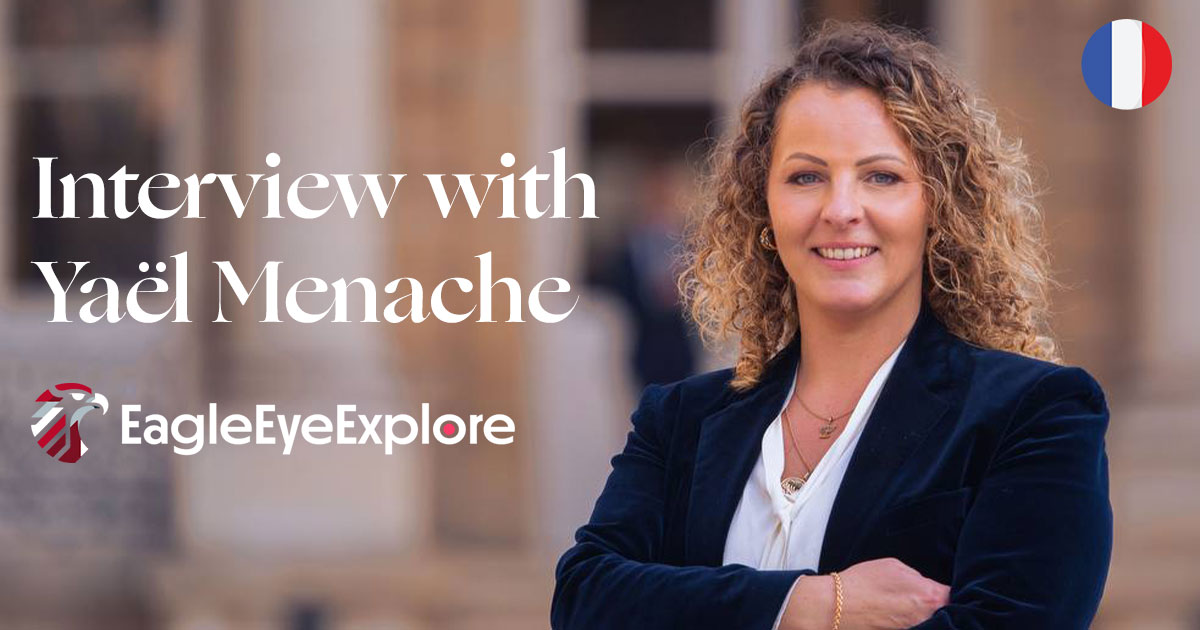
France is going through a profound crisis of confidence in its institutions and governing elites. For years, the French people have been told that their main concerns—immigration, purchasing power, security, and national identity—were issues of secondary importance. The upcoming elections represent, I believe, a decisive moment: the French are demanding a genuine break with the policies that have brought us to this point. The most important issues will be immigration, which the French consistently rank as their top concern, followed by security, the cost of living, and the protection of our social model. The National Rally is the only political force addressing these issues directly, without taboos, and with concrete and realistic proposals, says Yaël Ménaché, Member of Parliament for the 5th constituency of the Somme department in the French National Assembly and representative of the Rassemblement National (National Rally), in an interview with our portal.
The National Rally has significantly expanded its electoral base. What explains this growth, particularly among young people and the working class?
The progress of the National Rally reflects a simple reality: our ideas are right, and the French are becoming increasingly aware of it. Young people and the working class have realized that the traditional parties have abandoned them. They see in the National Rally a movement that defends national preference, protects workers from social dumping, and preserves a France where people can live safely and with dignity. Marine Le Pen and Jordan Bardella have also profoundly modernized the image of the movement, making it more accessible, more serious, and more credible in the eyes of all generations.
If the National Rally were to become part of the governing majority in France, what would be its first strategic priorities domestically and internationally?
Domestically, our absolute priorities would be restoring order and security throughout the entire French territory, implementing national preference, particularly in social housing and employment, strictly halting illegal immigration while controlling legal migration flows, and increasing purchasing power through lower energy costs and reduced taxes on essential goods. Internationally, we would rebalance France’s position within NATO, without subordinating our foreign policy to American dictates. We would restore full European cooperation based on respect for national sovereignty and work toward diplomatic solutions to conflicts, including the war in Ukraine, in order to prevent France from being drawn into the logic of open war.
Across Europe, we are witnessing the rise of sovereigntist, patriotic, and conservative movements. Is this a temporary political trend or a deeper civilizational shift within Europe?
What we are witnessing is not a passing wave. It is the awakening of European peoples who refuse to disappear culturally, demographically, and politically. The globalist model has failed: it has produced inequality, insecurity, and the erosion of identity. The rise of patriotic and sovereigntist movements in France, Italy, Hungary, Austria, and elsewhere reflects a deep popular rejection of a technocratic and post-national Europe. This is a civilizational realignment, and I am convinced that it is irreversible. Nations want to remain what they are.
How do you see the future of the European Union over the next decade? Can the EU survive in its current centralized form, or are deep institutional reforms necessary?
The European Union in its current form—hyper-centralized, ideologically driven, and dismissive of national sovereignty—is not sustainable. The choice is clear: either Europe reforms itself into a genuine alliance of free and sovereign nations, or it will continue to sink into an institutional crisis that will ultimately destroy it. We want a Europe of nations that respects each country’s choices regarding immigration, justice, economic policy, and moral values. An EU that imposes directives on every aspect of national life only fuels resistance. We are not against Europe; we are against this Europe.
Serbia continues to insist on preserving its sovereignty and territorial integrity in accordance with international law and United Nations Security Council Resolution 1244. How is this position viewed today within French political circles?
Serbia’s position is entirely legitimate and grounded in international law. Resolution 1244 is a binding United Nations Security Council resolution and cannot simply be set aside for reasons of political convenience. It is regrettable that a significant part of the French political class has accepted, without critical examination, a narrative favorable to Kosovo’s independence that ignores this legal framework. At the National Rally, we believe that international law must apply equally to everyone, without double standards. Sovereignty and territorial integrity are principles that we consistently defend, both for Serbia and for other countries.

How do you assess Serbia’s European path today? Can Serbia preserve its sovereignty and strategic independence while continuing cooperation with the European Union?
Serbia’s European path must not become a path of forced renunciation of its identity and sovereignty. Conditioning Serbia’s accession to the European Union on the recognition of Kosovo is, in our view, an unacceptable diktat that has no basis in international law. Serbia can and should cooperate with the European Union in areas of common interest—trade, infrastructure, and mobility—while at the same time preserving its strategic autonomy, independent foreign policy, and its cultural and civilizational distinctiveness. We deeply respect Serbia’s determination not to sacrifice its sovereignty on the altar of European integration.
Relations between France and Serbia have deep historical roots, particularly during the First World War and in the post-war period. Is it possible to build an even stronger strategic partnership in the future?
The Franco-Serbian alliance is written in blood and history. The sacrifice of the Serbian people alongside France during the First World War represents a fundamental bond that we must never forget. Today, France and Serbia share common interests: stability in the Balkans, resistance to the hegemony of great powers, the primacy of international law, and the rejection of imposed solutions. I believe in the possibility of a renewed strategic partnership based on mutual respect and genuine equality, rather than a relationship of tutelage. France needs reliable partners in the Balkans, and Serbia is one of them.
In recent years, Europe has witnessed a worrying rise in anti-Semitic incidents. In your opinion, what are the main causes of this phenomenon?
The rise in anti-Semitic acts in Europe is deeply alarming and must be clearly identified for what it is: a large proportion of recent anti-Semitic attacks have been committed by individuals from Islamist circles or communities that carry cultural traditions hostile to Jews. The political left, through its communitarianism and alliances with Islamist movements, has significantly contributed to the normalization of anti-Zionism, which often crosses the line into anti-Semitism. The National Rally has always been unequivocal on this issue: anti-Semitism is unacceptable, regardless of the form it takes or where it comes from. We are committed to protecting Jewish communities in France, which today face a very real threat.
At the same time, many people in Serbia and across the Balkans believe that there is a growing normalization of anti-Serbian narratives and stereotypes within parts of the Western political and media sphere. Do you see any parallels between anti-Semitism and the broader rise of identity-based hostility in Europe?
There is indeed a troubling parallel in the mechanism itself. Just as anti-Semitism is hatred based on the demonization of a people, their religion, and their history, the anti-Serbian narrative maintained in certain Western media and political circles constructs a simplified and unfair image of Serbs as a people collectively responsible for the events of the 1990s. Such a form of identity-based stigmatization is a prejudice that must be challenged wherever it appears. Serbs deserve to be viewed in all their human and historical complexity and dignity.
We are facing profound geopolitical changes, including the war in Ukraine, tensions among major powers, and the crisis of the post-Cold War order. How do you see Europe’s place in this emerging multipolar world?
Europe must accept the world as it is, not as liberal ideologues imagine it to be. The unipolar order that emerged after the Cold War has come to an end. We are entering a truly multipolar world in which the United States, China, Russia, and emerging powers pursue their own interests. Europe must stop being a subordinate actor and become a sovereign pole. It should be capable of speaking with everyone while automatically aligning with no one. This requires strategic autonomy: independent defense, an energy policy free from geopolitical dependencies, and a trade policy that protects our industries. France should lead this shift and stop sacrificing European sovereignty on the altar of transatlantic loyalty.
Do you believe that Europe is currently suffering from a crisis of political leadership and a lack of long-term strategic vision?
Absolutely. European leadership has been taken over by a technocratic class that confuses process management with genuine political vision. It produces directives, green plans, and migration pacts, but it fails to answer the fundamental question: what is Europe for, and whom does it serve? True political leadership requires courage—the courage to name problems such as immigration, Islamism, industrial decline, and demographic weakness, but also to offer solutions that people can understand and support. That courage is dramatically lacking in today’s Brussels leadership.
Politics is increasingly shaped by media pressure, social networks, and rapid polarization. Is it difficult to remain faithful to your convictions in such an environment?
It is a daily challenge. The modern media and digital environment rewards provocation and viral moments, often at the expense of depth, nuance, and long-term consistency. What has kept me grounded is direct contact with people in the field, with the residents of the Somme department whom I represent every day. When a family from Péronne comes to me with concerns about housing, public services, or employment, it reminds me why I entered politics. My convictions were not formed in the comfort of established positions; they were shaped through direct engagement with reality.
What motivated you to enter politics, and which values continue to guide your political work today?
I entered politics because I did not want to accept the decline of France—a France that was losing its security, sovereignty, social cohesion, and sense of a shared future. However, the main driving force behind my engagement was the fight against anti-Semitism. The values that guide me are those of the National Rally: protecting the French people as a priority, remaining faithful to our history and civilization, promoting social justice without communitarianism, and maintaining a deep commitment to national sovereignty. For me, politics is not a career but a genuine personal commitment.
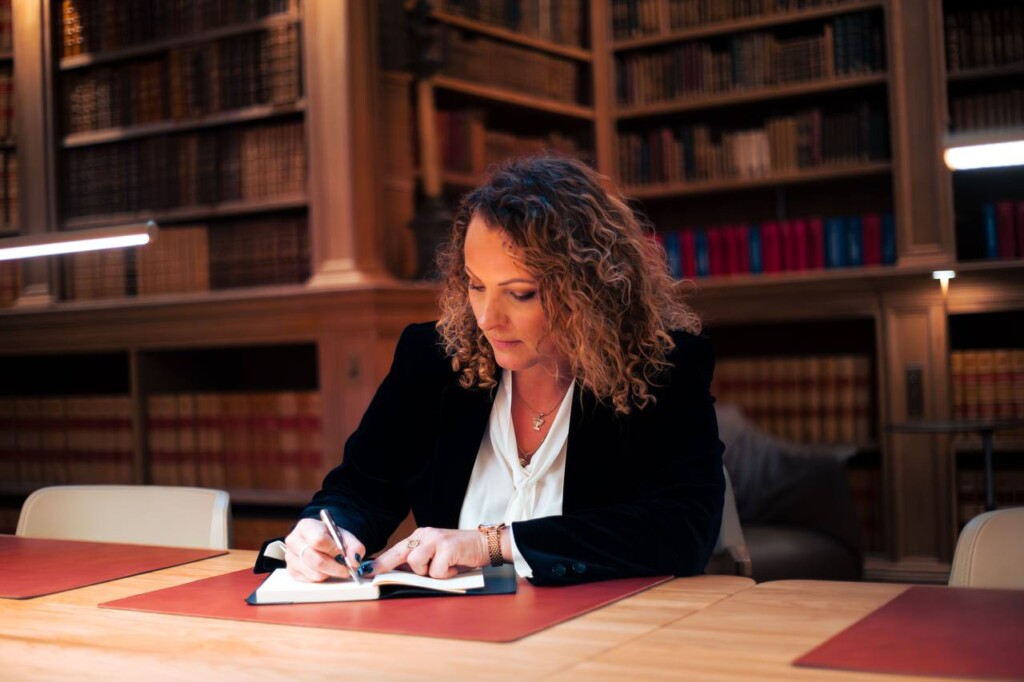
Since entering the National Assembly in 2022 as the representative of the 5th constituency of the Somme department, you have focused particularly on local communities, social policy, and the concerns of citizens outside major urban centers. How important is it to remain closely connected to local communities and ordinary people?
I would say it is absolutely essential. It is the very foundation of what it means to be a representative of the people. The France I defend is not the France of major metropolitan centers and the so-called “creative class.” It is the France of medium-sized towns, rural areas, and working-class suburbs. These are places that have felt abandoned for decades through the withdrawal of public services, hospitals, and local economic activity. In Somme, in Roye, Péronne, and Ham, I see every day the consequences of policies designed far from reality. An elected representative of the Republic who loses that connection loses what matters most. Being rooted in one’s community is not a weakness—it is a duty.
Finally, you visited Serbia three years ago. What impressions did you take away regarding Serbia, its people, culture, and political atmosphere?
Serbia left a deep impression on me. There I found a people proud of their history, deeply attached to their sovereignty and identity, and genuinely friendly toward France. That warmth stems from a historical memory that remains very much alive. I was impressed by the vitality of cultural and political life, by the determination of the Serbian people not to allow others to dictate their path, and by a patriotic spirit very close to what we ourselves defend in France.
I was particularly moved by the history of Serbia, especially the genocide committed against Serbs by the Ustaše. Serbia is a country that has suffered greatly, that is still unfairly stigmatized today, and that deserves the respect and genuine friendship of France. I hope to visit again and to see these ties continue to grow stronger.