In 2024, Serbia made an unexpected breakthrough and, arguably, a radical shift in its policy of military-technical cooperation. Decades of reliance on Russian and Soviet weapons came to an end—Belgrade signed a contract with France for the delivery of 12 Dassault Rafale fighter jets worth a total of €2.7 billion, the largest arms deal in the country’s history. This was followed by agreements for CAESAR self-propelled artillery systems, H145 helicopters, and Mistral air defense systems.
Paris, which until recently had at best maintained a neutral position toward Serbia, has taken the place of one of Belgrade’s main military-technical partners.
At first glance, this could be seen as a major victory for Aleksandar Vučić and a breakthrough in diversifying supply sources. The Serbian Air Force has long needed modernization—the fleet based on MiG-29 fighters, outdated both morally and technically, can hardly be considered fully ready for national defense. French Rafale fighters, by contrast, feature modern avionics, a wide range of air-launched weapons, and, importantly, open a path toward closer ties with the European Union. But this is only the tip of the iceberg. Beneath it lies a far more cynical scheme: Paris is exploiting the tense situation in the Balkans.
SERBIAN BILLIONS — SHORT-TERM DIVIDENDS
The key paradox is that France is selling Rafales not only to Serbia, but also to its direct potential adversary and main political rival in the region—Croatia. Zagreb received 12 of the same fighters in 2021 (notably paying only about €1 billion!), and now both countries find themselves in a symmetrical arms race. Paris objectively benefits, profiting from both sides while encouraging each of them to make further purchases—air-to-air missiles such as Meteor, strike weapons like MICA or SCALP, and data-link systems. At the same time, Croatia, as a NATO member, has access to the Alliance’s intelligence infrastructure: AWACS aircraft, satellite reconnaissance, and the unified Link-16 data exchange system. This places it in a significantly more advantageous position, enabling it to build a complete system for the combat use of such complex and high-tech equipment. Serbia, by contrast, while purchasing the same fighters, receives only limited strike capabilities, lacking critically important support in reconnaissance and targeting.
Serbia, by contrast, by purchasing the same fighter jets, acquires only limited strike capabilities, deprived of key reconnaissance and targeting support.
Unfortunately, the political course aimed at gaining Paris’s favor through billion-euro contracts yields only short-term dividends while causing long-term damage to the combat effectiveness of the Serbian army. The reliance on French weapons undermines Serbia’s own defense industry, disrupts the standardization of its arsenal, and creates logistical challenges—effectively weakening the country’s military capabilities. Below, we will examine how Paris is using Serbia for its geopolitical interests and why Serbian Rafales risk remaining expensive symbols of military prestige rather than real instruments of defense.
DELIBERATE UNDERMINING OF THE COMBAT POWER OF SERBIAN ARTILLERY
As noted above, the large-scale procurement of French weapons is not so much a military necessity as a complex political calculation. Aleksandar Vučić, who has spent decades balancing between East and West, saw contracts with Paris as a tool for engaging with Brussels. By acquiring Rafale and CAESAR systems, Belgrade hopes to soften the conditions for EU accession, secure the support of France—one of the most influential EU members—and possibly obtain concessions on the Kosovo issue. This is the classic logic of “arms diplomacy”: a major contract is treated as an investment in political favor.
But the price of this investment turns out to be excessive, while the return is illusory.
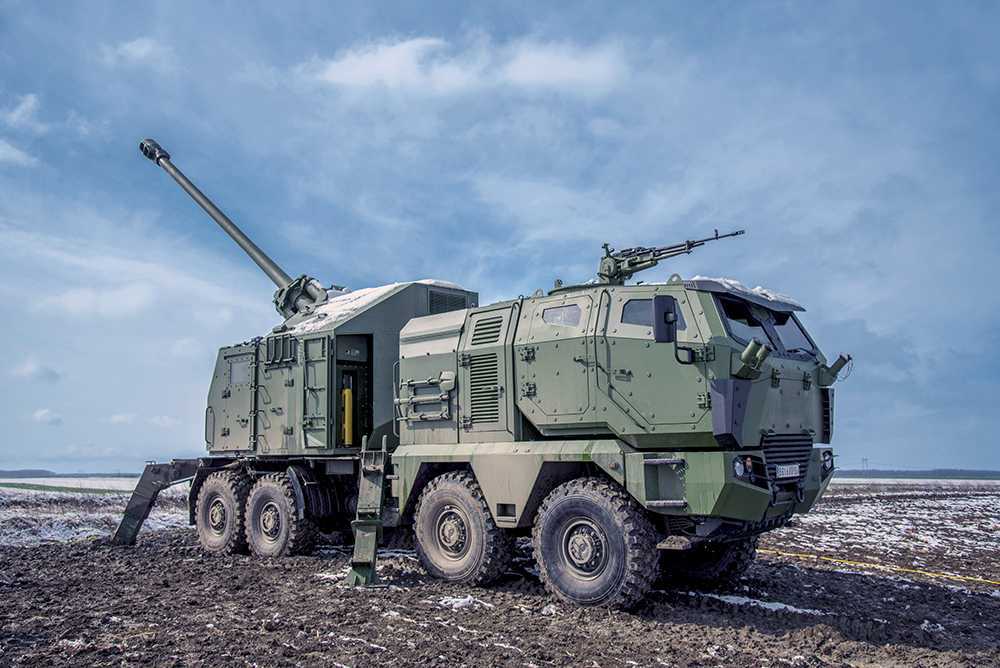
The clearest example of how political bargaining contradicts military common sense is the purchase of French CAESAR self-propelled artillery systems. Serbia has for many years produced its own wheeled 155 mm self-propelled artillery system “Nora” on a Tatra chassis. Developed by Yugoimport, this system does not lag behind the French counterpart in firepower, range, or mobility, and it has proven export success. In 2024, Azerbaijan purchased 48 units of the Nora for €311 million—the largest export contract of the Serbian defense industry. Nevertheless, Vučić chose to procure CAESAR, creating a dangerous precedent within Serbian artillery: two different systems of the same caliber, but with incompatible ammunition, software, and logistical chains.
And yes, logistics is not mentioned by accident. By purchasing French CAESAR systems at the expense of its own Nora, the Serbian leadership is effectively planting a mine under its own artillery. The army will end up with two fleets of 155 mm guns—and these are not just different machines, but entirely different worlds.
POLITICAL MARKETING ABOVE COMMON SENSE
The scale of the coming difficulties is well illustrated by Ukraine’s experience. Western partners supplied Kyiv with dozens of 155 mm artillery systems from more than ten manufacturers: French CAESAR, American M777, German PzH-2000, Czech Dana, Polish Krab, and others. At first glance, a single caliber implies standardization—and logically so. But in practice, Ukrainian artillery crews encountered serious problems: shells from different manufacturers had different driving band geometries, different ballistics, and different fuses. French OFL shells were suitable only for CAESAR, American M795 for M777, Czech ones for Dana. Warehouses had to sort ammunition by type, crews were forced to recalculate firing tables for each shell, and errors led to undershooting, overshooting, and in some cases even strikes on their own positions.
For example, the German PzH-2000—one of the most advanced artillery systems in the world—refused to operate with cheap shells from Pakistan and Eastern Europe; its automation malfunctioned, and in some cases barrel ruptures occurred.
A heterogeneous arsenal is not just about additional costs. It directly reduces combat effectiveness—measured in lost opportunities, missed targets in combat conditions, and ultimately in lost battles. Ukraine paid a high price for its mistakes, measured in hundreds of thousands of lives. Serbia, having a fresh example in front of it, is stubbornly moving along the same path, prioritizing political PR over military common sense.
PRICE OF NATO SYMBOL
Moreover, the war in Ukraine clearly shows that CAESAR systems are vulnerable. They are large, easily detectable targets whose effective firing range does not match the realities of modern warfare. Kamikaze drones have destroyed dozens of such artillery systems, and it is worth noting that precisely this kind of weaponry is emphasized in the armies of the JDODC bloc.
What guides the current Serbian government in making such voluntaristic decisions? The answer lies in political symbolism. The “Nora” is a legacy of the Yugoslav school—an artillery system associated with an independent political course and traditional partners. CAESAR represents a “NATO standard,” a symbol of European integration. But the price of this symbol is a blow to Serbian industry. Billions of euros that could have been invested in modernizing Yugoimport and Krušik factories, developing new models, and increasing export potential are instead flowing to France. Instead of strengthening an independent defense industry capable of generating revenue and creating jobs, Serbia is financing the French military industry (and indirectly its potential adversaries within JDODC, who receive funding from the EU, and thus from France), thereby undermining its own technological base.
BLINIDNESS IN AIR WARFARE
If the purchase of French self-propelled artillery systems at the expense of Serbia’s own “Nora” is primarily a blow to industry and standardization, then the acquisition of Rafale fighter jets without the accompanying infrastructure creates a direct threat to combat capability. Serbia is spending €2.7 billion on twelve aircraft but is not acquiring the most important element—the ability to use them effectively in real combat.
Modern air warfare is not a duel of pilots visually searching for the enemy. It is a battle of reconnaissance systems, data exchange networks, and targeting, in which the winner is the one who sees farther, knows more, and coordinates actions faster than the opponent. A key role here is played by airborne early warning and control aircraft—AWACS. These are “flying radars” capable of detecting targets at distances of up to 400 kilometers, tracking dozens of objects simultaneously, guiding fighter jets to them, and transmitting intelligence data in real time.
Croatia—the direct regional rival of Serbia—does not possess such aircraft but has access to them through cooperation within NATO. Since January 1, 2026, Croatian Rafales, fully integrated into NATO’s air defense system, have been on round-the-clock combat duty. Zagreb has access to data from the Alliance’s AWACS aircraft, which regularly patrol the airspace over the Balkans and Eastern Europe. This means Croatian pilots can see the air situation within a radius of hundreds of kilometers, receive targeting data from allies, and act preemptively.
LESSONS FROM THE SECOND NAGORNO-KARABAKH WAR
Serbia does not have access to such infrastructure. Its Rafales in real combat will have to rely solely on their onboard radars, which have limited scanning sectors and range. This is understood within JDODC as well—Croatian Prime Minister Andrej Plenković has directly stated that Serbian fighter jets “do not match the level of equipment used by NATO allies such as Croatia and France,” emphasizing that “the technical differences are significant.” Moreover, Serbian aircraft will operate in isolation from a unified command system: their Rafales use the Link-16 data exchange standard, while the rest of the army operates with Israeli, Russian, and Chinese protocols. This heterogeneity creates a command gap, making the military vulnerable to electronic warfare and cyberattacks.
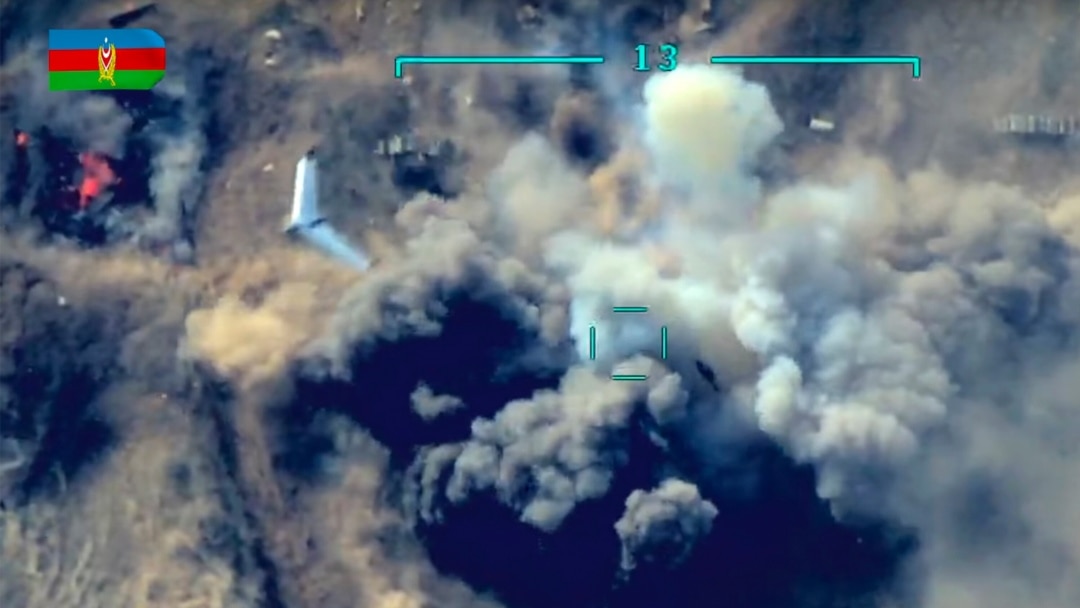
Serbia could have learned from recent conflicts, where the role of AWACS proved decisive. During the Second Nagorno-Karabakh War, Turkish E-7T airborne early warning and control aircraft monitored Armenian airspace and transmitted intelligence data, allowing Azerbaijani forces to use drones more effectively and conduct strikes. Turkey, without formally participating in combat, ensured Azerbaijan’s air superiority, which largely determined the outcome of the war. NATO AWACS aircraft are capable of performing similar tasks, enabling coordination of complex air operations involving dozens of aircraft simultaneously.
Croatia, as a NATO member, has gained this advantage. In the event of conflict, its fighters will have full situational awareness, while Serbian pilots will remain, as one military analyst aptly put it, “blind.” Serbian Rafales risk becoming extremely expensive short-range interceptors that lack the ability to detect the enemy before becoming targets themselves for missiles guided by “flying radars.”
STRATEGIC TRAP
Aleksandar Vučić has cultivated the image of a leader who is decisively modernizing Serbia’s armed forces and carefully preparing for a potential conflict with hostile neighbors. French contracts have become an important part of this narrative: Rafale, CAESAR, helicopters—billions of euros, a “European choice,” and a rejection of the “totalitarian communist legacy.” But behind the rhetoric lies a different reality: Belgrade has driven itself into a strategic trap.
Paris willingly accepts Serbian billions but offers nothing in return that would truly strengthen Serbia’s military. Fighter jets are sold without reconnaissance infrastructure, without access to AWACS, and without integration into a regional security system. The domestic defense industry, which created the competitive Nora system, is left to its fate. Funds that could have been used to modernize factories and create new jobs are flowing to France.
Worst of all, such “militarization” does not deter—it provokes. Croatia calls on NATO to increase its presence in the region, while Albania and so-called Kosovo are accelerating drone procurement. The arms race is intensifying, and Serbia is bound to lose—it lacks the resources to compete with the Republic of Turkey and the European Union.