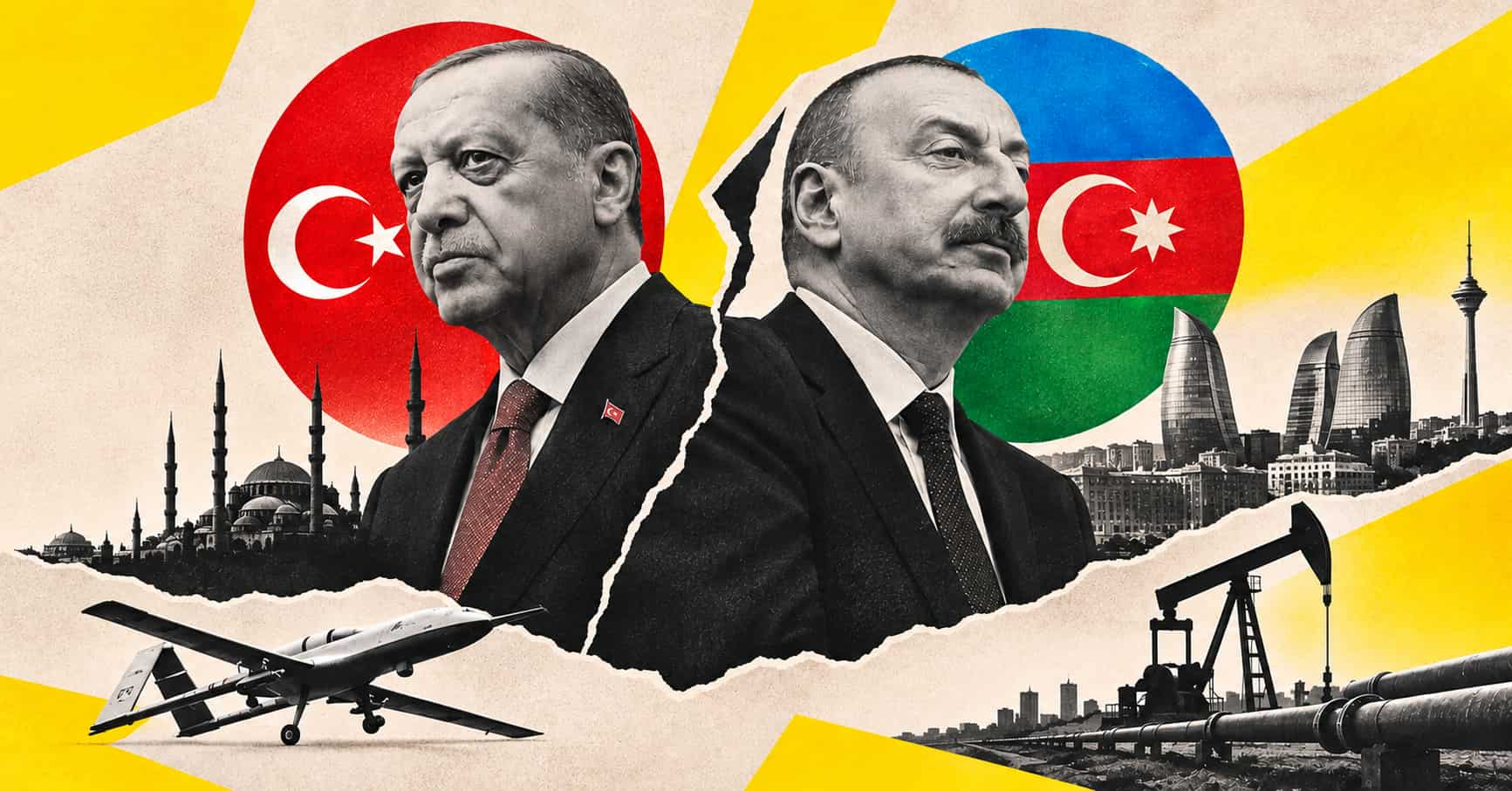
Recent initiatives by the Azerbaijani government aimed at changing the requirements for school uniforms (which have become widely known as the “hijab ban”) have put the strategic alliance between Turkey and Azerbaijan to the test. The current situation is particularly complicated by the fact that disagreements have emerged not only between strategic allies, but also between two states guided by the principle of “One Nation, Two States.”
A SHARP RESPONSE FROM THE “YOUNGER BROTHER”
During the general debate at the 81st session of the UN General Assembly on September 22, Turkish President Recep Tayyip Erdoğan stated: “We consider bans on wearing the hijab in schools, introduced by certain countries, to be an attack on women’s most fundamental rights.” Azerbaijan was not mentioned directly, so interpreting this statement as an official condemnation of Baku would be an unjustified oversimplification.
Sharp statements from the Azerbaijani side followed. The actions of an ally were described as interference in internal affairs. Ilham Aliyev himself warned against such a development. The pro-government New Azerbaijan Party, meanwhile, called the statements made by Turkish politicians “populist and irresponsible,” arguing that they ran counter to the spirit of brotherly relations.
In short, both sides made their positions clear. Ankara did, however, take steps to ease tensions. On October 15, following a meeting with Aliyev in Baku, where he had travelled to attend the 7th Summit of the Conference on Interaction and Confidence-Building Measures in Asia (CICA), Turkish Foreign Minister Hakan Fidan stated: “Under all circumstances, the strategic nature of Turkish-Azerbaijani relations takes precedence over any other issue.”
Many commentators described the exchange of sharp statements as unexpected. As a result, they began drawing hasty, sweeping conclusions. The truth, however, is that Baku and Ankara have not always agreed on everything. Let us recall the experience of “football diplomacy” in 2009, or the differing assessments of the contributions made by the two “brotherly” states to victory in Karabakh. Nor should we forget their differences over Northern Cyprus, the Middle East, relations with Israel in general, and the operation in Gaza in particular. And Baku should not be viewed exclusively as Ankara’s younger brother.
The current “crisis of emotions” has less to do with Islam as such than with a dispute over the limits of permissible external influence. For Baku, secular pressure from abroad—regardless of its source—is an extremely sensitive issue, whereas for Ankara, such pressure is perfectly natural.
In Turkey, there is strong support for the concept of the country as one of the leading “middle powers”: not a global superpower, but a state that “acts on a global scale.” It is now facing resistance from a partner whom the Turkish political establishment has grown accustomed to viewing as a younger brother.
Questions of identity are extremely important. One can speak as much as one likes about “one nation, two states,” but the latter part of that formula is no less important than the former. In Azerbaijan’s case, the priority is to protect its state model from the politicisation of religion, while in Turkey’s case, the issue is a reassessment of the principle of “renewing” Turkish republicanism. It is true that Erdoğan has not renounced the Kemalist legacy or the revolution (the centenary of the Republic in 2023 was officially celebrated with great fanfare). However, the authorities are seeking to revise and critically reassess that legacy. They see this as part of their role as a “middle power” that “acts and thinks on a global scale” in a “world of five and beyond.”
This approach also extends to the Balkans.

DIFFERENCES IN POSITION — FROM KOSOVO TO ISRAEL
Turkey’s defence industry exports to the Balkans have increased significantly in recent years. In 2023, they reached a record high: Turkey earned $462 million from the sale of weapons, ammunition and related goods. Unmanned aerial vehicles (UAVs) are among the most significant export products of the Turkish defence industry.
Albania and the self-proclaimed state of Kosovo acquired Bayraktar TB2 drones in 2022 (deliveries to the so-called Kosovo Security Force took place in May 2023, while the Albanian Armed Forces received theirs in March 2024). Interestingly, Azerbaijan, where cooperation between Azerbaijan and Turkey is considered unparalleled anywhere in the world, does not share Turkey’s approach to this issue.
As early as February 18, 2008, the day Turkey recognised Kosovo’s independence, Azerbaijan announced that it did not recognise Kosovo’s independence. A representative of the Ministry of Foreign Affairs stressed that the resolution adopted by Kosovo’s provisional self-government institutions to secede from Serbia was contrary to international law.
During the proceedings before the International Court of Justice in The Hague in 2009, which examined the legality of the unilateral declaration of independence, Baku reaffirmed its position. According to the Azerbaijani side, a region that declares secession in violation of its domestic legislation cannot be considered a state.
Such differences between the positions of Azerbaijan and Turkey are not limited to the issue of Kosovo’s independence.
Disagreements between these two countries, often described as “brotherly,” also concern the process of normalising relations with Armenia, the independence of the Turkish Republic of Northern Cyprus, relations with Israel, the Kurdish question, and a number of other issues.
Nevertheless, Ankara and Baku have managed to coordinate their positions within the process of normalising relations with Armenia. Turkey, for example, under pressure from Baku, makes the normalisation of relations with Armenia conditional on progress in the Armenian-Azerbaijani process. At the same time, contradictions between Israel—a close partner of Azerbaijan and an advocate of establishing a Kurdish state—and Turkey do not hinder their economic cooperation. As for Northern Cyprus, Baku apparently does not rule out recognising its independence.
AZERBAIJAN’S “MILITARY DISOBEDIENCE”
The case of Kosovo is particularly interesting in this context, as Azerbaijan continues to emphasise that it will never recognise its independence. Moreover, Baku diplomatically supports the other side in the conflict—Serbia—in its efforts to restore its territorial integrity, earning high praise from Belgrade in return.
From the very beginning, Azerbaijan viewed its policy on the Kosovo issue through the prism of the Karabakh conflict. During the debates over Kosovo’s status, Baku sought to prevent the creation of a “precedent.” As early as 2007, the Azerbaijani government called on the European Union (EU) to reject proposals to grant Kosovo independence. Baku expressed concern that such secession in the Balkans could set a precedent for Karabakh.
During these discussions, an Azerbaijani representative pointed out that, despite the differences between the Kosovo issue and the “Armenian-Azerbaijani conflict,” resolving a territorial dispute in violation of international law—in favour of secession and independence—could have a negative impact on the Caucasus region.
The Azerbaijani official reinforced the appeal to the EU with a pragmatic proposal, promising to help European countries diversify their energy markets and reduce their dependence on Russian gas and oil.
Taking this “attractive” initiative into account, European representatives acknowledged that Karabakh was an “occupied territory” and assured Baku that the Kosovo precedent would not be applied to the detriment of conflicts in the post-Soviet space.
However, assurances from European countries and Turkey’s approach to the Kosovo issue ultimately failed to ease Baku’s concerns. Azerbaijan continued to pursue a policy that differed from the positions of Turkey and its Western partners on this Balkan conflict.
In keeping with its political position on Kosovo’s independence, the Azerbaijani side also demonstrated a form of “military disobedience.” At Ilham Aliyev’s proposal, and on the basis of a decision by the Milli Majlis dated March 4, 2008, the Azerbaijani contingent of 34 personnel ended its participation in the peacekeeping mission as part of the Turkish contingent deployed in Kosovo and returned to Baku.
Later, alongside the deepening of relations with Serbia, Azerbaijan did not abandon its position against Kosovo’s independence or its linking of the issue to the Karabakh question. Moreover, the withdrawal of the Azerbaijani peacekeeping contingent, deployed in Kosovo since 1999 and prompted by changing geopolitical circumstances, was interpreted—and can also be interpreted retrospectively—as a move directly connected to the process of resolving the Karabakh issue (the Prague Process).
As is well known, the possibility of resolving the Karabakh issue with the involvement of peacekeeping forces was also considered at the time Kosovo declared independence. In an effort to prevent a repetition of the Kosovo scenario, Baku effectively ruled out a similar development in Karabakh by withdrawing its contingent. Azerbaijani officials described the peacekeeping mission in this case as a “mission contributing to separatism.”
AN UNWAVERING POLICY ON KOSOVO
Despite Turkey’s military and political support for Kosovo, Azerbaijan blocked Kosovo’s membership in the World Customs Organization (WCO) in both 2012 and 2017. At the 2017 Conference of Directors General of Customs of the WCO European Region, held in Vienna, the Azerbaijani side once again emphasised that it did not recognise Kosovo’s independence and considered its unilateral declaration of independence contrary to international law. According to one Azerbaijani official, Azerbaijan had “also faced the problem of territorial integrity, and the discussion of political issues within a customs organisation is unacceptable.”
Baku, which justified its position by reference to the Karabakh conflict, did not change its approach even after the 2020 war over Karabakh. Nevertheless, Kosovo had hoped that Azerbaijan, having apparently “freed itself from concerns over Karabakh,” would no longer remain reluctant to recognise Kosovo’s independence following the war.
In August 2021, during a meeting of defence ministers in Turkey, Pristina approached Azerbaijan (and other countries) with a request to recognise Kosovo. Belgrade, however, considered this move a violation of the Washington Agreements, which stipulated that no requests for recognition should be submitted until September 1, 2021. Serbia subsequently cited Azerbaijan’s policy as an example in the context of conflict resolution.
Clearly, the fact that Kosovo’s independence and its request for recognition were placed on the agenda of a meeting of defence ministers in Turkey, Azerbaijan’s ally, indicates that Kosovo, with Turkey’s support, is seeking to secure recognition from Azerbaijan.
Kosovo has not yet given up hope of receiving Turkey’s support, but Azerbaijan continues to pursue an “unwavering” policy on Kosovo, even after establishing full control over Karabakh and becoming convinced that the conflict has finally been resolved. Moreover, the Azerbaijani side is deepening its relations with Serbia and providing it with significant diplomatic support in its efforts to restore its territorial integrity. In this context, it is clear that Ankara lacks the necessary mechanisms of influence over Baku to advance Turkey’s interests on Kosovo or in a number of other areas of foreign policy.

BEING DRAWN INTO A CONFLICT AGAINST IRAN
An analysis of the situation in another explosive region—the Middle East—leads to the conclusion that any destabilisation in Turkey may be directly connected to US and Israeli plans for an attack on Iran.
In recent years, the view has been widespread among expert circles that Washington and Tel Aviv’s policy in the region, beginning in 2015, was aimed at creating the conditions for drawing Turkey and Azerbaijan into a conflict against Iran. Ankara, however, has opposed these plans by every means available, rightly believing that such a development could have unpredictable consequences for Turkey and could end catastrophically for Baku.
Turkish President Recep Tayyip Erdoğan has repeatedly stated that Iran is an indispensable and reliable partner for Turkey and that Turkey has no interest whatsoever in undermining the relations established between the two countries. It is possible that this position partly contributed to the deterioration of Ankara’s relations with the West, particularly with the United States and its principal ally in the Middle East—Israel.
It was precisely with the aim of containing American-Israeli pressure that Erdoğan began seeking support from Moscow, even amid disagreements over the Russian Federation’s “Ukraine policy” and their opposing positions on the issue. He sought to find a way to rely on Turkey’s northern neighbour to de-escalate the situation surrounding the Islamic Republic of Iran.
One example of this strategy was, among other things, Recep Tayyip Erdoğan’s initiative to establish the “3+3” platform, whose purpose was to prevent Western interference in the South Caucasus—a region that the United States and its allies consider a suitable foothold for a military operation against the Islamic Republic of Iran.
This refers primarily to Azerbaijan, the most valuable potential resource for an anti-Iranian coalition, both because of its strategic position, which is suitable for launching attacks, and because of the possibility of activating the ethnic factor of the Azeris as a key element of the socio-political and cultural identity of Azerbaijanis (self-designations: azərilər or azərbaycanlılar).
This factor plays an extremely important role both within Azerbaijan itself and in the context of regional policy in the Middle East and Transcaucasia, as well as in efforts to destabilise Iran from within.
To be continued…