Recent drone attacks on civilian vessels in Bulgaria’s exclusive economic zone in the Black Sea have raised questions about who is behind these manoeuvres and whether setting this geopolitically sensitive region ablaze could serve as a pretext for a new escalation in tensions between NATO and Russia. As expected, Bulgaria’s political establishment, with a few isolated exceptions, has blamed Russia, while several members of parliament have passionately called for the activation of Article 4 of the North Atlantic Treaty. However, Ivelin Prvanov, an MP from the Revival party (Vazrazhdane) and a member of the Bulgarian Parliament’s Defence Committee, takes a different view and does not rule out the possibility that the entire operation was orchestrated by a third party.
The attack on two more ships near Bulgarian territorial waters has reignited the debate at a meeting of the Parliamentary Defence Committee. What conclusions did you reach?
The heated debate was nothing new—it always goes round in circles without anything substantial being said. Nothing was discussed that had any bearing on the country’s security. Each political group tried, in one way or another, to demonstrate how far-sighted it had been and that its position was the only correct one. The minister also spoke on the matter, representing the parliamentary majority. In other words, there are no concrete steps to improve the situation in the Black Sea region, in our territorial waters, along our coastline or within the country’s exclusive economic zone.
Ivaylo Mirchev of DB (Democratic Bulgaria) insisted on invoking Article 4 of NATO, which is supposed to trigger consultations…
That was the reason for the confrontation with the minister. The minister explained that Article 4 is followed by Article 5, and that so far only two countries have requested the invocation of Article 4: Poland, following the fall of a ballistic missile, and Estonia, after Russian aircraft entered its airspace by several hundred metres. However, the NATO Council, of course, rejected such a request, because this could in no way constitute a casus belli.
The biggest problem for all our Euro-Atlanticists, whether from DB, PP (We Continue the Change) or GERB, is precisely that they keep saying we are all one big family that should be fighting against Russia. They always say this when they are not in positions of power. But when it comes to making decisions and taking responsibility, for some reason they become much more cautious.
I have noticed something else since the beginning of the year. They operate like communicating vessels with “Progressive Bulgaria.” “Progressive Bulgaria” is trying to present itself as pro-Russian while simultaneously bowing to Brussels.
During the election campaign, a candidate from “Progressive Bulgaria” said: “You are doing this deliberately. You remain silent and refuse to say who the aggressor is so that you can win over your Russophile electorate, but the Bulgarian people want something different.” My response is: “Yes, but the Bulgarian people elected them precisely because the Bulgarian people are predominantly Russophile.”
So, through these accusations that one side is pro-Putin while the other presents itself as an anti-Putin force, they are actually operating like communicating vessels. On the domestic political scene, they accuse one another and thereby mobilise their respective electorates. In doing so, they also mobilise people on the fringes who would not otherwise vote for a particular candidate.
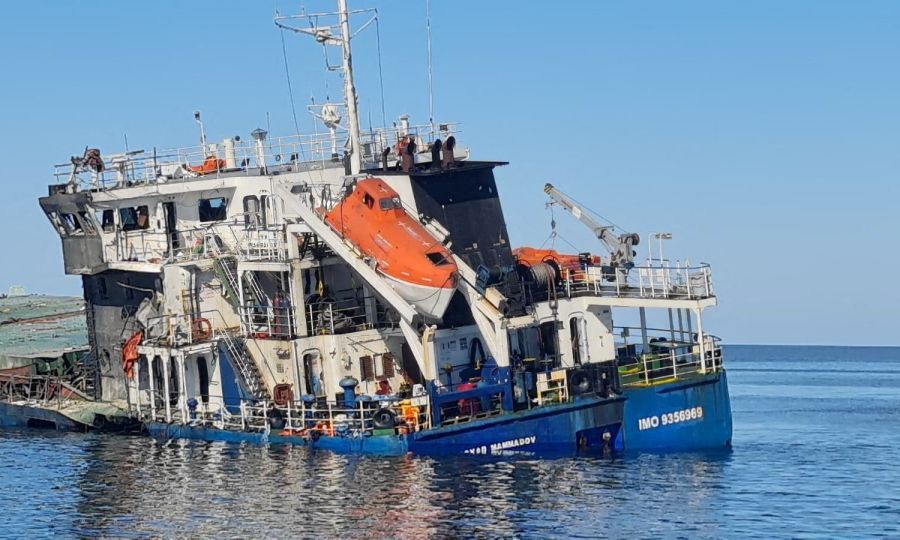
The ships have been attacked, yet we have no evidence as to who is behind it all. The Russian ambassador was summoned not to the Ministry of Foreign Affairs, but to the Council of Ministers. Assumptions are being made. The Russian ambassador has also suggested another possibility—that this could be a provocation by a third party. What actually happened?
We cannot rule out the involvement of a third or even fourth power. There are countries outside our region that also have an interest in the Black Sea area and in disrupting maritime traffic.
As for the latest incident, it is almost identical to the one that preceded it. Two ships were hit. We do not know who did it. Usually, when people say that the country responsible is unknown, we know that the Ukrainian side is involved.
Previously published information makes it clear that, over the past several years, since the beginning of the war in Ukraine, approximately 600 ships have been attacked in the Black Sea region in various ways. Last year and this year, it became common for ships linked to Russia, the so-called “shadow fleet,” to be attacked, regardless of which part of the Black Sea they were in.
We know how many times the Ukrainian side has boasted that its drones had struck a particular vessel. Both military and civilian ships have been targeted. Therefore, the country with the greatest experience of attacking civilian vessels in Black Sea waters is undoubtedly Ukraine.
But that does not mean, for example, that Ukraine itself could not be used as a cover for the activities of interested third countries.
And here we need to consider the economic aspects, which they dismiss as nothing more than propaganda clichés. This brings us back to what you mentioned earlier, and what representatives of DB, PP and GERB argued during the committee meeting: that it is almost certain that Russia was responsible, that it must have been Russia, and that Russia’s responsibility must be proven.
If such evidence existed, I believe they would have presented it long ago. It is possible that the Russian side was partially involved, given that the official version is that these were vessels carrying non-military cargo. But do we have any guarantees that the cargo was not military? In such circumstances, if there is something on board that could have a dual use—I am not talking about ammunition or weapons—the vessels become legitimate military targets…
The incident could also have been carried out under a false flag. This has happened many times. But here I want to draw attention to something else that people very often overlook: the previous incident took place after the former head of the Ukrainian intelligence service had visited Bulgaria.
Yes, that was going to be my next question. I would particularly like to draw attention to Budanov.
Nobody has told us to this day what exactly he was coordinating.
On the other hand, does Ukraine, for example, have an interest in stirring up incidents at this particular moment, from a foreign policy and diplomatic perspective? Of course it does, because something happened that seemed unimaginable at first glance: an economic agreement, the so-called oil deal between the United States and Russia.
The Russian Federation, which was supposed to be under sanctions and which the American media and political establishment had spent years branding as an aggressor and a country of evil, suddenly turned out to be an acceptable business partner. As a result, President Zelensky and the regime governing in Kyiv have, in a sense, been left on the sidelines.
As for the question of whether the fact that one of the ships belonging to one of the warring parties was attacked necessarily means that the other side carried out the attack, we heard the argument that this was perfectly logical because, in the words of our minister, Ukraine could never attack its own ship.
Nevertheless, if the regime in Kyiv is under threat, and if the objective is to rally the international community, primarily the European community—“Ursula and the others” in Brussels—in support of Zelensky, then all means are permissible.
We should not forget that the first targets were the two Nord Stream gas pipelines, the destruction of which affected Europe most severely. Europe was left without cheap energy, and the economies of Western Europe began to suffer the consequences. A large number of manufacturers relocated from Europe to other regions. So, one loss, another loss, and a third loss.
Whether the Ukrainian side was involved in some kind of provocation, whether other forces seeking to help Ukraine did something, or whether someone had particular economic interests—we have no evidence of any of this and can only speculate.
As for whether Ukraine would sacrifice its own citizens, one of its facilities or its material assets for the sake of a provocation, I recall the beginning of the war in 2022, when the Ukrainians fired a Tochka-U missile that struck the railway station in Kramatorsk, where a large number of people had gathered in an attempt to evacuate.
Ukrainian propaganda then tried to portray it as an attack by the Russian side, but the missile debris was recovered, and it turned out to have been a Tochka-U missile, which Russia had withdrawn from service more than 20 years earlier and no longer uses.
The next major provocation was Bucha.

One more question about Budanov’s visit. I have come across comments suggesting that a third party could be the United Kingdom. There have also been comments that some kind of pressure was exerted on the authorities in Sofia during Budanov’s stay here. In both cases, there is no evidence…
If Budanov was acting as an envoy for another power, and not merely for the one governing on the banks of the Dnipro, then that is entirely possible. If someone authorised him to do so, I can see how pressure may have been exerted.
Another possibility is that it was simply a matter of coordinating positions so that everyone could have their cake and eat it too. It is entirely possible that elements of our elite somehow coordinated their positions with elements of the Ukrainian elite to ensure that, over the coming months, everything proceeds in such a way that none of the ruling cliques suffers any losses, either here in Sofia or in Kyiv.
Something else caught my attention. During the meeting of the Defence Committee, the Montreux Convention, signed 90 years ago in 1936, was mentioned. Under this convention, warships belonging to foreign states cannot enter the Black Sea and remain there for more than three weeks. Ever since the beginning of the conflict, there has been considerable talk about the need for a NATO naval task force to enter the Black Sea in order to deploy some kind of peacekeeping force there.
On the one hand, Turkey was not allowing others to enter, while, on the other, such a deployment was not in Russia’s interests.
It is entirely possible that Budanov tried to convince our authorities that there was no Ukrainian involvement in the incidents.
Various things have been said. People from maritime circles, the civilian shipping industry and the military have told me that there may have been explosives or some kind of ammunition aboard one of the ships, which would explain why it sank so quickly.
On the other hand, when discussing experience in conducting naval warfare in the Black Sea, we should not forget that both last year and this year, combat unmanned platforms, the so-called maritime drones, were found off the coast of Asia Minor in Turkey. They had lost control, but, as you can see, they had managed to cross almost the entire Black Sea diagonally. Such drones were also found off the Georgian coast. Therefore, it is possible that one of the ships was hit by maritime drones. For now, Ukraine is the leading country throughout the Black Sea region when it comes to the development of maritime drones.