The American attack on Venezuela and its kidnapping of President Nicolas Maduro and his wife, First Lady Cilia Flores, on the 3rd January 2026 marked one of the United States’ most flagrant breaches of international law and its biggest act of military aggression against another state in decades. Not only that, but the sheer unprecedented nature of the American attack – codenamed Operation Absolute Resolve – which left 55 military personnel (23 Venezuelan and 32 Cuban) and two civilians dead, had arguably changed the nature of the global order dramatically once again. Six years into the 2020s, with the Russo-Ukrainian War and the ongoing crises in the Middle-East continuing to unfold, the addition into this new geopolitical maelstrom of a new form of American imperialism may prove to be the biggest factor contributing to this new international instability to date in the 21st century.
What makes the US attack on Venezuela even more significant and damaging to the United States’ international reputation is the admission of the US Government following the attack that the entire operation had largely been planned in order to capture and secure Venezuela’s vast oil supplies, despite President Trump publicly claiming beforehand that any military actions against Venezuela were “anti-drug trafficking operations”. In fact, shortly after the attack and Maduro’s capture, Trump had already made the arrangements to send multiple US oil companies down to Venezuela to secure the country’s oil reserves and immediately begin producing an estimated 30-50 million barrels of oil, in order to be quickly sold internationally. Furthermore, Trump had stated that the US would effectively “run” Venezuela indefinitely, until a so-called “transitional government” was formed. In other words, US-backed regime change in favour of a new national government which would be friendly to the United States, while simultaneously effectively looting the country of its most valuable natural resources. Thus, not only did the US military attack on Venezuela alone break international law and violate Venezuela’s national sovereignty – effectively being a declaration of war by the US against Venezuela – but the blatant act of thievery of another state’s natural resources for the aggressor state’s personal and state interests is one of the biggest cases of imperialism and economic colonialism in the 21st century.
Not even 24 hours after the American attack on Venezuela and the kidnapping of President Maduro and his wife – the two now held in indefinite custody in the United States, awaiting trial on charges of “narco-terrorism” – Trump and his closest advisors had already expressed intentions to target other states and territories worldwide in similar manners. While a number of different countries and territories had been mentioned by Trump and his advisors over the past few days, if the United States were indeed to pursue all of these territories as potential targets for future military operations, the international reputation of the United States, the integrity of the NATO military alliance and the last remaining remnants of the old international world order, in existence from 1991 to 2022, would all crumble and collapse. But exactly which countries could potentially be next in Donald Trump’s sights, and exactly why does he see these regions as potential future targets in this sudden new era of American imperialism?
GREENLAND: THE BEGINNING OF THE END OF NATO?
Donald Trump and his advisors have long been eyeing the territory of Greenland for the better part of Trump’s second term as President of the United States. Located between the Arctic and the North Atlantic, Greenland – the largest island in the world – is politically an autonomous territory of the Kingdom of Denmark. By extension, Greenland is also political territory within the European Union and the NATO military alliance.
The United States already has an established military base in Greenland, called the Pituffik Space Base, but for the Trump Administration, this alone is not enough. Over the past year, Trump and his allies have repeatedly stated publicly that they strongly desire Greenland to become part of the United States as the country’s 51st state. Predictably, the US’ allies have strongly opposed any and all US interest in Greenland, with the EU and NATO alike publicly condemning Trump and declaring that Denmark, the EU and NATO will unanimously oppose any and all attempts by the US to take Greenland. Last year, Trump had approached Denmark with an offer to buy Greenland from the Kingdom. Naturally, the Danes and the people of Greenland alike firmly rejected the offer, both mutually citing the need to protect the sovereignty and territorial integrity of the Kingdom of Denmark.
Regarding Trump’s own personal rationale for wanting to annex Greenland, he has constantly stated that the US “must acquire” Greenland for the sake of the United States’ so-called “national security”. Trump had also outlandishly claimed that Greenland was surrounded by Russian and Chinese warships, which could pose a threat against the US. A confusing and poor excuse, largely due to the simple fact that as Greenland is de facto a part of NATO through Denmark, any attack against either the US or Greenland/Denmark would be considered an attack against the other, so both states would be required to come to the other’s aid, regardless of who owns the island. Trumps, however, is not wrong in his assessment that Greenland is of vital strategic importance, in terms of its geographical location. Located around the Arctic region, with the polar ice caps slowly melting, due to climate change and global warming, new shipping lanes are expected to open up in the coming decades, thus also allowing for new maritime routes for naval forces, making the Arctic Circle a more dangerous place for competing naval powers in the global north.
Similarly to Venezuela, when the US attacked the country under false claims of tackling alleged “narco-terrorism”, before immediately sending US oil companies in to take control of Venezuela’s vast oil reserves, the same scenario could very well unfold for Greenland. This is due to the fact that Greenland possesses vast amounts of natural resources of their own – namely rare earth minerals, but also reportedly large amounts of oil and gas reserves of their own.
Any attempt by the United States to launch a military operation against Greenland in any capacity would mean a declaration of war between two NATO member states, the US and Denmark, and as the US would, in this case, be considered the aggressor state, according to NATO’s famous Article 5, “an attack on one is an attack on all”, and the entire military alliance would be required to come to Denmark’s aid against the United States. A scenario that even fiction couldn’t come up with in preceding years now looks to be a very real possibility – an internal war between NATO member states, with the US being the largest and most powerful of all NATO states. With NATO effectively at war with itself, the alliance would inevitably collapse, with the US’ immediate expulsion from NATO, and the global order as we known it will take an even more dramatic turn. All it would take would be one single military operation in a frozen island in the Arctic Circle.
MEXICO: SOUTH OF THE BORDER
Donald Trump’s personal issues with Mexico have been known publicly since long before he was voted in as President of the United States in 2016. Initially having run on his infamous platform of “Build the Wall” during his first term as President, in order to tackle illegal immigration and drug smuggling from Mexico, over the course of past year, Trump’s rhetoric against Mexico had become increasingly antagonistic. On his very first day in his second term in office, Trump had signed an executive order which formally renamed the Gulf of Mexico to the Gulf of America on US-produced maps and atlases.
Not unlike his stance against Venezuela, Trump had also accused the Mexican Government of not doing enough to combat illegal immigration and drug trafficking into the US from Mexico. Granted, while Mexican drug cartels are notorious for their sheer brutality, it must also be emphasised that the reaches of a state’s law enforcement agencies are constitutionally limited to within the borders of the state itself, not across borders and into other sovereign states. Despite this, Trump had previously suggested to the Mexican Government that US military forces – in collaborating with Mexican forces – could intervene in Mexico in order to carry out strikes and limited military operations against drug cartels in the country. However, Mexican President Claudia Sheinbaum has consistently refused to permit the presence of US forces on Mexican soil.
Currently, the Trump Administration has no plans (that we know of) to intervene in Mexico, despite the country sharing a border with the United States and the active presence of drug cartels and trafficking from Mexico.

CUBA: AN OLD FOE
The small island nation of Cuba in the Caribbean Sea, located just 145km (90 miles) south of Florida, has been a geopolitical foe of the United States since the Cold War. In fact, Cuba is still under many sanctions which were imposed upon it by the United States since the 1960s. What makes Cuba especially important to the US amidst the current state of affairs is that Cuba is a key ally of Venezuela and the socialist regime there. Furthermore, Cuba benefits greatly from its close relations with Venezuela due to a mutual agreement between the two countries regarding oil and labour workforce numbers. In exchange for 30% of its oil supplies from Venezuela, Cuba sends many of its skilled workers down to Venezuela – predominantly from the medical sector. With the US now in near-total control of Venezuela’s oil supplies, Cuba’s fuel lifelines have effectively been cut off, putting the island nation at risk of energy shortages, unless they agree to work out deals with the United States. Predictably, any potential deals between Cuba and the US would ultimately be at Cuba’s expense.
Despite fears of US military intervention in Cuba, President Trump had stated that there were currently no plans to send any US forces down to Cuba, for the Cuban Government is “ready to fall”. According to Trump himself, “I don’t think we need any action. It looks like it’s going down…I don’t know if they’re going to hold out, but Cuba now has no income. They got all their income from Venezuela, from Venezuelan oil.”
However, Trump’s advisors have refused to rule out direct intervention in Cuba in the near future. US Secretary of State, Marco Rubio – himself a son of Cuban immigrants – has stated, “If I lived in Havana and I was in the government, I’d be concerned, at least a little bit…When the President speaks, you should take him seriously…”
COLOMBIA: THE SECOND VENEZUELA
The Trump Administration’s threats against Colombia are largely the same in nature as the threats against Venezuela were. Accused of being a “narcotics hub”, coincidentally, Colombia also happens to possess a significant amount of natural resources, including oil, gold, silver, platinum, emeralds and coal. While Colombia is indeed a global hub for the international cocaine trade, a significant amount of that cocaine ultimately ends up in Europe, not the United States, as Trump has so often claimed. Regardless, the US has imposed several sanctions against Colombia in much the same way as it has imposed them against Venezuela, even down to directly threatening the President of Colombia, Gustavo Petro. To quote Donald Trump directly, Petro should “watch his ass”. This quote came mere hours after the completion of the US attack against Venezuela and the kidnapping of President Maduro. Trump further threatened Colombia and President Petro by stating that the country is “run by a sick man who likes making cocaine and selling it to the United States”, and that Petro is “not going to be doing it for very long.” Upon being asked whether or not the US would target Colombia in the same way as it did Venezuela, Trump simply answered, “It sounds good to me.”
What makes this new aggressive stance against Colombia even more bizarre is that the Colombian Government had actually worked very closely with the United States in tackling drug cartels and drug trafficking. Over the past several years, hundreds of millions of US Dollars had been provided in aid to Colombia for the very purpose of tackling cartels and the drug trade.
After the attack on Venezuela, it has very quickly become clear to international observers and analysts that if Colombia were to become a military target for the United States in the future, it would very likely be for the very same reasons as the attack on Venezuela – American control and exploitation over Colombia’s natural resources and the imposition of what would effectively be a pro-American puppet government, in place of its current left-wing socialist one.
IRAN: CRISIS IN THE MIDDLE-EAST
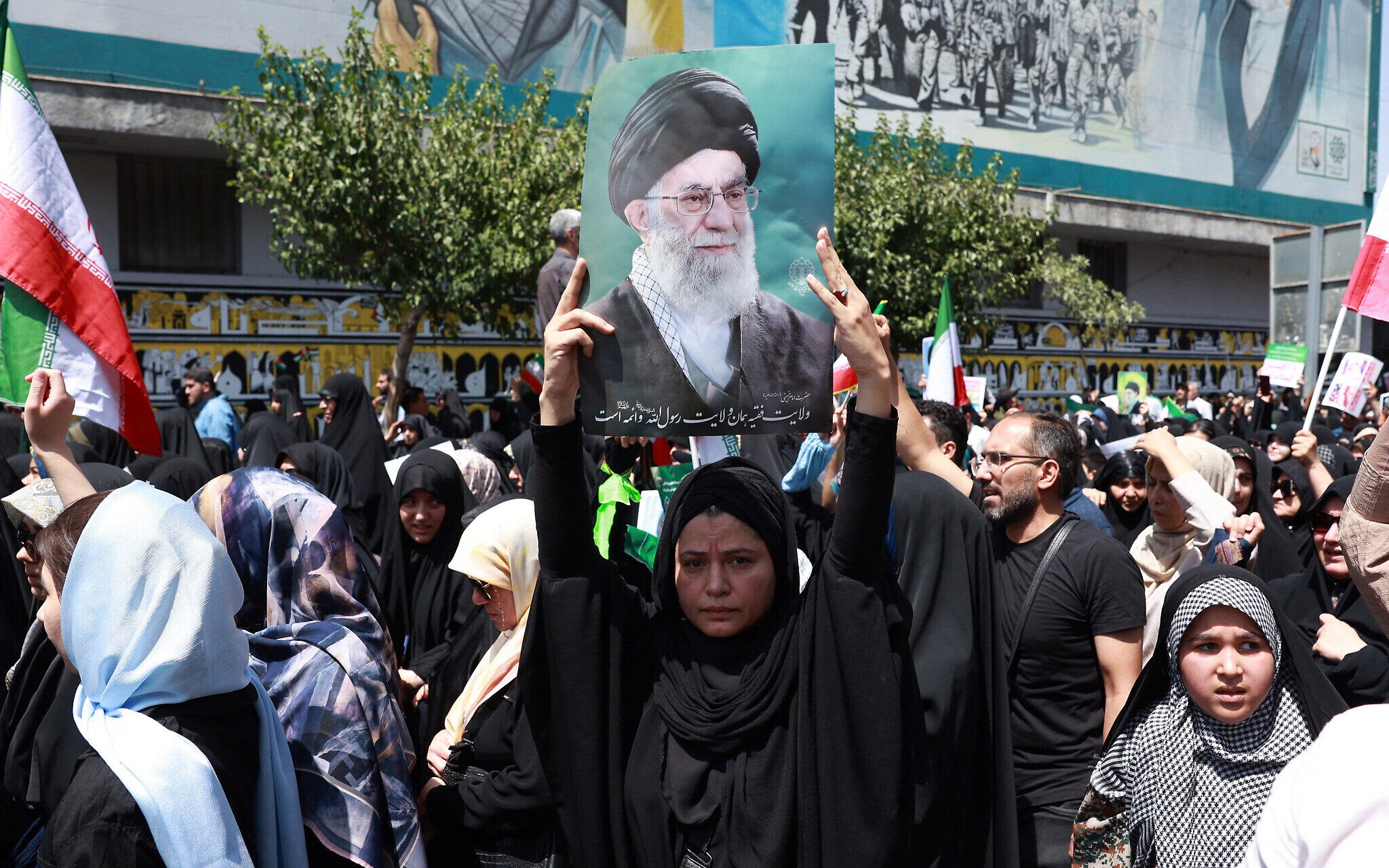
The Middle-East has been a crucial geopolitical zone of interest for the United States for decades, and in the 2020s, despite tasting defeat in Afghanistan after two decades of war, the United States continues to interfere in the affairs of this most unstable of regions. In recent years – largely due to pressure from Israel – Iran has become the primary foe for the United States in the Middle-East. Even after the US strikes against Iranian missile and alleged nuclear facilities last year, the Trump Administration continues to be informed by Israel that Iran still possesses the manufacturing capabilities for ballistic and, possibly, nuclear missiles. Of course, ever since the illegal 2003 invasion of Iraq, when the United States, then under President George W. Bush, falsely accused Iraq of possessing weapons of mass destruction, public support for renewed US military activities in the Middle-East has been steadily declining. Even within the Republican Party itself – which has always been staunchly pro-Israel – an increasing number of party members are beginning to abandon Trump’s pro-Israel policies in the Middle-East in favour of a truly America First policy – no foreign interventionism whatsoever, even if Israel is in question. However, with Israel’s status as the most powerful nation in the Middle-East all but secured after the unprecedented bloodshed over the course of the Gaza War since the 7th October 2023, for the pro-Israel crowd in the Trump Administration, the current biggest obstacle to total Israeli-US domination in the Middle-East is still to be taken care of – Iran.
The Iranian Government is currently facing the largest and most violent protests that the country has witnessed in recent years, and, if history has taught us anything, it is that domestic unrest is the prime time for foreign powers to intervene and exploit the situation for their own respective interests. For the US, the downfall of the Islamic regime of Iran and the restoration of the pro-Western monarchy in the country would provide a significant boost to US geopolitical influence in the Middle-East. As expected by now, Trump had also refused to rule out military action in Iran to achieve such aims. In previous days, Trump had stated that if the Iranian authorities continue to carry out violent crackdowns against the protestors and rioters, Iran would be “hit very hard”. Previously, during the 12-day Israel-Iran War – also known as the Twelve-Day War – Trump had carried out similar threats by outright bombing targets across Iran using stealth bombers. Speaking to reporters during an interview on Air Force One, Trump had stated that the US was “watching it [Iran] very closely. If they start killing people, like they have in the past, I think they’re going to get hit very hard by the United States.”
Following the recent meetings in the US between President Trump and Israeli Prime Minister Benjamin Netanyahu, the latter had refused to rule out the possibility of renewed and US-backed strikes against Iran, claiming that Iran had started rebuilding its crippled ballistic missile capabilities, and that Israel could count on further military support from the United States if a new conflict between Israel and Iran were to break out in the future. Considering the ongoing situation in Iran, such a conflict might erupt once again sooner rather than later.
THE NEW “DONROE DOCTRINE”
The historical Monroe Doctrine of the United States of America, was first created in 1823 in order to combat potential European colonialism in the Western Hemisphere at the expense of the United States. It was extended following the Second World War to include any and all foreign influence in the Western Hemisphere, European or otherwise. Critics of the Monroe Doctrine have argued that the policy had always been merely an excuse for the US to justify so-called “American exceptionalism” against the established norms of international law. Following the end of the Cold War, the United States had remained the only recognised superpower in the world, and despite only a few presidents publicly promoting the policy of the Monroe Doctrine, in reality, most US presidents and administrations had carried out the practical policies of the doctrine since its creation in 1823 – the policy of establishing US geopolitical domination over the Western Hemisphere. However, it has been made very clear to the international community that the US never really had any interest in keeping its influence contained within the Western Hemisphere. Instead, since the end of the Second World War, consecutive US governments had, publicly or otherwise, continued to adhere to the Monroe Doctrine, albeit at different levels of intensity. Under President Donald Trump and his second term as President of the United States of America, the Monroe Doctrine has quickly become the newly-termed “Donroe Doctrine”, establishing a new era in the history of US foreign policy – one which the world fears could lead to the most aggressive United States in decades, and also greatly risks making new enemies out of old allies and the continued collapse of the current world order as we know it permanently.