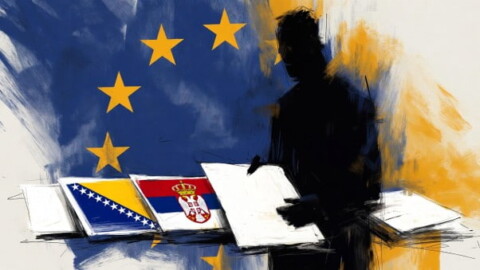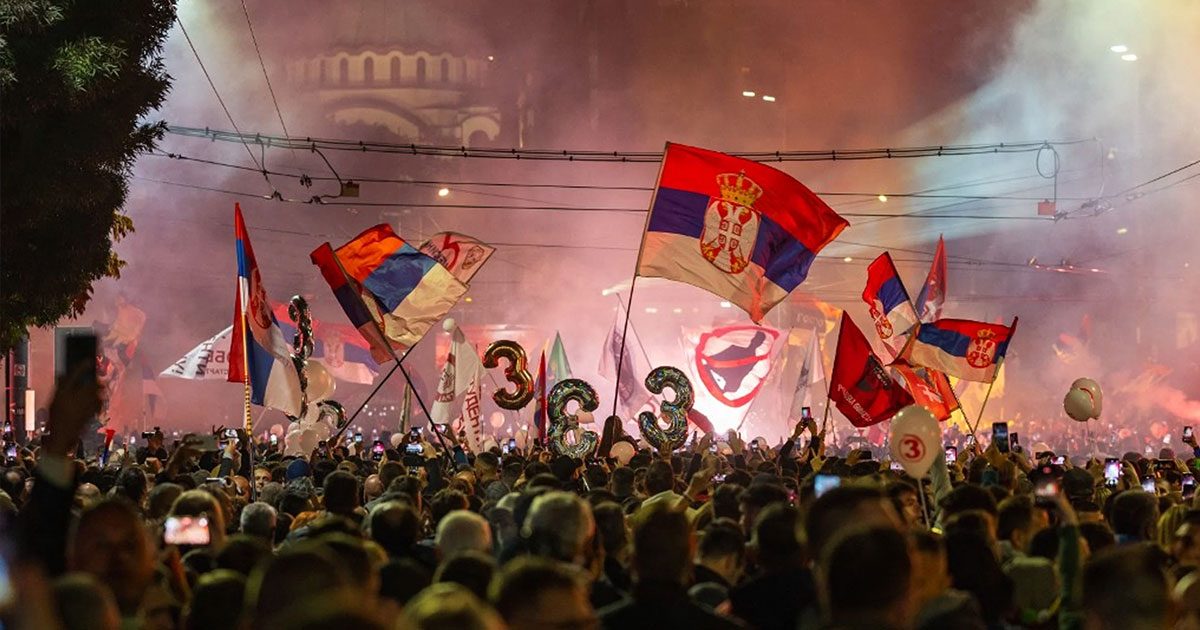
Will the departure from power of the Serbian Progressive Party and the Socialist Party of Serbia, after fourteen years of uninterrupted rule, and the Student List’s assumption of executive power bring changes to Serbian foreign policy? This is a question that both Serbs and foreigners have been asking frequently in recent days. Naturally, Serbs are asking it to a much greater extent, since the resolution of numerous issues of national policy, as well as the country’s economic stability and security, directly depend on the choice of foreign policy course.
Despite the significant influence that foreign policy exerts on all other policies in Serbia, given the delicate geopolitical position of our country and the Serbian people as a whole, it ranks only eighth in the Student List’s political programme, behind, for example, urban planning and telecommunications. That, in itself, speaks volumes.
RELATIONS WITH THE EU ARE THE TOP PRIORITY
In its foreign policy, the Student List has given absolute priority, just like the Serbian Progressive Party, to relations with the European Union, to which a separate chapter is devoted in the Student Plan. Although, at first glance, relations with the European Union appear to be viewed exclusively from the perspective of economic cooperation, the Student List in fact considers European integration to be Serbia’s foreign policy priority. After all, economic cooperation with the Union is also regulated by the fundamental instrument governing Serbia’s accession process to the EU—the Stabilisation and Association Agreement—and, in accession negotiations, political requirements and economic considerations go hand in hand.
Moreover, the Student List has gone a step further than the Serbian Progressive Party in its approach to European integration as the number one priority of Serbia’s foreign policy. Its political programme states that “obtaining IBAR status” is the first and most important objective in the European integration process. According to the New Methodology for EU Accession of February 2020, no negotiating chapter in accession negotiations with a candidate country can be provisionally closed until IBAR status has been obtained—that is, until the Interim Benchmark Assessment Report (IBAR) for Chapters 23 and 24, which concern the rule of law, has been issued.
Since obtaining IBAR status is one of the most important steps in the accession process of a candidate country to the Union, declaring the achievement of this status a foreign policy objective of the Student List clearly reveals the foreign policy priorities of the new authorities. It is evident that, with regard to European integration, Serbia’s new authorities wish to follow the path taken by Montenegro’s new authorities, who declared the day on which IBAR status was obtained a “historic day.”
A CRACKDOWN ON SERBIAN NATIONALISTS?
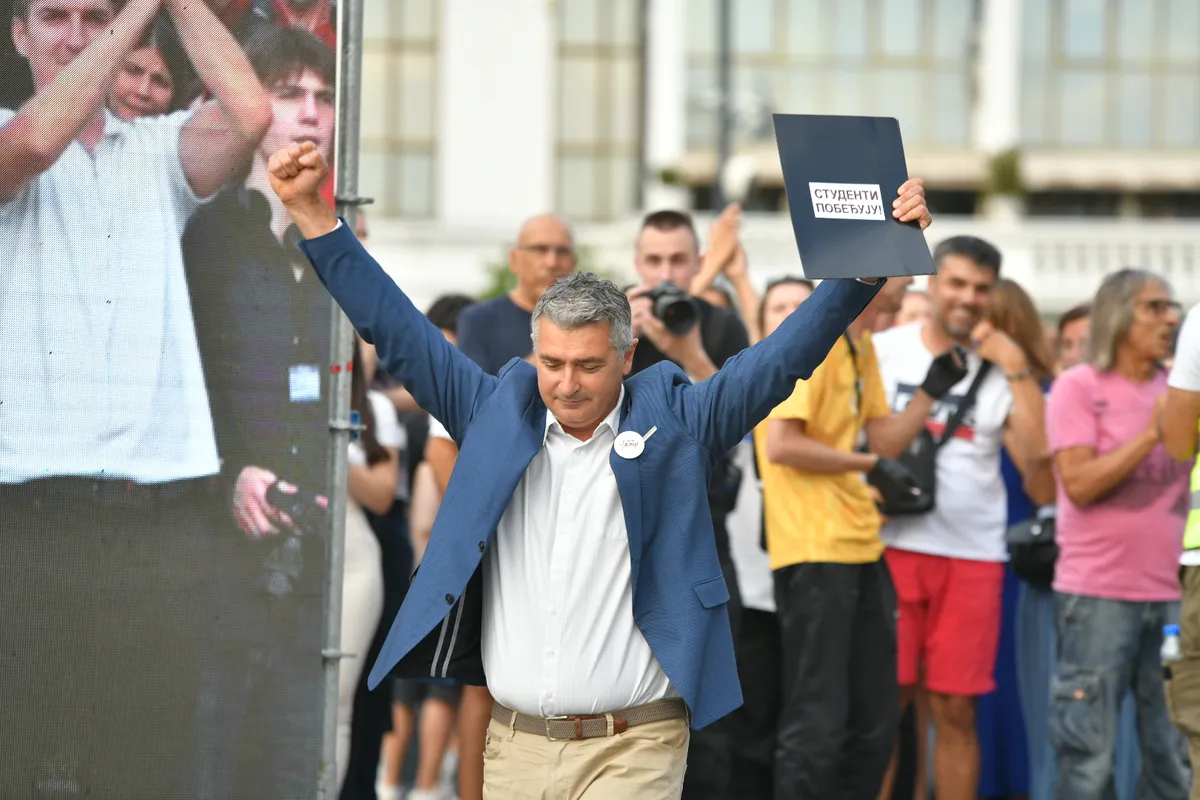
Since leading figures of the Student List, Ilija Srdanović and Bakić, openly stated after the elections that they had a plan to increase public support for the European Union in the country, this will most likely be pursued by insisting on the implementation of all EU requirements concerning the supposedly politically neutral rule of law, that is, Chapters 23 and 24. The aim would be to encourage a more positive public perception of the Union among a public euphorically preoccupied with the fight against corruption, and to present the accession process as the only means of eradicating the alleged authoritarian legacy. At the same time, the politically dangerous adoption of the notion of an authoritarian legacy and the necessity of establishing so-called transitional justice has the potential to become a legitimising basis for a crackdown on Serbian nationalists, in line with the long-standing demands of the so-called “Other Serbia” for the denazification of Serbian society.
THE NEW AUTHORITIES’ POLICY TOWARDS RUSSIA AND THE UNITED STATES
Unlike its approach to relations with the European Union, the Student List has not devoted a separate chapter to Serbia’s relations with Russia, in accordance with its foreign policy priorities. Instead, the new authorities’ policy towards Russia is outlined in a chapter entitled “Serbia and the World.” The policy towards Russia advocated by the Student List in its election programme is in no way different from the policy pursued by the Serbian Progressive Party since 2022. On the one hand, the Student List advocates not imposing sanctions on Russia, while, on the other, supporting respect for Ukraine’s territorial integrity. In addition, the Student List’s programme includes the following commitment regarding relations with Russia:
“We will preserve our traditional partnership with the Russian Federation on matters of coordination in the United Nations Security Council concerning the protection of Serbia’s territorial integrity and the resolution of outstanding issues of mutual interest.”
Immediately after the section on relations with Russia, the Student Plan sets out its position on Serbia’s relations with the United States, which is identical to the policy towards the US advocated by the Serbian Progressive Party while in power. This is particularly true of the details concerning the intensification of energy cooperation with the United States, which are reminiscent of the clauses in Vučić’s Washington Agreement. The proposal involves a “strategic dialogue” in the fields of telecommunications and energy, including “gas diversification” and the purchase of American liquefied natural gas. It also envisages strategic cooperation with the US in the field of artificial intelligence, as well as the “arrival of high-tech investments” from that country. This may indicate the continuation of cooperation in this area initiated under the Serbian Progressive Party, when the two sides signed the “Joint Statement on the AI Opportunity Partnership” (AI Opportunity Partnership) in New York in early October.
A WARNING OF PRESSURE ON CHINESE INVESTORS?
Following the section outlining the approach to relations with the United States, the Student Plan briefly presents the Student List’s vision for the future of Serbia’s relations with China. On the one hand, it insists on “developing a comprehensive strategic partnership” with China, while, on the other, Chinese investments are associated, in line with negative Western propaganda stereotypes, with widespread violations of domestic environmental and labour regulations. Accordingly, the Student List advocates “compliance with domestic regulations, environmental standards, workers’ rights and occupational safety.”
The latter could signal the prospect of politically motivated pressure on Chinese investors through the (mis)use of regulatory inspections, as well as through the announced introduction of new fees for the use of public assets in the mining sector, potentially creating room for Western companies. The Student List’s programmatic position on publishing all contracts between the Serbian state and foreign investors, and declaring null and void any contract that has not been made public, can also be interpreted as a warning of potential pressure on Chinese investors. Moreover, the enormous importance attached to this issue in the Student Plan is strikingly reminiscent of the 1917 Decree on Peace, through which the Bolsheviks announced the publication of all secret treaties concluded by the “government of landowners and capitalists.”
PAX SILICA TAKES PRECEDENCE OVER THE WAICO INITIATIVE
The fact that the Student Plan makes no mention of strategic cooperation with China in the field of artificial intelligence—formalised when Serbia joined China’s global WAICO initiative on 16 July 2026 (comprising 29 countries from the so-called Global South, as well as Serbia, Belarus and Russia from Europe)—while mentioning strategic cooperation in this field exclusively with the United States, could signal Serbia’s complete alignment with the American initiative for cooperation in artificial intelligence development, Pax Silica. Since a kind of Cold War in the field of high technology will be waged in the 21st century, choosing between the Chinese and American initiatives for artificial intelligence development carries considerable political significance. It is therefore no coincidence that the Pupin Initiative previously reacted critically and immediately to the decision by the authorities in Belgrade to join China’s global WAICO initiative.
All in all, the Student List’s foreign policy programme is extremely general in nature and often contradictory. Taken as a whole, it largely resembles the foreign policy pursued by the governments of the Serbian Progressive Party and the Socialist Party of Serbia after 2022. However, it also contains details suggesting the possibility of a change in the existing course of Serbia’s relations with certain countries regarded as pillars of Serbian foreign policy.
Statements made by certain representatives of the Student List after the elections have also pointed to the possibility of such changes. In an interview with the Podgorica-based newspaper Vijesti, Jovo Bakić justified the Student List’s opposition to imposing sanctions by arguing that sanctions against authoritarian regimes weaken the opposition in those countries. In doing so, he effectively conveyed the message that Serbia’s new authorities regard Putin as an autocrat and fundamentally share Western politicians’ assessments of the political character of the contemporary Russian state.
In addition, Bakić claimed that Koštunica and Tadić had “handed over the Oil Industry of Serbia to the Russian Federation for next to nothing.” It remains unclear how the new authorities—who are, in any case, virtually unknown in Moscow and, unlike the Serbian Progressive Party and the Socialist Party of Serbia, have no established networks or contacts in Russia—will negotiate an extension of the short-term gas supply agreement in the near future, following such negative messages from one of their prominent members.
“PROTECTING INTERESTS” OR IMPOSING STATE ADMINISTRATION ON NIS?
That relations between Serbia and Russia could nevertheless deteriorate, despite the Student List members’ general pledges not to impose sanctions on Russia, can be inferred from a statement by one of the Student List’s leading figures, Vladan Kuzmanović. In an interview with RT Balkan, he described the previous government’s policy regarding NIS as “passive” and stated that the new authorities would become involved in the sale of NIS in order to “protect their interests.” It is unclear how representatives of the Student List intend to become involved in the sale process when the Russian side has already made it clear that the Serbian state, as a minority shareholder in NIS, has no place at the negotiating table. This is particularly significant given that the sale is being forced upon the Russian side and concerns an asset of strategic importance to Russia, in a politically sensitive situation.
If the Russian side was unwilling to make its negotiations with a potential buyer of NIS accessible even to Vučić, a person with longstanding and extensive connections at the highest levels of the Russian establishment, it is difficult to imagine that the Kremlin would allow entirely unknown figures from Belgrade’s new governing structure to become involved in the process. In that case, it is entirely unclear how the new authorities, in Kuzmanović’s words, intend to “protect Serbia’s interests” in the sale of NIS.
Since the right of first refusal cannot be exercised under conditions of a forced sale, and Article 2 of the Agreement between the Government of the Republic of Serbia and the Government of the Russian Federation on Cooperation in the Oil and Gas Industry prohibits nationalisation, did Kuzmanović mean by protecting Serbia’s interests the imposition of state administration over NIS by the Serbian government, should the Russian side refuse to involve the new authorities in the sale process and the entire transaction become protracted? Such a move would not only be legally questionable, as the Bulgarian case demonstrates, but would also seriously disrupt Serbian-Russian relations and jeopardise the continuation of the favourable gas supply agreement with Russia.
FROM THE PERSPECTIVE OF RUSSIAN ANALYSTS
Although Montenegro’s decision to introduce visa requirements for Russian tourists demonstrates that it is possible for Serbia’s new government, under pressure from Brussels, to “shoot itself in the foot,” it is difficult to imagine the new authorities opting for such a politically high-risk move, which would leave Serbia without cheap and reliable Russian gas. One thing is certain: Serbia’s energy ties with Russia, established by the 2008 Agreement, created a crucial economic precondition for the country’s multipolar foreign policy. As such, they undoubtedly represent a burden for those political forces seeking to make Serbia entirely dependent on the European Union.
Assessments of the post-election situation in Serbia by Russian analysts and officials differ. The reason appears to be that the Student List, whose organisation lacks transparency, remains an unknown quantity in Russia, both in terms of its personnel and its political programme. Accordingly, one of Russia’s leading political analysts, Fyodor Lukyanov, points out that it is too early to say “that the situation in Serbia has become clear.” He also considers it too early to assess whether this heterogeneous organisation, made up of figures largely unknown to the public, will be capable of governing the country successfully.
According to Lukyanov, the only thing that can be stated with certainty is the future ideological orientation of a Student List government, which will be defined predominantly by “former members of the Democratic Party” and which the Russian political analyst describes as “pro-Brussels.”
Meanwhile, Russian expert on the Balkans Katarina Entina expects positive cooperation between Moscow and Belgrade to continue, taking into account, above all, statements made by certain Student List members, such as Radomir Saičić. Senior Russian state officials, however, have been far more reserved in their assessments. Influential Russian senator and one of the key figures involved in the latest amendments to the Constitution of the Russian Federation, Andrey Klishas, went so far as to write immediately after the elections that “there is a high probability that we will witness Serbia’s turn towards a European course.”
WHO IS REALLY IN CHARGE HERE?
One of the world’s leading economic experts, Branko Milanović, also believes that some changes to the country’s existing foreign policy course can be expected during the first months of the new government. Although he generally believes that “nothing fundamental will change in Serbia’s foreign policy, because a country’s foreign policy is a product of its geopolitical position,” Milanović expects certain changes in relation to Vučić’s foreign policy during the first few months. Vučić, he argues, “although he never openly admitted it, conducted foreign policy along the lines of Tito’s approach.” Consequently, according to Milanović’s assessment, the new government will “probably initially return to a policy of blindly following a pro-European course, until it too becomes disillusioned with the EU, just as all its predecessors have.” “After that, it will try to restore and revive relations with China,” the Serbian economist concludes. At the same time, this Johns Hopkins University professor points out that the main demands for Serbia to impose sanctions on Russia are coming from the United Kingdom, but that such sanctions “would have no economic significance for Russia,” just as they “would bring nothing to the West,” while sanctions against Russia would “harm the population of Serbia.” In view of this, Milanović concludes that their purpose is entirely exhausted by “the demonstration of power and colonial subservience.” In a word, sanctions imposed by Serbia on Russia would “show who is really in charge here.”

PROMISES: GENERAL AND INSUFFICIENTLY DEVELOPED
One of the world’s three leading credit rating agencies, Fitch Ratings, assesses that “there are currently few clear indications of this movement’s economic and fiscal priorities” (the Student List, author’s note), since its “pre-election promises are general in nature and insufficiently developed.” It also warns that implementing the Student List’s political programme could encounter difficulties “stemming from the movement’s limited political experience, its decentralised structure, ideological diversity and the highly politicised nature of state institutions.”
Despite this cautious assessment, Fitch Ratings analysts already estimate that the Student List’s foreign policy, “as was the case under the previous government,” will “seek to maintain a balance in relations with Russia, Europe and China, given Serbia’s significant economic ties with these actors, including those in the energy sector, as well as the circumstances of heightened geopolitical tensions.”
MESSAGES INTENDED TO KEEP MOSCOW OFF GUARD
It appears that the geopolitical situation in Europe and the world, the country’s economic circumstances and the possibility of political instability will undoubtedly reduce the new authorities’ room for manoeuvre in making significant changes to foreign policy through even closer alignment with Brussels and an acceleration of EU accession negotiations. This is, after all, a political and ideological position shared by more than 80 per cent of the Student List’s MPs.
This does not, however, mean that the new authorities will not attempt to pursue such a policy during the first months of their term. Accordingly, the positive messages sent to Moscow by the Student List in the first days after the elections do not necessarily mean anything. These messages may be intended to keep Moscow somewhat reassured while Serbia’s new government is being formed and consolidated. Only afterwards will the true nature of its foreign policy become apparent.