
This year, Italy has witnessed a troubling series of violent incidents: clashes in Turin following the eviction of the Askatasuna social centre in January, riots on the fringes of an anti-Olympics march in Milan in February, and, most recently, scenes of destruction in Milan, Turin and Bologna on 17 October. To discuss how young people from Lega Giovani interpret this escalation, and whether it reflects spontaneous social anger or something more organised and ideologically driven, we speak with Davide Quadri, the organisation’s International Secretary. His work to build bridges between young conservatives across Europe is attracting considerable interest.
“What we have witnessed are not spontaneous protests. The Italian left claims it does not know who is behind them, but in reality, we know very well that the groups responsible for setting our cities ablaze are militant far-left groups, social centres, and second- and third-generation immigrants who represent a potential electoral base for the left. These are people whom the left has spent years accommodating and pandering to. Today, the left pretends to condemn violence while simultaneously seeking to grant citizenship to these young immigrants in order to secure a reliable reservoir of votes.”
Many of those arrested during the latest protests were teenagers, and some were minors. What does the fact that so many young people are becoming involved in street violence tell us? And how can a movement like yours offer young Italians a more constructive way to express their frustrations over the cost of living, housing, and uncertainty about the future?
The cost of living and the housing crisis are issues affecting all young people who want to build a future of their own. The right approach, alongside participating in peaceful protests, is to put forward proposals and call for the adoption of measures that support young people entering the labour market, as well as family policies that enable them to start families of their own. Such demands can be made without smashing shop windows or stealing designer clothes. In Italy, the youngest protester was just 11 years old. I find it difficult to believe that he was protesting because he could not afford to buy an apartment.
Immigration remains one of the defining issues of Giorgia Meloni’s government, and the League is one of its most vocal advocates. How would you assess the results achieved so far, from border controls to the agreement with Albania, and what do you believe still needs to be done, both in Rome and in Brussels?
In recent years, the Italian government has made considerable efforts to address the migration crisis. Unfortunately, certain parts of the state apparatus have systematically sought to undermine laws with which they disagree. Giorgia Meloni has sought to restore common sense to Europe and has often managed to achieve tangible results. Nevertheless, more needs to be done, including the adoption of legislation on remigration, drawing in part on Danish legislation in this area. Italy has, moreover, signed an agreement with Denmark.
As International Secretary, you have a particular insight into these issues. How do you see the prospects for young people who stand up for tradition, national sovereignty and conservative values, both in Italy and across Europe?
This dystopian, multicultural and woke world will destroy itself, becoming a victim of its own contradictions and internal dysfunctions. Fortunately, when ideological saturation reaches a tipping point, a reset occurs. And that reset comes about thanks to the European peoples themselves, when they recognise the absurdity and madness surrounding them and vote for those who can restore common sense.
Looking ahead, what do you consider to be the greatest opportunities for your movement and like-minded youth organisations across Europe? On the other hand, what are the main dangers and risks that young conservatives should be prepared for?
We must act more decisively and place greater emphasis on our identity and traditional values. There is a strong desire among young people to rediscover the fundamental values of Christian Europe. One need only look at the scenes in Paris during the Pope’s visit. That is where we must begin again.
Do you expect the next European Parliament elections to bring about a genuine shift in the balance of political power within the European Union? What would stronger representation for patriotic and sovereigntist political forces in Brussels mean in concrete terms for ordinary European citizens?
We expect surprises in the 2029 European Parliament elections. The political establishment, after all, is doing everything it can to weaken sovereigntist parties. Nevertheless, we will eventually reach a point where election results can no longer be annulled on the pretext of alleged foreign interference. Then we will truly change everything.
The rightward shift in the United States has served as an inspiration to many on the European right. In your view, what can European conservatives, particularly young people, learn from the American experience, and which elements should be adapted to European traditions rather than simply adopted wholesale?
My answer is based on two simple and clear principles. First, addressing immigration, both by controlling our borders and by combating illegal immigration within our territory. Second, conducting foreign policy in a way that supports our economies and businesses.
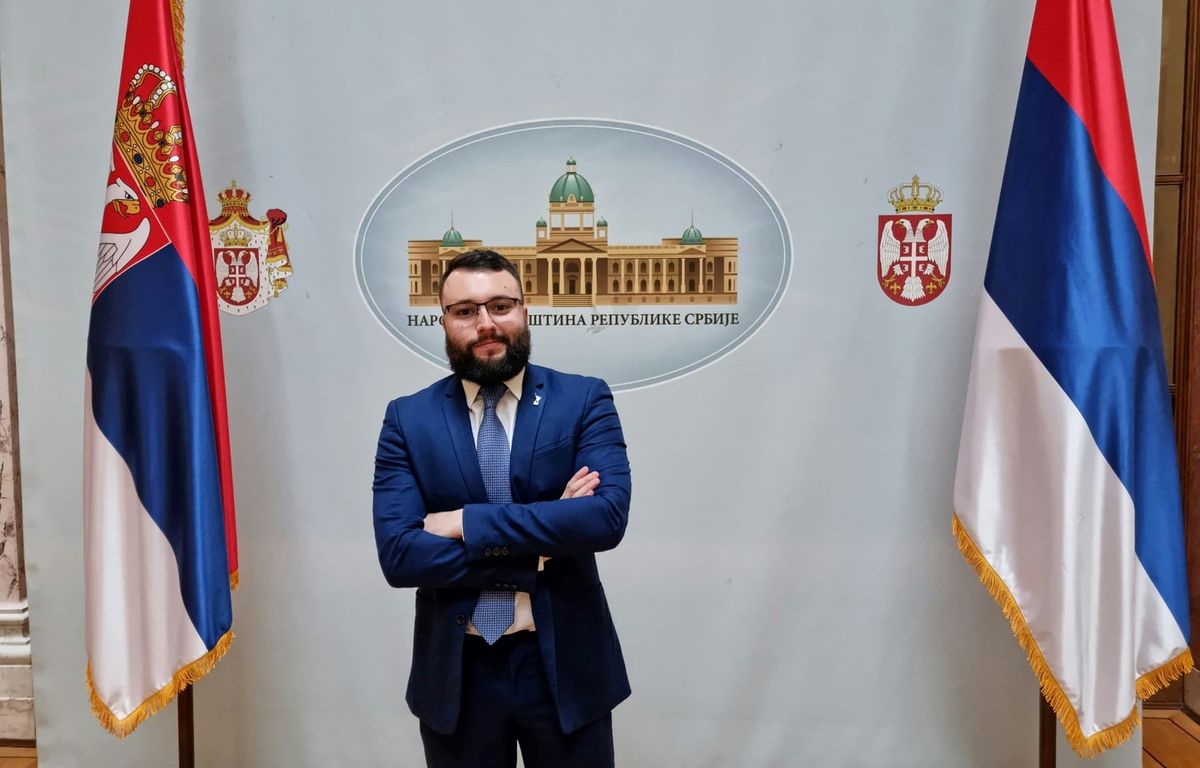
Finally, a question particularly close to our hearts: how do you see the opportunities for cooperation between Lega Giovani and like-minded young people in Serbia and across the Balkans? Is there room for joint initiatives, exchanges of experience or the establishment of a common platform?
In recent years, we have worked to strengthen cooperation between our sovereigntist movements. I believe that in the years ahead, we must work even more decisively to consolidate these ties, particularly by strengthening the patriotic front, which is gaining momentum across Europe. I am confident that we can turn a new page and bring change to a Europe that has lost touch with its roots.