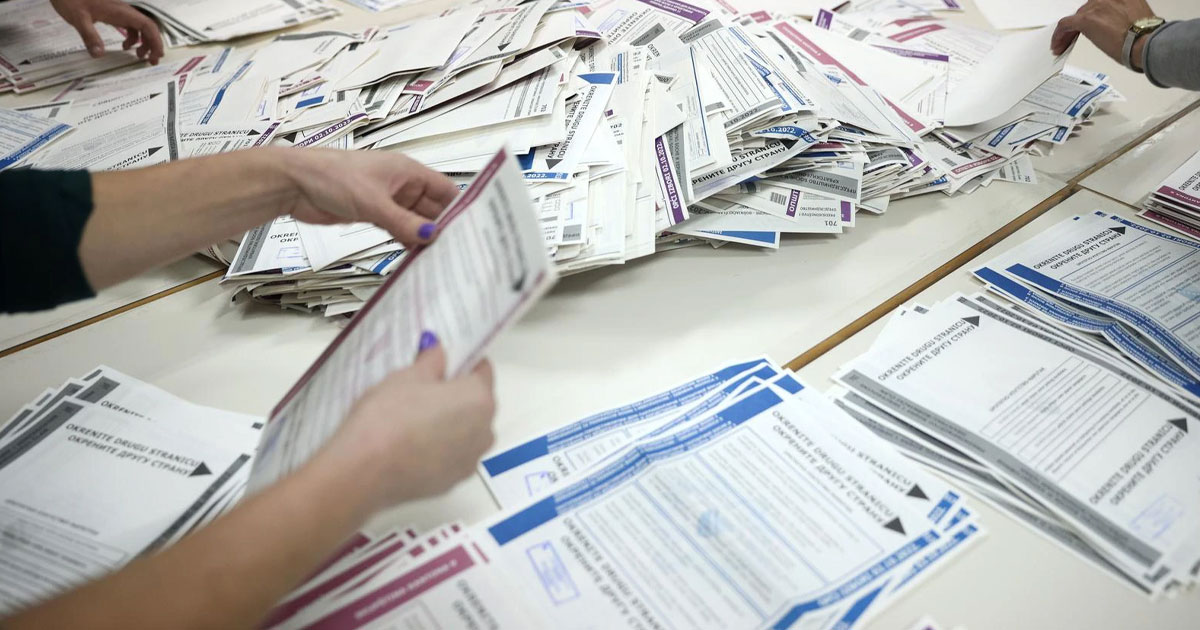
Former U.S. Ambassador to Bosnia and Herzegovina Michael Murphy was reluctantly forced to acknowledge that the biggest winner of the recently concluded general elections was none other than his greatest political adversary, Milorad Dodik. Murphy had devoted all his capabilities to Dodik’s removal, even staking his ambassadorial position on it. The American had to acknowledge the obvious facts: otherwise, he would not only have looked foolish, but such self-deception would also have seriously harmed the future implementation of the plans of the political camp in whose name he had acted in Sarajevo until recently.
VICTORY NOT ONLY ON THE SYMBOLIC LEVEL
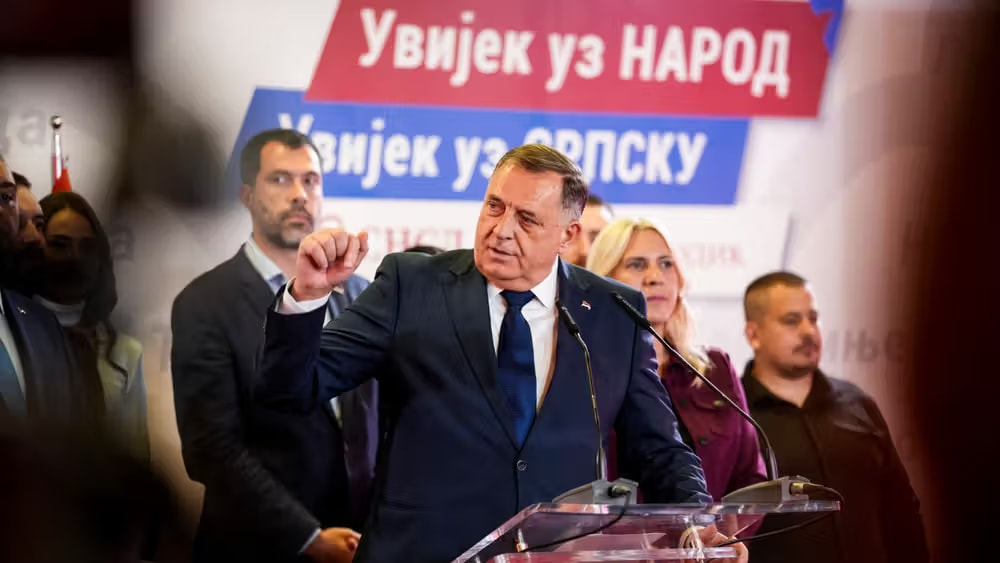
Dodik was first and foremost a symbolic winner. From the position of a politician whom sanctions and what the author calls fabricated proceedings were intended to permanently drive out of political life in Republika Srpska and BiH, he managed, together with SNSD and with his name appearing in the titles of electoral lists, to secure victories at all levels of government in BiH. The victory was not merely symbolic: numerically, SNSD’s current result was more convincing than its result in the 2022 general elections.
In the 2022 elections for the National Assembly of Republika Srpska, SNSD won 34.64 percent of the vote; in the latest elections it won 39.14 percent. In the presidential election, the SNSD candidate received 47.06 percent of votes cast in 2022 and 52.34 percent in 2026. A comparison by municipality and city shows that SNSD also won this time in most places where the opposition candidate had won in 2022. In 2025, the opposition candidate for president of Republika Srpska won in twenty-one municipalities and cities; in the latest elections, that happened in only eight. This could provide SNSD with a good foundation ahead of the 2028 local elections.
A HEAVY DEFEAT FOR THE OPPOSITION PARTIES
At the state level, the SNSD candidate for the Serb member of the BiH Presidency received 51.65 percent of votes cast in 2022 and 55.58 percent in the latest elections. In elections for the House of Representatives of the Parliamentary Assembly of BiH, Dodik’s SNSD more or less repeated its previous result: it won 41.15 percent in 2022 and 41.21 percent this time.
Given these figures, and especially the highly optimistic pre-election expectations of opposition parties from Republika Srpska that they would finally send into opposition the party of Viktor Orbán’s ally—a party suppressed and punished from abroad for years—the opposition’s defeat is much heavier than the numbers alone suggest.
The electorate in Republika Srpska sent a clear message that external threats from Brussels cannot be an advantage in domestic electoral competition. This was one of the important political gains of the election. The EU’s marginalization as a factor influencing elections in Republika Srpska would not have happened, however, had the world not changed and had Dodik and his team not established useful communication with the Trump administration and strengthened already good relations with Israel and Russia.
THE DECLINE OF LIBERAL CRITICISM OF THE GOVERNMENT
The electoral failure of the opposition, especially that of Nebojša Vukanović, the colourful and extremely ambitious leader of the For Justice and Order party, showed, as Mihailo Bratić observes, that the full range of liberal criticism—from corruption to media freedom and the rule of law—is losing ground in Republika Srpska when confronted with three factors: a higher standard of living compared with the previous three decades marked by war and privatization; effective foreign-policy maneuvering and perseverance under exceptionally difficult circumstances; and nationally oriented politics.
Bratić adds: “This ideological challenge facing the opposition is very serious. Just as the government found the basis of its new legitimacy in its confrontation with sanctions and the Office of the High Representative (OHR), the opposition cannot base its future on recipes from the late 1990s and early 2000s. Most of those recipes were bad for the country even then, and now they are not good even for their promoters. This does not mean turning a blind eye to the social problems raised by the opposition. But reinterpreting them within a conservative, state-building and sovereigntist framework—one oriented toward stability and taking account of a country under constant and unusually strong external pressure—is the only way for the opposition to chart its future. Otherwise, it faces stagnation in dead rhetorical formulas born of a liberal-globalist clique, which is losing ground even in the countries where it originated and never had a significant social base in Republika Srpska.”
The failure of Serbian opposition parties to remove SNSD from power through criticism confined to liberal political discourse is an important contribution to the defeat of the idea of a civic Bosnia and Herzegovina.
A SHIFT WITHIN THE OPPOSITION
The figures show a shift within the opposition in Republika Srpska: the Serbian Democratic Party (SDS), with 12.11 percent, has yielded its former leading position to Draško Stanivuković’s Safe Srpska Movement, with 14.10 percent.
This does not guarantee a secure political future for the young mayor of Banja Luka’s movement. In the coming period, the once ‘new star’ of Republika Srpska politics will need to build organizational infrastructure and define its ideological and political profile much more clearly. Despite its electoral failure, the SDS’s political future therefore appears more certain than that of Stanivuković’s organization. Stanivuković lacks what the SDS still has—or could rebuild: organizational infrastructure and a distinct political identity. The SDS, meanwhile, lacks Stanivuković’s vitality. A possible merger, after Stanivuković distances himself from the negatively burdensome legacy of the Party of Democratic Progress (PDP), could positively affect political life in Republika Srpska.
PARLIAMENTARY SEATS—THE SOVEREIGN WILL OF THE VOTERS
SNSD’s position has also strengthened: in the new National Assembly of Republika Srpska it will hold thirty-four seats instead of twenty-nine, out of eighty-three, and will have a much stronger position within the governing coalition. Cautiously, one can conclude that the results indicate a gradual consolidation of political parties in Republika Srpska. Movement toward a three-party or even two-party system could stabilize internal conditions and restore sovereignty, since negative external influence on Banja Luka, intended to restrict political freedom, is exercised above all through small parties with outsized political ambitions.
Banja Luka political analyst Aleksandar Stojanović says that SNSD’s seats this time “are no longer the result of post-election bargaining and compromises, but the direct and sovereign will of the voters,” meaning that “the blackmailing capacity of all other actors—both coalition partners and the opposition—has been reduced to a minimum.”
WEAKENING OF THE POLITICAL INFLUENCE OF SARAJEVO’S BOSNIAK PARTIES
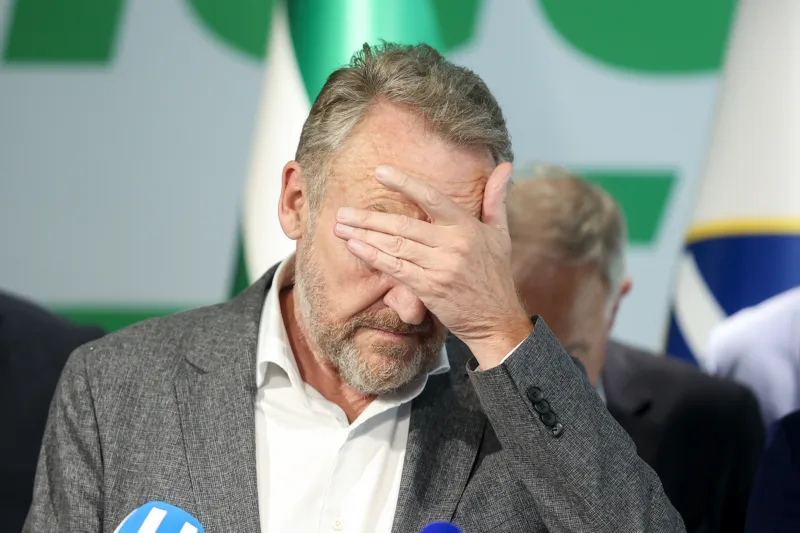
The latest elections removed another obstacle to restoring Republika Srpska’s sovereignty and gradually returning it to the constitutional and legal framework established by Dayton. Sarajevo-based Bosniak parties will apparently have four seats in the new National Assembly of Republika Srpska instead of five.
The loss of one seat will affect the Council of Peoples of Republika Srpska. In the Bosniak Caucus, Sarajevo-based parties will be able to appoint four of the eight members, while SNSD will appoint the other Bosniak members. For the first time, Sarajevo’s Bosniak parties will thus lack an absolute majority in the caucus, which they need to block a possible amendment to the Constitution of Republika Srpska or to invoke a vital national interest to block a law in the National Assembly. At the same time, for only the second time in the history of Dayton BiH, there will be no representatives of Sarajevo-based Bosniak parties among representatives from Republika Srpska in the House of Representatives of the Parliamentary Assembly of BiH.
Sarajevo’s so-called pro-Bosnian parties—which are, in fact, Bosniak parties (SDA and SDP)—won seventeen seats in the 1998 elections for the National Assembly of Republika Srpska. The latest result therefore forms part of a trend weakening their political influence within Republika Srpska. Ramiz Salkić, the SDA candidate for president of Republika Srpska, warns that “without Bosniaks in the RS entity, Bosnia and Herzegovina would be meaningless.”
The purported civic-Bosnian concept—which the author characterizes as in fact pro-Muslim—and which forms the ideological basis of a unitary BiH, suffered a more serious blow at the level of the BiH Presidency than in the National Assembly of Republika Srpska.
Croats in BiH succeeded in securing what the author calls their legitimate representative in the Presidency: Darijana Filipović of HDZ BiH. Her decisive victory thwarted an attempt by Sarajevo’s unitarists to once again have a Croat associated with Željko Komšić’s Democratic Front in the Presidency. After a long interval, the Presidency will again function as a collective body composed of representatives of the country’s three constituent peoples. With Čović’s HDZ BiH becoming the sole representative of what the author describes as the authentic interests of Croats in the Federation of BiH, Sarajevo’s so-called pro-Bosnian politics is left without a Croat component and will struggle to ‘sell’ the idea of a civic BiH.
THE FINAL BLOW TO THE UNITARIST CONCEPTION OF A CIVIC BiH
Finally, the SDA’s electoral victory delivered the final blow to what the author calls the crypto-Muslim, unitarist conception of a civic BiH. At the level of the Federation of BiH, SDA defeated SDP, Sarajevo’s principal promoter of the civic-unitarist concept.
The defeat of the false pro-Bosnian, civic-unitarist Sarajevo political agenda, followed by the mobilization of voters along national lines around SNSD, SDA, and HDZ BiH, appears to be the most significant consequence of the latest general elections in BiH.
Such an outcome could secure a much more peaceful and prosperous future for BiH, both entities, and all three peoples, and gradually return the country to the only sustainable constitutional and legal framework: the original Dayton Constitution. However, protectorate status does not guarantee this outcome, because foreign actors can still intervene coercively to overturn the electoral will of the peoples. As long as the foreign protectorate remains, the megalomania of hegemonic Muslim politics—which, in the author’s view, has been the principal source of instability and a threat to peace in BiH from 1991 to the present—will not subside.