Over the past decade, the Government of Serbia has consistently emphasized its commitment to European standards, treating accession to the European Union as one of the country’s key foreign policy priorities. Official statements and strategic documents have regularly underscored Belgrade’s aspiration to integrate into European institutions, presenting this objective as the natural continuation of a long-standing policy of closer alignment with the West. This strategic direction has remained unchanged regardless of changes in government or shifts in public opinion.
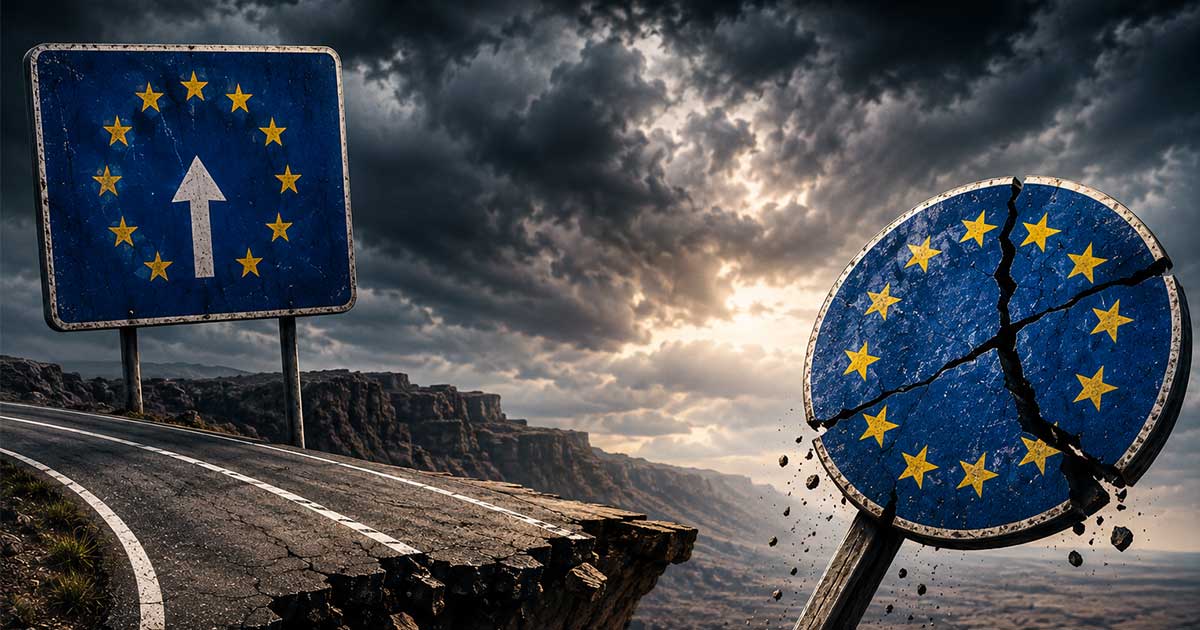
In recent years, however, the European Union itself has undergone structural changes that call for a reassessment of its attractiveness.
A cumbersome bureaucratic apparatus, political competition between national governments and supranational institutions, as well as increasingly restrictive internal policies concerning digital freedoms and information control, have become defining characteristics of today’s European Union—a reality acknowledged even by participants in the European integration project itself. The European Commission has actively employed new regulatory instruments, such as the Digital Services Act (DSA), to regulate the information space, introduced measures that limit financial anonymity, and has gradually begun establishing systems of comprehensive online digital identification. Under the banners of combating disinformation, money laundering, and protecting minors, the European Union is rapidly dismantling the sphere of personal freedoms that, until recently, was presented as one of the fundamental pillars of European identity.
Under these circumstances, a fundamental question arises: if the European Union, which presents itself as a guardian of democratic values, is itself moving toward greater control and restrictions on individual freedoms, how meaningful is Serbia’s aspiration to become part of such a system?
Answering this question requires not only political reflection but also an honest analysis of the processes shaping today’s European Union.
DIGITAL CENSORSHIP, THE EUROPEAN WAY
Our discussion should begin with the internet—or, more precisely, with the methods used to regulate it. Today, this has become an exceptionally sensitive issue. Authoritarian regimes around the world are increasingly seeking to bring the digital sphere under state control, and, according to its critics, the European Union is becoming less and less distinguishable from them in this regard.
At the outset, the European Commission presented the Digital Services Act (DSA) as a tool for combating disinformation and illegal online content. In practice, however, critics argue that the legislation has gradually evolved into a mechanism of political censorship, enabling the EU’s supranational institutions to exert direct influence over global content moderation rules.
Ironically, its implementation has also drawn criticism from another self-proclaimed bastion of democracy and human rights—the United States. In a report published in July 2025, the U.S. House Judiciary Committee sharply criticized its European counterparts. Titled “The Censorship-Industrial Complex Abroad: How the European Union’s Digital Services Act Compels Global Censorship and Undermines American Free Speech”, the report argues that the European Union is using the DSA to pressure the world’s largest social media platforms into censoring political discourse. According to the report’s authors, the DSA effectively compels companies to alter their global content moderation policies, rather than limiting those changes solely to content available within the European Union.
The report cites specific examples of the DSA’s alleged misuse to suppress political expression. During a closed European Commission workshop held in May 2025, a hypothetical post stating, “we need to take back our country”—a common political statement that neither called for violence nor contained explicit hate speech—was reportedly classified as “illegal incitement to hatred,” requiring its mandatory removal. The report further claims that such censorship is applied asymmetrically, targeting primarily conservative political actors, while European regulators are increasingly seeking to restrict debate on issues such as immigration and environmental policy.

DSA – AN INSTRUMENT OF GLOBAL PRESSURE
According to its critics, the key factor that transforms the DSA into an instrument of global pressure is the scale of the financial penalties for non-compliance—up to 6 percent of a digital platform’s total annual global revenue. The report argues that the European Union has openly expressed its intention to make these penalties so severe that companies would prefer to censor content worldwide, even in countries where such censorship is not required by law.
Criticism of the DSA is not coming solely from across the Atlantic. It is also being voiced within the European Parliament itself. In parliamentary question E-003513/2025, Member of the European Parliament Erik Kaliňák described the DSA as “an authoritarian instrument for suppressing freedom of speech and democracy,” arguing that it grants the European Commission “broad powers to impose censorship around the world without any judicial oversight.” He also claimed that the law is being enforced “disproportionately against conservative viewpoints.”
In another parliamentary question, E-003303/2025, reference is made to the U.S. administration’s call for the repeal or fundamental revision of the DSA, which American officials reportedly regard as “an ideologically motivated censorship mechanism that is used, under the pretext of combating disinformation, to suppress undesirable opinions.”
Finally, European Parliament Resolution B10-0099/2025 states that the adoption of the DSA has made the definition of prohibited content “extremely vague” and that the legislation is “frequently used to censor political views that diverge from the dominant opinion.” The resolution expresses concern about the state of freedom of expression in Europe and emphasizes that the European Union should protect freedom of speech as one of its fundamental values, rather than restricting it through legislative measures.
As a result, the DSA—originally conceived as a framework for regulating the digital space—has, in the eyes of its critics, evolved into a system of global control over political discourse, relying on financial pressure to compel digital platforms to adopt content moderation standards that they describe as a form of direct censorship serving the interests of the European bureaucracy.
FINANCIAL CONTROL AND THE ABOLITION OF ANONYMITY
In addition to expanding control over online content, the European Union is also systematically tightening oversight of the digital financial environment through two key regulatory frameworks: the Markets in Crypto-Assets Regulation (MiCA), which entered into force in 2025, and the Anti-Money Laundering Regulation (AMLR), whose application is scheduled to begin on July 10, 2027. Taken together, these measures effectively eliminate financial anonymity across all 27 EU member states by establishing a comprehensive system of financial transaction monitoring.
Perhaps the most far-reaching measure is the ban on privacy-focused cryptocurrencies. Article 79 of the AMLR explicitly prohibits crypto-asset service providers (CASPs) from supporting or holding so-called “enhanced anonymity coins.” By July 1, 2027, all regulated cryptocurrency exchanges operating within the European Union will be required to delist Monero (XMR), Zcash (ZEC), Dash, and other similar cryptocurrencies specifically designed to conceal transaction details. Individuals will still be allowed to own and use these assets for private purposes, but they will no longer be able to trade them through any regulated European platform.
The MiCA Regulation, on the other hand, introduces mandatory licensing for all cryptocurrency companies and imposes what critics describe as “strict enforcement of Know Your Customer (KYC) rules—with no anonymous trading.” Every cryptocurrency transaction worth €1,000 or more requires full identification of both the sender and the recipient. Furthermore, the AMLR explicitly prohibits anonymous crypto accounts, as well as any services intended to “enhance anonymity or impede the tracing of transactions.”
Alongside regulating cryptocurrencies, the European Union is also tightening restrictions on cash payments. The AMLR introduces an EU-wide ban on commercial cash transactions exceeding €10,000, while customer identification procedures become mandatory for transactions ranging from €3,000 to €10,000. Individual member states retain the right to impose even lower thresholds.
Particularly noteworthy is the legal conflict this regulatory framework creates within the European Union’s own legal system. In its Guidelines on Processing Personal Data through Blockchain Technologies (April 2025), the European Data Protection Board (EDPB) highlights the fundamental contradiction between the immutable nature of blockchain technology and the requirements of the General Data Protection Regulation (GDPR). Under Article 17 of the GDPR, citizens have the “right to be forgotten,” meaning they may request the deletion of their personal data. However, blockchain’s immutable architecture makes it technically impossible to erase or alter data once it has been recorded. For this reason, the EDPB recommends that personal data should, whenever possible, not be stored on blockchain networks at all.
At the same time, however, the obligations imposed by the AMLR and MiCA require regulated companies to collect, retain, and transmit customers’ personal data in connection with blockchain-based financial transactions. As noted in submissions made to the EDPB, Bitcoin users cannot simultaneously comply with the GDPR’s emphasis on data minimization and anti-money laundering regulations that effectively eliminate anonymity. According to critics, this creates a fundamental legal contradiction that could ultimately render Bitcoin and other public blockchain networks legally problematic within the European Union.
Critics therefore argue that, under the legitimate objectives of combating money laundering and terrorist financing, the European Union is gradually dismantling citizens’ financial privacy. The restrictions apply not only to privacy-oriented cryptocurrencies but also to significant cash transactions. From this perspective, the end result is a regulatory system in which virtually every attempt to preserve financial confidentiality is increasingly treated as inherently suspicious—and potentially even unlawful.
COMPLETE DIGITAL IDENTIFICATION
Under the pretext of protecting minors online, the European Union is gradually introducing mechanisms of comprehensive digital identification that affect virtually all internet users without exception. On July 14, 2025, the European Commission unveiled the first version of a pan-European age verification application template. Based on open-source software, the application is presented as free, secure, and privacy-oriented. At the same time, it is fully compatible with the architecture of the future European Digital Identity Wallets (EUDI Wallets).
The template includes technical specifications aligned with EUDI Wallet standards, as well as an open-source mobile application that individual member states can adapt to their own national requirements. In October 2025, the European Commission released an expanded second version which, in addition to electronic identification methods, also enables age verification through passports and national identity cards. The pilot project began in July 2025 with the participation of EU member states, online platforms, and end users. Denmark, France, Greece, Italy, and Spain became the first countries to integrate the system into their national digital wallets or to develop their own applications based on the European Commission’s solution.
At the same time, the European Parliament was working on legislation introducing mandatory age verification. On November 26, 2025, the European Parliament overwhelmingly adopted a non-binding report—by 483 votes in favor, 92 against, and 86 abstentions—proposing the introduction of a minimum age of 16 for independent access to social media platforms, video-sharing services, and AI assistants throughout the European Union. Teenagers between the ages of 13 and 16 would only be permitted to access these services with parental consent.
The report also called for restrictions on platforms that fail to comply with European Union rules, as well as limitations on so-called “persuasive technologies,” including targeted advertising and certain forms of algorithmic influence. At the same time, it explicitly endorsed the development of a mobile age verification application and the European Digital Identity Wallet (eID).
Taken together, these initiatives establish the legislative foundation for mandatory age verification which, according to critics, ultimately affects the digital rights of all users, not just minors.
At the same time, data on how young people use the internet raises questions about the justification for such restrictions. According to the 2025 Eurobarometer survey, 65 percent of respondents aged 15 to 24 identify social media as their primary source of information on political and social issues. Instagram, TikTok, and X are the most popular platforms within this age group, while virtually all young people in the European Union use the internet on a daily basis.
Attempts to restrict access to this digital space reveal, according to critics, a fundamental contradiction. The European Union is preparing to limit young people’s access to what has become their natural environment for communication, education, and civic participation. In the age of the global digital economy, such measures, from the perspective of their critics, resemble a path toward technological stagnation and a widening generational gap in digital competencies more than an effective mechanism for protecting minors.
BRITISH PRECEDENTS: PRISON SENTENCES FOR SOCIAL MEDIA POSTS
The tightening of control over the internet and freedom of expression is not limited to continental Europe. The United Kingdom, although it has formally left the European Union, is following a similar—and in some respects even more restrictive—trajectory, gradually expanding mechanisms of digital oversight over its citizens.
On March 17, 2025, the first binding Codes of Practice under the Online Safety Act (OSA), originally adopted in 2023, entered into force. The legislation applies to all online platforms providing services to users in the United Kingdom, regardless of where the company is headquartered.
Penalties for violating the provisions of the Online Safety Act can reach £18 million or 10 percent of a company’s global annual revenue, whichever is higher. In addition, the law provides for criminal liability for company directors who fail to comply with its obligations.
The UK’s communications regulator, Ofcom, has been actively exercising these new powers. Since the Codes of Practice came into effect, Ofcom has launched five enforcement programs and examined 69 online platforms for potential violations. It has also opened 12 formal investigations into individual platforms, including Kick and 4chan. The next phase of the law’s implementation will involve publishing the official register of Category 1 and Category 2 platforms, which will be subject to additional regulatory obligations.
Particularly noteworthy is the position of the UK Ministry of Justice. In response to a parliamentary question requesting data on the number of individuals arrested, charged, or convicted over the previous five years for social media posts, the Ministry stated that it does not collect such statistics, as responsibility for arrests and charging decisions lies with the police and the Crown Prosecution Service (CPS).
The absence of centralized statistical data makes it more difficult to assess how the law is being enforced and leaves the criteria for criminal prosecution insufficiently transparent.
Taken together, these developments point to a broader trend that extends well beyond continental Europe. Even the United Kingdom, despite leaving the European Union, is following a similar path toward increasingly stringent regulation of online speech—through substantial financial penalties for digital platforms, criminal liability for company executives, and the imposition of prison sentences on citizens for certain activities on social media.
DOUBLE STANDARDS
In November 2025, the European Commission published a new Progress Report in which Serbia received one of its harshest assessments in recent years. In the area of freedom of expression, the report identified “backsliding”—a term in the European Union’s diplomatic vocabulary that signifies not merely a lack of progress but an intentional deterioration of the situation. The report cited the absence of a functional media regulator, verbal attacks by government officials against journalists, the use of SLAPP lawsuits (Strategic Lawsuits Against Public Participation), as well as growing political and economic pressure on the media. Overall, the report was regarded as the most critical to date, concluding that Serbia had experienced serious and deepening regression in the areas of the rule of law, media freedom, civic space, and democratic governance.
An even stronger condemnation followed in a European Parliament resolution adopted on October 22, 2025, by 457 votes in favor and 103 against. The resolution, titled “Polarisation and Intensified Repression in Serbia One Year After the Novi Sad Tragedy,” strongly condemned the continued political polarization and state repression in Serbia. The European Parliament called for a comprehensive and transparent judicial investigation into the Novi Sad tragedy, reaffirmed its support for the right of students and citizens to peaceful assembly and protest, and demanded greater institutional accountability together with the implementation of democratic reforms. The resolution also condemned the alleged use of Pegasus spyware, long-range acoustic devices, and tear gas against civilians. Members of the European Parliament emphasized that media freedom, judicial independence, and an enabling environment for civil society are fundamental democratic principles and essential prerequisites for Serbia’s accession to the European Union.
However, while Brussels and Strasbourg continue to demand that Belgrade uphold democratic standards, the European Union itself is, according to its critics, moving in the opposite direction. The Digital Services Act (DSA), which the European Union enforces under the threat of enormous financial penalties, is viewed by many not as an instrument for protecting democracy but as a tool of censorship. European regulators are increasingly requiring social media platforms to remove content they consider undesirable, while classifying ordinary political opinions as “hate speech” without any judicial oversight, effectively assuming the authority to determine the boundaries of acceptable public discourse.
Hungary, another frequent target of criticism from Brussels, further illustrates what critics describe as the paradox of the European Union’s position. On November 25, 2025, the European Parliament adopted a resolution concluding that the “autocratization of Hungary” was continuing. Adopted by 415 votes, the resolution reaffirmed Parliament’s position that Hungary constitutes “a hybrid regime of electoral autocracy” and called on the Council of the European Union to intensify proceedings under Article 7 of the Treaty on European Union. The authors of the resolution condemned what they described as “deliberate and systematic efforts by the Hungarian government to undermine the fundamental values of the European Union.”
This raises an obvious question: why does the European Union so sharply criticize Serbia and Hungary for restricting freedoms while, at the same time, appearing to overlook its own systematic departure from many of those same principles?
One interpretation advanced by critics is that Brussels uses criticism of candidate countries and politically non-compliant member states as an instrument of political pressure, while simultaneously legitimizing its own increasingly restrictive regulatory mechanisms. Under the banners of combating disinformation, money laundering, and protecting minors, the European Union is gradually expanding a system of comprehensive oversight over information, financial transactions, and the private lives of citizens—the very practices for which it simultaneously criticizes countries such as Serbia.
From this perspective, double standards are no longer merely a diplomatic tactic but have become one of the defining characteristics of the European project itself, in which rules written for others are not applied equally to those who create them.

SERBIA FACES A DIFFICULT STRATEGIC CHOICE
For decades, the European Union has presented itself as an “empire of freedom”—a guarantor of democratic values and human rights. Today, however, its critics argue that it is increasingly taking on the characteristics of a bureaucratic system with elements of authoritarian control. According to this perspective, the European Union is pursuing a systematic policy aimed at expanding oversight over information, financial flows, and the private lives of European citizens.
Serbia today faces a difficult strategic choice. It can continue to follow European standards that, according to critics, are rapidly losing both their democratic appeal and their normative credibility. Alternatively, it can seek different paths of development while preserving its own freedoms and sovereignty, basing its policies on national interests rather than on the expectations of distant bureaucratic institutions.
Alternatives do exist: strengthening regional cooperation, developing independent economic partnerships, and building a technological base founded on domestic innovation and cooperation with reliable partners. None of these options is beyond Serbia’s reach, provided there is sufficient political will.
The question of European Union membership is gradually ceasing to be solely a political and economic issue; it is increasingly becoming an existential one.
In the end, one simple question remains:
What does Serbia truly hope to gain from membership in the European Union?