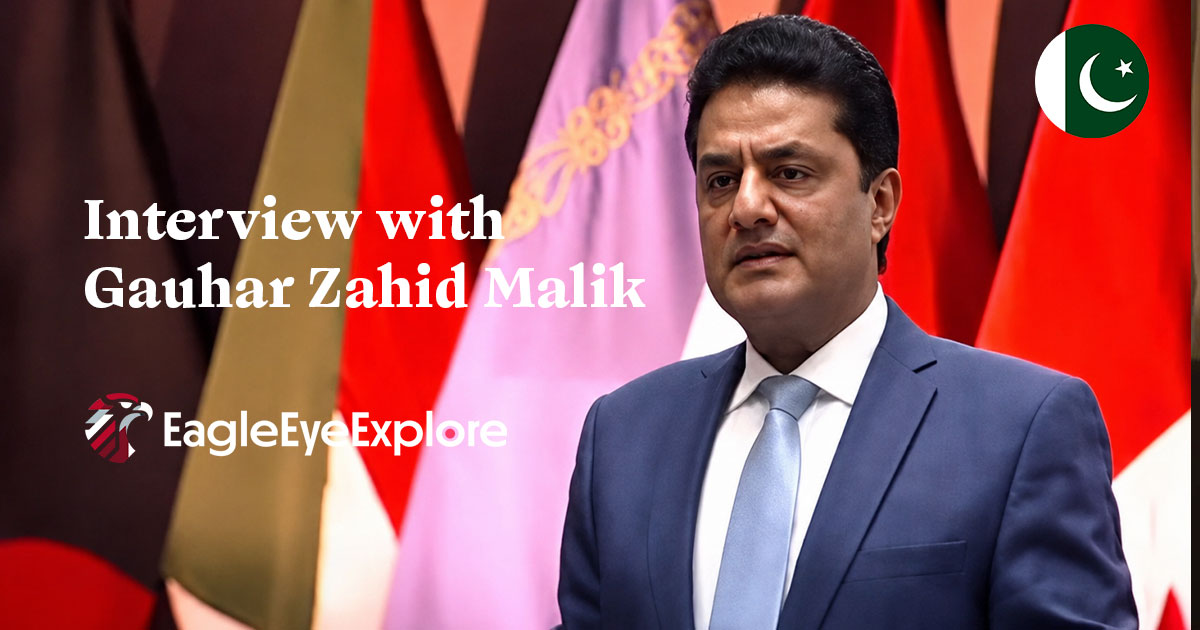
The English-language daily Pakistan Observer, founded in 1988, reflects the distinctly Asian—more precisely, Pakistani—media model, in which family ownership is closely intertwined with what is often dismissively referred to in Europe as the “national interest.”
According to my interviewee, Gauhar Zahid Malik, President of Pakistan Observer and son of the newspaper’s founder Zahid Malik (1937–2016), the publication “has consistently played a leading role in promoting Pakistan–China diplomatic relations.”
“Over the past ten years, we have actively supported and highlighted the progress of the China–Pakistan Economic Corridor (CPEC) through our special publication, the CPEC Edition, reporting on the latest achievements in economic cooperation, infrastructure development, and the shared vision of common prosperity. We have also strengthened media cooperation with leading Chinese media organizations by publishing and distributing Shanghai Daily and the China Daily Global Edition (CDGE) together with Pakistan Observer throughout Pakistan,” says Gauhar Zahid Malik, one of the founder’s two sons.
The significance of Pakistan Observer in informing the Pakistani public is easily illustrated by the fact that the newspaper’s various editions are circulated in the hundreds of thousands of copies, while its online editions attract a very substantial readership.
I met Gauhar Zahid Malik in Beijing at the Silk Road Media Network Journalism Awards ceremony. In 2023, the editorial team of Pakistan Observer received an award for its reporting.
Indeed, Pakistan Observer, together with its affiliated editions, has proven to be a credible and therefore valuable source of information on the development of economic and broader cooperation across Asia, as well as a reliable outlet for those seeking information and factual reporting about that part of the world.
During the complex developments in the Middle East, Pakistan has emerged, in the broader global context, as an important country in the process of negotiations between the United States and Israel on one side and Iran on the other. Mediation has long been a defining feature of Pakistan’s foreign policy. The country played a key role in establishing contacts between China and the United States in the early 1970s.
Your country has also played an important mediating role in the Afghan peace process, as well as in a number of lesser-known diplomatic and negotiating efforts, including talks between Iran and Saudi Arabia, Saudi Arabia and Yemen, Afghanistan and China, and even Turkey and Afghanistan. Where does Islamabad’s ambition to mediate come from—an ambition that has made it a genuine global peacemaker?
Pakistan’s foreign policy has always been based on peace, dialogue, and cooperation. Our ambition to mediate stems from two things: our belief that problems are best resolved through dialogue and our long history of building bridges between nations. Whether in the past or today, Pakistan has sought to play a constructive role whenever it can help reduce tensions and promote stability. We do this not for ourselves, but because a peaceful region and a peaceful world benefit everyone. Pakistan will certainly continue to support all sincere efforts aimed at dialogue and mutual understanding.

Pakistan serves as a mediator, but at the same time it faces its own internal challenges. The issue of Balochistan is a serious challenge confronting your country. The European public is not particularly familiar with the essence of this issue. To what extent does the separatist movement there threaten Pakistan, and what is your government doing to resolve this issue permanently? I ask this bearing in mind that five insurgencies have taken place there since 1948.
Every large and diverse country faces internal challenges, and Pakistan is no exception. Balochistan is an important province of Pakistan. Like people in other parts of the country, its residents aspire to development, education, employment, and a better quality of life. The Government of Pakistan’s approach is focused on dialogue, development, and inclusion. Major efforts are underway in Balochistan in the fields of infrastructure, healthcare, education, and economic development in order to create opportunities for the local population. At the same time, we remain committed to constitutional and political means of addressing grievances. Pakistan is a democratic and united country. Our goal is to ensure peace, prosperity, and equal rights for all citizens in every province, including Balochistan.
Pakistan is also one of the fastest-growing countries in the world in terms of population. At present, its population exceeds 255 million—more than half the population of Europe. How is Pakistan addressing the challenge of rapid population growth?
Rapid population growth remains a national challenge. The government is making every possible effort to manage it. Pakistan recognizes population management as an important national priority. We are focused on three key areas: healthcare, education, and economic opportunity. In partnership with provincial governments, health organizations, and civil society, the government is expanding access to family health services, maternal healthcare, and public awareness programs. At the same time, we are making significant investments in education, vocational training, and job creation so that our young population becomes Pakistan’s greatest strength. We see young people as Pakistan’s most valuable resource, and our goal is to provide them with the health, education, and opportunities they need to contribute to the country’s development.
It is well known that China is Pakistan’s most important political and economic partner. Your country was among the first to recognize the government in Beijing as the legitimate government of China. Do Asian countries have any reason to “fear” China, as Western media propaganda often suggests? What has Pakistan’s experience been in this regard?
Pakistan and China share a long-standing friendship based on mutual respect, trust, and cooperation. In our experience, China has always been a development partner for Pakistan—in infrastructure, energy, trade, and technology. This partnership is focused on growth and regional stability. Every country should build its international relationships on the basis of its own national interests. Pakistan’s experience with China has been positive and constructive. We believe that cooperation and dialogue among nations are the best way to ensure peace and prosperity in Asia and beyond.
How important is Pakistan’s military cooperation with China?
Military cooperation is an important component of the broader strategic partnership between Pakistan and China. Like Pakistan’s defense cooperation with many other friendly countries, our cooperation with China covers the fields of defense and security. Its objective is regional peace, stability, and the ability to respond to common challenges. This cooperation is part of our broader partnership, which also focuses on trade, development, and people-to-people ties. For Pakistan, strong relations with all partners contribute to a peaceful and secure region.
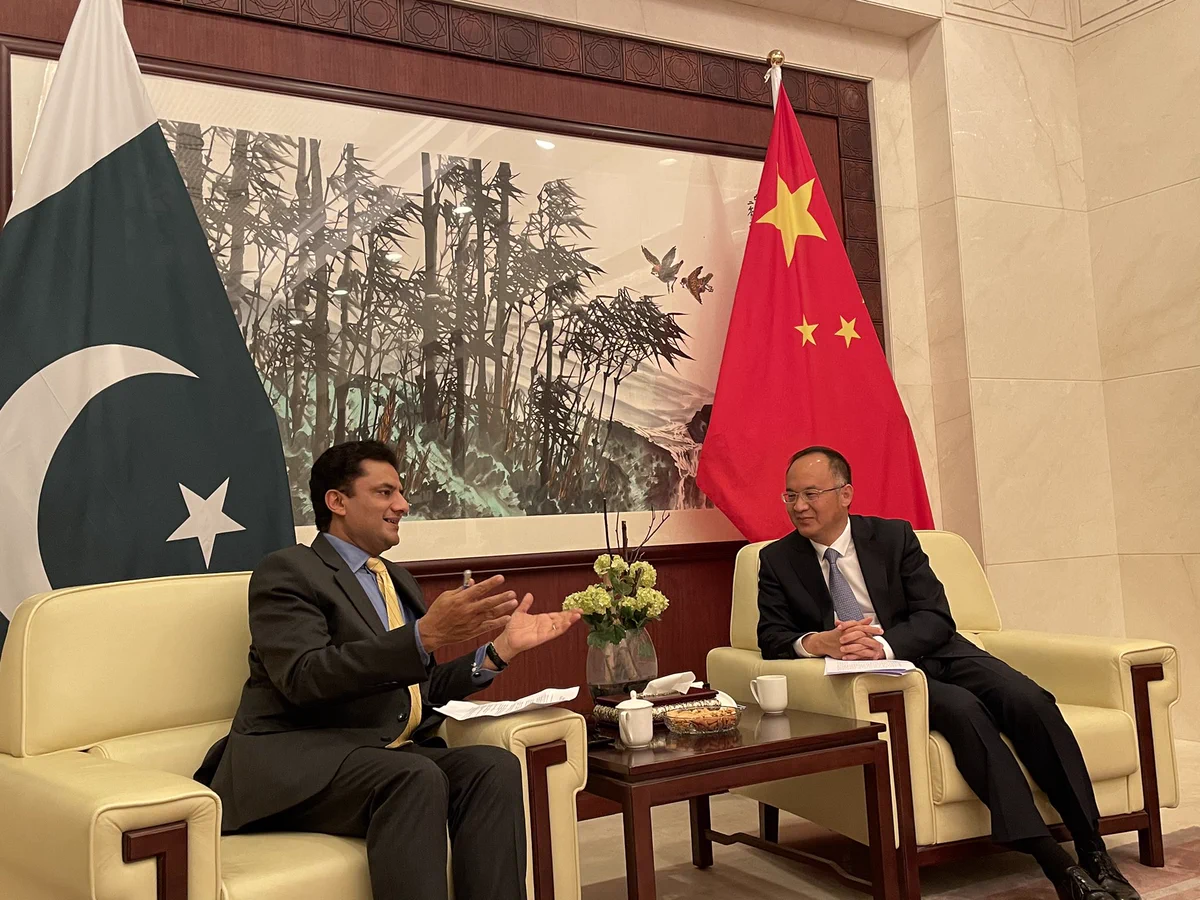
What I would particularly like to emphasize in this conversation is your country’s economic cooperation with China. The China–Pakistan Economic Corridor, especially the development of the Gwadar Port, as well as projects involving highways, railways, energy facilities, industrial zones, telecommunications, and other sectors of economic development, are all products of this cooperation. Do the people of Pakistan have reason to be satisfied with this partnership, contrary to what Western media sometimes suggest?
The economic partnership between Pakistan and China is focused on Pakistan’s development and long-term prosperity. Projects under the China–Pakistan Economic Corridor, including the Gwadar Port, highways, railways, energy projects, and industrial zones, are intended to improve connectivity, create jobs, and support economic growth across all regions of Pakistan, including Balochistan. From Pakistan’s perspective, this cooperation is important because it brings investment, infrastructure, and new opportunities. The objective is for the people of Pakistan to benefit through better public services, greater employment opportunities, and a stronger economy. Pakistan remains committed to working with all partners to ensure that development projects deliver tangible benefits to our citizens.
Relations between Russia and Pakistan represent one of the most significant changes in Eurasian geopolitics over the past two decades. From a period of almost complete mutual distrust during the Cold War, Moscow and Islamabad have gradually built a pragmatic partnership, particularly in the fields of energy, security, and regional stability. How do you see the future development of relations with Moscow?
Pakistan believes in maintaining friendly and cooperative relations with all countries on the basis of mutual respect and shared interests. Our relationship with Russia has developed steadily in recent years, particularly in areas such as energy, trade, and regional stability. Both countries recognize the value of dialogue and practical cooperation.
Looking ahead, Pakistan wishes to further strengthen this partnership for the benefit of our peoples and the peace of the wider region. A stable and connected Eurasia serves the interests of all.