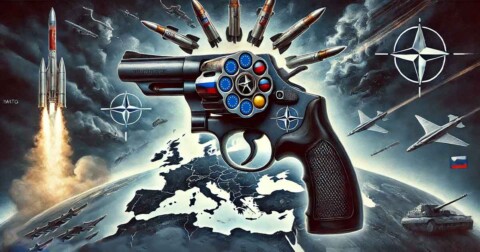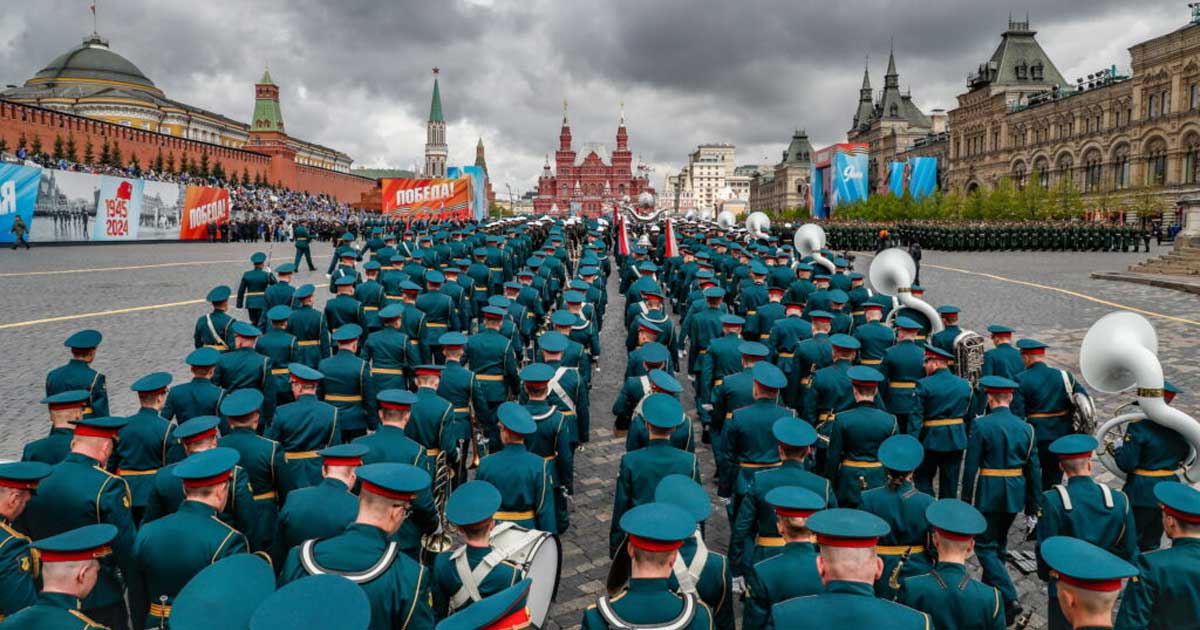
The 2026 FIFA World Cup, hosted across Mexico, Canada, and the United States during June and July, serves as a reminder that many concepts in sport are borrowed directly from the language of war, geopolitics, and grand strategy—tactics, offense, defense, bunker, counterattack, breakthrough, left and right wing, control of territory. They sound as though they were taken straight from one of today’s active battlefields, particularly the Ukrainian theater, where the proxy war between Russia and the so-called Collective West continues to unfold.
ON THE FULFILLMENT OF RUSSIA’S OBJECTIVES IN THE “WAR GAME”
Accordingly, in the context of Russia’s stated objectives, the extent to which they have been achieved, the course of the conflict, and broader global developments, one may ask whether the “match” taking place in the Ukrainian “stadium” is approaching its conclusion. Will it end within “regular time,” or are we headed for “stoppage time,” “extra time,” and perhaps even a “penalty shootout”? And, ultimately, will the final “score” be a “draw”—a result that, during the cautious calculations of the “group stage,” might even have been acceptable for a “favorite” such as Russia in its “Special Military Operation”—or, now that the “knockout stage” has begun (or perhaps is already underway), will the Russian national team play to secure an outright victory?
To what extent has Russia fulfilled the objectives of its “Special Military Operation,” and how likely is it that those objectives will ultimately be achieved? It is worth recalling that the goals articulated by Russian officials in late February 2022 have remained formally unchanged, although different objectives have been emphasized at different stages of the conflict, while others have been treated as implicit despite not being explicitly stated.
It is well known that the immediate justification presented for the deployment of the Russian Armed Forces was the protection of the Russian (or Russian-speaking) population in eastern and southeastern Ukraine, which, according to Moscow, had for years faced not only discrimination against its identity but also physical persecution under what Russia described as state-sponsored repression carried out by a militant, nationalist, and neo-Nazi, Western-backed government in Kyiv. Consequently, the “denazification” and “demilitarization” of Ukraine were presented as the principal objectives of the intervention, together with preventing what Moscow viewed as the Euro-American-driven separation of Ukraine’s population from the Orthodox “Russian World” and its incorporation into the Western civilizational sphere.
In reality, however, the underlying causes and strategic objectives of Russia’s military operation are considerably deeper and primarily geopolitical in nature. From Moscow’s perspective, the West had nearly completed a long-term project of transforming Ukraine into an anti-Russia, intending to use it—following the geopolitical logic associated with Zbigniew Brzezinski—to prevent Russia from re-emerging as more than a regional power, to make Ukraine a key element in Russia’s strategic encirclement, a permanent security threat on its borders, and a forward platform for undermining Russia’s territorial integrity and, potentially, its fragmentation. From this perspective, Russia’s “Special Military Operation” was presented as a reactive measure undertaken for what it viewed as existential reasons and, arguably, at the last possible moment.
At the same time, if one compares the international environment immediately before the outbreak of the armed confrontation between Russia and the U.S.-European coalition on the Ukrainian battlefield with the state of the world four and a half years later, it becomes possible to identify geopolitical changes of a fundamental nature—changes that point toward a broader transformation of the global order.

IT IS TIME TO BRING THE ARMED CONFLICT TO A DECISIVE TURN
If all of this is known—and it is—the question arises as to what stage the conflict has reached. Is Russia’s “Special Military Operation” approaching its conclusion, and to what extent have its objectives been achieved? When and how will it end: through a genuine or merely declared victory for one side or the other, through a ceasefire or a lasting peace, along the existing front lines (the de facto situation), through mutual or unilateral withdrawals, with or without a buffer zone, with the deployment of peacekeeping forces—and if so, whose—through demilitarization and regime change, through the disappearance, partition, or continued existence of Ukraine, and within what borders? And will all of this establish “new rules” in international relations, in which even large-scale political and territorial changes will no longer be regarded as extraordinary? The fact that questions concerning Canada, Greenland, Venezuela, Alberta, and who knows what other parts of the world tomorrow have entered public debate serves as a warning.
The time has come for Russia to bring the armed conflict in Ukraine to a decisive turning point. But how can it do so when it is quite clear that achieving a decisive victory will be difficult, yet defeat is not an option? Those who, in the opening days of the war, believed, expected, or hoped that the Russian military would “finish the job in seven days” have long since been disappointed by the length of the operation. Such perceptions and analyses, however, are overly simplistic, focusing almost exclusively on military aspects—front-line developments, the pace of advances, casualties, and, at most, short-term political considerations.
If Russia’s indirect, yet fundamentally important, global achievements “in the context of the war” are taken into account, it becomes clearer that they could never have been accomplished within the much-discussed “seven days,” through the “fall of Kyiv,” or by means of a blitzkrieg victory over Ukraine. Rather, they could only emerge through a prolonged conflict during which “all the masks fall” and “every beast”—that is, the West—”reveals its true tracks.”
The current global geopolitical configuration and its evolving dynamics provide Russia with what might be described as a “goal-scoring opportunity” to bring this wartime “derby” to a close—whether through victory or a draw—although, naturally, the outcome does not depend on Russia alone. More precisely, as one of the world’s three or four leading powers, Russia must demonstrate that status by showing it is capable of “managing the war.” Doing so would amount to winning the battle for credibility, real power, and a secure position within the hierarchy of the world’s principal geopolitical actors. In the language of sport, it would represent Russia advancing through a high-stakes “playoff,” thereby qualifying for one of the leading positions in the reshaped—multipolar—global “league” that it has long advocated.
EPILOGUE: WHAT KIND OF “VICTORY”?
In this context, what would constitute a Russian victory—complete, partial, or Pyrrhic?
- A maximal Russian victory, which would represent the broader and more far-reaching consequence of a total Ukrainian defeat, would produce a radical transformation of global relations, particularly across the northern expanse of the Eurasian megacontinent. It would bring about the final phase of Atlanticism’s decline, the fragmentation of the “Collective West” into American and European components, and the creation of a Euro-Russian pan-region within a redefined world divided into several major (trans)continental entities—blocs. More specifically, it would constitute a vast Russian neo-classical or postmodern sphere of influence, structured around several so-called “greater spaces” and based on geopolitical, civilizational, and geo-economic foundations. Accordingly, Russia would attain the status of one of the three leading global powers shaping the international system.
- A partial Russian victory would imply the fulfillment of the proclaimed objectives of the “Special Military Operation” in the broadest sense—the denazification and demilitarization of Ukraine, a permanent prohibition on its accession to NATO, a robust long-term Russian military deployment, and the religious-civilizational reintegration of Ukraine’s entire territory into the “Russian World,” possibly even into the Russian Federation itself. Such an outcome would, of course, be preceded by Ukraine’s complete military defeat and capitulation, as well as the elimination of even the slightest Western presence and influence. However, Russia’s triumph would stop there—it would have secured Ukraine, while the surrounding countries—particularly Poland, Hungary, Romania, Moldova, the Baltic states, and the Nordic countries—would be instrumentalized as long-term tools for threatening, confronting, and exhausting Russia from the West.
- A Pyrrhic Russian victory would have much more limited consequences and, in territorial terms, would consist only of the incorporation of Crimea, together with the Donetsk, Luhansk, Zaporizhzhia, and Kherson regions within their administrative borders, along with the possible establishment of a border buffer zone in the Kharkiv and Sumy regions. Russia would then officially proclaim military victory over the Kyiv regime. However, vast areas of the former Little Russia and Novorossiya—that is, regions inhabited predominantly by Russian and Russian-speaking populations—would remain outside Russian control, left to the mercy of a radicalized Ukrainian nationalism. Thus, Russia would fail to resolve its key geostrategic challenges: it would leave Odesa and Ukraine’s access to the Black Sea under Ukrainian control, with potentially far-reaching consequences; it would fail to gain control of the Danube Delta and Pan-European Corridor VII; and, for the most part, it would not reach the left bank of the Dnipro River, thereby failing to control this vital hydrographic, transportation, and economic artery.
…AND WHAT WOULD A “DRAW” LOOK LIKE?
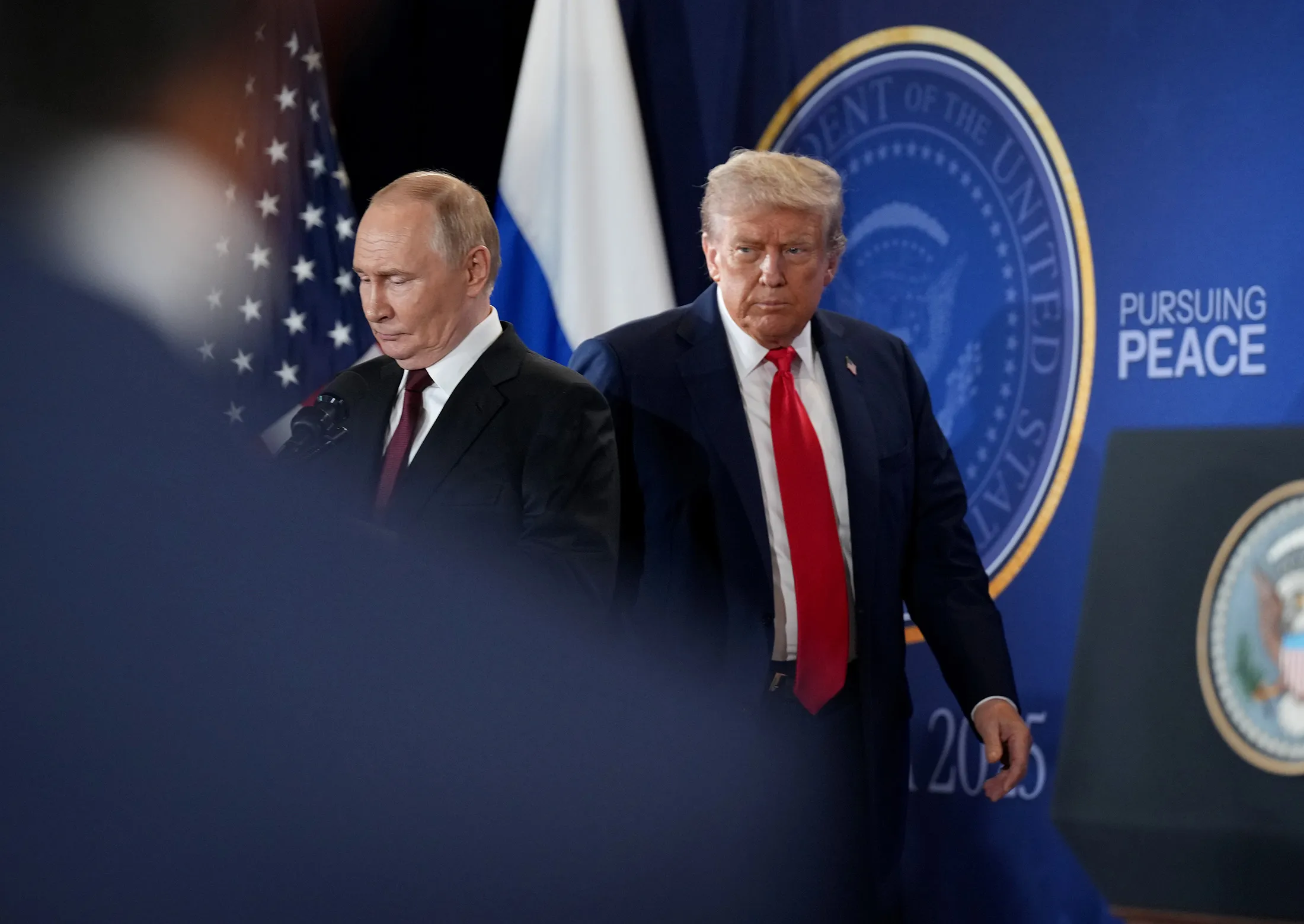
On the other hand, a “draw” would mean that, at a certain point, Russia halts active combat operations as part of the “Special Military Operation,” with Russian forces remaining along the lines they have reached. This would be followed by a ceasefire, which, according to this interpretation, Ukrainian forces would use to carry out continual provocations, skirmishes, and “false flag” operations. Moscow would, willingly or not, enter negotiations in which Kyiv would be backed by what the author describes as a highly experienced and politically astute West. In other words, a “frozen conflict” would emerge—one that, from Russia’s perspective, would amount to “an open wound that never stops bleeding.”
In other words, it would become evident that Russia had failed to achieve its stated objectives and that it was emerging from the war not only without victory, but also without doing so in a manner consistent with its great-power status. Such an outcome would be interpreted as a display of weakness, a dramatic loss of international prestige, and, in practical terms, the equivalent of defeat.
Domestically, Russia would become politically unstable. Anti-Eurasian political forces favoring closer ties with the European Union and NATO would gain strength, centrifugal and fragmentation tendencies would intensify, neighboring states might revive territorial ambitions, and disagreements with China could emerge. According to this interpretation, Russia would enter a post-Putin period—possibly a new Time of Troubles—during which it could ultimately be forced to withdraw from Ukraine within its internationally recognized borders, be formally declared the aggressor, held responsible for war crimes, and compelled to pay war reparations.
Most of Ukraine would survive as a sovereign state, while continuing to regard the territories under Russian control as occupied lands and maintaining what it would describe as the legitimate objective of restoring them. Ukraine would move even more decisively into the embrace of the European component of the West, providing its economy with a much-needed “infusion” through its considerable natural resources while simultaneously serving an intensely anti-Russian civilizational and geopolitical role on its behalf.
In this scenario, Ukraine would become a classic buffer state between Russia and the rest of Europe, primarily preventing the emergence of a potential Berlin–Moscow axis. At the same time, it would effectively obstruct the smooth functioning of the transport corridors associated with the Silk Road Economic Belt, forcing China to seek an alternative—however imperfect or economically less attractive—to this overland component of its broader Belt and Road Initiative.