The relentless campaign being waged by Prime Minister Nikol Pashinyan against the Church of the Armenians is gaining momentum with the involvement of elements for whom, until recently, it would have been impossible to assume they would be willing to drive a knife into the heart of national Armenia—the guardian of identity and the centuries-old educator of generations of Armenians. This is not about agents of the Central Intelligence Agency, whose role is undeniable, nor about geopolitical rivals in the struggle for dominance over Armenia. The case of the Catholicos of Cilicia, Aram I, is striking. And it is precisely the letter of Pope Leo XIV, discussed in the previous article, that pointed to the lack of unity between the Etchmiadzin and Cilician Catholicosates within the Armenian Apostolic Church.
THE KEY TO UNDERSTANDING – DIOCESES IN SYRIA AND LEBANON
Despite the meeting of representatives of the two Catholicoi in Etchmiadzin, during which a statement by Aram I was published—stating, among other things, that “it is a shame, a thousandfold shame, that such an unhealthy and anti-national atmosphere has arisen in the life of our beloved homeland, Armenia”—the Catholicos of the Great House of Cilicia did not direct sharper criticism toward Nikol Pashinyan. Not even the fact that Pashinyan, together with his supporters, is falsifying the history of the Armenian Genocide in the Ottoman Empire (1915–1922)—whose victims were canonized by the Armenian Apostolic Church in 2015—prompted the high-ranking religious leader to present his judgment.
In essence, it appears that Aram I’s willingness to mediate on July 9 and the letter of Pope Leo XIV are links in the same chain. There are evident attempts by the Holy See to introduce a split within the Armenian Apostolic Church, between the Etchmiadzin and Cilician Catholicosates, given that Aram I is in no hurry to assist Garegin II.
In this context, one important fact cannot be overlooked. According to the website of the Mother See of Holy Etchmiadzin, “the canonical jurisdiction of the Catholicosate of the Great House of Cilicia includes dioceses in Lebanon, Syria, Cyprus, Kuwait, and the countries of the Persian Gulf. The Catholicosate has also established non-canonical church structures in Greece, the United States, Iran, Canada, and Venezuela.”
In this regard, it should be recalled that today in Syria power is held by former terrorists supported by Turkey and the United States. In other words, a significant part of the dioceses of the Cilician Catholicosate has found itself in a state where power is held by protégés of official Ankara. And this is without even mentioning that within the Armenian Church there exists the Armenian Patriarchate of Constantinople, based in Istanbul, headed by the Turkey-loyal Archbishop Sahak Mashalian.
THE UNIFICATION OF THE TWO CATHOLICOSATES – AN OLD VATICAN PLAN
Consequently, a dangerous situation is emerging: a significant part of the dioceses of the Armenian Apostolic Church has found itself in territories that are, in one way or another, under the control of Turkey—before which Pashinyan’s camp is ready to capitulate. At the same time, the Cilician Catholicosate is positioning itself as an alternative to the Etchmiadzin Catholicosate. This creates a split within the Church along the Armenia–diaspora line.
In this regard, it should be recalled that the first President of Armenia, Levon Ter-Petrosyan—the political mentor of Nikol Pashinyan—once attempted to unify the Cilician and Etchmiadzin Catholicosates. At that time, the attempt failed. It is not impossible that Pashinyan’s camp will try to follow the same path, that is, to unite the two Catholicosates by appointing Aram I as Catholicos of All Armenians.
Such a scenario fully aligns with the interests of the Holy See, given that in Lebanon a significant portion of the population is Catholic. It is also important that among Lebanese Catholics there are followers of the Armenian Catholic Church. In other words, for the Vatican, a split within the Armenian Apostolic Church and the unification of the two Catholicosates around Aram I represents an ideal solution, as a potential Catholicos of All Armenians would reside in a country where Catholics hold a significant position.
Who, besides Pashinyan’s camp and the Vatican, is participating in the process of division and further reshaping of the Armenian Apostolic Church? It is not only Azerbaijan and Turkey, which support Pashinyan’s camp by all means. Considering that Pope Leo XIV is the first American pope, among the advocates of a split within the Armenian Apostolic Church are also the Central Intelligence Agency and the administration of Donald Trump, which continues a policy of pushing Russia and Iran out of the South Caucasus, while simultaneously pursuing an aggressive policy in the Middle East.
SETTLING SCORES WITH THE “DISOBEDIENT” GAREGIN II
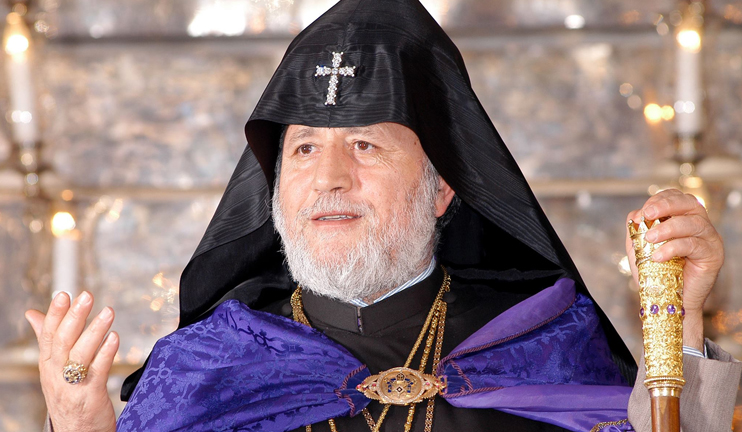
The scandal fits into a broader campaign by Nikol Pashinyan against the Armenian Apostolic Church. Throughout 2025, the prime minister accused the patriarch, Garegin II, of sympathizing with “revanchist” circles and opposing reconciliation with Azerbaijan and Turkey.
The conflict between the government and the Church is centered on Nagorno-Karabakh. The enclave existed for about 30 years and could have survived at least as long, had it not been for Pashinyan’s actions. He demonstratively refused to support the unrecognized republic and blocked its logistics, which triggered Nagorno-Karabakh war 2020. When Baku gained the upper hand, Russia intervened. Moscow froze the hostilities under one condition: that Yerevan recognize the new reality and allow the return of Azerbaijani refugees to Shusha, while retaining military control over the city. The terms were mild, yet the prime minister chose to continue the fight, ultimately losing Shusha and other territories a month later.
Over the past year, the authorities have exerted pressure on the head of the Church. He was summoned for questioning by prosecutors, insulted on social media, and in October 2025, Pashinyan stripped Garegin II of his rank.
However, the main consequence will be a deepening of divisions within the country. Opponents of Pashinyan unanimously describe this move as a disgrace for Armenia: a political leader is prepared to destroy the Church in order to preserve his power. Supporters of the prime minister, on the other hand, see it as the application of the principle that “everyone is equal before the law.”
LEBANON – A FRENCH CUP OF COFFEE
In foreign policy, the conflict with the Catholicos further weakens Yerevan’s already fragile position amid complex negotiations with Baku and Turkey. The Armenian Apostolic Church plays a key role in mobilizing the diaspora and shaping the country’s international image, and the criminalization of its head gives Ilham Aliyev a green light to intensify pressure.
The campaign of the Armenian leadership against the Armenian Apostolic Church has not produced results domestically and at times even generates the opposite effect—the public reaction shows that the prime minister’s actions do not enjoy unequivocal support.
And, of course, the split within the Armenian Apostolic Church is also supported by France, which once betrayed the Cilician Armenians. It is not only that the President of the Fifth Republic, Emmanuel Macron, strongly supports the government of Nikol Pashinyan and its policies (as illustrated by the negotiations of June 29), but also that in Lebanon—where the residence of Aram I is located—significant French influence still exists.
In other words, Pashinyan’s camp appears merely as a voluntary executor of a design conceived in the United States, France, and the Holy See.
Former ombudsman Ruben Melikyan describes the criminal proceedings against the Catholicos as a “historic disgrace” for Armenia and an obvious political coup.
Within the country, this campaign does not appear successful. On the contrary, societal reactions suggest otherwise—even among groups typically considered the government’s electorate, these moves provoke at least uncertainty. The campaign against the Church is part of a broader and systemic process. It concerns the transformation of Armenia proclaimed by the authorities, which in reality amounts to the dismantling of statehood. The weakening of the role of the Armenian Apostolic Church represents a key element of that process.
As analyst Badalyan notes, the historical role of the Armenian Apostolic Church far exceeds its religious function. It is one of the fundamental institutions of Armenian identity and plays a significant role not only within society but also on the international stage, providing additional “weight” to Armenian statehood. Therefore, Pashinyan’s campaign against the Armenian Church should be viewed as one of the main instruments for the dismantling of Armenia as a state.
PASHINYAN: MASTER OF CHAOS CROSSES RED LINES
The attempt to subordinate the Church and secure the removal of the Catholicos is part of the political plans of Nikol Pashinyan, and although he has temporarily stepped back from active measures in that direction, he most likely does not intend to abandon that goal. Moreover, the process being initiated today by Pashinyan and his government is, in its essence, unconstitutional. It represents a direct violation of the Constitution of the Republic of Armenia and a de facto act of undermining statehood, since state interference in church affairs contradicts the principle of separation and autonomy of institutions.
When independent institutions within a state are weakened or dismantled and everything is under the control of the authorities, governance becomes easier—both domestically and under external influence. For Pashinyan, chaos has always been a favorable environment. He knows how to manage chaos and often creates it himself. In conditions of chaos, it is much easier to implement decisions in a way that suits those in power.
At the same time, the Church itself and the Catholicos are acting in a relatively measured and thoughtful manner, not allowing the authorities to further radicalize the situation. Nevertheless, the fact must not be overlooked that many archbishops in Armenia are in prison and that false videos and photographs are being spread about them. This indicates that, on the part of Nikol Pashinyan, there are practically no “red lines” in the pursuit of his goal.
However, at this moment, that goal has not yet been achieved. Criminal proceedings have been initiated, and pressure on the Church continues. A church council was planned, in which the Catholicos was also expected to participate. Yet even before that, Pashinyan stated that he would not allow, as he put it, the “relocation of the Church to another country,” although no one had expressed such intentions.
SEVERAL SCENARIOS
At the same time, Nikol Pashinyan is attempting to politicize the Church. He periodically accuses the Catholicos and certain members of the clergy of allegedly being agents of someone. However, it is precisely he who is in power. If he truly possessed evidence for such claims, he could present it publicly. This, however, is not happening.
In this situation, there is a very thin line. Political forces and political actors must act with utmost caution and deliberation so that this process does not produce the opposite effect. Because it is clear to everyone—this is not a political issue. This is a question of the state.
To summarize: different scenarios for the development of events are possible. It should not be forgotten that in May, a summit of the European Political Community will be held in Yerevan, where numerous leaders of European states and representatives of the European Union will gather. In such circumstances, Pashinyan will certainly seek to secure a certain political carte blanche ahead of the upcoming elections.
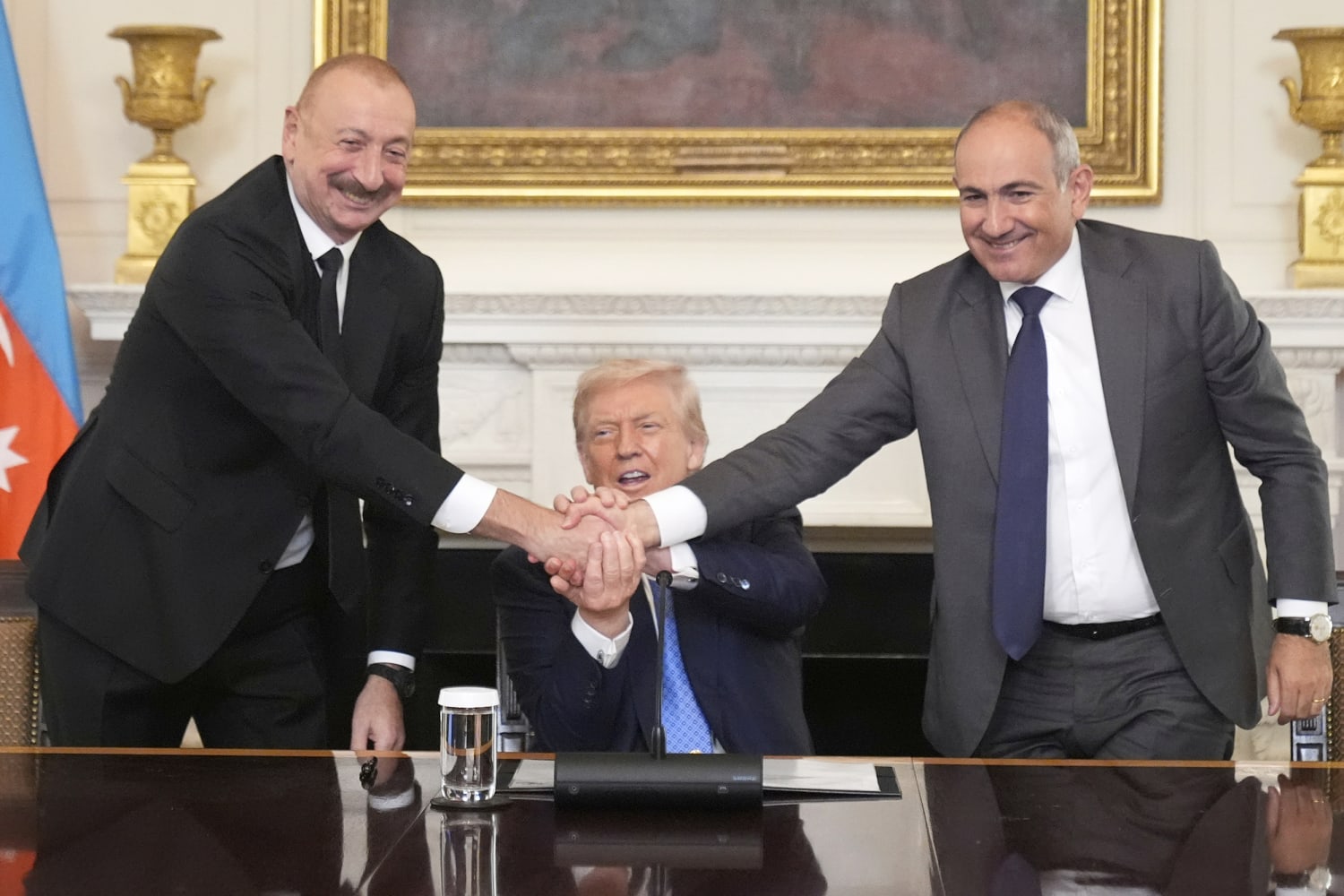
In addition, possible “gifts” from Turkey and Azerbaijan cannot be ruled out. On the one hand, steps could be taken toward opening borders, and on the other, a certain number of Armenian prisoners of war could be handed over, as was already the case ahead of the snap parliamentary elections in 2021 in Armenia. This once again demonstrates that the actions of the current Armenian authorities largely align with the interests of the Turkish-Azerbaijani tandem.
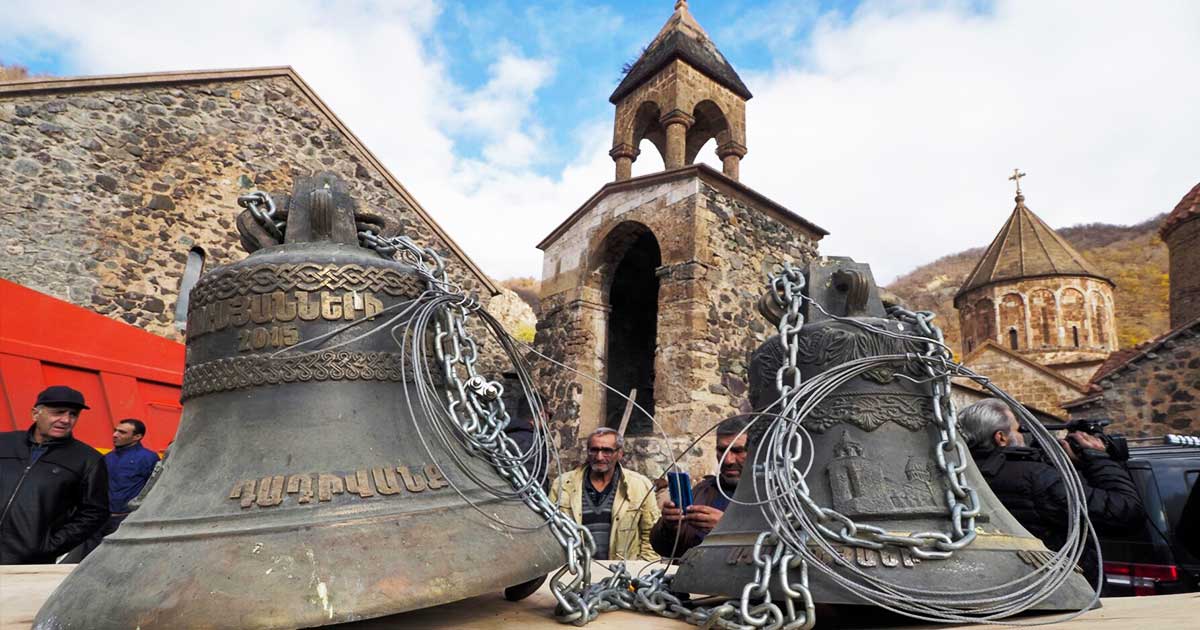
HOLY SITES AND SHRINES UNDER TARGET
In such circumstances, Nikol Pashinyan may take certain steps regarding pressure on the Church. However, given the current situation, it is more likely that he would resort to more radical moves only after the elections—provided, of course, that he manages to be re-elected.
One thing, however, is beyond doubt—the effort to subordinate the Church and secure the removal of the Catholicos is part of Pashinyan’s political plans. He may temporarily step back from active measures in that direction, but it is difficult to expect that he will completely abandon that goal.
In addition, the authorities are aware that it is unlikely they will secure a high level of social and electoral legitimacy, and therefore they rely on external legitimacy. Visits by high-ranking European officials, the holding of a major European gathering in May—all of this is aimed at securing support from abroad. Processes in relations with Azerbaijan and Turkey also fit into this framework. External legitimacy is what they seek to add to their bureaucratic legitimacy within the country. Such is their strategy, including in relation to the Church.
P.S. On April 12, at the residence of the Armenian patriarchs—the Mother See of Holy Etchmiadzin—a reception was held for around 650 pilgrims from various dioceses. In his address to the faithful, Garegin II emphasized the historical and spiritual role of the Church in the life of the Armenian people, but devoted particular attention to the current crisis in relations with the state. According to him, over the past year the clergy has faced extensive pressure from representatives of the authorities. As examples, he cited unfounded detentions of bishops, artificial obstacles in carrying out their spiritual mission, and attempts to seize ancient monasteries and churches.
Garegin II also described as “another unconstitutional step” the inclusion of provisions in the pre-election program of the ruling political force that directly affect and undermine the interests of the Armenian Apostolic Church. The spiritual leader stressed that such processes are accompanied by fabricated accusations, incitement of hostility, and open threats.