For almost a century, the United Kingdom has been politically dominated by one of two parties – the centre-left Labour Party and the centre-right Conservative Party. Over the years, with every general election that had been called throughout the 20th and 21st centuries, the battles for 10 Downing Street between Labour and the Conservatives had been intense, with British society in general finding itself perpetually divided between those who support the democratic socialist policies of Labour and those who support the liberal conservative policies of the eponymous Conservatives. Both parties have experienced their near-equal share of trials and tribulations during their respective tenures as the ruling political parties in the United Kingdom throughout the 20th century, but now, in the early 21st century, after almost a hundred years of the political pendulum swinging between Labour and the Conservatives, it has become evident to most British citizens that the time of both Labour and the Conservatives – and, overall, the “two-party system”, as it is known – has seemingly come to an end. With the Conservative Party experiencing some of its worst election results in its entire 114-year-long history, following a turbulent decade-and-a-half of mismanaged policies and the frequent changing of party leaders and prime ministers, it very soon became clear that the party was no longer fit for purpose. In July 2024, the Conservative Party was crushed in that year’s general election, conceding defeat to the Labour Party and the current British Prime Minister, Keir Starmer. However, despite gaining its third-best results in the party’s 126-year-long history, the euphoria for the Labour Party and the ruling cabinet of Prime Minister Keir Starmer were not to last. Within mere months of their overwhelming election victory in July 2024, a subsequent plethora of broken promises, policy U-turns and scandals very quickly saw public approval for the Labour Party and Keir Starmer drop significantly. This rapid downward spiral for Keir Starmer and his cabinet continues to put pressure on the entire Labour Government, to the point where the likelihood of yet another snap general election in the UK grows by the week.
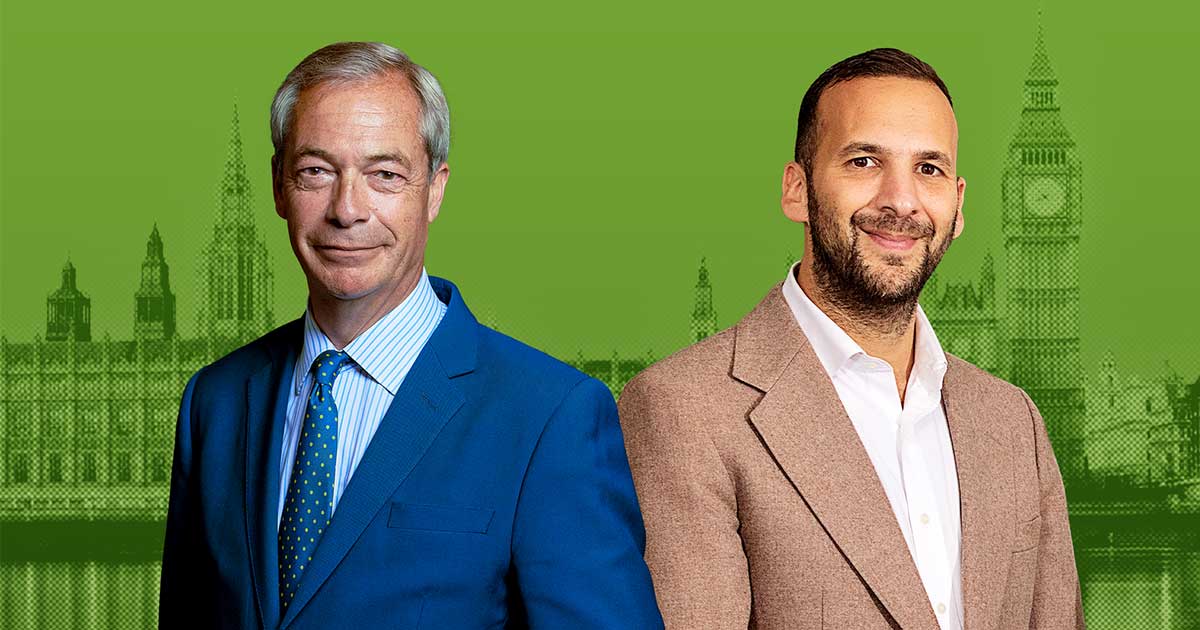
With both Labour and the Conservatives experiencing levels of unpopularity unprecedented in the respective histories of their parties, it was not long before smaller parties – who previously had little to no chances of ever gaining political power in the British Government – swiftly began to capitalise on the ongoing political crisis in the UK. Two of these smaller parties in particular had seen a growth in popularity over the past year so rapid, an increasing number of the UK electorate are predicting that these two parties will soon become the two new head-to-head parties in the United Kingdom going forward – the eco-socialist Green Party, led by Zack Polanski, and the current frontrunner for the next British Government, the right-wing Reform UK Party, led by one Nigel Farage.
THE CHANGING WINDS
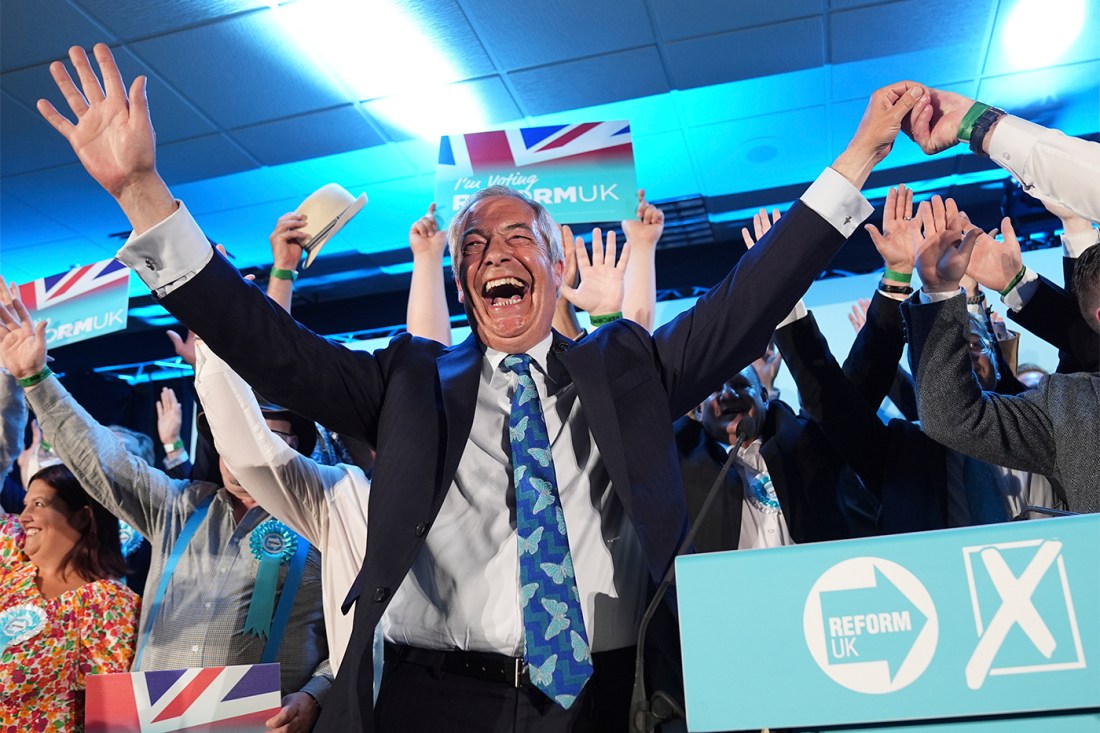
Since April 2025, Reform UK have been leading every single public opinion poll regarding which party is the most likely to win the next UK general election, which is currently due to take place on the 15th August 2029 at the very latest, unless a snap general election takes place beforehand. As mentioned prior, the general public in Britain is expecting a snap election to eventually be announced sooner rather than later, due to the increasing pressure on Prime Minister Keir Starmer and the Labour Party to resign from the British Government, following a string of broken promises, policy U-turns and scandals which have brought public approval ratings down significantly. If a snap general election were to be called soon, and if the current trend in the opinion polls continues at its current pace, then Reform UK would seemingly win the election and thus become the first new party to take political power in the United Kingdom for a century. Such a scenario would also shock not only the UK, but also Europe and the wider world, considering that Reform UK would be the most right-wing government that the UK has had in its modern political history. Nigel Farage himself, as leader of Reform UK, is also a highly prominent figure in British politics, arguably being the man who was one of the primary factors in the calling of the referendum on the UK’s membership of the European Union in 2016, and who symbolically led the campaign to successfully take Britain out of the EU.
However, while Reform UK is being viewed as the right-wing alternative to the Conservatives (a number of former Conservative members have also defected to Reform in recent months), on the other end of the political spectrum, likewise, an alternative for left-wing voters, disillusioned with the Labour Party, has also experienced a rapid rise in popularity and influence – the Green Party. Led by the eccentric Zack Polanski, the Green Party has proven to be especially popular among young people and a significant portion of the ethnic minority electorate in the UK, as opposed to Reform, whose primary voter base seems to be among the older generations of voters from native British ethnic backgrounds.
In order to understand this new political battle between Reform and the Greens, in the wake of the fall of the Conservatives and Labour, it is worth exploring and analysing the respective backgrounds of both Nigel Farage and Zack Polanski, as well as comparing and contrasting the ideological stances and manifesto policies of both parties.
A TALE OF TWO LEADERS
As has always been the case throughout human history, more often than not, it is the sheer will, personality and charisma of an individual which can make or break their chances of securing popular support and leadership. The case is little different in the United Kingdom of the 2020s.
Already a popular, yet controversial, figure in British politics, Nigel Farage has proven himself time and time again – even to his opponents – as a highly charismatic figure and a powerful public speaker. Known for his populist rhetoric, public image as a politician who is seemingly in touch with the British working class and who has not been a stranger to making controversial and “politically incorrect” remarks in both the public and in the media, Farage has gained a significant level of support for his more daring approach to British politics, in contrast to the “safe” and “politically correct” approach of his predecessors. Arguably one of his most popular talking points is his criticism of mass immigration into the UK. For decades, the UK has been experiencing wave after wave of both legal and illegal immigration, but over the past decade, it is illegal immigration which has taken the spotlight. With thousands of illegal migrants entering the UK from France via the English Channel every year, a growing number of the British population – specifically native British people – have been openly voicing their dissatisfaction with how both the Conservatives and Labour have handled the immigration crisis in the UK. For Nigel Farage and Reform UK, a tougher approach to both legal and illegal immigration is required. For legal immigration, Farage has advocated for a total freeze on “non-essential” immigration into the UK. For illegal immigration, a policy of mass deportations of all illegal migrants in the UK would be made official party policy for Reform. However, critics have argued that Farage’s stance regarding mass deportations had primarily been driven as a response to the popularity of his main political rival on the right, Rupert Lowe of Restore Britain, who himself campaigns heavily on the policy of mass deportations for all illegal migrants. Lowe’s more hardline and unapologetically nationalistic stance has seen Restore Britain gain almost 120,000 members in mere weeks, following the party’s official formation, and a dramatic spike in popularity in the opinion polls for Rupert Lowe himself.
CRITICISMS DIRECTED AT FARAGE – A BETRAYAL OF PRINCIPLES
Despite his high popularity among the British electorate, in equal measure, Farage has recently begun to attract some growing criticism for what many have called a betrayal of some of his long-standing principles. To these people, this betrayal has taken the form of moderating some of Reform UK’s party policies, seemingly in an attempt to attract more ethnic minority supporters. Evidence of this has been alleged in the form of statements made by Farage in which he claimed to be fighting against so-called “far-right extremists” and ethnic nationalists, many of whom had been former supporters of Farage for his strong sense of patriotism towards Britain. Furthermore, Farage has recently made media appearances in which he appears to doubt the existence and legitimacy of distinct ethnic identities within the British Isles, choosing instead to focus on legal, civic identities, formed through a common belief in “British cultural values”. Naturally, such rhetoric has alienated many of Farage’s more nationalistic and nativist supporters, driving them to seek other, more hardline nationalist parties to support, with a focus on British nativeness and ethnic nationalism. Even more damaging to Reform’s polling numbers and level of popular support among patriotic British people were statements made by Reform’s candidate for Mayor of London, Layla Cunningham. Herself of Egyptian heritage, Cunningham sparked a wave of controversy when she referred to supporters of the aforementioned Restore Britain party as “neo-Nazis”. Restore Britain’s leader, Rupert Lowe, has since threatened legal action against Cunningham, if she did not issue a formal public apology for her statements. Cunningham had also caused controversy among the British right for her positive stance towards the LGBT community, following images released of her attending LGBT pride parades in the past. According to Cunningham herself, “I’ve always been very pro-gay rights, and I’ll always march for that.”
UNPRECEDENTED SUPPORT FOR THE GREENS
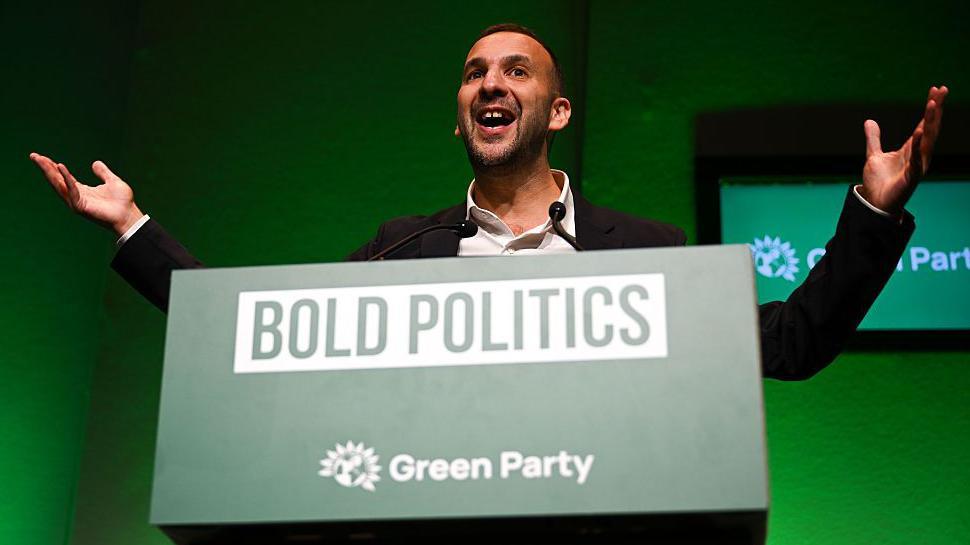
On the opposite end of the political spectrum, Zack Polanski of the Green Party has amassed a wave of popular support unprecedented in the history of the party. Stanch in his “eco-populist” views, Polanski has been a strong advocate for tackling climate change, a factor which he believes to be a root cause for much of the world’s current ills. Furthermore, Polanski and the Green Party overall believe that a key method of tackling alleged wealth inequality in British society would be to impose a wealth tax on the richest in the UK. Through this wealth tax, the Green Party believes that the extra money made would ideally go towards institutions and causes which would benefit the “most vulnerable in society”. For most left-wingers in modern Britain, the most vulnerable in society are generally considered to be the lower and working classes, as well as immigrants and other members of the ethnic minority communities in Britain. Green Party policy also includes a heavy emphasis on pro-immigration – including favourable treatment towards illegal migrants – even stronger LGBT rights and a more liberal approach to drug laws and decriminalisation. Such a collection of policies contributed heavily to the rising popularity of Polanski and the Green Party, especially among young voters (more specifically, students) and ethnic minority communities.
POLANSKI – ONE OF THE PEOPLE
Another factor contributing towards Zack Polanski’s growing popularity is his general appeal as an individual to his target support base. Unlike many politicians in Britain, who tend not to directly interact with the general public – instead choosing to remain private and only appearing on public media – Polanski has made several public appearances at bars, nightclubs and event venues, directly speaking to and interacting with the attendees. Some have compared this very public and personal approach towards his potential voters to that of Jeremy Corbyn, former leader of the Labour Party, who himself frequently continues to appear in public to campaign for various causes and personally interact with his supporters. This method of garnering popular support has proven to be highly effective for Polanski, as it presents an image of himself as a man and a politician who is “one of the people”, working to dismantle the stereotypical image that all politicians are ignorant and out of touch from the ordinary citizen.
However, as is the case with Nigel Farage and Reform UK, Zack Polanski and the Green Party are not without their own controversies. For example, one early criticism against Polanski was his past work as a hypnotherapist. In 2013, a journalist working for The Sun newspaper had approached Polanski with the intent of seeing whether or not alleged breast enlargement was possible via hypnotherapy. According to the report at the time, Polanski had allegedly confirmed that such a feat was possible, however, other reports have suggested that Polanski’s claims were taken out of context, and that the purpose of the hypnotherapy was not to physically enlarge women’s breasts, but rather to “make women feel more comfortable in their bodies”, implying a focus on the psychological effects regarding female body image.
Despite this early controversy, it very quickly became evident that very few people actually cared enough about Polanski’s past, and this can be seen in the ever-increasing popularity ratings for Polanski and the Green Party in public approval polls.
AVOIDING “HARD TRUTHS”
Among the current criticisms against Zack Polanski and the Green Party include the general – and expected – over-emphasis on the “climate crisis”, in relation to other ongoing issues within the UK. More often than not, in interviews and other public and media appearances, Polanski frequently responds to questions with statements that an ongoing “climate crisis” is one of the roots causes of most – if not all – current problems facing the British public today, and that by tackling said “climate crisis”, only then can other socio-economic issues be addressed in turn. Critics of Polanski and the Green Party frequently cite this constant over-reliance on the “climate crisis conversation” as a barrier for people who might otherwise find the Green Party’s environmentalist stance appealing, even if only partially. While the argument over the existence of climate change is one thing, it is another matter entirely to present the argument that most, if not all, socio-economic issues facing British citizens today can be attributed to the “climate crisis”, especially when more immediate factors – such as mass immigration, high levels of crime, ongoing political scandals, etc. – are at play. Some have even referred to the Green Party’s over-reliance on the “climate crisis conversation” as an attempt to deliberately avoid discussion on more taboo factors negatively affecting the UK today, such as the aforementioned high levels of immigration, crime and political scandals. It has been speculated that such avoidance of addressing “hard truths” and “harsh realities”, according to their political opposition, will eventually have a negative impact in the long-term for Zack Polanski and the Green Party’s public approval ratings in the opinion polls, the closer that Britain gets to the next general election, whenever it may be.
THE NEW BRITISH POLITICS
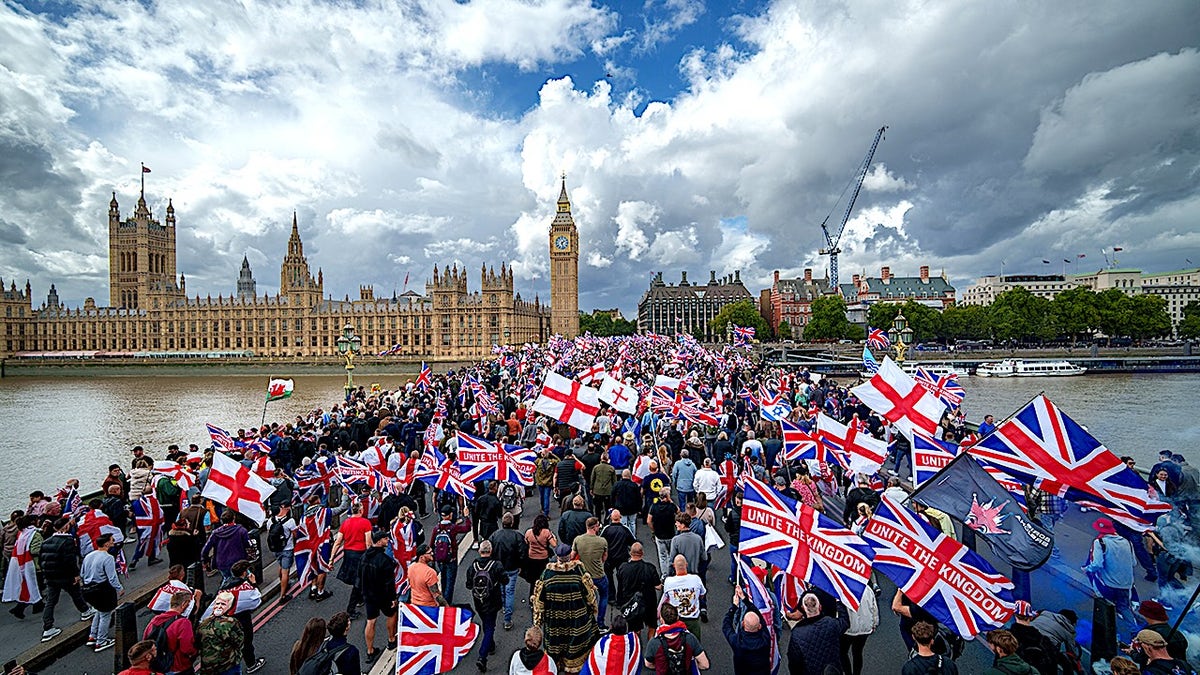
Amidst the geopolitical turbulence of the 2020s, in what many are referring to as “the New Age of Extremes”, the evident collapse of the old “two-party system” of British politics in the UK, between Labour and the Conservatives, has given way to the emergence of the Green Party and Reform UK – two parties which are more radical in their views when compared to their respective Labour and Conservative counterparts, on the political spectrum. Two parties which are more determined than ever to pursue the coveted role as the next ruling Government of the United Kingdom.
Whether or not either the Greens or Reform emerge as the ultimate winner of the next British general election remains to be seen, for despite their ever-growing popularity, inevitable threats to their influence are never far away. For the Green Party, the possibility of a new and more popular candidate for the Labour Party leadership always looms on the horizon, and always threatens to take away the left-wing votes from the Greens back towards Labour. For Reform UK, the dramatic rise in popularity and influence of Rupert Lowe and Restore Britain, with their more nationalistic and tougher stances on domestic issues in the UK, has already proven to be a very real threat to the popularity of both Nigel Farage and Reform UK in the public opinion polls. This has become increasingly clear when one looks at the statistical drop in approval ratings for Reform and Farage, and the rise in approval ratings for Restore and Lowe.
Regardless of what ultimately happens over the course of the next few years, until the next scheduled general election is called in 2029, one thing is for certain – amidst the ongoing changes in the world today, and with the rapid electoral collapse of both the Conservatives and Labour, from here on out, a new age for British politics looks to be dawning with the clash between the Green Party and Reform UK.