After the Second World War (as, incidentally, after the First World War as well), humanity naively believed that violence as the primary instrument for resolving conflicts between states had come to an end. A monstrous, cyclopean slaughter lasting for years ended with the use of nuclear weapons; tens of millions perished, and hundreds of cities were wiped off the face of the earth. “Never again,” it seemed, would become the new slogan of the international community; the lessons of World War II (despite the fact that yesterday’s victors almost immediately began preparing for a new confrontation with one another) appeared, at least at first glance, to have been learned. An international organization aimed at preventing war and genocide emerged — the United Nations — and the very word “war” was pushed out of the legal political lexicon. It seemed that people would nevertheless find a way to communicate with one another and put an end to armed confrontations around the world, but…
But all of these processes were nothing more than hypocrisy elevated to the level of an international institution. The creation of the UN and the system of international law did not abolish armed violence — they merely made it formally inadmissible. War ceased to be a recognized and legal process. It turned into something vague and nameless: “operations,” “missions,” “crises,” “use of force,” “security provision,” and, as the pinnacle of cynicism, “humanitarian bombings.”
Violence remained, but real responsibility for it disappeared.
BETWEEN THE REALITY OF WAR AND THE REFUSAL TO ACKNOWLEDGE IT
The Cold War закрепed this model as a new political norm. A world divided into global military blocs fought almost continuously, but hardly ever did so officially. Vietnam, Afghanistan, the Middle East, proxy conflicts in Africa and Latin America — all of this existed within a logic that denied the very fact of war as an existential event.
At the beginning of the 21st century, this logic reached its apogee. The idea of the “end of history” became a philosophical premise shaping political thinking. Large-scale war was declared impossible by definition, as a relic of the industrial past — it was completely pushed beyond the bounds of acceptable political discourse.
Developed countries were quite willing to accept this fact of Realpolitik as long as war was somewhere far away: in Asia, Africa, or the Middle East. They even tolerated war in the very center of Europe, in the Balkans — in the view of the international community, this was a “barbaric war” far from civilized countries, the outcome of which was that NATO ground down the unfortunate victors in a two-month military campaign. But the hypocrisy proved short-lived: just a couple of decades later, a real, classical old-school war suddenly flared up in Europe, as if straight from the pages of textbooks. Sieges, defenses, artillery shelling, the bombing of cities, enormous casualties, and several years of bloody conflict. Europe is still in shock: it suddenly realized that war is very close — and not just close, but influencing the global economy, security, and the political architecture of entire regions. Yet together with the return of war as a new norm of political interaction, there has been no return of states’ willingness to recognize war — and to take responsibility for it. The modern world has found itself in a paradoxical situation: armed violence once again defines the international agenda, but language, law, and political practice still refuse to call what is happening by its proper name.
It is precisely from this gap — between the reality of war and the refusal to recognize it — that the key paradox of our time arises. If war cannot be called war, then all of its derivatives also become inadmissible: mobilization, collective sacrifice, structural redistribution of resources. War is being waged, but society must continue to live as if it does not exist.
WHAT IS MOBILIZATION?
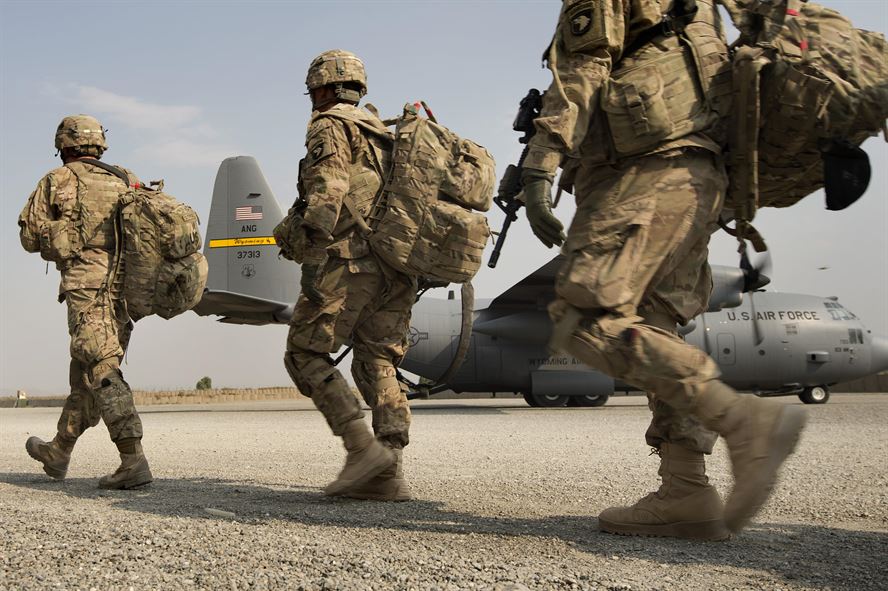
Any discussions and reflections on mobilization processes almost always look like a set of reproaches from history-obsessed “military experts”: in their view, modern societies have allegedly lost the ability to mobilize, have become weak, and have forgotten how to sacrifice. In reality, however, the problem lies deeper — first and foremost, most people simply do not understand what mobilization is as an economic and social process.
In mass consciousness, the state is perceived by analogy with a household. The budget and GDP are thought of as a kind of “state salary,” and expenditures as a set of items from which, in a crisis, a few percent can be diverted for military needs. Within this logic, 5, 10, or even 20 percent of GDP for defense seems insignificant: if a person can set aside a tenth of their own income, why can’t a state do the same? But this view is deeply mistaken.
By default, the state has no “extra money.” In normal conditions, its revenues are entirely bound by obligations to maintain the existing economic, social, and infrastructural system. Moreover, the modern economy assumes by default that the state lives on debt — and that this debt must constantly grow. This has been normal practice since the end of World War II: new debts service old ones, and everything works as long as the economy grows faster than bond interest rates. Any sharp redistribution of resources in favor of war, without a fundamental change in the structure of the budget itself, inevitably undermines the functioning of the economy: it triggers inflation, shortages, supply-chain disruptions, and rising social tensions. That is why mobilization has historically never been reduced to an increase in military spending. It has always meant something else — recognition that the previous model of economic relations no longer corresponds to the moment and requires radical structural change.
Classical mobilization was an extraordinary effort. It implied not merely redistribution, but a reboot of the economy: growth of production, creation of redundancies, expansion of the industrial base, and subordination of market logic to the task of survival. This was a painful process, accompanied by a decline in living standards, but it had a clear goal — to ensure the resilience of the system in the face of an existential threat. To ensure victory in war.
Modern societies and states do indeed demonstrate an inability to undergo such transformations. Mobilization requires not only resources, but also trust; it is based on a political contract and a willingness to recognize war as the shared fate of the nation. It inevitably turns society into a subject rather than a passive observer. And, ironically, it is precisely this — not military defeat — that modern elites fear most: mobilization means losing the illusion of complete manageability of society and abandoning the post-industrial model of prosperity with its inherent atomization.
Thus, mobilization turns out to be politically more dangerous than even military defeat.
But military expenditures cannot be covered by political decisions alone — they require resources, and those resources must be taken from somewhere. Instead of a mobilizational super-effort, state systems have resorted to an entirely different instrument — managed economic contraction. When a government proves incapable of rebooting the system of economic, political, and social contracts with society, it begins to free up resources precisely through their reduction. The consumer sector, services, social programs, and import-dependent industries come under attack. A decline in living standards frees up labor, reduces expenditures, and lowers the burden on social welfare — making it possible to channel money and people into priority sectors without formally acknowledging mobilization.
This approach is not a peculiarity of individual countries or regimes. On the contrary, it has become a general trend. For example, the EU, formally not at war with Russia but indirectly involved in the conflict, is adapting its economy to a long-term confrontation precisely through abandoning previous models of growth and social provision.
But this is not a hidden form of mobilization aimed at a final result such as military victory — it is adaptation to deterioration and contraction as a new norm.
The fundamental difference between mobilization and contraction/reduction/simplification lies in their goals and outcomes. Mobilization creates a new economic configuration and increases the resilience of the governance system in wartime conditions. Contraction, by contrast, merely redistributes scarcity. It allows war to be waged without restructuring society, but only at the cost of degradation and the loss of long-term prospects. War thus turns not into a process of resolving contradictions that cannot be resolved otherwise, but into a self-sustaining process of mutual exhaustion with no logically articulated end point for the application of military effort.
TECHNOLOGY AND THE MYTH OF THE “ABOLITION OF MILITARY MASS”
One of the most persistent illusions of modern warfare is the belief that technologization supposedly eliminates the need for military mass and, consequently, mobilization. In public and expert discourse, technological superiority is often presented as an alternative to quantity: precision instead of volume, quality instead of numbers, information instead of industrial production. In reality, however, technologization does not eliminate the need for mass — on the contrary, it radically changes the way it is formed.
Military mass has not disappeared, but it has ceased to be primarily human and industrial in the classical sense. Modern mass is a distributed system of platforms, sensors, communication channels, computing power, and logistics chains. It is reproducible, scalable, and requires not so much the mobilization of the population as the mobilization of industry, energy, and data. One kamikaze drone does not replace hundreds of classic artillery shells; on the contrary, the logic of warfare increasingly demands their serial and mass production, and thousands of drones constitute precisely that concentration of firepower in its modern interpretation, thanks to the simplicity of their production and the lack of need for large numbers of military personnel to employ them.
Technology does not make war simpler — no, it makes the production of mass cheaper and faster. Mass shifts from the human to the system: the decisive factor becomes not the number of soldiers, but the ability to maintain a continuous flow of robotic platforms, components, and data. War once again takes on the character of a contest of exhaustion, but now it is not so much the population that is exhausted as production and logistics capabilities.
Here we can see how technologization is directly linked to the crisis of mobilization. The refusal to openly mobilize society is compensated by attempts to create military mass outside the sphere of social interaction with the public. Instead of general staffs — automated data-processing systems; instead of mass armies — robotic platforms; instead of political tension — industrial and technological strain. Yet this does not abolish the fundamental requirement of war — the concentration of resources, because technical mass consumes no fewer resources than industrial mass.
Technology is not an alternative to mobilization, but its functional substitute. It allows states to wage war while avoiding direct confrontation with their own societies, but it does not relieve them of the need to create and sustain that same military mass — simply in a different, less obvious form.

WAR WITHOUT A DECISION
The combination of managed economic contraction, technological military mass, and neo-military blocs has allowed modern states to wage wars without making a political decision to go to war. This set of instruments lowers the threshold of involvement, stretches conflict over time, and allows costs to be distributed in such a way that they do not turn into an existential confrontation. War becomes a managed process, devoid of a formal beginning and, more importantly, of a pre-thought and logically articulated end.
This constitutes the vicious limit of modern models of armed confrontation. They are relatively effective in short- and medium-term conflicts, in the form of coercive pressure designed to demonstrate capabilities or achieve limited exhaustion of the adversary. But in wars fought for results — where the decisive factor is the ability to reproduce resources over the long term, maintain economic resilience, and preserve political will — these mechanisms begin to work against the states that employ them.
Managed economic contraction does not create a new growth base and does not form a sustainable war economy. Technological mass requires a continuous flow of resources and productive capacity that cannot be sustained indefinitely without a structural reboot. As a result, war loses direction and turns into a process of self-sustaining exhaustion — not only of the enemy, but of one’s own system.
At some point, this contradiction becomes insoluble. Either the state recognizes war as war and undertakes real mobilization — with all its economic, social, and political consequences — or it continues to evade responsibility, gradually losing strategic initiative. Intermediate solutions buy time, but they cannot ensure victory.
This is the core paradox of the contemporary era. States have learned how to wage war without mobilizing society and how to start conflicts without recognizing them as war. But they have not learned how to win without assuming responsibility for the consequences of the chosen path. Armed confrontation that the direct participants refuse to recognize as war can last a very long time, but it is hardly inclined to end in triumph — instead, countries receive only a draining, indeterminate outcome that undermines the foundations of the very system that the war was supposed to protect.