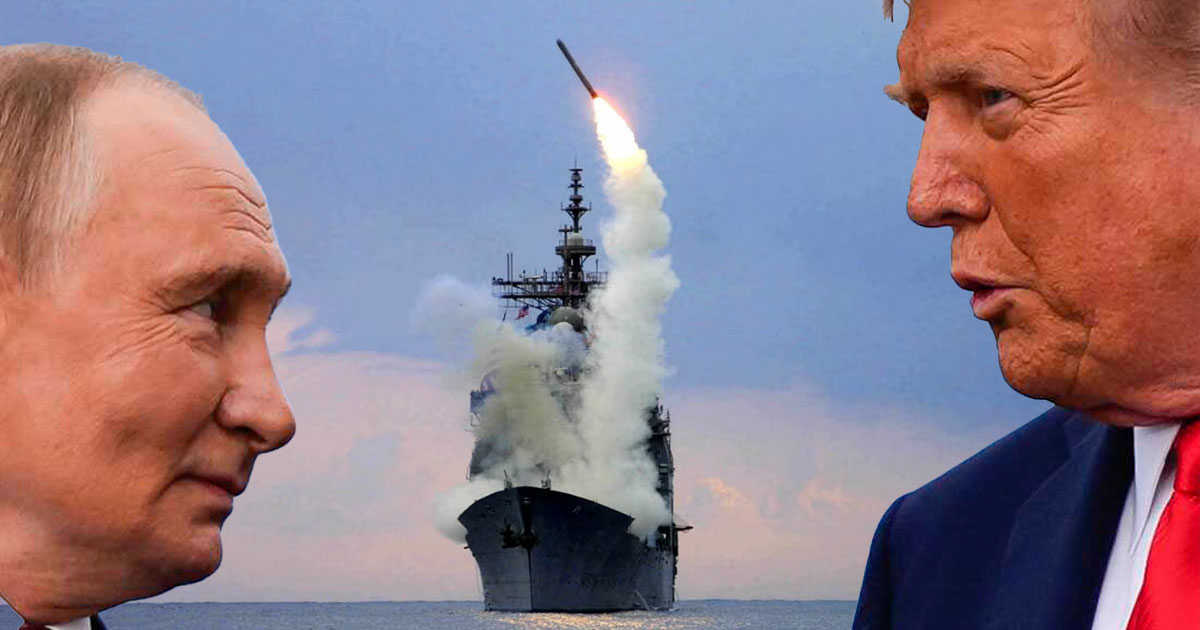
For decades, the backbone of U.S. sea- and submarine-launched strikes — the Tomahawk cruise missile — has once again taken center stage in global attention. The mention of a potential delivery of this missile to Ukraine has sparked intense diplomatic reactions and raised a series of operational questions concerning possible actions by Kyiv on one hand, and responses from Moscow on the other. What are the real capabilities of the Tomahawk, and what potential consequences could its delivery have for the United States, Europe, and Russia?
LONG-RANGE, PRECISE, AND ADAPTABLE
Seen in layman’s terms, the Tomahawk is just one among a number of dangerous missiles. In practice, placing it in the context of the Ukrainian conflict is an American message wrapped in steel and a turbofan — a message of power and readiness to cross yet another line. The idea that Ukraine could receive cruise missiles capable of flying over 2,500 km and striking targets with precision does not so much strengthen its arsenal as it attempts to redefine the boundaries of the war. Moscow views this as a signal that the West is entering a dangerous zone of no return.
The Tomahawk was developed back in the 1980s and has survived several modernizations. Today it is a cruise missile designed for precision strikes at long range. Modern variants are launched from ships and submarines — notably the Block IV (TACTOM). It can fly up to 2,500 km while carrying a 450-kg warhead, and uses multiple guidance systems such as INS, GPS, TERCOM, etc. What sets the most advanced version apart is that it can be controlled remotely during flight — that is, its target can be changed in mid-flight.
Also, when the target changes, it can loiter in the air until new attack coordinates are received, while remaining hard to detect by radars and thus keeping the operators relatively safe. This makes it a weapon capable of deep, precise strikes beyond the range of most artillery systems.
If such a weapon were to fall into Ukrainian hands, or if it were delivered to states like Poland or Romania, the boundaries of the war would shift. It would enable strikes on Russian command centers, lines of communication, and airfields. Moscow, Bryansk, Sevastopol, and Kursk would be within the missile’s reach. In military-political terms, this would be an open provocation toward Russia.
FROM A REGIONAL INTO A STRATEGIC CONFLICT
If Ukraine were to receive this weapon, it would not be just one more weapon but a capability to strike deep into Russian territory and hit strategically significant targets unreachable by short-range systems. Command centers, logistics bases, ammunition depots and other strategically important facilities located well behind the front line would become potential targets. Although this would not necessarily change the course of the war, it would certainly affect strategy and policy. With the Tomahawk, the conflict in Ukraine would change its character and grow from a regional into a strategic confrontation that could involve NATO.
Delivering a modern version of the Tomahawk to Kyiv would set a precedent both militarily and geopolitically. The Tomahawk has a range of 1,600 to 2,500 kilometers, which is incomparably greater than anything Ukraine currently possesses in its arsenal. Beyond enabling strikes behind the front, it could threaten Russian reserves and exert psychological pressure on the Russian population and armed forces.
However, supplying and employing the Tomahawk is not straightforward and faces a number of obstacles. Beyond political hurdles there are operational constraints. Tomahawks are produced only in limited numbers. The Pentagon produces dozens, not hundreds, of these missiles annually, and the bulk is allocated to the needs of the U.S. Navy. Moreover, even if the United States decided to hand over a significant portion of these missiles to Ukraine, technical obstacles to their use would remain. Modern Tomahawks are launched primarily from ships and submarines using specialized launchers.
Although there are land-based variants, Ukraine certainly does not currently have compatible launchers. It would also be necessary to train personnel to operate them and solve logistics and spare-parts maintenance issues. These are complex systems requiring high technological and command coordination, as well as infrastructure for storage and upkeep of the missile — infrastructure that would become a priority target for Russian strikes.
Domestically, both the delivery itself and mere speculation about it have enormous morale effects. They demonstrate to Kyiv’s population and military that Western support is growing even if the front lines do not actually move. For Russia, however, this would mean that the Ukrainian conflict had exceeded its previous bounds and become a direct confrontation with NATO. Kyiv would turn into a focal point where two global military doctrines collide.
WHAT DOES TRUMP RISK?
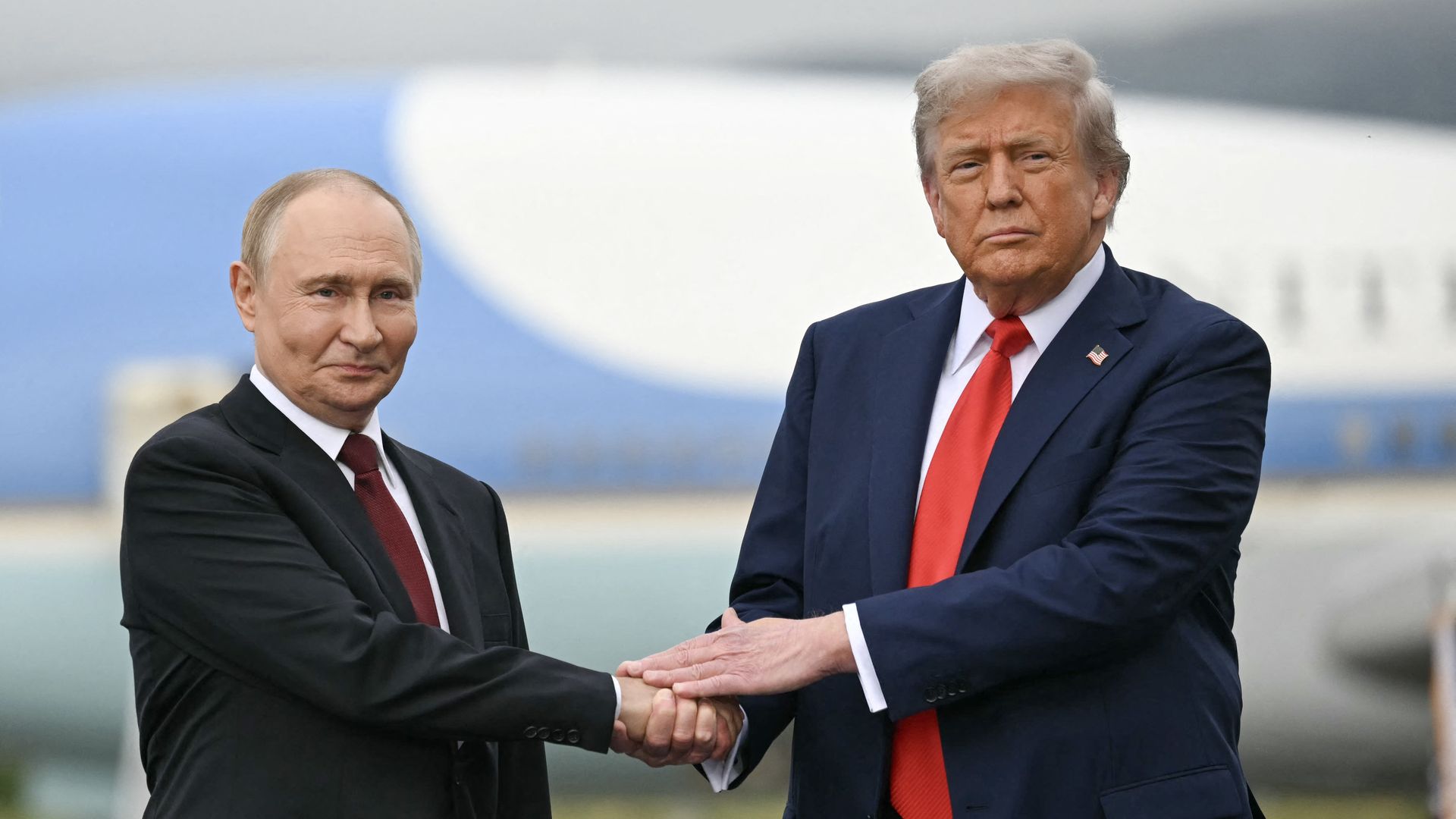
For an American administration that decides on such a move, sending Tomahawks can have dual implications.
First, it would worsen the political situation in the United States. This move could be perceived as an escalation that pushes the U.S. into a direct conflict with Russia. Trump might be accused of taking military risks for geopolitical points and thereby endangering his own people. Also, the logistical and operational assistance to Ukraine in this case could be regarded as direct participation in the conflict. Second, his decision could have serious consequences for Europe, which might become a secondary theater of the conflict.
Thus Trump entered the White House again promising to “stop the war in Europe” now. If he approves the delivery of Tomahawks, he could be declared the president who opened a new war or even dragged the U.S. into a direct confrontation with a nuclear power. And if he refuses, he could be accused of appeasing Russia.
In any case, the Tomahawk move is not merely a military decision but a geopolitical time-bomb with delayed action — its timer is ticking both in Moscow and in Washington.
EUROPE AS COLLATERAL DAMAGE
For Europe, the delivery of this type of weaponry is a moment of unease. Although the EU officially speaks of “the need to support Ukraine by all means,” unofficially, nervousness is growing in many European capitals. Each new delivery of heavy weaponry—from tanks to long-range missiles—brings Europe one step closer to the status of a new battlefield.
The Russians have openly warned that they will target supply chains, bases, and logistical points that enable missile strikes, including infrastructure in NATO countries or their bases. In practice, this means there is a possibility of strikes on logistical hubs, disruptions in supply routes, and political pressure on individual states. European governments now face a decision: whether to support Ukraine more deeply and risk provoking a Russian response, or to limit assistance and preserve their own peace.
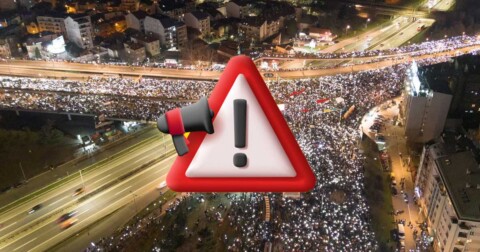
European countries are already facing protests and political turbulence, while their economies are heavily strained by sanctions, energy shortages, and inflation. Now, they are also confronted with the risk of becoming not only economic but also military targets.
RUSSIAN RESPONSE: “TOMAHAWK WON’T GET FAR”
Russian military sources reacted to the rumors of Tomahawk deliveries by saying that “any attempt to launch a Tomahawk from Ukrainian territory will be regarded as a direct NATO attack on Russia.” This statement from the Russian Ministry of Defense essentially meant that the Russian response would not be confined to Ukrainian territory.
Russia possesses a dense network of air- and missile-defense systems — from the S-400 and S-500 to the Pantsir and Buk-M3 — which practically means a Tomahawk would have to break through multiple layers of protection before even reaching its target. In practice, a Tomahawk would not get very far.
However, that is not the key point. Moscow has stressed that it will not act defensively alone: if American weapons strike Russian territory, the response will be expanded to the points from which the missiles were launched. NATO ships, support bases and infrastructure in countries that participated in logistical support could be at risk.
The Russian arsenal includes a number of trump cards — such as the Kinzhal, Zircon and Iskander-M systems. All these systems can strike at long range and at hypersonic speeds, well beyond the capabilities of Western air defenses.
Some military analysts point out that supplying Tomahawks would only accelerate the full deployment of these Russian systems. If they were placed in Kaliningrad and the Black Sea, all of Eastern Europe would fall within the reach of Russian missiles within minutes.
For every Tomahawk, Russia could use a Zircon. While the West would call this “deterrence,” in Russian military doctrine it would be a “symmetrical response.”

LIMITS OF POWER
The Tomahawk is a powerful and precise weapon capable of altering both tactical and strategic balance. Yet its delivery carries complex logistical, political, and security consequences. For the U.S. and the EU, the decision is a choice between escalating the conflict and strengthening Ukraine; for Moscow, it is a geopolitical red alert. In reality, the Tomahawk represents far more than a missile — it is a test of political will. Ultimately, this is not about weaponry, but about the boundaries of power.
Behind the talk of a possible Tomahawk delivery lies more of a political message than an actual military intention. It is a classic show of force — an attempt to send a signal to Moscow, but also to reassure European public opinion, which has for years been fed the narrative of a “Russian threat.” In truth, anyone who understands military logic knows that deploying such weapons in Eastern Europe would mean crossing a red line and triggering open destabilization.
A missile like this may cross half a continent, but it cannot escape the consequences of its flight. What the West calls “Ukraine’s right to self-defense,” Russia sees as a pretext for direct aggression — placing Europe in a split between alliance and fear.
The Tomahawk may indeed be a powerful weapon, but it is far more potent in global headlines than in reality, because its actual use would signify direct confrontation between great powers — something neither Washington nor Brussels is ready for. The irony is that the Tomahawk, a missile designed for precision, has become a symbol of a world increasingly uncertain of where the limits of power truly lie.