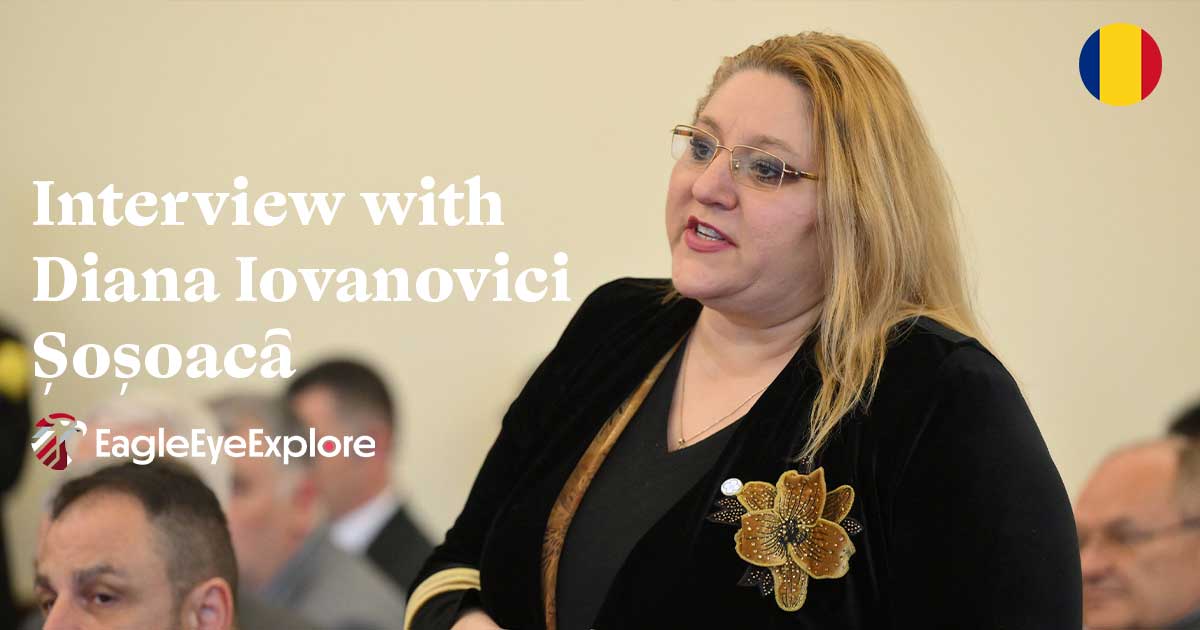
Diana Iovanovici Șoșoacă, a Romanian lawyer and Member of the European Parliament, is one of the most recognisable voices of sovereigntist politics in Europe. She founded and leads the S.O.S. România party and, before entering the political arenas of Brussels and Strasbourg, served as a senator in the Romanian Parliament. She is known for her uncompromising stance on national sovereignty, traditional values and the right of nations to determine their own destiny. She does not shy away from speaking openly about issues that others would rather avoid, earning her the loyal support of numerous Romanians both at home and across the diaspora.
In the European Parliament, she operates independently, outside the major political groups. Although she is frequently targeted by political opponents and the media — a situation she herself describes as political persecution — she remains faithful to her motto: “I do not run, I do not remain silent, I do not bow.”
Ms Șoșoacă, how would you assess the current situation in the European Union regarding its relations with the BRICS countries and Russia? What is your position on sanctions, the war narrative and the general political climate within the EU? Could you offer us a broader perspective on the situation?
Unfortunately, the situation is very bad — above all for ordinary people, not politicians. I have heard many statements, but we often forget what matters most: the human being, the citizen. We ask people to vote, and then we speak exclusively about politics.
I know about BRICS, and some politicians know about it too, but ordinary citizens do not. BRICS needs better communication — what I would call “propaganda”, in the positive sense of the word — to explain what it represents. Most European citizens have no idea what it is. In Romania, I try to explain what BRICS is in simple terms.
Europe is deeply divided today — both between political leaders and citizens, and among citizens themselves. Some people reject the idea of a new geopolitical direction simply because of patterns of thinking they acquired through their education. It all begins with education. When we lose traditional education — values, history, respect for God and faith — we lose our moral compass. Many young people today no longer know the history of their own countries or the most important events in world history. This is how generations without roots or principles are growing up.
The gap between the EU leadership and the population is growing ever wider. Protests are taking place everywhere. Why? Because chaos works in favour of those in power — it allows them to do whatever they want. I fear that the European Union is moving towards an authoritarian system, one that even resembles certain fascist tendencies of the past, with sanctions being imposed not only against Russia but also against European citizens and politicians who dare to speak the truth.
If we want democracy, people must be allowed to express their views freely, rather than being punished, imprisoned or placed in psychiatric institutions for doing so. Yes, there is even a new proposal suggesting that politicians whose rhetoric is considered “incorrect” could be placed in psychiatric institutions. This is unacceptable.
The sanctions against Russia have largely harmed the European Union itself. They have weakened our economy and sown hatred within our societies. A society built on hatred can lead only to conflict and war. And time is running out — we are losing generations, losing our economies and wasting years that should be spent building something meaningful.
We are in a very bad situation. In my opinion, it is time for a revolution — not a violent one, but a revolution of conscience, thought, attitudes and political leadership. Otherwise, a real revolution will break out in the streets, and politicians will bear responsibility for its consequences.
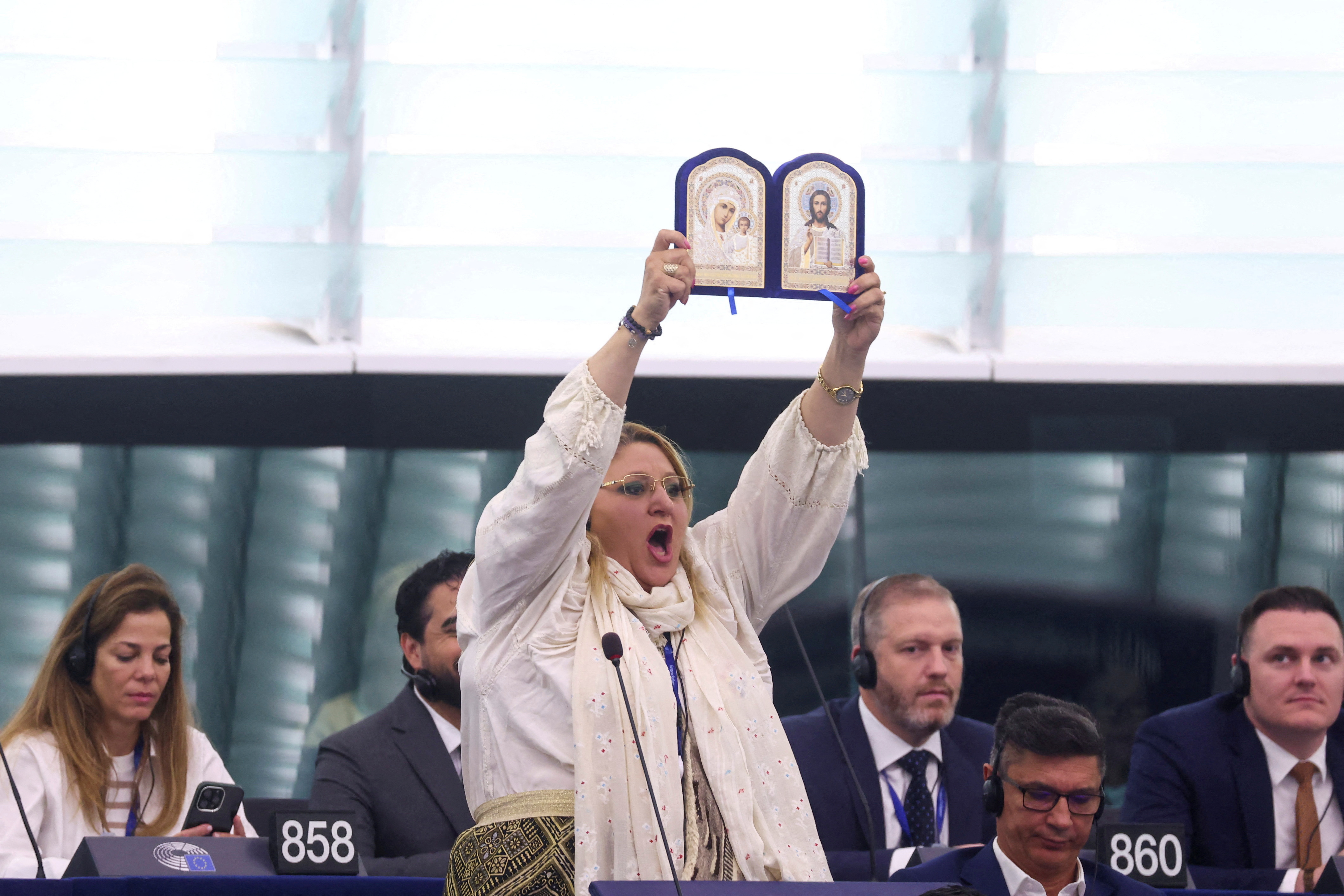
If we look more deeply at the causes of these political developments, can we speak of a dominant left-liberal ideology, wokeism, as well as censorship and social ostracism? What is it like to be a politician in the European Parliament, where you face such a system?
Liberalism and woke ideology today have nothing to do with the genuine liberal doctrine. If we read the works of classical liberalism, we will see that it has nothing to do with censorship, discrimination or repression. What is happening today — the restriction of rights and the silencing of dissenters — represents, in my opinion, and I say this as a lawyer, a form of crime against humanity.
Europe fought for centuries for rights, freedoms, sovereignty and independence — for workers, women and minorities. Today, we are moving backwards. In fact, I believe we are living through a modern form of the Inquisition. In Romania, some people call me “Diana d’Arc”, after Joan of Arc, because I refuse to remain silent. Someone even made a short film portraying me rising from the flames like a phoenix.
Political doctrines today serve exclusively to divide people — into the left, the right, the far right and the far left. I do not belong to any of these categories. When I was asked which doctrine I belonged to, I called it the “Doctrine of the Epicentre”, because wherever I appear, I cause an earthquake. And sometimes that is precisely what is needed.
As for censorship, the European Convention on Human Rights guarantees freedom of speech, thought and religion. The Romanian Constitution also prohibits censorship. And yet I face threats of a 25-year prison sentence or placement in a psychiatric institution because of my political statements in the Romanian and European Parliaments. If my views differ from those of Ursula von der Leyen, I am labelled “far-right”, an “extremist” or an “antisemite”.
For example, if I say “Free Palestine”, I am labelled an antisemite. They forget that Palestinians are Semites too. They are changing dictionaries, changing films, changing values. But true values remain within us.
So where is democracy? Everywhere in the European Parliament, you see the slogan “Democracy in Action”. I told them they should change it to “Dictatorship in Action”. You cannot build peace if you refuse to engage in dialogue with the other side. And yet today we have only one acceptable opinion, one leader and one narrative. That is dangerous.
Let us turn our attention to Romania. You recently held important elections. How would you describe this new wave of conservative awakening in Romania, and how do you assess the election results, particularly in light of allegations of democratic backsliding?
People outside Romania know only what they have been allowed to know. I was the first victim of the system in these presidential elections. According to the actual opinion poll results, I had the support of around 67.5 per cent of voters — I could have become Romania’s first woman president, and that in the first round.
I had not been convicted of any criminal offence. Instead, they resorted to unconstitutional procedures through the Constitutional Court — an institution which, in my view, is a political rather than a judicial body. Its decisions cannot be appealed. They banned me from running because I had visited the Russian Embassy, because I had criticised the EU and NATO, and because they claimed that I did not uphold “constitutional values”. Nobody can explain what that actually means.
For me, 5 October 2024, the day that decision was made, represented a coup d’état. From a legal standpoint, the Romanian state was destroyed by that decision. When you abolish the Constitution, you abolish the state as well.
What followed was a form of social engineering carried out by the domestic intelligence services, acting against foreign intelligence services. They created chaos and divisions. They turned Romanians against one another and thwarted my efforts to unite nationalists in a single movement. Many now understand that I was right when I said that the system was using certain individuals to divide us.
Romanians are now afraid to take to the streets in protest. They are being told to stay at home and not to react. But that is not right. We must reclaim our civic spirit.

In light of everything you have said so far, and with the next European Parliament elections approaching, what message would you send to national-conservative forces across Europe? Is there a possibility of their coming together again and acting jointly, and of defeating the left-liberal establishment?
The prospects for success depend entirely on courage. There are many national conservatives, but too many of them are afraid to speak openly. Others are divided — some support Israel to avoid being labelled antisemites, while others support Palestine. Meanwhile, those who support Palestine often embrace woke and LGBT ideology. Everything has become completely muddled.
In the European Parliament, they have placed me in the “far-right” group, even though that group supports Israel, whereas I support Palestine. I oppose woke and LGBT policies, so where do I belong? The left? The right? The centre? Nowhere?
I believe in God. I defend victims. I stand up for rights and freedoms. I speak the truth. Many politicians do not have the courage to speak the truth. That is the fundamental problem.
We must change the paradigm. Diplomacy is important, but we are living in a new era. Young people think differently. In Romania, I am the politician who is most popular among children, teenagers and young people. Perhaps it is because I speak naturally, courageously and energetically — because I am who I am.
People are fed up with empty diplomatic statements. They want authenticity. They want politicians who understand their everyday lives — poverty, the lack of opportunities, the inability to have children or start a family. People have lost joy, friendship, togetherness and faith.
We are surrounded by betrayal and hatred. And we have forgotten God. Where is God in all of this? Where is Jesus Christ?