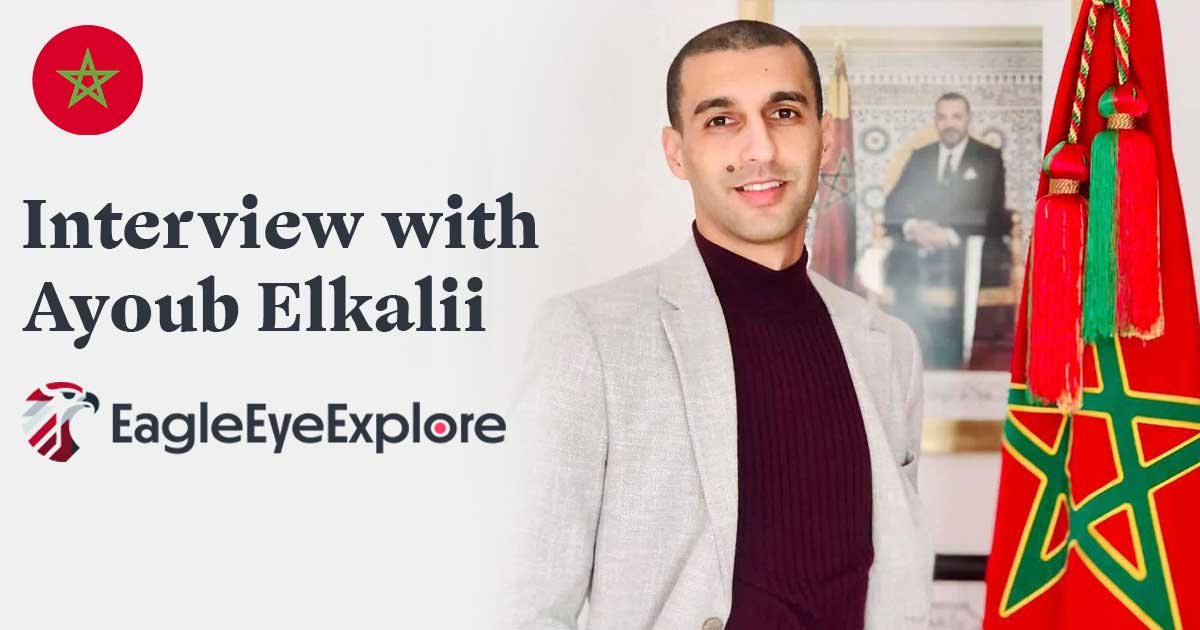
Speaking from Rabat about the wave of youth protests, the moral mobilization for Palestine, Morocco’s balancing act between the West and Arab solidarity, and the growing geopolitical tension with Algeria, public policy researcher Alyub Elkali explains how his country navigates between its Western partners and its commitments to the Arab world. He discusses why energy projects in the Maghreb are becoming increasingly important for Europe, why the rivalry between Morocco and Algeria remains one of the region’s key security challenges, and why Turkey—despite its strong rhetoric—cannot pursue a more confrontational policy toward Israel. The analysis offers insight into one of the most sensitive geopolitical knots of our time.
In Morocco, especially among the younger generation using social networks like TikTok, campaigns have emerged against economic and social injustice. How do you view these developments, and what do they reveal about the current political and social issues? What is happening in your country today?
The recent protests in Morocco were not merely moments of anger but an honest outcry from a generation whose ambitions exceed what the current political and economic system can offer. Young people are expressing a deeper frustration—not only with living conditions but also with the feeling that their future is narrowing.
Their legitimate demands—better healthcare and education, employment opportunities, and a firm fight against corruption—are widely shared across Moroccan society. In many ways, they simply voiced aloud what many citizens have been struggling with in silence.
Demonstrations took place across the country, and tensions arose where gatherings were not legally authorized, since Moroccan law requires protests to be organized through a recognized structure such as a political party, union, or association. A few criminal elements took advantage of the unrest, but they were quickly arrested and brought to justice.
The government responded by increasing the budget for healthcare and education within the 2026 Finance Law, modernizing more than 70 hospitals, and opening new university hospitals in Rabat and Agadir. Young representatives were also invited to speak on national television alongside the relevant ministers, and several political parties expressed support for the demands.
For now, the protests have calmed down, but expectations remain high, and the credibility of the response will depend on the implementation of these promised reforms.
We are witnessing youth protests from Rabat to London and Paris. Across the Arab world, but also in Europe, demonstrations in support of Palestine and broader mobilization of young people are taking place. How do you interpret this new generation of Arab and European activists—is it a moral rebellion, political awareness, or something else?
What we are seeing from Rabat to London and Paris is, in fact, a moral reaction to what many perceive as unbearable injustice. The suffering in Gaza—of children, women, the elderly, and the sick—has shocked an entire generation that refuses to remain silent. For them, this is less a political issue and more a matter of basic human dignity and decency.
These young protesters are expressing a kind of moral uprising. They are driven by empathy and solidarity, acting outside traditional political channels because they believe governments are too slow or too cautious. For them, supporting Gaza means standing up for people, not for an ideology or a religion.
At the same time, this reveals a gap between public opinion and official policy. Governments, including Morocco, must juggle alliances, security, and regional interests. But for these young people, the motivation is simple and immediate: they see suffering and feel compelled to act.
Morocco is known for its good relations with the West, especially with the United States, while at the same time being a Muslim country with strong public expectations regarding support for Palestine. How does Morocco balance between political interests and religious solidarity with Gaza, given that Western countries—primarily the U.S.—openly support Israel? How do you personally view this contradiction: that Muslim countries, including Morocco, maintain close relations with the West while their people express strong support for the Palestinians?
Yes, this is a very relevant question. Morocco’s official position often differs from public opinion. The country has long been active on the international stage regarding the Middle East conflict, especially during the reign of the late King Hassan II. Morocco currently chairs the Al-Quds Committee and played a central role at the Arab Summit in Fez in 1982, where King Fahd’s two-state solution plan was discussed and accepted by Arab states— a plan supporting the coexistence of Israel and Palestine, which Israel still has not accepted.
At the same time, Morocco has strategic interests tied to its territorial integrity, particularly concerning the Moroccan Sahara. The Hamas movement openly supports the separatist Polisario Front in the so-called Sahrawi Arab Democratic Republic, with the backing of Iran. For this reason, direct political support for Hamas is extremely complicated.
Although Moroccan public opinion strongly supports the people of Gaza, this support stems primarily from Arab solidarity rather than religious obligation, since the population of Gaza includes both Muslims and Christians. Officially, Morocco has consistently defended Palestinian civilians, sending humanitarian aid during the escalation after October 7, 2023—aid that Israel did not block.
Morocco’s position is also shaped by broader geopolitics. Western countries have interests in prolonging the conflict, including arms sales, and it required significant diplomatic pressure—particularly from U.S. President Donald Trump—to secure temporary arrangements favorable to the United States and Israel.
Furthermore, Morocco is bound by the Abraham Accords with Israel, signed on Moroccan soil under U.S. supervision, which formalized Morocco’s recognition of Israel. In return, the United States recognized Moroccan sovereignty over the Sahara and supported the autonomy plan proposed in 2007. Recently, on October 30, the UN Security Council adopted Morocco’s autonomy plan with 11 votes in favor—including the United States, France, and the United Kingdom—while China and Russia abstained.
When discussing the role of the Islamic world, many are asking why Turkey—a country with significant regional influence—has not reacted more strongly to the events in Gaza. Do you believe that NATO membership has limited Ankara’s ability to openly oppose Israeli policy because of U.S. support for Israel?
Turkey’s position on Gaza reflects a careful balance between political rhetoric and practical constraints. The ruling Justice and Development Party (AKP) often speaks forcefully in support of the Palestinians, which reflects its political base and ideological identity. However, Turkey’s ability to take stronger action is limited by its NATO membership, close ties with the United States, ongoing economic relations with Israel, and its role as a regional mediator. As a result, there is often a gap between Turkey’s public statements and its actions on the ground. The government provides political and humanitarian support to Gaza, but avoids direct confrontation with Israel, allowing it to show solidarity without jeopardizing its broader strategic and economic interests.
It is also important to note that Turkey is, in many ways, a secular country. Most of its population is not deeply religious, and the country has a long history of managing internal divisions, including separatist movements such as the Kurdish insurgency led by Abdullah Öcalan. Turkey has repeatedly faced the challenge of maintaining internal security while managing diverse communities.
At the same time, Turkey strives to maintain its position in the international system. Its long-standing desire to join the European Union has been limited by concerns over human rights and governance, while NATO membership and close ties with the United States shape its foreign-policy choices. Even while condemning Israeli actions in Gaza, Turkey cannot go beyond diplomatic measures without risking tensions with the United States, which remains Israel’s main ally.
This cautious approach reflects the broader balance of power in the region. With U.S. backing, Israel has established dominance in key areas of the Middle East—from the occupation of southern Lebanon after 1982, to the Golan Heights since 1967, and various interventions in Syria, Iran, and Yemen. In this context, Turkey’s responses are necessarily moderate: it expresses solidarity with the Palestinians and humanitarian concern, but acts within the limits imposed by strategic realities and its own national interests.
How do you view the rivalry between Morocco and Algeria, especially in light of the Western Sahara issue, where political, security, and energy interests are deeply intertwined? Could this rivalry develop into a more serious security challenge for North Africa?
The rivalry between Morocco and Algeria dates back to the early 1960s, beginning with the “Sand War” of 1963 over borders inherited from French colonial rule. France had annexed parts of eastern Morocco and incorporated them into its Algerian colony. After Algeria gained independence, it did not return these territories, creating long-lasting tension. Algeria also supported the Polisario Front in its attempt to create a state in southern Morocco, challenging Morocco’s control over the Sahara and access to the Atlantic.
Today, the rivalry remains shaped by history and entrenched perceptions. Algeria often views Morocco as a long-term strategic competitor, especially regarding the Sahara, where security and regional influence are key. However, mutual deterrence, diplomatic arrangements, and international pressure—including warnings from the United States—prevent the dispute from escalating into open conflict.
The rivalry is therefore a blend of history, politics, and strategy, carefully managed within the broader geopolitical reality of North Africa.
Europe is searching for alternatives to Russian gas. If Morocco were to begin serious exploitation of its oil and gas reserves, could this shift the regional energy balance and change Morocco’s position in relation to the EU? And if Europe started importing Moroccan gas on a larger scale, would Morocco be able to pursue an independent energy policy, or would it have to adapt to the demands of its Western partners and NATO allies?
Morocco has significant energy potential, but current discoveries remain relatively modest. In the near future, it is unlikely to become a major player on global gas markets solely through domestic production. The most realistic scenario involves securing gas via pipelines—for example from Nigeria—while simultaneously developing its own reserves.
If Europe begins importing more Moroccan gas, the country could gain additional influence. However, it would still have to navigate the expectations of its Western partners and NATO allies. Full independence in energy policy is a long-term goal, but for now Morocco’s strategy is to balance its growing energy role with its existing international and regional commitments.
Morocco has not recognized Kosovo to this day. How do you view Morocco’s position in international relations, and what do you believe are the reasons behind this stance?
Morocco’s decision not to recognize Kosovo is deliberate and strategic. It is grounded in the principle of territorial integrity and closely tied to the question of the Moroccan Sahara. Recognizing a state that declared independence unilaterally could set a precedent that undermines Morocco’s own claims to its territory.
At the same time, this policy allows Morocco to maintain a coherent diplomatic stance and balance its relations with key international partners. It is about safeguarding national sovereignty and ensuring that decisions made elsewhere in the world do not create challenges for Morocco.