The end of the Cold War era and the collapse of a state built on Serbian military victories and state traditions caught the Serbian political and intellectual elite in Serbia and Montenegro largely unprepared. Irretrievably mired—with assistance from abroad—in inherited ideological feuds and, for the most part, captive to someone else’s cultural pattern, our elite was in every respect unprepared to clearly and collectively define, from a Serbian perspective, strategic national and state objectives, the timetable for achieving them, and to assume responsibility for national leadership and their implementation. This, rather than the unfavourable external situation alone, is one of the key reasons for our subsequent and present-day national uncertainty, setbacks, and defeats.
ON THE EVE OF THE ADOPTION OF THE SO-CALLED ŽABLJAK CONSTITUTION
The geopolitical outlook of most of our political and intellectual elite during the collapse of communism was clouded by the chimeras of Western neoliberalism. As a result, they were unable to recognise long-term processes in the policies of the most important Western countries toward the Balkans. And in the rare cases when they did recognise them, they were generally morally unprepared and professionally incompetent to oppose them in a planned and systematic way.
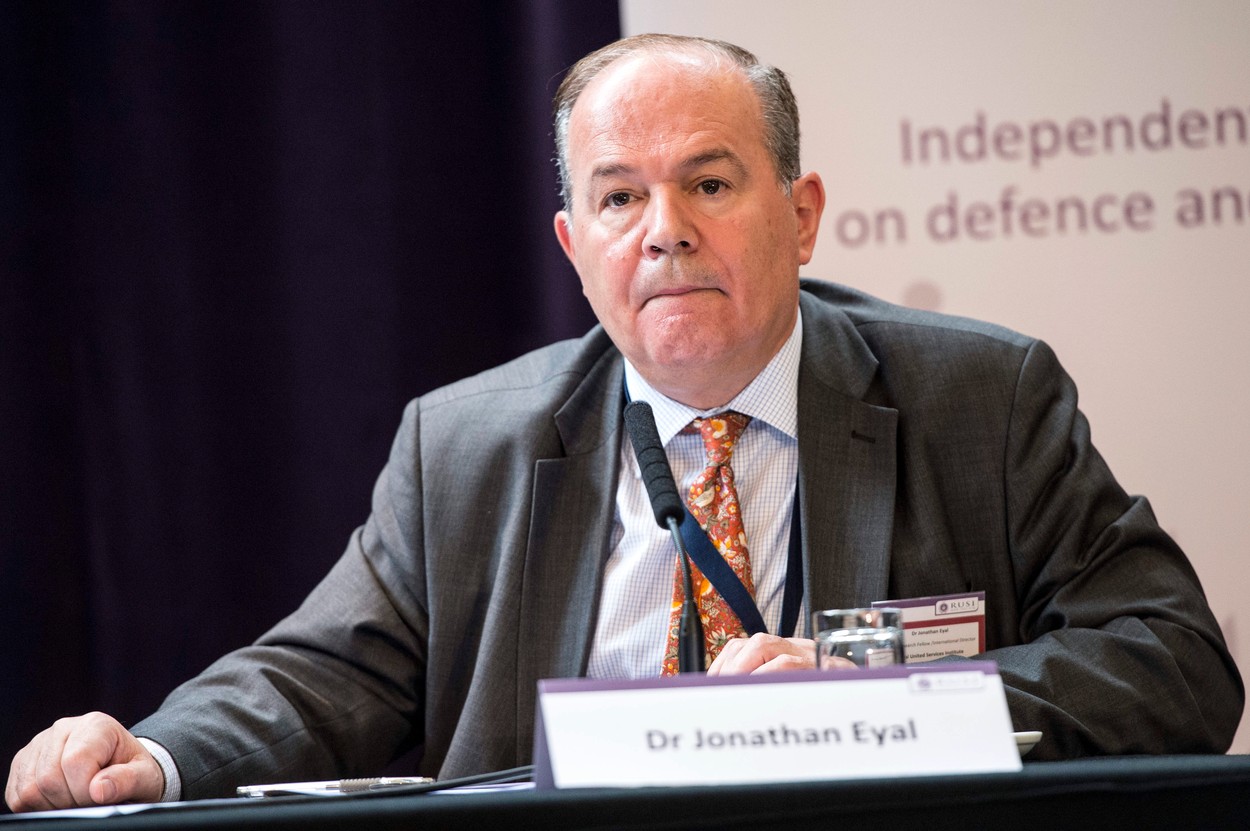
There were occasions when certain Western experts, very close to the centres of power in their own countries, spelled out in their statements or writings during the 1990s precisely what their states would later do in the Serbian national space. One example is a brief interview given to the Podgorica-based Monitor on 22 April 1992 by Jonathan Eyal, director of the prestigious British Royal United Services Institute (RUSI).
One of Britain’s leading experts on Balkan and Eastern European politics, both past and present (Mira Adanja-Polak gave her interview with him the telling title “The Man Who Knows — Jonathan Eyal”), Eyal spoke to a publication close to Slavko Perović’s Liberal Alliance of Montenegro just days before the Federal Republic of Yugoslavia was formed and the so-called Žabljak Constitution was proclaimed.
THE CONCLUSION OF “THE MAN WHO KNOWS”
With that already announced event approaching, Eyal warned Monitor that “Montenegrins should be extremely cautious about the constitutional arrangements now being signed.” Although the creation of the new state at that point was backed by the wishes of 95.96 per cent of voters who, on 1 March of that year, voted for Montenegro to remain in a state union with Serbia as a “sovereign republic”—with turnout of 66.04 per cent (members of the Albanian minority boycotted the referendum)—Jonathan Eyal confidently concluded: “It will not last. The only question is how long these constitutional arrangements will endure. They will not be considered legitimate in Serbia and Montenegro, and their lifespan will be short. If the authorities in Serbia and Montenegro believe they are now making an agreement that will stand the test of history, I have good news for them: it will last no longer than the constitutional arrangements previously introduced by communist governments in Eastern Europe.”
At that moment, Jonathan Eyal’s view that Montenegrins and Montenegro were threatened and unequal in the new federation—which the Briton called “Serboslavia”—was shared only by voters of the Liberal Alliance and the Social Democratic Party of Reformists. These parties advocated reorganising the former Socialist Federal Republic of Yugoslavia into a confederation and, if that failed, Montenegro’s independence. In the parliamentary elections that December, however, they won only 17 of the 85 seats in the Montenegrin Assembly between them. Parties supporting a state union with Serbia won 65 seats in the same election: the Democratic Party of Socialists (DPS), the People’s Party, and the Serbian Radical Party of Montenegro. Moreover, the openly Serbian parties—the People’s Party (14 seats) and the Serbian Radical Party of Montenegro (8)—won five more seats in the December election than the parties that shared Eyal’s views and advocated Montenegro’s independence.
NOTHING NEW FROM LONDON
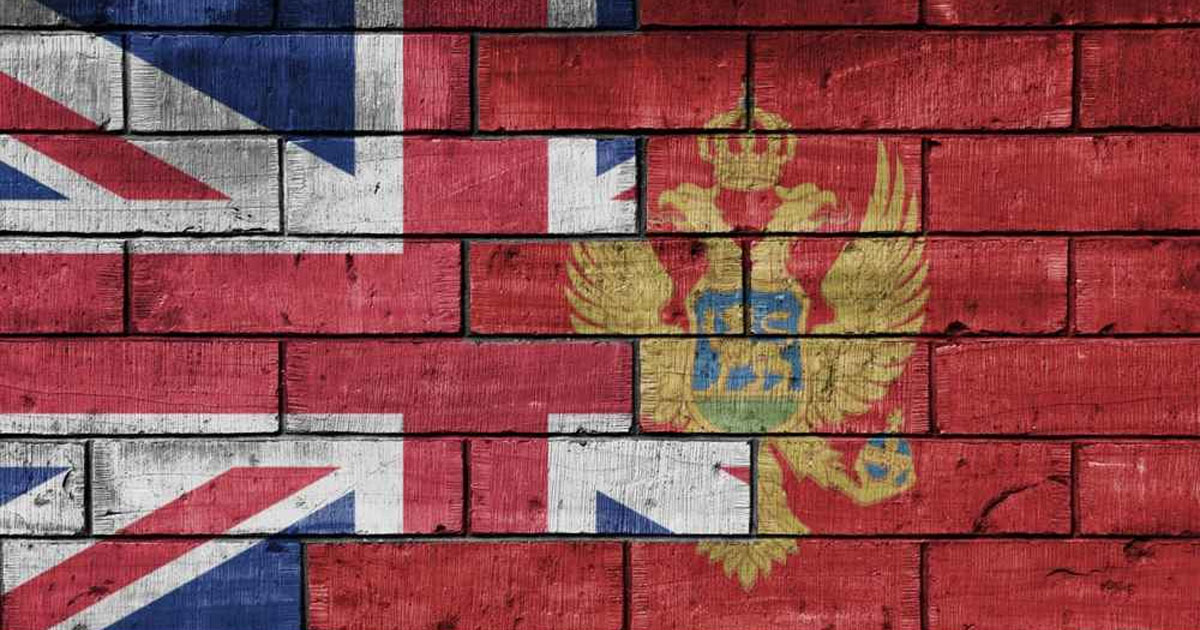
This situation did not, however, discourage London or prompt it to redefine the objectives of its Balkan strategy, the foundations of which had been established during the nineteenth century. Instead, in 1992 Jonathan Eyal spoke openly about what the United Kingdom would do to turn what was then an unfavourable situation for it in Montenegro entirely to its advantage over time. To halt the Serbian national revival in Montenegro, which had gained momentum after the “anti-bureaucratic revolution,” London was preparing, on the one hand, to reactivate the oldest sources of division and hostility between Cetinje and Belgrade and to awaken dormant collective stereotypes and fears. To that end, five days before the proclamation of the Federal Republic of Yugoslavia, Eyal told Monitor that “there will be no federation between Montenegro and Serbia,” but that “Montenegro will become a province of Serbia in everything but name.”
After raising the question of relations within the federation and Montenegro’s constitutional equality and status, the Montenegrin question was also to be opened as an ethnic one. In this connection, the director of the British Royal United Services Institute (RUSI) observed in Monitor in April 1992 that it was a “major failure of the Montenegrin authorities, as well as the opposition,” that they had failed to “redefine what Montenegrin identity is, what the Montenegrin nation is.” In view of this, Jonathan Eyal advised Montenegro’s political elites that “there must be a definition [of identity, author’s note] that is different from Serbia,” and then concluded: “And that is something you must decide for yourselves. Although it is not an easy task, it is what you need to do. Once you have done that, everything in Western policy toward Montenegro and Serbia will become clearer.”
In short, according to Eyal’s promise at the beginning of 1992, Montenegro would receive Western support only once it had clearly emancipated itself nationally from Serbdom and separated itself from Serbia in constitutional and legal terms. Nothing new from London.
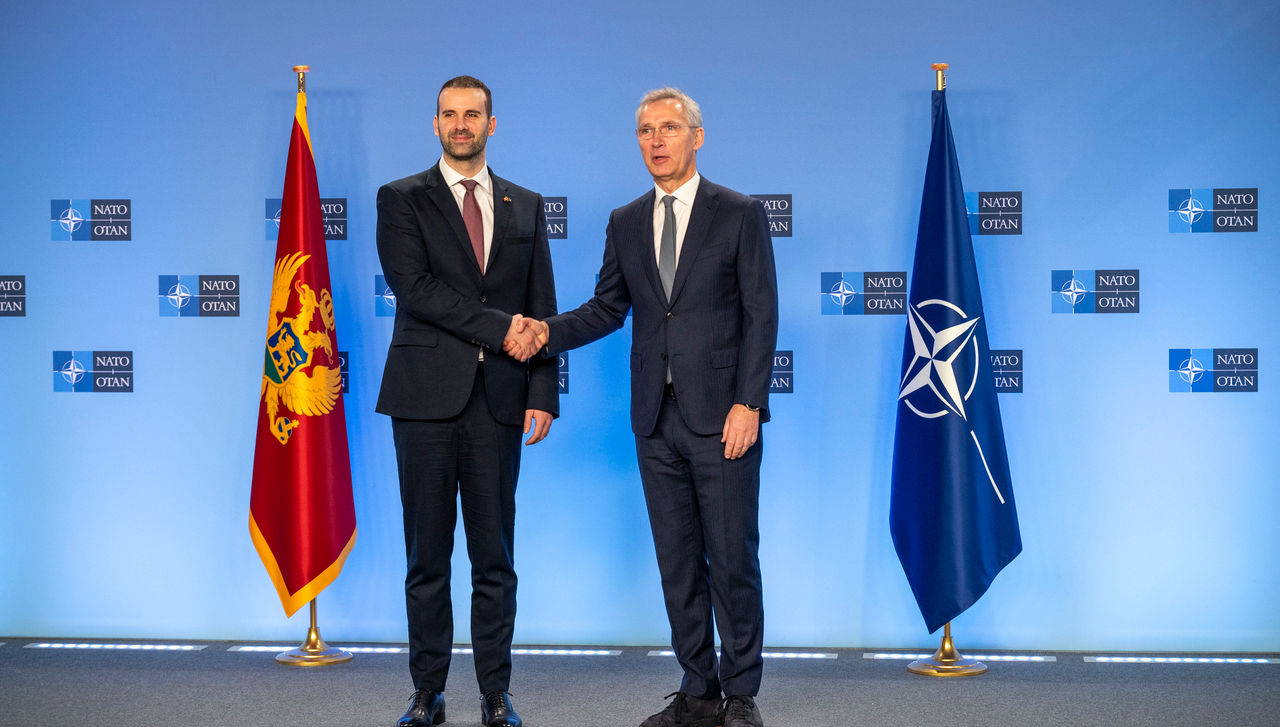
NATO GETS THE PORTS; MONTENEGRO GETS CABBAGE AND POTATOES
For example, in early 1876 Disraeli wanted to separate Montenegro from Serbia so that the latter would be left alone in a future war with the Ottoman Empire. According to Dragoljub Živojinović, Disraeli was then prepared to offer Montenegro territorial expansion in the form of “a small garden in which to grow cabbage and potatoes”—that is, fertile land to ease its economic difficulties. He was not, however, prepared to grant its request for a section of the Adriatic coast, because that could have allowed Russia to obtain a port on the Mediterranean through Montenegro. To forestall the same geostrategic risk in modern Montenegro, twenty-five years before Montenegro joined NATO, Jonathan Eyal linked the restoration of Montenegro’s full independence to foreign security guarantees. In other words: NATO gets the ports, while Montenegro gets potatoes and cabbage.
To persuade Montenegro’s political elite that distancing Montenegro from Serbia, and Montenegrins from Serbdom, was in their own interest, Jonathan Eyal used his 1992 interview in Monitor to warn them that the British knew “that the Albanians are very quiet and are waiting to see what happens in the north [of Yugoslavia, i.e. Croatia and Bosnia and Herzegovina, author’s note] before opening what is called a ‘second’ front,” and that this “second” front was “absolutely inevitable.”
In light of this, the director of the British Royal United Services Institute (RUSI) said: “That is why I must ask the Montenegrin people: is it in their interest to be involved in a conflict between Albanians and Serbs? Would that not poison the more or less good relations that have existed with Albanians in some parts of Montenegro? The point is that you will be drawn into a conflict over which you have absolutely no control, and which will be decided in Belgrade, not Podgorica, leaving you with only one choice: to fight against something that really has nothing to do with you.” In short, in order to make Serbia’s task of suppressing the already-planned uprising by Albanian separatists more difficult, London first fuelled Montenegrin separatism and, in 1997, began the process of Montenegro’s de facto separation from the Federal Republic of Yugoslavia.
PLAYING THE CARD OF SEPARATE INTERESTS
By playing on the separate interests of certain groups within Montenegrin society, London, through strategists such as Jonathan Eyal, effectively launched a search for Montenegro’s first separatist at the very beginning of the Yugoslav crisis of the 1990s—someone who would break up the Federal Republic of Yugoslavia and revive, in a new form, the Titoist tradition of detaching Montenegro from its Serbian identity. What happened in 1997 was merely the visible implementation of a policy for which the “man who knows everything” had precisely drawn the blueprint in Monitor in 1992.
What London had planned in the early 1990s, with the aim of breaking up the unified Serbian ethnic and state space and pushing the Serbian state away from the Adriatic coast, was finally realised in 2006. British policy required fourteen years of applying various methods of subversive activity in Montenegro to transform the 95.96 per cent support for a common state with Serbia in the referendum of 1 March 1992 into 55.5 per cent support for separation from Serbia in the referendum of 21 May 2006.
Serbian politics has no alternative but to work with the same persistence and consistency to reverse this process, and to prepare the human and material resources for such an undertaking in good time. The alternative to this difficult task is the quiet disappearance of Serbdom.