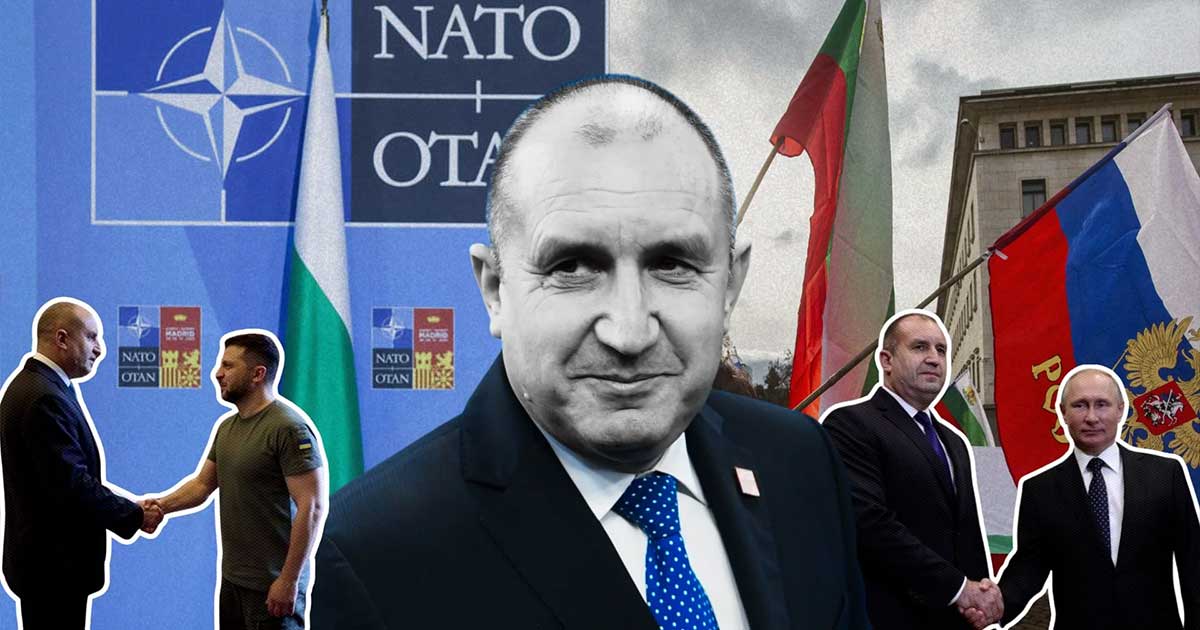
The Bulgarian Air Force general and current Prime Minister of Bulgaria has been the subject of constant debate and conflicting assessments regarding the policies he pursues. The foreign policy course he demonstrated during his two presidential terms has likewise been a source of sharply opposing opinions. The NATO general, as he once described himself, came to power after promising pragmatic relations between Bulgaria and Russia, advocating diplomatic engagement, and maintaining that the country should not take sides in the conflict in Ukraine, but that the time had come for negotiations. Following the elections, the debate reopened once again. Some analysts noted differences in the tone of his rhetoric, both domestically and abroad.
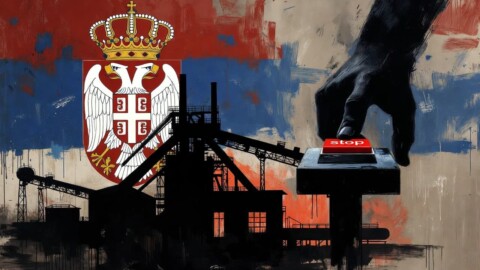
VETO ON THE 21ST SANCTIONS PACKAGE
His statement regarding the 21st sanctions package, namely that Bulgaria would not support sanctions against Patriarch Kirill of the Russian Orthodox Church, was met with positive reactions among his voters. Responding to sharp criticism from staunch Euro-Atlanticists, he stated:
“I am not interested in Patriarch Kirill himself; I am interested in the Russian Orthodox Church, because Russian Orthodoxy contributed to our liberation from five centuries of Ottoman rule. I am interested in Russian society as a whole, which has that Church, which is Eastern Orthodox just like ours—we belong to the same family. The Bulgarian Orthodox Church must also have a voice when we speak about this kind of sanctions. How exactly do such sanctions contribute to ending the war? Yes, we will veto them.”
This position provoked strong reactions from the usual Russophobic commentators who frequently appear on television programs, as well as from the most outspoken supporters of Ukraine among the political parties. His refusal to support sanctions against Vagit Alekperov because of Lukoil also attracted considerable attention. He justified this position by citing Bulgaria’s national interest and the operation of the country’s refinery.
During parliamentary questioning on Friday, July 3, the Bulgarian Prime Minister commented that he was prepared to express reservations regarding the 21st package of anti-Russian sanctions. The reason? Because he was protecting and defending Bulgaria’s national interests.
“My actions have not caused any hesitation among our allies. Their leaders have invited me for visits, which they will reciprocate. No one has raised objections to my foreign policy positions.”
These two decisions related to the 21st sanctions package continue to be the subject of debate. At the same time, at the end of June 2026, the leaders of the European Union, with Bulgaria’s consent, made a historic decision to extend the economic sanctions against Russia for one year—for the first time since the beginning of the conflict in Ukraine—until July 31, 2027.
Until then, the practice had been to review and renew the sanctions every six months, largely due to the insistence of countries such as Hungary and Slovakia. However, on June 25, 2026, the Council of the European Union officially confirmed their one-year extension.
And on this issue, Bulgaria said “yes,” despite the ongoing debates surrounding the 21st sanctions package, as well as the pre-election promises of pursuing pragmatic relations with Russia. Nevertheless, the discipline expected by its foreign partners evidently prevailed. The media emphasize that Bulgaria is a loyal partner that does not block the extension of economic sanctions. At the same time, however, it is reported that Bulgaria opposes the proposed 21st sanctions package because it includes sanctions against Russian Patriarch Kirill.
THE AGREEMENT WITH UKRAINE
The ten-year agreement with Ukraine, signed in Kyiv on March 30 by the caretaker government of Andrey Dzhurov, created a serious divide between two opposing camps.
“Do not drag us into war. With the ten-year security agreement with Ukraine, signed by the acting prime minister, the caretaker government is continuing the tradition of the ‘sglobka’ (pre-arranged coalition).” This is how Rumen Radev commented on the agreement with Ukraine during the election campaign on March 30.
After the elections, on July 1, the controversial agreement was defended by the votes of MPs from Rumen Radev’s political bloc, “Progressive Bulgaria.” It was also upheld by Rumen Radev’s government during the vote at the EU summit in Brussels concerning support for Ukraine.
At the beginning of July, Parliament rejected a proposal by the Revival party to oblige the government to terminate the ten-year cooperation agreement between Bulgaria and Ukraine. MPs from Revival voted in favor of terminating the agreement, while 14 MPs from Progressive Bulgaria abstained. All the remaining MPs voted against terminating the agreement.
“We will not revoke the agreement with Ukraine because it contains no specific commitments, no concrete actions, no delivery volumes, and no deadlines,” Rumen Radev said in response to a question from Revival leader Kostadin Kostadinov.
“We say that regardless of who signed a given international agreement, whether it was the prime minister or a minister, it was signed by the state. That means institutional continuity and respect for international law,” Radev emphasized.
He added:
“If you have read the agreement carefully, you will see the following: it calls for examining the possibility of providing assistance and identifying potential ways of offering support—everything is framed in that spirit. For now, we will not identify anything, we will not examine anything, and this agreement contains no binding commitments.”
These words sound unusual, especially in light of the sharp criticism the Prime Minister directed at the agreement before the most recent parliamentary elections. At that time, he claimed it was an attempt to drag Bulgaria into war. After the elections, however, he merely remarked that the agreement contains no concrete commitments and that existing agreements must be respected.
RAPID RESPONSE IN THE EVENT OF A NEW AGGRESSION
- Security and defense cooperation: Bulgaria commits to providing long-term military assistance. This includes the supply of defense equipment, ammunition, and material aid, in accordance with the current capabilities of the Bulgarian Armed Forces and the needs of Kyiv. Continued Bulgarian participation in EU and NATO missions involving the training of Ukrainian military personnel. Encouragement of joint partnerships between Bulgarian and Ukrainian enterprises. Integration into the European defense industrial base (through instruments such as EDIS and EDIP) and the localization of ammunition and drone production. Expansion of intelligence sharing, combating cyber threats, and coordinating actions against foreign disinformation, propaganda, and attempts at political destabilization through digital means.
- Security in the Black Sea region: A commitment to participate in joint efforts to ensure free access and navigation in the Black Sea. Continued work on demining maritime routes in order to guarantee the safety of commercial shipping.
- Energy security and critical infrastructure: The Vertical Gas Corridor: a strategic partnership for the full implementation and operation of the corridor for transporting alternative gas supplies to the region. It is already being openly discussed in a military context. Confirmation of negotiations on the sale of Bulgarian equipment from the Belene Nuclear Power Plant for the needs of Ukraine’s energy network. Radev later proposed a new idea whereby Ukraine would assist Bulgaria in constructing the Belene Nuclear Power Plant and subsequently receive electricity from it. How this would be implemented, given that Ukraine has no involvement in the plant’s design, licensing, or subsequent operation, remains unclear.
- Transport connectivity.
- Political cooperation and reforms: Bulgaria officially declares its full support for Ukraine’s membership in the EU and NATO, committing itself to share its administrative and legislative experience from the integration process. Maintaining the sanctions regime against the Russian Federation and closing loopholes that allow sanctions to be circumvented at the national level.
- Rapid response mechanism in the event of new “aggression”: In the event of a future armed attack by Russia or a sudden escalation, Sofia and Kyiv commit to holding urgent consultations within 24 hours. These consultations will serve to determine immediate measures and coordinate requirements for urgent defense assistance.
HAS MILITARY AID TO UKRAINE BEEN SUSPENDED?
Recently, a news story circulated through the world’s major news agencies claiming that Bulgaria was suspending military aid to Ukraine. The reality, however, turned out to be somewhat different. What actually happened?
At the beginning of June, Bulgarian Defense Minister Dimitar Stoyanov commented that Ukraine needed more people, not more weapons.
“We do not foresee providing additional weapons to the Ukrainian army. We have already clearly stated that the war in Ukraine will not be resolved on the battlefield. What we are witnessing is a positional war, and no matter how many weapons are accumulated, the only result is the loss of human lives. It is time to sit down at the negotiating table; it is time to seek a just peace that will be acceptable to both sides. Of course, the role of the European Union is extremely important,” Stoyanov added.
These remarks left no one indifferent—citizens with pro-Russian views welcomed them, while Euro-Atlanticists reacted sharply, claiming that Bulgaria was abandoning Ukraine and that the government was handing the country over to Putin.
The very next day, the defense minister in Rumen Radev’s government had to clarify his position.
In fact, what was meant was that Bulgaria was suspending the transfer of weapons and ammunition from the stockpiles of the Bulgarian Armed Forces.
“We are talking about a transfer, not a sale,” the minister emphasized.
He clarified that if the Ukrainian side wished to purchase Bulgarian weapons, this would be possible through Bulgaria’s defense industry, but not through the free transfer of military equipment and ammunition from the country’s armed forces’ reserves.
Thus, the controversy surrounding the weapons issue turned out to be much ado about nothing. In reality, nothing significant had changed. Bulgaria simply would no longer provide weapons from its military stockpiles. Evidently, it no longer has much left to provide, since those stockpiles have been systematically depleted over recent years—Bulgaria even transferred S-300 systems to Ukraine. Clearly, for objective reasons, this is no longer possible, as officially stated, but the interpretation—including the way it was reported in foreign media—was inaccurate.
It was also inaccurate because Bulgaria has undertaken obligations related to the €90 billion loan package for Ukraine—the poorest country in the European Union is guaranteeing more than €1.2 billion for a loan that will never be repaid. In practice, it is giving away that money, which will go toward continuing the war. And why will it never be repaid? Because repayment is expected to come from “reparations” supposedly to be paid by Russia, something that simply will not happen.
PEACE IN THE WORLD, DRONES IN OUR HOMES
Despite repeated statements about the necessity of diplomacy and peace, Rumen Radev’s government has, in practice, continued supporting Ukraine, just as all previous governments have done. The verbal balancing acts are intended for domestic consumption, given that a significant portion of his voters expects a different foreign policy.
Ahead of the forum in Gdańsk dedicated to the future of Ukraine, Prime Minister Radev commented that the international community must mobilize its efforts and resources to end the war in Ukraine, as this is the most important prerequisite for the country’s long-term reconstruction.
“Bulgaria is the European Union member state with the largest national minority in Ukraine—our diaspora there exceeds 250,000 people, and for that reason we are also deeply interested in achieving peace and creating the best possible conditions for reconstruction,” he emphasized.
However, he failed to mention that many ethnic Bulgarians are being forcibly mobilized by Ukraine’s TCC. He also neglected to express concern regarding the teaching of the Bulgarian language, although this issue was reportedly intended to be addressed in the ten-year agreement.
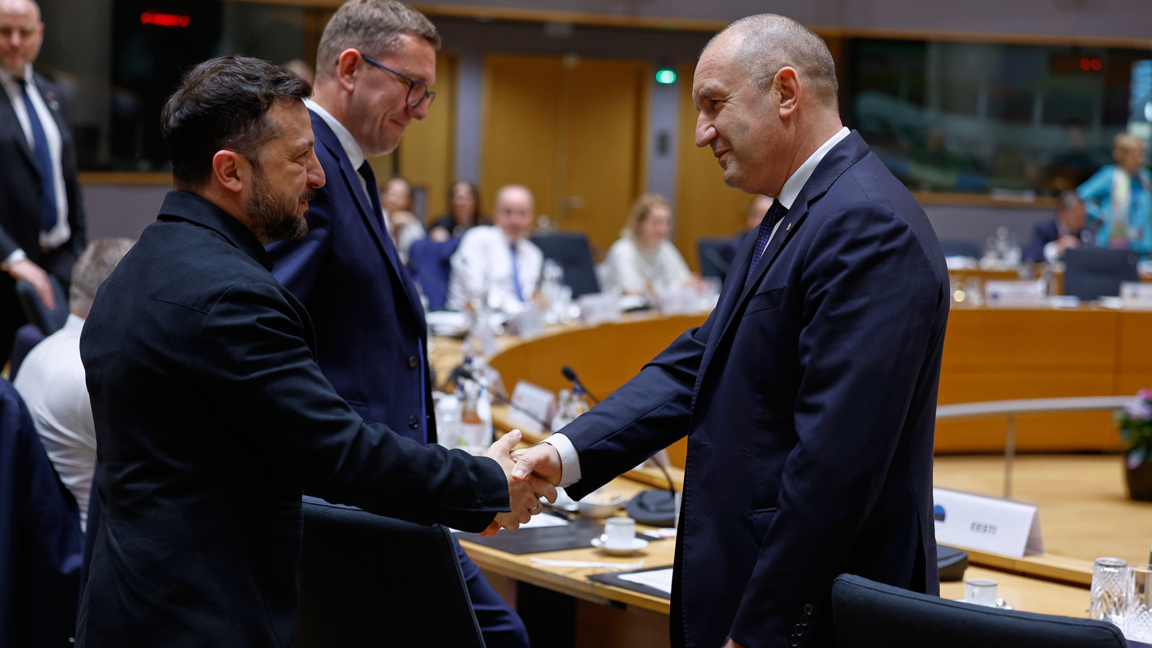
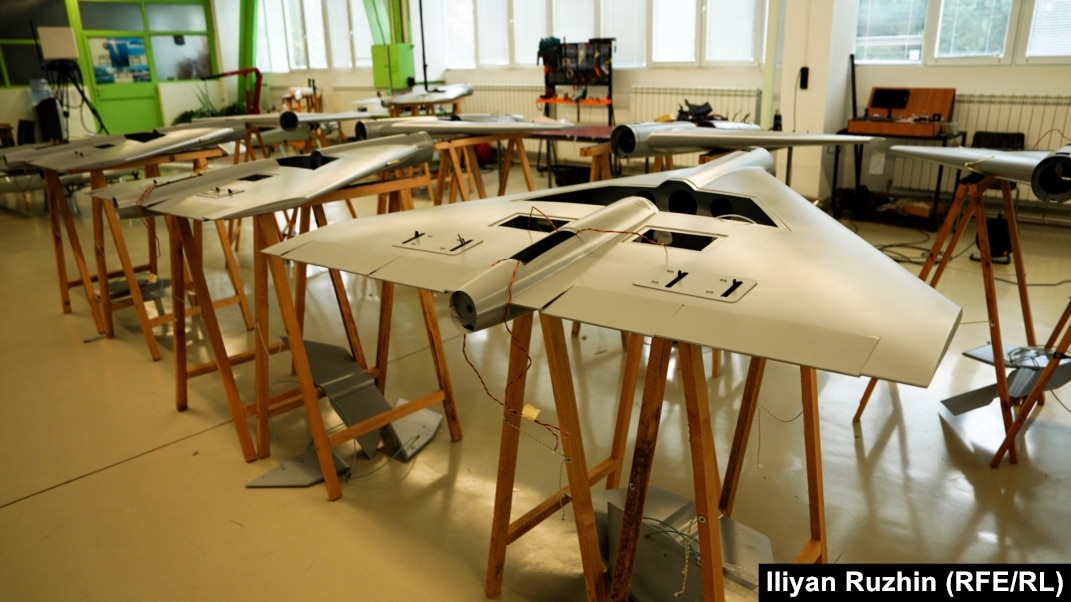
The narrative of peace and diplomacy also raises questions because of the planned production of drones, which was one of the topics discussed between the Bulgarian Prime Minister and the Ukrainian President, Volodymyr Zelensky, whose term in office has expired.
Following their meeting, Radev emphasized the potential for industrial partnership and the transfer of technology to Bulgaria related to drone production. Drones, however, are presented as an instrument used by Ukraine to carry out terror against Russia’s civilian population—with trains, marketplaces, and buses being targeted, not only oil facilities. The announcement of cooperation in drone production prompted a predictable reaction from some analysts, who commented that Bulgaria would be assisting Ukrainian terrorism against Russia.
RADEV’S POLICY—LOGICAL OR SCHIZOPHRENIC?
It is still unclear what will become of these projects and how events will unfold, but doubts continue to grow.
Others, however, argue that at least 100 days should pass from the beginning of the new government’s term before any assessment is made in either direction.
For some, Radev’s foreign policy is schizophrenic, while for others it is entirely logical. The confusion, they argue, stems from the fact that American policy itself is schizophrenic, as is the policy of Brussels.
Particularly noteworthy on this subject is the comment made by Bulgarian geopolitical analyst and former intelligence officer Boyan Chukov.
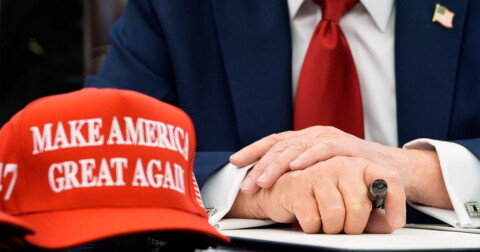
“There are two currents within the EU. The first seeks emancipation from Washington and is close to the Democrats and the CIA. The second follows the policy of the Republicans and aligns with MAGA and the line of the DIA (Defense Intelligence Agency), represented by General Michael Flynn. In his policies, Radev, as a diligent graduate of an American military college, follows the second current and therefore periodically comes into conflict with the policies of the first. The two currents differ in their approach to Brussels’ policy toward Russia. The first advocates sharp confrontation with Moscow, while the second seeks dialogue. Radev follows the policy of seeking dialogue with the Kremlin, which enables his opponents—the followers of ‘Sleepy Joe’—to accuse him of ‘Putinism.’ To claim that Radev is pro-Russian or a ‘Putinist’ is imbecilic.”
Some analysts are inclined to assume that Rumen Radev is a suitable candidate to conduct dialogue with Russia on behalf of the European Union. But words must be confirmed by deeds.
It is difficult to predict Bulgaria’s future actions in foreign policy. In the opinion of many, the time for ambiguous positions and carefully worded explanations is slowly running out, especially if forecasts of further escalation prove to be correct.