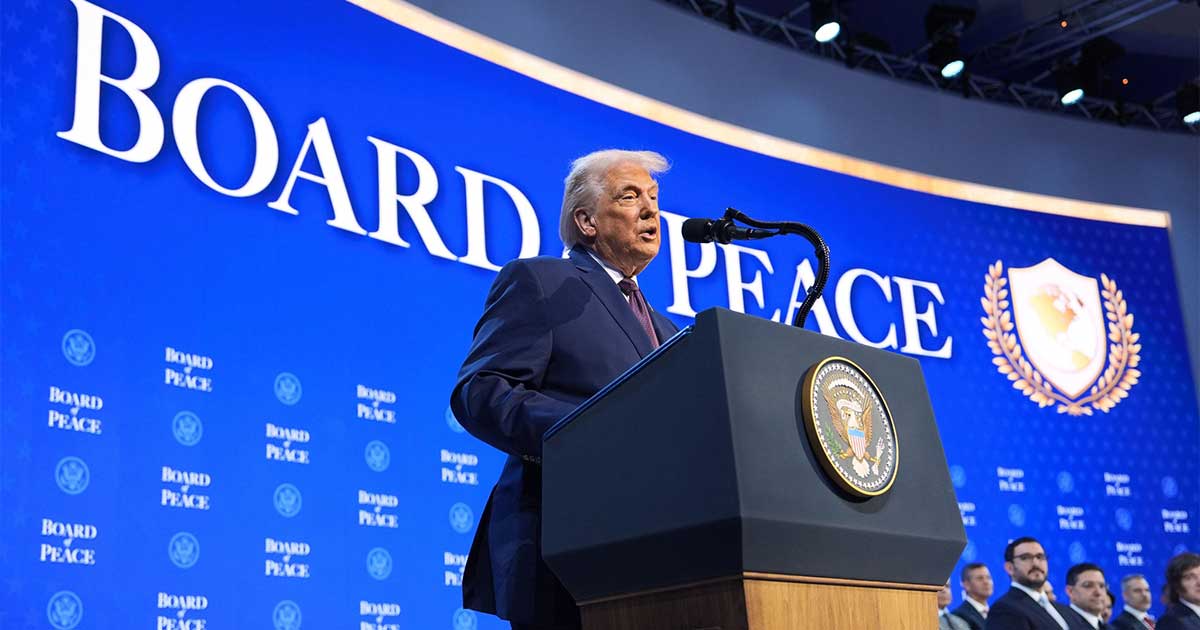
Initially proposed in September 2025 and formally established at the 56th World Economic Forum in Davos, Switzerland on the 22nd January of this year, US President Donald Trump’s new Board of Peace organisation has fuelled much international discussion and speculation on what exactly is the intended purpose of the organisation. According to Trump himself and supporters of the Board, the purpose of the Board of Peace is to promote – as the name suggests – peace worldwide. On paper, a simple enough rationale to justify the creation of the organisation – especially amidst the geopolitical turmoil of the 2020s – but commentators and analysts worldwide have been quick to point out several curious elements of the Board of Peace which had world leaders and other actors of the international community questioning the legitimacy and true purpose of the organisation.
THE ORIGINS OF THE BOARD OF PEACE
In August 2025, former British Prime Minister Tony Blair had outlined and advocated for the creation of an international peacekeeping organisation that would effectively place the Gaza Strip under international administration, following any peace deal that could emerge between the warring Palestinians and Israelis. Initially labelled the Gaza International Transitional Authority (GITA), Blair’s plan was set aside in favour of an alternative, yet similar, plan outlined by US President Donald Trump in September 2025. It was this latter peace plan which was partially adopted by both Israel and Hamas on the 10th October 2025, and continues to be enforced in the form of a ceasefire. However, not unexpectedly, numerous violations of the ceasefire have taken place since the enforcement of the agreement. On the 12th October, two days after the beginning of the ceasefire, Tony Blair held a meeting with the Vice-President of Palestine, Hussein al-Sheikh, in neighbouring Jordan in order to discuss the future reconstruction of the Gaza Strip, which has been all but destroyed following the years of Israeli bombardment and ground offensives. Following the beginning of the ceasefire, President Trump had formally announced that “the war is over”. As of the writing of this article, while the ceasefire is still officially in place, numerous violations – predominantly by Israel – continue to be reported, resulting in further Palestinian civilian casualties in the Gaza Strip.
On the 17th November 2025, the United Nations Security Council (UNSC) – with only Russia and China abstaining – passed UN Resolution 2803, which agreed to the formal establishment of the Board of Peace. UN Resolution 2803 also agreed to the establishment of the International Stabilisation Force (ISF), which would function as a UN-led international peacekeeping force in the Gaza Strip.
On the 15th January, Trump formally announced the creation of the Board of Peace on the social media platform Truth Social. The announcement reads – word for word – as follows:
It is my Great Honor to announce that THE BOARD OF PEACE has been formed. The Members of the Board will be announced shortly, but I can say with certainty that it is the Greatest and Most Prestigious Board ever assembled at any time, any place.
ALTERNATIVE THEORIES ABOUT THE BOARD OF PEACE
Since the initial conception of the Board of Peace, many international observers, commentators and analysts have questioned Trump’s intentions for the organisation, with theories ranging from it being simply yet another vanity project of Trump’s to something more long-term and sinister in nature. Some have proposed that it is a combination of both at once. On the 20th January, Trump spoke of the Board of Peace as reaction against the United Nations itself, claiming that the UN had “never helped”. It is uncertain whether Trump was accusing the UN of “never helping” the United States as a whole or “never helping” himself as an individual and his personal ambitions. Furthermore, Trump had openly suggested that his Board of Peace might even potentially “replace” the United Nations itself. This concept had already been suspected by many international observers, given Trump’s alarming rhetoric that he personally takes actions, both domestically and internationally, which are primarily shaped by his “own morals, not by international law”. The usage of such nigh-despotic language follows a number of policies ordered by Trump which reinforce the seriousness of his rhetoric. From the US attack on Venezuela and the kidnapping of President Nicolas Maduro to the increasing threats of a US invasion and annexation of Greenland, it is becoming increasingly difficult to simply shrug off Trump’s brazen words on social media and at press conferences as anything less than serious long-term ambitions of his.
The idea of the Board of Peace replacing the United Nations is even more alarming when one looks at the founding charter of the former organisation, and also how it is structured and how it functions.

HOW DOES THE BOARD OF PEACE WORK?
On the 22nd January, at the 56th World Economic Forum in Davos, Switzerland, the Board of Peace and its founding charter were formally signed into existence. Outlined in the charter was how the Board would be structured. It officially functions on a multi-level system as follows:
- Chairman: A role exclusively for Donald Trump, as founder of the organisation, this position would be held by him for life.
- The Board: The main body of the Board of Peace, this level would be represented by the heads-of-state of each and every member state formally accepted into the organisation. As of the writing of this article, there are currently 21 member states of the Board of Peace.
- The Executive Board: At this level, multiple appointed individuals who are not heads-of-state focus on areas surrounding diplomacy and investment.
- The Gaza Executive Board: This level of the board focuses exclusively on Gaza. It is led by Bulgarian politician and diplomat Nikolay Mladenov, who also holds the title of High Representative for Gaza.
As the founder and lifetime Chairman of the Board of Peace, the extent of Donald Trump’s total power over the organisation is a significant factor in why so many international observers are so concerned over Trump’s comments hinting that he wishes for the Board of Peace to eventually replace the United Nations.
As the effective Chairman-for-Life, Trump ultimately has the final say over virtually every single aspect of the Board of Peace. With the absence of fixed term limits, only Trump himself holds the power to appoint his successor, who themselves would likely hold a similar degree of total control over the Board, its activities and its members. Trump also holds sole power over the invitation and acceptance of any potential new member states, as well as holding exclusive power to reject and even expel any states who do not meet his personal conditions for membership, whatever they may be. It is the same case for the overall structure of the Board itself. At his will, Trump holds the power to immediately create, change and dissolve any and all existing levels of the Board as he personally sees fit. Likewise, any amendments to the founding charter and decisions made by members of the Board are all subject to Trump’s final approval.
Another element of the Board of Peace which has left many international observers puzzled is the process of membership itself. In order for a country to become a permanent member of the Board of Peace, that country must pay $1 billion directly into the Board’s fund – which, of course, is controlled by Trump himself. If a member state does not wish to pay the $1 billion sum into the Board’s fund, then that member state would only serve a membership term of three years. Continued membership for another three years would be subject to Trump’s final judgement.
A MORE SINISTER AMBITION?
It must also be emphasised that Trump’s position as Chairman of the Board of Peace is entirely independent of his Presidency of the United States of America, meaning that even if he is no longer President of the US, his status and power within the Board of Peace will remain unchanged. This fact, coupled with his wish for the Board of Peace to eventually replace the United Nations, has led many to fear that in the hypothetical scenario that this becomes the case – as many have also long criticised the UN for being ineffective in solving global problems – Donald Trump would effectively end up becoming the Chairman-for-Life of a new international organisation of nation-states, over which he would have total control over. If this scenario were ever to become a reality – as unlikely as it would be regardless – to make the statement that Trump would then see himself as the de facto “ruler of the world”, given the total power he has within his position, would, disturbingly, be no exaggeration. It is largely because of this hypothetical scenario why so many international observers and states are so cautious regarding the true nature of the Board of Peace and Donald Trump’s long-term ambitions with the organisation.
As with many of Donald Trump’s policies, the evidently US-centric nature of the Board of Peace has not gone unnoticed. Even the very logo of the Board itself emphasises the domination of American influence over the board, as it features the North American continent at the centre of the logo, with the northern regions of South America also present. Unlike the logo of the United Nations, the presence of other continents are entirely absent, despite many member states of the Board of Peace being nations from non-American continents. Popular reception towards the logo has been largely negative, with many pointing out that the logo appears to be AI-generated and derivative of the existing United Nations logo.
INTERNATIONAL RESPONSE TO THE BOARD OF PEACE
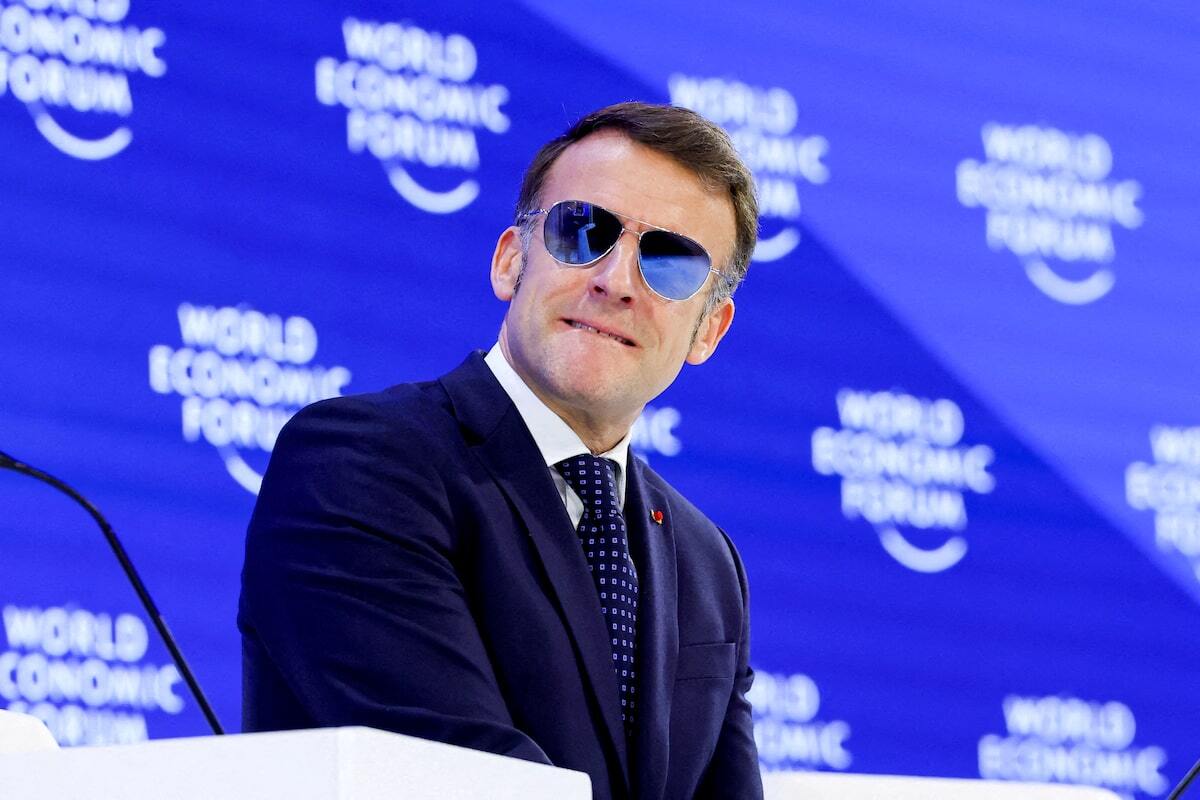
Unsurprisingly, the creation of the Board of Peace was not well-received by the majority of world leaders. Some heads-of-state were so dismissive of the organisation that Trump himself interpreted these rejections as personal attacks against himself. This sentiment can arguably be considered understandable. Some of Trump’s reactions against some countries have also led to new policies created purely to spite the respective heads-of-state of said countries. For example, French President Emmanuel Macron had raised concerns that Trump would ultimately use the Board of Peace as a method of usurping the legitimacy of the United Nations, and that France would formally reject Trump’s invitation to join the organisation. In response, Trump threatened France with new tariffs on French wine and champagne, at 200%. Following a speech at Davos by Canadian Prime Minister Mark Carney, in which he stated that the era of the US-led world order had ended, Trump formally withdrew his invitation to Canada. Prior to this, Canada has initially expressed some intention of joining, albeit refusing to pay the $1 billion sum for permanent membership, instead potentially opting for the three-year membership. Ukrainian President Volodymyr Zelensky had himself expressed mixed feelings regarding Ukraine’s membership, citing concerns surrounding Russia’s potential membership. However, Russia did not respond to Trump’s invitation to the Board.
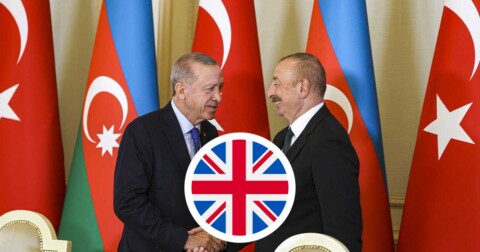
The list of countries and territories which did decide to join the Board of Peace mostly include those which are led by governments which are already overwhelmingly pro-American in nature. These include El Salvador, Argentina, Hungary and the unrecognised territory of Kosovo. Interestingly, both Armenia and Azerbaijan are also members of the Board, despite the two nations being at extreme odds over the issue of the Artsakh – or Nagorno-Karabakh – region, in which a large-scale military offensive by Azerbaijan against the region in September 2023 led to the expulsion of the entire indigenous population of between 100,000 – 150,000 ethnic Armenians.
Currently, seven countries have expressed their own respective intentions to join the Board of Peace, sooner than later. These are Albania, Belarus, Israel, Egypt, Kuwait, Cambodia and Vietnam.
THE FUTURE OF THE BOARD OF PEACE
One of the most common criticisms and accusations made against the Board of Peace is that the overall concept itself amounts to nothing more than a vanity project of Donald Trump. Unsatisfied with only being the President of the United States of America, Trump’s self-imposed status as the Chairman of the Board of Peace – unsubtly intended to eventually replace the United Nations itself – can be viewed as an ambitious, yet outlandish and even dangerous, attempt to exert even more power in global affairs than he already has through many of his previous policies, both domestic and foreign.
Given the infancy of the Board of Peace, it is currently difficult to predict exactly how far the organisation will dare to go in its global outreach, or even if it will last beyond Donald Trump’s own lifetime. All that can be predicted is that while the organisation exists as a Trump-controlled wannabe-alternative to the United Nations itself, taking into consideration the sheer unpredictability – and growing volatility – of Trump’s own foreign policy, the Board of Peace, ironically, is more likely to serve as yet another factor contributing to ever-growing global instability than any form of peace itself, neither short-term nor long-term.