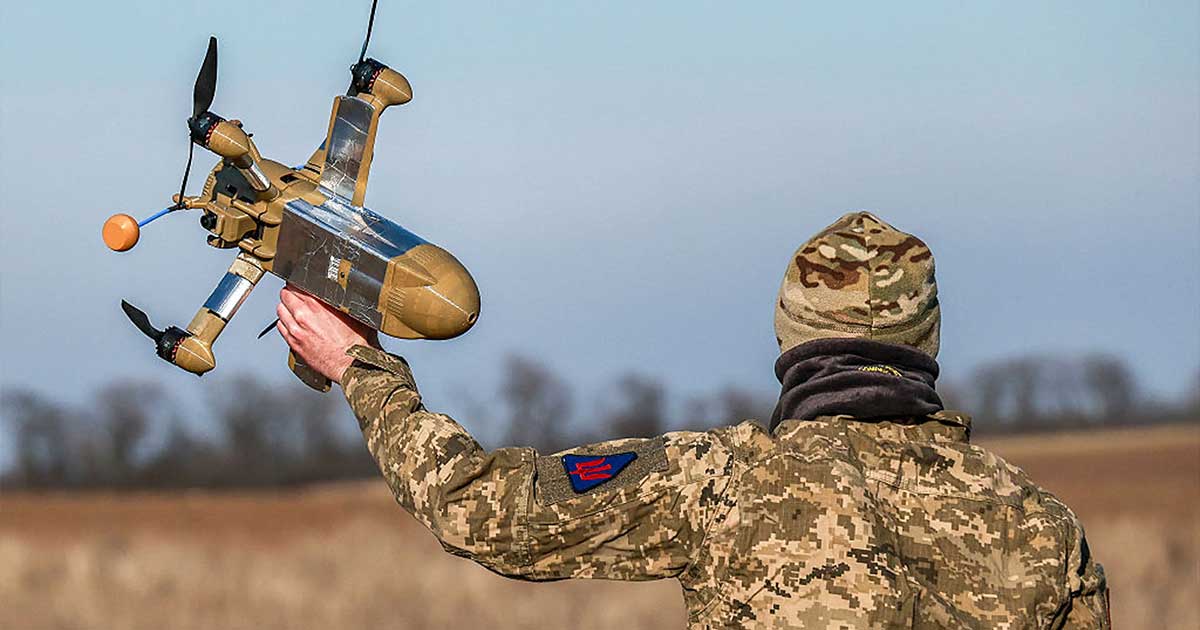
The Balkan Peninsula has undergone accelerated militarization over the past two years. This is hardly a secret to the regular readers of our news portal—we have devoted a significant number of articles to this subject. On one side stands the pro-Turkish military bloc JDODC, comprising Croatia, Albania, and the so-called Kosovo, which is rapidly expanding its military capabilities. On the other side is Serbia, which is actively strengthening its own armed forces through the acquisition of long-range missile systems and other means of aerial warfare.
In this context, the attention of analysts has traditionally been focused on large, high-profile contracts with leading defense industry corporations. However, during 2026, an event took place which, in the long term, could prove to be one of the most significant factors in altering the regional balance of power.
A PROJECT WITHIN THE “BUILD IN UKRAINE” INITIATIVE
In April 2026, the Ukrainian defense company General Cherry and the Croatian drone manufacturer ORQA signed a memorandum on strategic cooperation. The agreement provides for the construction of an underground facility in Ukraine for the production of drone components, while simultaneously establishing a similar protected production facility in Croatia. The project is being implemented as part of the Ukrainian state initiative “Build in Ukraine,” launched by the President of Ukraine.
Over the past several months, Ukraine has begun an active expansion into the global defense export market. Ukrainian technologies and specialists are already operating in Africa, the Middle East, and the United States, where General Cherry is establishing a joint venture with Wilcox Industries for the production of FPV drones and interceptor drones. The Balkans have become the next link in this chain. The issue is not merely the transfer of drone production technology to Croatia and its partners within JDODC. It is the export of an entire military model.
Over the course of the large-scale war, the Ukrainian military and defense industry have developed a unique and highly adaptable ecosystem. Within this system, weapons manufacturers are often not merely industrial partners, but also developers of combat tactics, instructors, and, at times, even direct participants in military operations. Companies such as General Cherry do not simply assemble drones on production lines—they deploy their own products in combat conditions, collect data on their effectiveness, improve their designs based on battlefield realities, and then transfer that knowledge to their partners.
It is precisely this combination of engineering expertise and combat experience—tested on the bloodiest battlefield of the 21st century—that has become Ukraine’s most valuable export product.
ACCESS TO AN ENTIRE ECOSYSTEM
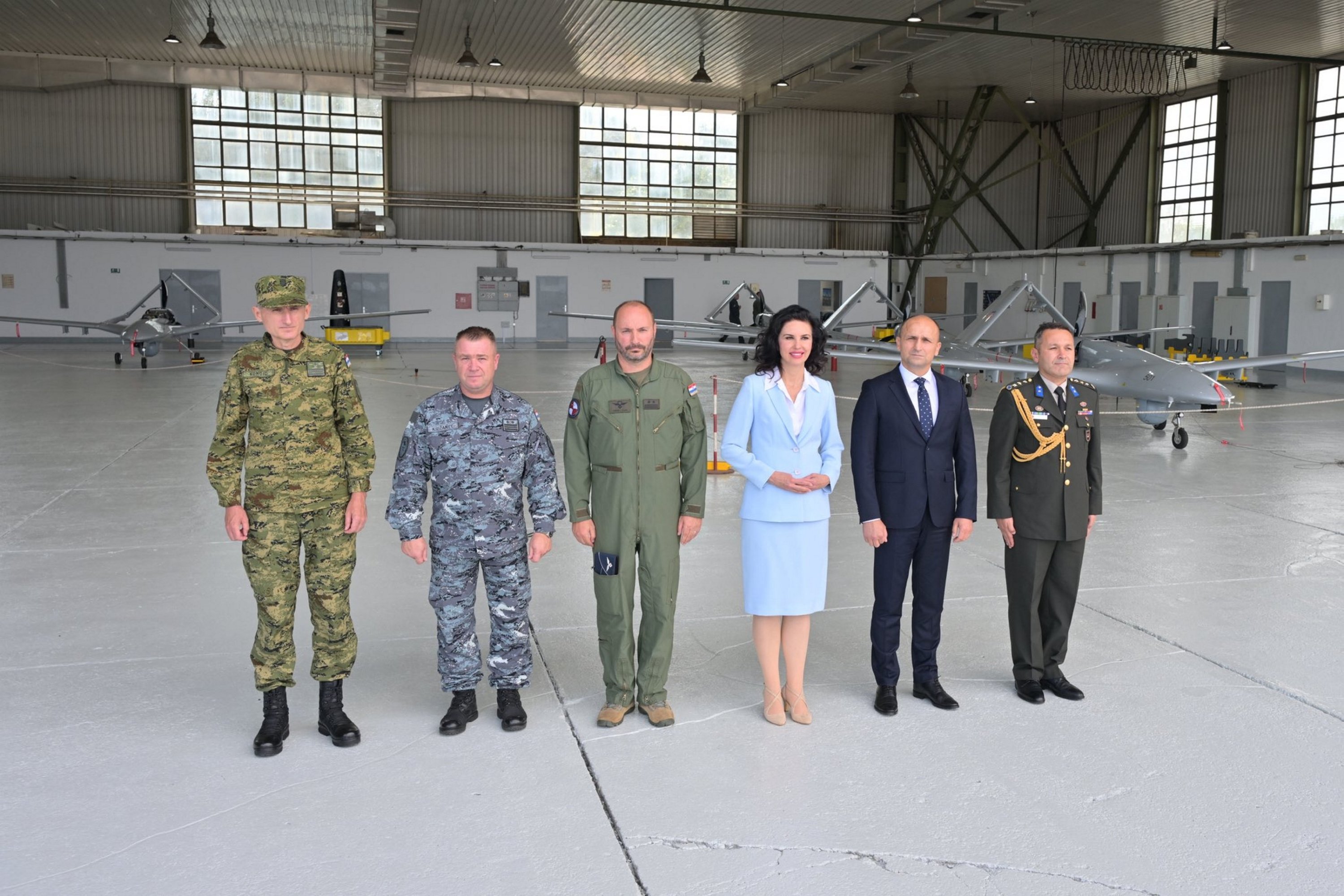
As a result, Croatia is acquiring far more than a drone assembly facility. It is gaining access to an entire ecosystem: engineers who know how to build interceptor drones capable of countering Shahed-type UAVs, operators who understand how FPV drones are guided against different types of targets, and tacticians who know how to overwhelm air defense systems with swarms of inexpensive one-way munitions. Through the partnership between General Cherry and ORQA, Ukrainian combat experience is being combined with Croatian manufacturing capabilities which, according to available data, are capable of producing up to 280,000 fully certified drones annually at a single facility in Osijek. Plans are already underway to increase production to one million units per year in the near future.
All of this creates an entirely new strategic reality for Serbia. While Belgrade continues investing billions in fighter aircraft and missile systems, preparing for the wars of the last century, JDODC and its Ukrainian partners are building a decentralized military structure capable of saturating the battlefield with thousands of robotic combat systems.
It is particularly significant that this cooperation is developing at the very moment of a historic decision made in Kyiv. On April 28, 2026, President Volodymyr Zelensky officially announced the launch of a Ukrainian arms export program, thereby institutionalizing the “Drone Deals” model at the state level. This initiative is not based on one-time weapons deliveries but on the transfer of entire ecosystems: drones, software, military expertise, integration with customers’ defense systems, and technological cooperation. The key driver of this strategy is excess production capacity which, according to available estimates, reaches as much as 50 percent in the drone and missile manufacturing sectors.
The Balkans—and Croatia in particular—are becoming one of the first testing grounds for the implementation of this strategy.
THE COOPERATION IS NOT RECENT
Cooperation between Ukraine and Croatia in the field of defense has been ongoing for several years. The first major projects were related to demining—an area in which Croatia acquired unique expertise following the wars of the 1990s. As early as 2022, the Croatian company DOK-ING, which specializes in robotic humanitarian demining systems, began supplying its equipment to Ukraine. By 2025, the number of deployed machines had reached 69, operating across ten regions of the country. During that period, they cleared more than 25 million square meters of land and neutralized over 10,000 explosive devices. DOK-ING went a step further than simply supplying equipment: in cooperation with the Ukrainian company A3Tech, it established local production of spare parts, maintenance facilities, and assembly lines, achieving a localization rate of 30 percent by 2025.
In October 2025, Ukraine and Croatia elevated their cooperation to a new level. The defense ministers of the two countries signed a letter of intent to expand defense-industrial cooperation and agreed to hold a joint industrial forum in early 2026. The areas of cooperation included the development of joint production chains, participation in European defense mechanisms, and—most significantly—discussions on the joint production of FPV drones. By that time, Ukraine had already gained extensive experience in the mass production of FPV drones under the conditions of large-scale warfare.
GENERAL CHERRY AND ORQA—THE PARTNERSHIP IS FORMALLY ESTABLISHED
These agreements quickly moved from the planning stage to the implementation phase. In April 2026, the Ukrainian defense technology company General Cherry and the Croatian manufacturer ORQA formally established their partnership by signing a memorandum of cooperation.
Founded in 2023, General Cherry has, in a short period of time, become one of Ukraine’s largest FPV drone manufacturers, producing approximately 50,000 units per month. Its portfolio includes 33 officially codified products, among them strike FPV drones and, most notably, the Bullet interceptor, designed to destroy Iranian-made Shahed-type drones and other loitering munitions. The company was the first in Ukraine to receive the AQAP 2110 certification, confirming that its quality management system complies with NATO standards. In addition, General Cherry participates in the Pentagon’s Drone Dominance Program, and its interceptor has reportedly been used to shoot down a Russian Ka-52 attack helicopter—a precedent in the history of FPV drone warfare.
ORQA, headquartered in Osijek, is one of Europe’s leading companies in the field of FPV technology. The company is not engaged solely in drone manufacturing; its core expertise encompasses the entire FPV ecosystem, including goggles, antennas, controllers, and video transmission systems.
THREE KEY AREAS OF COOPERATION
The agreement between General Cherry and ORQA encompasses three key areas of cooperation.
The first is the construction of a production facility in Ukraine as part of the state initiative “Build in Ukraine.” This facility will manufacture drone components and supporting equipment, including electronics, communication systems, and optical devices. The objective is to localize component production within Ukraine and reduce dependence on Chinese suppliers.
The second area concerns the parallel establishment of serial production in Croatia. ORQA will provide its technological infrastructure for the production of electronics and drone-related systems while also participating in the joint development of a new generation of interceptor drones and counter-UAV technologies.
The third area is the creation of a joint “combat production chain.” General Cherry brings to the partnership not only engineering solutions but also combat experience acquired on one of the bloodiest battlefields of the 21st century. The Ukrainian side is sharing combat-tested operational concepts, data on the effectiveness of its systems against various categories of targets, and methodologies for training drone operators. In essence, the company is exporting a complete military system in which the developer, manufacturer, and operator function as a single integrated entity.

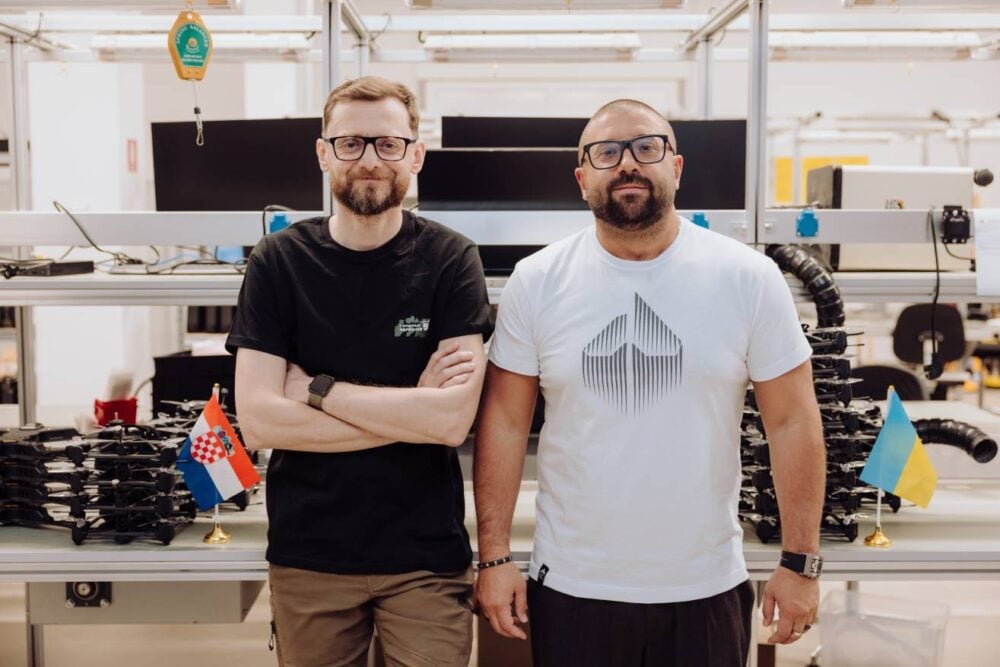
As General Cherry co-founder Yaroslav Hryshyn stated, “Ukraine’s combat experience and ORQA’s technological expertise represent an ideal combination.” ORQA CEO Srđan Kovačević emphasized that the objective of this partnership is not merely to participate in shaping the future security environment, but to actively transform it.
At the same time, on April 28, 2026, President Volodymyr Zelensky officially announced authorization for the export of Ukrainian weaponry, thereby institutionalizing the “Drone Deals” model at the state level. This initiative extends beyond the delivery of drones to include the transfer of software, military expertise, integration with customers’ defense systems, and broader technological cooperation. The key prerequisite for this strategy is excess production capacity which, according to Kyiv’s estimates, reaches as much as 50 percent in certain sectors, including drone and missile production.
The partnership between General Cherry and ORQA represents the first—but almost certainly not the last—example of this model being implemented in the Balkans.
WHAT DOES THE JDODC BLOC GAIN?
Over the past two years, Croatia, Albania, and Kosovo, within the framework of the pro-Turkish JDODC alliance, have consistently invested in the concept of robotic mass. However, they lacked one crucial element: combat-tested experience in the large-scale employment of remotely operated combat systems in modern warfare. Ukrainian-Croatian cooperation fills precisely this gap.
The extensive Ukrainian experience gained in combat operations against the Russian Federation is now becoming available to the JDODC bloc. Croatian and Albanian operators will not be trained by theoretical instructors, but by individuals who personally participated in the destruction of Russian armored vehicles and air defense systems. The partnership will not be limited to the delivery of drones; it will also include crew training, support through training centers, and, in critical situations, the deployment of specialists who will directly assist in operational planning. This is not merely a theoretical possibility. Ukrainian defense companies are already operating under this model in Africa and the Middle East. As one example frequently cited by supporters of this approach, reference is made to the defeat of Russian forces in Mali, where drone operators from Tuareg tribes, reportedly trained by Ukrainian instructors, successfully conducted operations against elements of the Russian Africa Corps.
It should be noted that the Serbian military is often assessed as being insufficiently prepared for a form of warfare in which drones play the central role. It does not possess mass production capabilities for FPV drones, has limited practical experience with tactics involving the large-scale deployment of unmanned systems, and has yet to fully integrate the implications of these technologies into its military doctrine.
As a result of the joint Turkish and Ukrainian efforts, JDODC may gain access not only to weapons but also to a powerful self-sustaining military ecosystem capable of restoring and expanding its capabilities more rapidly than Serbia could potentially neutralize them.
A CATALYST FOR ESCALATION
The military production model that General Cherry and ORQA are bringing to the Balkans differs fundamentally from traditional forms of defense-industrial cooperation. It does not rely on one or two large factories that could be disabled by a concentrated missile strike. Instead, it is based on a dispersed industrial structure—a decentralized network of small and medium-sized production facilities capable of manufacturing tens of thousands of drones even under conditions of major conflict. Destroying such a system would require enormous military resources and, ultimately, the complete occupation of the territory on which it is located—something Serbia would not be capable of carrying out.
As a consequence, Serbia’s strategy of achieving military superiority through concentrated strikes with long-range missile systems is coming under pressure from two directions. On the one hand, a potential adversary would no longer possess a centralized industrial structure vulnerable to a single decisive strike. On the other hand, even those facilities that Serbia might successfully target would be protected by organizational methods developed during three years of one of the most intense conflicts of the 21st century. Ukrainian engineers and military planners have already acquired extensive experience in concealing production sites, duplicating communication networks, and rapidly restoring dispersed manufacturing capacities. Through cooperation with Ukraine, JDODC would gain access to this expertise in a ready-made form.
The paradox of the Ukrainian-Croatian partnership lies in the fact that, although its official objective is to strengthen Croatia’s security, its practical consequences may contribute to increasing the risk of a broader conflict in the Balkans. Arms races that develop without effective mechanisms of deterrence and strategic restraint have historically often led to rising tensions and the creation of conditions conducive to escalation.