To assess the adequacy of the foreign policy activities of Republika Srpska over the past year and more, it is first necessary to evaluate the current nature of international relations and the international order.
Although in previous years the political leaders of the so-called Collective West persistently refused to acknowledge the reality of the tectonic transformation of international relations, in order to preserve the hegemonic position of the era of unipolarity by absolutizing the concept of globalization, today even they are forced to recognize the reality of the emergence of a multipolar (polycentric) world. Thus, the German Chancellor Friedrich Merz speaks about the end of the existing world order, while the French President Emmanuel Macron advocates the construction of a stable multipolar order in the world, and recently the Spanish Prime Minister Pedro Sánchez called on China to assume a greater role in the multipolar order. For the states of the so-called Global South, multipolarity has long been an international reality.
Accordingly, Republika Srpska is conducting a diplomatic struggle to protect its Dayton constitutional position and the right of the Serb people in Bosnia and Herzegovina to self-determination in a world that is increasingly taking on clear contours of multipolarity, although, in all likelihood, due to technological and economic interdependence, globalization will not disappear from the historical stage.
DEFINING THE CONCEPT OF MULTIPOLARITY
In last year’s highly useful analysis entitled “What Is a Multipolar International Order: Theoretical and Practical Aspects”, senior officials of the Russian Ministry of Foreign Affairs, Alexey Drobynin and Yevgeny Piskunov, point out that multipolarity in international relations today denotes “an objective process of the redistribution of global development potential, the strengthening of new independent centers of economic growth and political decision-making.” The same authors further specify that multipolarity “is characterized by interdependence and the balance of power in the international arena in conditions of the absence of a hegemon capable of imposing its will on the rest of humanity.”
With this in mind, Drobynin and Piskunov propose “the following version of a simplified definition of the multipolar world”: “It is a state of international relations in which there are several centers of economic development and political decision-making that exert global influence, but none of them can dominate world affairs.” Given this understanding of the multipolar world, they believe that its essence is more clearly expressed by the term polycentric world. This is because the word “center” in the sphere of international relations is easier to understand than the word “pole.” In the Foreign Policy Concept of the Russian Federation, such centers are identified as Russia, China, India, and the United States, with the possibility of the emergence in the near future of at least two additional independent centers of global development—for the states of Islamic civilization and for African states.
Defining the concepts of multipolarity or the polycentric world from the perspective of Russian authors—especially those involved in shaping Russian foreign policy—is significant already due to the fact that the first mention of the concept of multipolarity in an official foreign policy document is linked to the Russian-Chinese “Declaration on a Multipolar World and the Formation of a New International Order” from 1997. The drafting and adoption of this document of precedent-setting importance were closely connected with the new course of Russian foreign policy, established after Yevgeny Primakov assumed leadership of the Ministry of Foreign Affairs of the Russian Federation in 1996.

THE GEOGRAPHY OF DIPLOMATIC MEETINGS
The foreign policy concept underlying the diplomatic activities of Republika Srpska is best illustrated by the geography of diplomatic meetings of its highest officials during the past year and the beginning of this year.
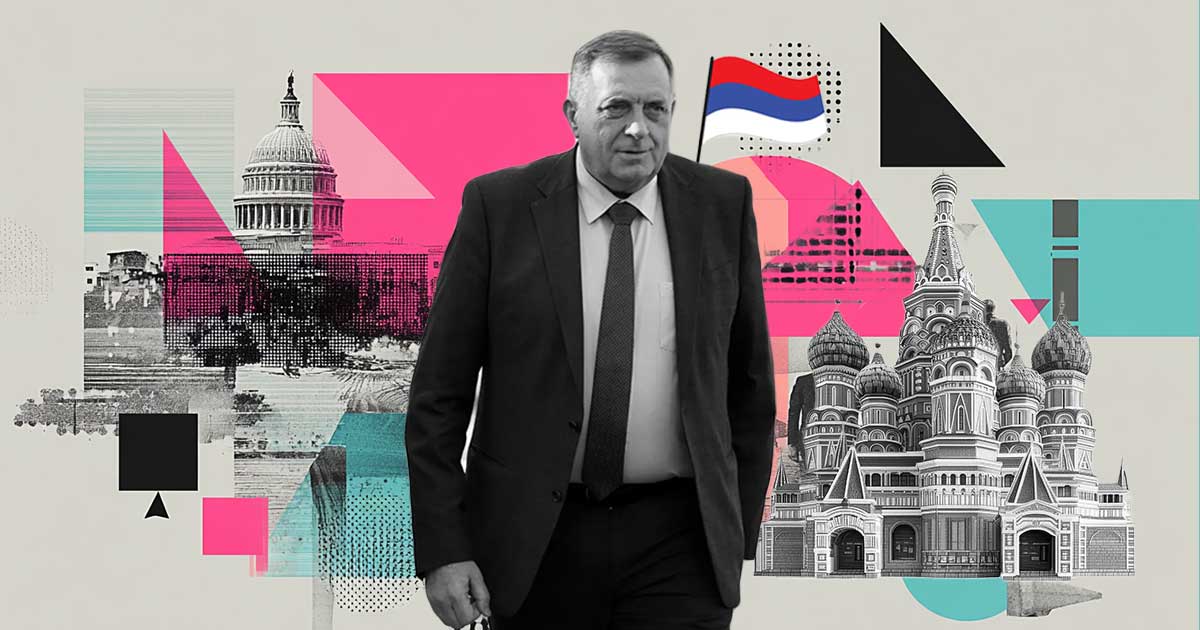
In the year in which he was convicted under an imposed unlawful act by Christian Schmidt, and subsequently deprived of the office of President of Republika Srpska, Milorad Dodik was most frequently a guest of the highest Russian officials. As once noted by the Kommersant correspondent Gennady Sysoyev, Dodik likes to emphasize that he has met with the President of Russia Vladimir Putin “at least twenty-five times”. The last time last year, and overall for the twenty-seventh time, Dodik met with Putin on the sidelines of the Valdai Forum in Sochi, on October 2, 2025.
That Dodik’s evident reliance on Russia does not mean neglecting other key poles of the multipolar world—those also listed in the aforementioned Foreign Policy Concept of the Russian Federation—was demonstrated by Washington’s decision of October 29 to lift sanctions on Dodik and other senior officials of Republika Srpska, which had been imposed in 2022. This major success crowned months of effective lobbying by Republika Srpska within the administration of Donald Trump.
Subsequently, on January 26, 2026, Dodik visited Israel, where, together with Ana Trišić Babić, he met with the head of the Jewish state Isaac Herzog and Prime Minister Benjamin Netanyahu. On that occasion, Dodik was presented in the Knesset with a high Israeli award for his contribution to the development of relations between Republika Srpska and Israel.
AN INVITATION TO AMERICAN BUSINESS TO INVEST IN REPUBLIKA SRPSKA
Finally, the highest delegation of Republika Srpska, which included until recently sanctioned Milorad Dodik and Željka Cvijanović, visited the United States at the beginning of February this year. During their multi-day stay in the U.S. on the occasion of the National Prayer Breakfast, the high delegation of Republika Srpska held meetings with the Secretary of Defense Pete Hegseth, the Speaker of the House of Representatives Mike Johnson, as well as numerous members of Congress and former senior officials close to Donald Trump.
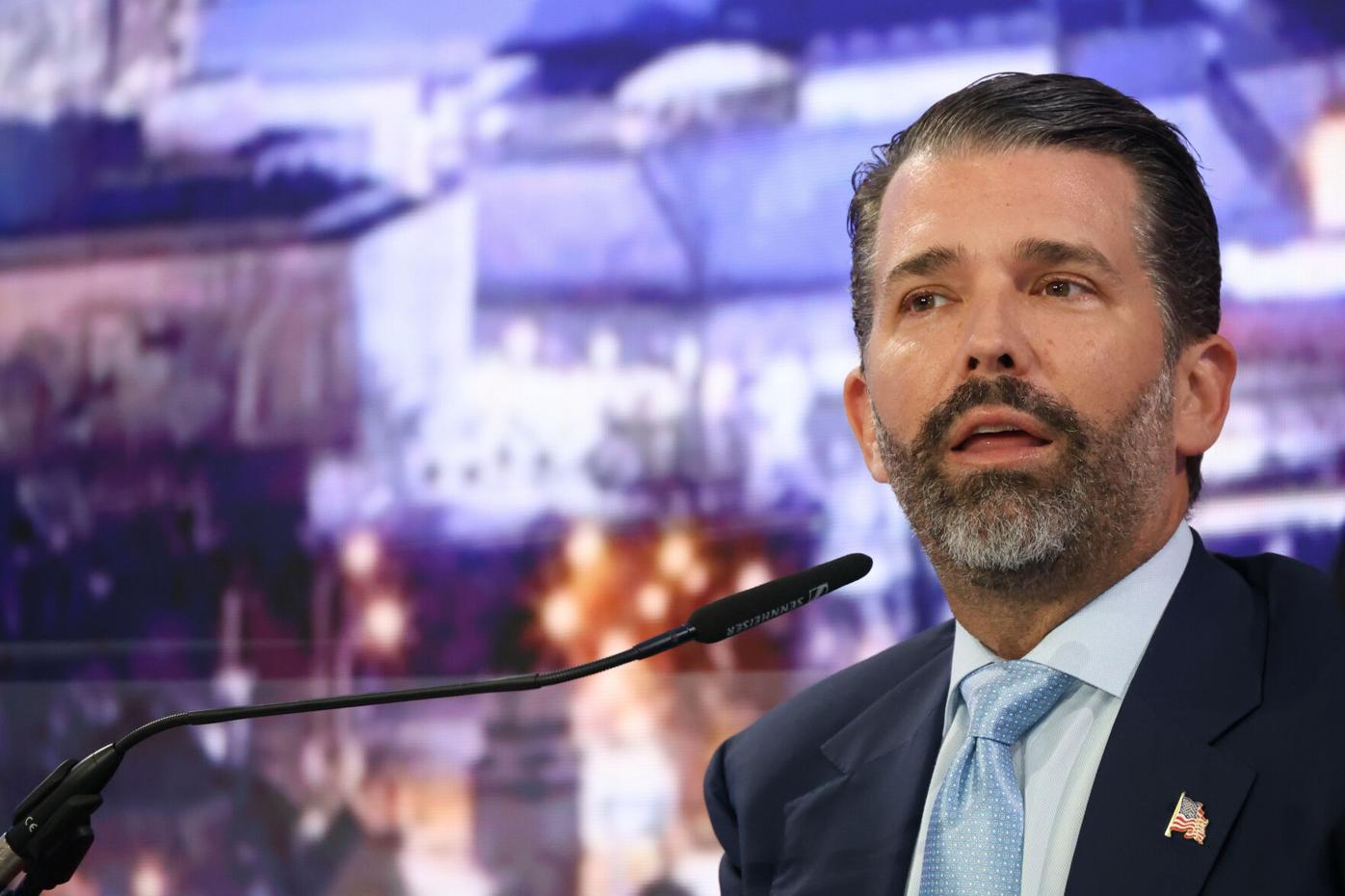
Then, on April 7, there was also a visit to Banja Luka by Donald Trump Jr. Milorad Dodik commented on his stay in Republika Srpska, which was marked by an intensive schedule of meetings, with words that reflect the essence of Republika Srpska’s foreign policy concept: “Republika Srpska believes in open dialogue, cooperation, and the creation of new economic opportunities, and today builds friendships around the world, strengthens its international position, and achieves victories. The Serbian people and the people we are speaking with around the world today share the same principles—freedom, the right of peoples to decide for themselves, and a policy of common sense”.
On the other hand, the son of the U.S. President conveyed to the public that he was impressed with what he saw in the Serb entity in Bosnia and Herzegovina, especially the “work ethic” of its people. This was, in fact, an invitation to American business to invest in Republika Srpska.
DISTANCE FROM BRUSSELS AND THE HUNGARIAN ELECTIONS
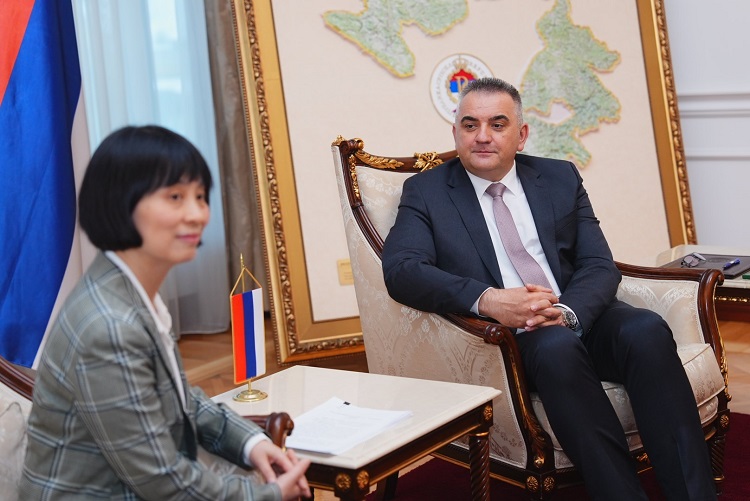
Fully in line with multipolarity, the Prime Minister of Republika Srpska Savo Minić spoke at the end of March this year about intensifying investments in the economy of Republika Srpska with the Ambassador of China to Bosnia and Herzegovina, Li Fan.
Between these meetings with representatives of states that are the main poles of the multipolar world (Russia, the United States, China), as well as with countries aspiring to regional leadership (Israel), the leadership of Republika Srpska maintained traditionally good relations with sovereignists within the European Union, primarily with Viktor Orbán.
Although with the electoral defeat of Viktor Orbán, Republika Srpska lost an important and loyal ally within the European Union, the years-long distancing of Republika Srpska from Brussels and from Bosnia and Herzegovina’s European integration effectively neutralizes potential negative consequences of the outcome of the Hungarian parliamentary elections on the foreign policy position of Republika Srpska. In short, if European integration is no longer a goal of Republika Srpska, then major political changes in EU countries do not carry for Banja Luka the weight they would have had if Republika Srpska were strategically committed to Bosnia and Herzegovina’s accession to the European Union.
TO THE DISMAY OF UNITARIST–ISLAMIST POLITICAL CIRCLES
Instead, in recent months the leadership of Republika Srpska has consistently treated the European Union as a secondary foreign policy factor, whose influence in a multipolar world cannot be compared to that of states that serve as centers of civilizational grouping within the emerging new international order. Regardless of this attitude toward the European Union, cooperation with Hungary and Italy remains traditionally important for the states of the Serbian people, since such an alliance has significant potential to contain anti-Serb actions of the Croatian and Albanian factors in the Balkans. For now, the geopolitical potential of these countries is most seriously limited by their membership in the EU.
To the great disappointment of unitarist–Islamist political circles in Sarajevo, which will never be able to adapt their policy to the demands of a polycentric world, the electoral defeat of Viktor Orbán will not elevate their protectors in Brussels into the first echelon of world politics in the era of multipolarity. Just as Orbán’s electoral defeat cannot halt the process of resovereignization of Republika Srpska.
International relations in a multipolar world require far greater self-confidence, independence, and flexibility from national political elites than was demanded in the era of globalism, which was incomparably more suited to the nature of Bosniak politics. The outcome of the Hungarian elections has shown that another important feature of politics from the era of globalism no longer carries the same weight in a multipolar world as it once did—a direct endorsement by foreign leaders of a particular political option, such as that given by Donald Trump to Orbán, does not guarantee electoral victory.
DEFENSE OF NATIONAL INTERESTS – THE GUIDING PRINCIPLE OF FOREIGN POLICY
The intensive contacts of Banja Luka in recent months with Moscow and Washington, along with maintaining close relations with Beijing and Jerusalem, clearly testify that Republika Srpska has adapted its diplomatic activity to the realities of a new world order based on the principles of multipolarity.
What could in the future threaten the foreign policy position of Republika Srpska is only the neglect of national interests. Because, in the words of Russian diplomats Alexey Drobynin and Yevgeny Piskunov, national interests are the only constant in the era of multipolarity. Moreover, in the era of multipolarity, as a new version of the historical policy of the “balance of power,” strategic alliances are once again gaining importance, although their significance is often less visible in conditions of general instability and volatility that characterize the painful process of the collapse of the old and the emergence of a new international order.
After all, the defense of national interests—which become the guiding principle of foreign policy in the era of multipolarity—is inconceivable without long-term strategic alliances. In this regard, the leadership of Republika Srpska should always bear in mind that the currently nationally beneficial cooperation, at the regional level with the Croatian political factor, and at the global level with the United States, should not, due to the divergence of strategic interests, move from the tactical to the strategic level.