
The worsening situation in the Middle East threatens to destabilize neighboring countries, including Turkey — a state with one of the largest armies in NATO. The United States has ultimately shattered the system of international law, acting like a bull in a china shop, interfering in the affairs of other states and imposing its will on middle and regional powers.
It is worth recalling that an Iranian ballistic missile was intercepted in the area of Turkey’s Hatay Province. The presumed target may have been the Kürecik base, where NATO’s early-warning radar station for missile attacks is located. Iran officially denied involvement in the attack. Following the incident, a telephone conversation was held between the leaderships of Iran and Turkey, during which the sides discussed the situation and the possible risks of further escalation. Ankara is seeking to avoid being drawn into direct confrontation and advocates preventing the conflict from spreading onto its own territory.
SEVERING EURASIA’S LOGISTICAL LINKS
Who benefits from escalation? For many states in the region, any further spread of the conflict carries serious economic and environmental risks. In particular, attacks on oil infrastructure could lead to environmental pollution and affect the countries of Central Asia.
In addition, the destabilization of the Middle East could disrupt important trade and transport routes linking the north and south of Eurasia, as well as Europe and Asia. This could lead to a reshaping of logistics chains and an increase in the costs of international trade. The United States is interested in exactly that, as it is in effect severing all logistical links across Eurasia, creating an artificial barrier in the Middle East and thereby leaving only one route for trade — through Turkey and the South Caucasus, and then, it seems, however unusual that may sound, through the United States itself, in order to connect China with Europe.
The current crisis has demonstrated the high degree of resilience of Iran’s political system and the country’s ability to respond to military challenges. It should be noted that during the exchange of strikes, numerous infrastructure facilities and military targets were damaged. However, the scale of the destruction and the real consequences of the conflict remain subject to further assessment. What is beyond doubt is that developments surrounding Iran will have long-term consequences not only for the Middle East, but also for regions economically and politically connected to it, including the countries of the South Caucasus and the post-Soviet space.
The American administration enthusiastically announced the “Trump Route for International Peace and Prosperity” (TRIPP), a project intended to connect Azerbaijan and Armenia with Turkey. At the same time, the Turkish authorities announced the start of construction of the Kars–Dilucu railway line, which is supposed to connect from the west to the “Trump Corridor” and ensure its functioning in the direction of Anatolia. The countries participating in both projects are hinting at the launch of a process of transforming Eurasian logistics and strengthening their role as key actors on the New Silk Road. However, the implementation of such large-scale projects may face numerous geo-economic and geopolitical risks.
IF IRAN HOLDS OUT…
If Iran withstands the current conflict with the United States and Israel, the “Trump Corridor,” which is supposed to pass through Armenia’s Syunik region, may never be realized. The tone of Iranian Foreign Minister Abbas Araghchi in his conversation with Azerbaijani Foreign Minister Jeyhun Bayramov was noticeably sharp. According to Araghchi, no state has the right to place its territory and infrastructure at the disposal of aggressive actions against other countries. He also warned of possible provocations and false-flag operations aimed at undermining Iran’s relations with third countries.
It should be recalled that under peacetime conditions Iran did not allow itself such tones in communication with Azerbaijan. The senseless American-Israeli aggression has paradoxically strengthened Iran’s position in the region and in the world.
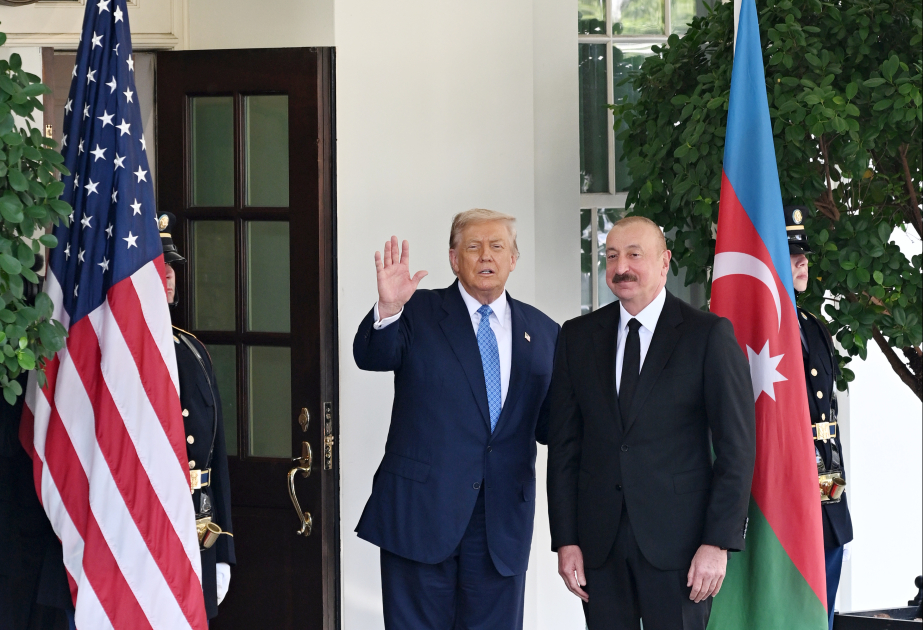
If Iran holds out, a new configuration of its relations with Azerbaijan and Turkey will also be inevitable. I believe, moreover, that after this war Iran will not agree to a “Trump Corridor” along its borders. It will demand a revision of the conditions for its construction and the exclusion of American participation. The project Trump Route for International Peace and Prosperity (TRIPP) was agreed upon by the leaders of Armenia, Azerbaijan, and the United States on August 8, 2025.
The “Zangezur Corridor,” as it is called in Baku, will on the Armenian section be managed by the Americans. Iran has opposed this.
A NEW FRONT IN AZERBAIJAN?
Under the new conditions of war between the United States and Israel against Iran, the Americans will seek to open a second front from the direction of Erbil toward Tabriz. This concerns Western and Eastern Azerbaijan, Zanjan, Ardabil, and, of course, Kurdistan. In the long term, such an advance could create the conditions for the seizure of Tehran. In order to open a northwestern front, the Western powers will most likely try to use not only the Kurds and their own forces, but also Turkey and Azerbaijan. Much here will depend on the will of Recep Tayyip Erdoğan and the readiness of the Kremlin to exert strong pressure on those countries. The use for military purposes of the Zangezur Corridor, referred to as the “Trump Corridor,” would also draw Armenia into the conflict.
The history of the idea of the Zangezur Corridor has its roots in the Soviet past. The “Zangelan–Nakhchivan” railway, which passed through Armenia’s Syunik region (then the Armenian SSR), enabled a connection between the main territory of the Azerbaijan SSR and the Nakhchivan Autonomous Republic (NAR), an Azerbaijani exclave bordering Turkey and Iran. After the outbreak of the First Karabakh War in 1992, traffic was completely blocked, and the railway line on Armenian territory was destroyed.
Since then, the lack of a direct land connection between Azerbaijan and Nakhchivan has become an existential problem for Baku. After the Second Karabakh War in 2020, the trilateral agreement between Russia, Azerbaijan, and Armenia envisaged the unblocking of transport communications under security guarantees from Moscow.
THE AZERBAIJANI RAILWAY — THE EASTERN APPROACH TO THE ZANGEZUR CORRIDOR
Despite the potential economic benefits, Armenia continues to refuse the opening of the corridor because of fears over Azerbaijani claims and the possible loss of control over strategic territories, and not only in the Syunik region. Armenia’s understandable concern was, for example, triggered by a project presented in 2022 by Azerbaijani public figures on the creation of a “Geycha-Zangezur Republic” on the territory of Armenia’s Syunik and Sevan regions (which in Azerbaijani historiography are referred to as “Zangezur” and “Geycha”).
Turkey and Azerbaijan regard the Zangezur Corridor as a key element in establishing uninterrupted transport connectivity not only between themselves, but also between Asia and Europe as a whole. For precisely that reason, since the end of the Second Karabakh War, Baku has persistently demanded from Yerevan the establishment of the Zangezur Corridor through Syunik, seeking to integrate its logistics capabilities with Turkish megaprojects such as the Eurasia Tunnel and the Sultan Selim Yavuz Bridge (both completed in 2016), which strengthen Turkey’s role as a key link on the New Silk Road.
Azerbaijan is rapidly constructing the “Horadiz–Aghbend” railway, which on the eastern side is intended to connect to the future Zangezur Corridor. According to Azerbaijan Railways (ADY), 84% of the design work and 67% of the construction work have already been completed. On a section 75–106 km long, earthworks are actively underway and engineering structures are being erected. The project includes the construction of nine stations, 40 bridges, 26 road crossings, and four tunnels. It is significant that Azerbaijan has from the very beginning fully financed the construction from its own resources, demonstrating complete confidence in the success of the Zangezur Corridor project. In addition, the highway connection linking Horadiz and Aghbend — built by Turkish companies — is almost 95% complete. The foundation stone for this road was personally laid by Recep Tayyip Erdoğan during a state visit to Azerbaijan. It is important to note that the engagement of Turkish contractors in major Azerbaijani infrastructure projects is a very common practice. Among such projects are, for example, the Fizuli–Shusha road and Fizuli Airport.
TURKEY’S “BRIDGE” BETWEEN ASIA AND EUROPE
While Azerbaijan is building the eastern “approach” to the Zangezur Corridor, Turkey is building the western one. The future Kars–Dilucu railway line, despite its relatively modest length of 224 km (twice shorter than the Istanbul–Ankara route), represents the most important link in the ambitious plans of Ankara and Baku. The significance of the new railway is not limited to quantitative indicators — it will directly connect Turkey with Baku through the Nakhchivan exclave.
After the completion of the Kars–Dilucu railway in 2029, travel time from Kars to the Azerbaijani border will be only 85 minutes. The project envisages the construction of seven stations, including Subatan, Digor, Tuzludžu, Iğdır, Karakoyunlu, Aralık, and Dilucu, as well as extensive infrastructure: 27 overpasses, 10 bridges, three viaducts, and 19 tunnels. The line will support passenger trains running at speeds of up to 160 km/h. The realization of the project will fundamentally transform the logistical role of the region: Kars will become a key freight gateway, Iğdır will serve as a trade hub, and Aralık and Dilucu will assume the role of strategically important transit points. The annual freight turnover of the line will amount to up to 15 million tons, while passenger flow will reach 5.5 million people.
The Turkish leadership, including President Recep Tayyip Erdoğan and Transport Minister Ali Uraloğlu, attaches high symbolic significance to the project, calling it a “bridge between Asia and Europe” that will strengthen the country’s geostrategic leadership, contribute to regional prosperity, and facilitate integration into global trade networks. From an economic point of view, the new line, integrated with the already existing Baku–Tbilisi–Kars railway, is expected to sharply increase the share of rail transport in Turkey’s foreign trade from the current 1% to 4% and generate revenues of 147.6 billion lira over the next 30 years. It is also assumed that, in the final analysis, the corridor will include oil and gas pipelines as well as optical communication lines alongside the railway.
BOLD STATEMENTS BY TURKISH POLITICIANS
The realization of the project will make it possible to create around 10,000 new jobs, which is particularly important for the development of Eastern and Southeastern Anatolia. Speaking to journalists during the laying of the foundation stone for the route, Ali Uraloğlu compared its significance to that of the İzmir–Istanbul motorway, which was officially opened on August 24, 2025. That route became a stimulus for the development of 12 organized industrial zones (OIZs) along its path, which has already led to the creation of new jobs. When asked whether similar changes could be expected along the Kars–Dilucu line, the minister replied that, at the very least, there is now political will not to allow all new industrial facilities to continue concentrating in Istanbul.
The cost of the new route will amount to 110 billion lira (approximately $2.8 billion at the current exchange rate). For comparison, Rize–Artvin Airport cost only $275 million, the new metro line to the bus terminal in İzmir will cost $535 million, and the new Istanbul Airport cost $12 billion.
It is significant that financing for the Kars–Dilucu line is being carried out through an international consortium of lenders, including Japan’s Mitsubishi UFJ, the Swedish (SEK) and Austrian (OeKB) export credit agencies, as well as the Islamic Development Bank. In Turkey, many railway projects are financed by such consortia; for example, the high-speed rail lines Ankara–İzmir and Mersin–Gaziantep were funded by European creditors.
In Turkey, it is believed that the corridor has the potential to completely transform logistical flows in the macro-region and reduce the transportation time of goods from 18 to 12 days, thereby increasing the competitiveness of the route in relation to traditional maritime routes. The bold statements of Turkish politicians indicate that official Ankara is absolutely convinced that the Zangezur Corridor will be launched, without which neither the Horadiz–Aghbend project on the Azerbaijani side nor the Kars–Dilucu project on the Turkish side would make sense and would be useless.
A SENSITIVE ISSUE FOR TEHRAN
However, the unblocking (and in essence the restoration) of the Zangezur Corridor appears to be a complex and uncertain issue. Armenia, in particular, insists that instead of restoring the Zangelan–Nakhchivan railway line, an entirely different one — the much more northerly Ijevan–Gazakh line — should be rebuilt. This railway was constructed much later, but it also enabled a connection between the “mainland” part of Azerbaijan and Nakhchivan, although not through Armenia’s Syunik region, but rather via Yerevan.
In Azerbaijan, the cross-border railway was linked to the main railway network, so trains could travel from Baku to Yerevan. Armenia is interested in restoring this section, which was also destroyed after the 1992–1994 war, in order to reestablish a connection with Russian Railways through Azerbaijani territory. However, if precisely this railway were to be restored, the need to build the new Horadiz–Aghbend and Kars–Dilucu routes would, of course, cease to exist.
Among other things, the “transport-logistics ambitions” of Ankara and Baku are facing serious disagreement not only from Armenia, but also from Iran. Tehran reacts extremely sensitively to the idea of creating a Zangezur Corridor that would bypass its territory. Moreover, frictions over cross-border freight transport have already emerged and, indeed, have led to escalation.
In 2021, Azerbaijani checkpoints were set up on the Goris–Kapan highway, on a 21-kilometer section that came under Azerbaijani control after the Second Karabakh War, where Iranian truck drivers encountered restrictions while passing through Armenia’s Syunik region. Iranian trucks were required to pay enormous fees for “crossing the border.” At the same time, claims emerged that in response Iran had banned the entry of Turkish trucks, but these statements were denied by the Iranian side and turned out to be an element of information warfare.
THREE CORRIDORS ARE IN PLAY — ONE OF THEM IS TRUMP’S
Nevertheless, Armenia has intensified construction of the Agarak–Sisian road to the Iranian border in order to create an alternative to the disputed section of the Goris–Kapan route, which is partially under Azerbaijani control. However, Iran, like Armenia, is also promoting its own transport project, one that above all serves its national interests — the idea of reviving the Soviet-era Aras transit corridor as a shortened route between Azerbaijan and Nakhchivan. That project would become an alternative to the Zangezur Corridor.
The Aras Corridor would allow Iran, via the Julfa station, to enter the railway network on the territory of the Nakhchivan exclave and, accordingly, integrate into the “Middle Corridor” for the transport of its own goods, regardless of Armenia’s interests. As early as 2022, it was announced that Azerbaijan had reached an agreement with Iran on the construction of an alternative corridor through Iran’s East Azerbaijan Province, but interest in the project then effectively faded due to geopolitical complications and the extremely high cost of the infrastructure solutions involved. Now Azerbaijan’s interest is entirely focused on the “Zangezur Corridor.”
The final word on which of the three proposed transport-link options will be realized — the Armenian one (the Ijevan–Gazakh route), the Iranian one (the Aras Corridor), or the Turkish-Azerbaijani one (the Zangezur Corridor) — still belongs to the United States, which until recently had not shown any striking interest in communications in the South Caucasus. However, after Ilham Aliyev and Nikol Pashinyan initialed a peace agreement between their countries during a visit to Washington, the project of the “Trump Route for International Peace and Prosperity” (TRIPP) was officially presented.

GATEWAY TO THE CASPIAN SEA
According to the plan, a private American consortium will receive the Zangezur Corridor — which passes through the territory of Armenia’s Syunik region — on a 99-year lease for infrastructure management and the development of surrounding territories. Although Washington is not assuming security functions, the very fact of a possible long-term U.S. presence in this strategic region has provoked sharp indignation from Russia and Iran. In Tehran, the project has been described as an attempt to sever Iran’s links with the Caucasus and establish a land blockade, likely precisely because the Zangezur Corridor was ultimately chosen instead of the Aras one. In Iran’s view, the display of U.S. interest in the South Caucasus fits into a broader strategy of economically blockading Iran in order to intensify anti-Iranian sanctions. In addition, Tehran seriously fears that Washington’s participation in managing the Zangezur Corridor opens for the United States a previously closed direct route to the Caspian Sea.
During the visit of Iranian President M. Pezeshkian to Armenia, N. Pashinyan assured him that the future Zangezur Corridor would be operated in accordance with Armenian legislation. However, this not only failed to remove the existing contradictions, but actually underscored their sharpness. The fundamental difference in the approaches of Baku and Yerevan remains: Armenia insists on establishing full border checkpoints with customs and border control at both ends of the corridor, while Azerbaijan views the corridor as a free transport artery without mandatory inspection of cargo heading to Nakhchivan. Only Azerbaijan’s willingness to pay Armenia transit fees, taking into account the potential freight volumes within the framework of the New Silk Road, could represent an economic interest for Yerevan.
THE PROJECT — A POTENTIAL IRANIAN MILITARY TARGET?
At this moment, the launch of the Zangezur Corridor directly depends on the signing of a peace agreement between Armenia and Azerbaijan. The agreement has only been initialed by the leaders of the two countries during the meeting in Washington, but there are still many hidden obstacles on the path to its signing. One of them is Azerbaijan’s demand to amend constitutional provisions and remove all references to Nagorno-Karabakh. Armenian Prime Minister Nikol Pashinyan has acknowledged that the implementation of the “Trump Corridor” (TRIPP) project may be delayed due to developments in Iran. At a briefing on March 12, he pointed out that TRIPP is currently not among the priorities of the U.S. administration. The Iranian side has never concealed its strongly negative attitude toward the project. Experts believe that this project could also become a military target for Iran, just like other American facilities in the region.
How can the project be realized under the existence of such a threat? Iran has shown that it is prepared to bomb everything built by the Americans, driving them out of the Middle East. The prospects of this project remain unclear for as long as the war in the region continues and until a new configuration of forces becomes clear. They will also remain unclear until elections are held in Armenia and it becomes evident who has won them. If new political forces come to power, they will certainly revise many of the decisions made by Pashinyan.
It should be borne in mind that statements about the alleged strategic partnership between Armenia and the United States in fact have no solid foundation whatsoever. The Americans have undertaken no obligations toward Armenia, and none are stipulated in these agreements. Everything remains at the level of declarations. We know how the Americans treat their allies — as vassals or servants. Naturally, no relationship of equality can exist here. Especially not in this project, where 74% belongs to the Americans.