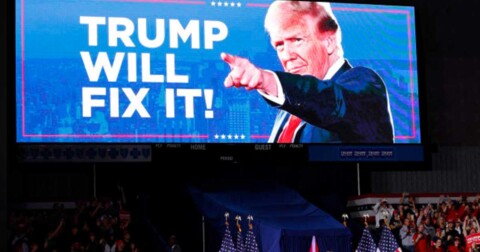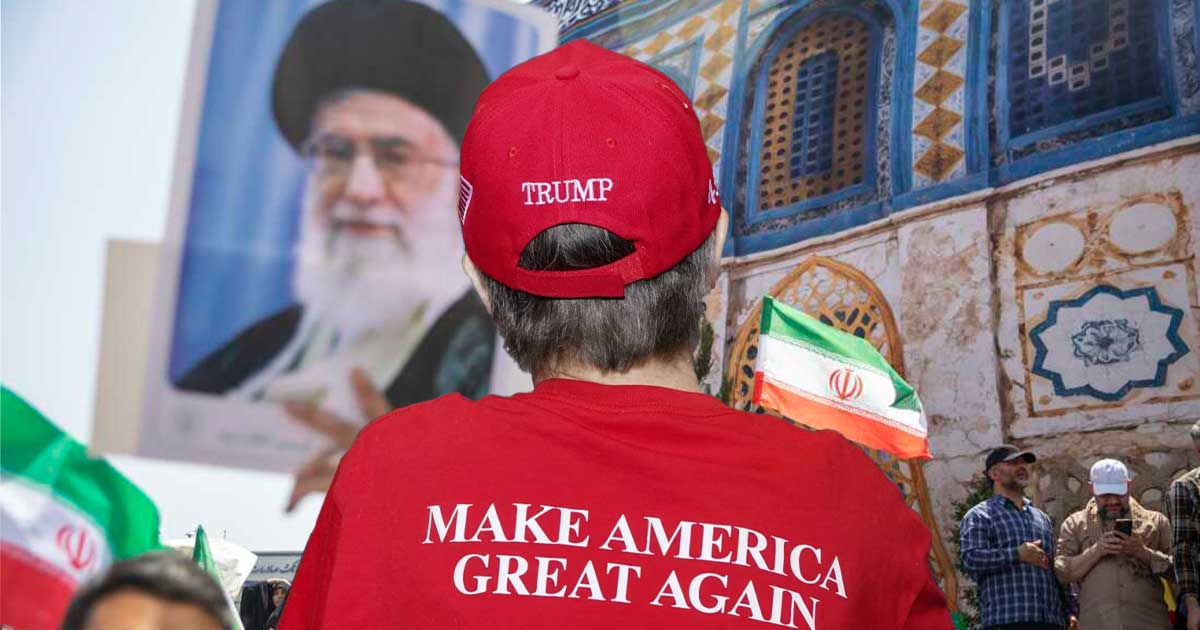
In 2016, the political revolution that lifted Donald Trump to the presidency was fueled by a simple but powerful promise: America would no longer bleed in endless foreign wars. The Iraq disaster, the chaos in Libya, and the stalemate in Afghanistan had convinced millions of Americans that Washington’s bipartisan foreign-policy establishment—often labeled the “neocons”—had squandered American lives and treasure for causes that had little to do with the national interest.
Trump understood that anger better than any Republican candidate before him. On the campaign trail he mocked the architects of the Iraq War, denounced “stupid wars,” and promised a new doctrine: America First.
Today, that promise is under serious strain.
The unfolding war with Iran has not only opened a dangerous new front in the Middle East. It has also opened something far more politically volatile at home—a deep fracture within the movement that once defined Trump’s rise.
For the first time since the MAGA movement emerged nearly a decade ago, some of Trump’s most influential early allies are publicly turning on him.
THE MAGA MEDIA REVOLT
The most striking feature of the current backlash is who is leading it.
These are not establishment Republicans or liberal critics. They are figures who helped build the Trump movement itself.
Among them is Tucker Carlson, whose nightly television broadcasts during the late 2010s became a central platform for populist nationalism and skepticism toward foreign intervention.
Carlson has not minced words.
On his podcast, he described the U.S. strike campaign—Operation Epic Fury—as “absolutely disgusting and evil.” In another moment of blunt commentary, he framed the strategic logic behind the war in stark terms: “This is Israel’s last chance to blow up Iran with America’s military, so naturally the neocons have reached peak hysteria.”
Such language would have been unthinkable during Trump’s earlier years in office, when Carlson frequently defended the president from attacks by the Washington establishment.
Now Carlson openly suggests the war represents a betrayal of the core promise that made Trump president in the first place.
His concerns go beyond strategy. On social media he even asked whether the conflict risked turning into something far more dangerous: “Is this a religious war designed to rebuild the Third Temple on the ashes of Al Aqsa? Hope not.”
Whatever one thinks of that speculation, its political meaning is clear: a leading voice of MAGA populism now believes the administration has drifted away from the America First principle.

“NO ONE SHOULD DIE FOR A FOREIGN COUNTRY”
Carlson is not alone. Former Fox News host Megyn Kelly—another figure deeply connected to the conservative media ecosystem that once amplified Trump’s message—has also voiced strong opposition to the war.
On her show she delivered a line that captured the mood of many disillusioned supporters:
“No one should have to die for a foreign country.”
Kelly went further, suggesting that American casualties in the conflict were not truly sacrifices for U.S. national interests.
“I don’t think those service members died for the United States,” she said. “I think they died for Iran or Israel.”
The comparison she drew was politically explosive. Kelly warned that the escalation resembles the road to the 2003 Iraq War—the very intervention Trump repeatedly condemned during his rise in Republican politics.
Her conclusion was blunt: “He’s going down the wrong path.”
For a president whose political identity was built on rejecting the foreign policy consensus of the Bush era, that accusation strikes at the heart of his brand.
ALEX JONES AND THE “NEOCON TURN”
Another voice from the early MAGA coalition has also broken ranks.
Alex Jones—who famously interviewed Trump during the 2016 campaign and once celebrated him as a nationalist disruptor—has turned sharply critical.
“Trump is starting to turn against his base and joining the neocons,” Jones wrote on social media.
He pointed out that Trump himself had once warned repeatedly that attacking Iran could trigger a global catastrophe.
“I can post hundreds of quotes of him saying don’t launch a full on attack against Iran because that’s World War III,” Jones said.
In a separate post, Jones mocked the escalation with dark sarcasm: “The beatings will continue until morale improves…”
For many longtime MAGA supporters, the message from figures like Jones is simple: the anti-war candidate of 2016 now appears to be embracing the same strategic logic he once condemned.
THE ISRAEL QUESTION
At the center of the controversy lies a sensitive but unavoidable issue: Israel’s role in the conflict.
Several critics argue that the United States was effectively drawn into war because of Israeli strategic calculations.
Carlson suggested as much when he remarked that Washington did not truly make the decision alone, pointing instead to the influence of Israeli Prime Minister Benjamin Netanyahu.
The controversy intensified when Secretary of State Marco Rubio acknowledged that the administration acted partly because Israel was preparing to strike Iran and the United States feared retaliation against American bases.
For critics inside the MAGA world, the admission confirmed their worst fears: that America First was becoming something closer to “allies first.”
Former Republican congresswoman Marjorie Taylor Greene expressed the sentiment bluntly during an appearance on Kelly’s podcast.
“Make America Great Again was supposed to be America First, not Israel First,” she said.
A MOVEMENT BUILT ON ANTI-WAR POPULISM
To understand the scale of the current backlash, it helps to remember how central the anti-war message was to Trump’s original appeal.
In 2016, he broke a long-standing Republican taboo by openly attacking the Iraq War and the politicians who supported it. He portrayed the intervention as a catastrophic mistake driven by ideological zeal and foreign policy arrogance.
That message resonated deeply with voters who had grown weary of two decades of conflict.
It also helped Trump attract a coalition that stretched far beyond traditional Republican voters: libertarians, populists, veterans disillusioned by endless deployments, and younger Americans skeptical of Washington’s global ambitions.
In short, opposition to new wars was not a minor campaign theme—it was one of the pillars of the entire movement.
Which is precisely why the Iran conflict feels so jarring to many supporters.
THE WHITE HOUSE PUSHBACK
Inside the administration, officials insist the criticism is exaggerated.The White House argues that the strikes were necessary to neutralize Iran’s nuclear capabilities and prevent attacks on American forces.Trump himself has dismissed critics, insisting that the MAGA movement remains loyal.
“I think that MAGA is Trump,” the president said in an interview. “MAGA’s not the other two.”
Many conservative media figures still support the operation. Personalities such as Sean Hannity and other Fox News commentators have defended the president’s decision as decisive leadership.But the cracks in the coalition are undeniable.And the deeper the war goes, the harder those cracks may become to repair.

THE POLITICAL COST
Foreign wars have a long history of reshaping American politics—often in ways presidents do not expect.The Iraq War destroyed the credibility of the Bush administration and reshaped the Republican Party for a generation.The Afghanistan withdrawal debacle helped cripple the Biden presidency.
The Iran conflict now carries similar risks for Trump.
Many voters who supported him did so precisely because they believed he would resist the pressures that led previous presidents into Middle Eastern wars.
If those voters conclude that promise has been broken, the consequences could be severe.
Midterm elections already pose challenges for any sitting president. A fractured base could make those challenges far worse.
THE FUTURE OF AMERICA FIRST
The deeper question is not simply whether Trump will pay a political price. It is whether the America First movement itself can survive this moment without redefining its identity.
If the movement was truly built on nationalist realism and skepticism toward foreign intervention, then the Iran war represents a profound test. For many supporters, the issue is no longer about loyalty to a single leader. It is about whether the principles that animated the 2016 political revolution still mean what they once did.
And that debate—now playing out across podcasts, social media, and conservative media—may ultimately determine what the next chapter of the MAGA era looks like.
Because if the architects of the movement believe its founding promise has been broken, the political consequences may reach far beyond one war in the Middle East.
They may reshape the entire future of American conservative populism and all it standed for.