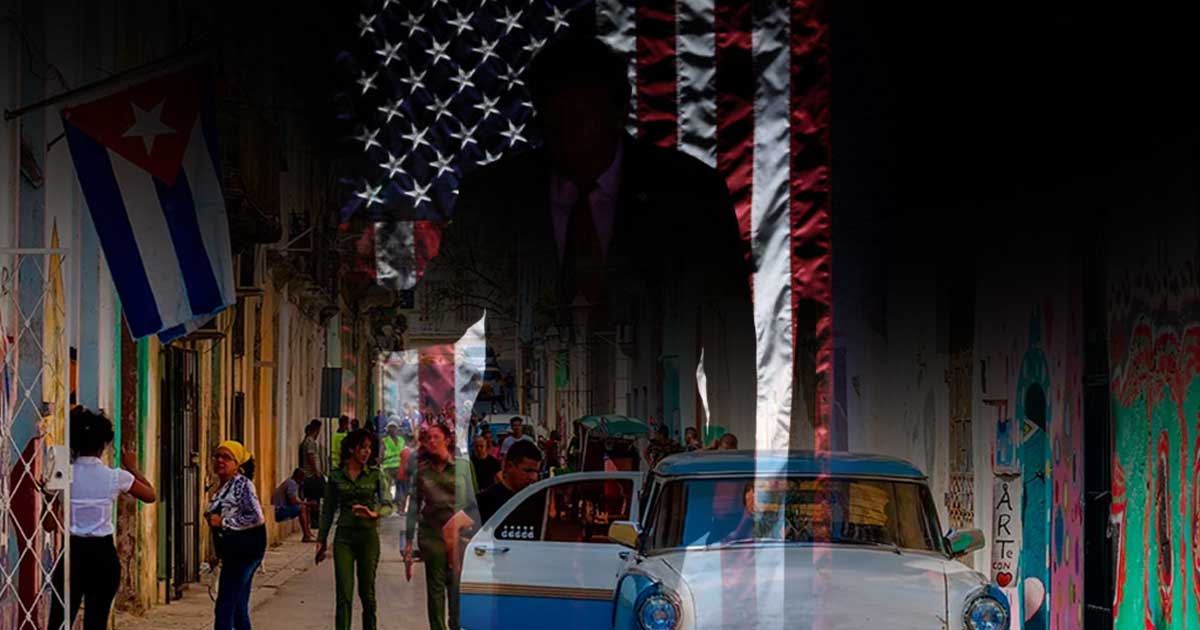
Only two-and-a-half months into 2026, and US President Donald Trump has already shaken what remains of the old world order through his rapid surprise attack on Venezuela, his brazen threats against Greenland and now the ongoing war against Iran. Ironic for a man who likes to present himself as a “President of Peace” and who had recently set up his new Board of Peace organisation, with not-so-veiled intentions to eventually see it replace the United Nations itself. Unfortunately for international law – or what remains of it – Venezuela, Greenland and Iran are not the only lands which have been on Trump’s list of geopolitical targets for quite some time. Another country which could potentially be the next one to fall victim to this new American imperialism is Cuba.
While Cuba has long been a geopolitical thorn in the United States’ side – especially during the Cold War – Cuba in the modern era has gradually been decreasing in domestic stability for a number of years now. Ongoing factors such as poor-quality public services (especially in the field of healthcare), low salaries, a severe shortage of public sector workers, food rationing and a reported 88% of the population living in extreme poverty – as per the Cuban Observatory of Human Rights – all contribute towards the increasingly fragile and unstable state of Cuba today. And as history has often proven, when a nation is experiencing long-term instability and hardship, the conditions are ripe for bigger, stronger nations to take advantage of the situation for their own interests and agendas. For Cuba and the Cuban people, the external threat at this time is their old enemy – the United States of America.
“A FRIENDLY TAKEOVER”
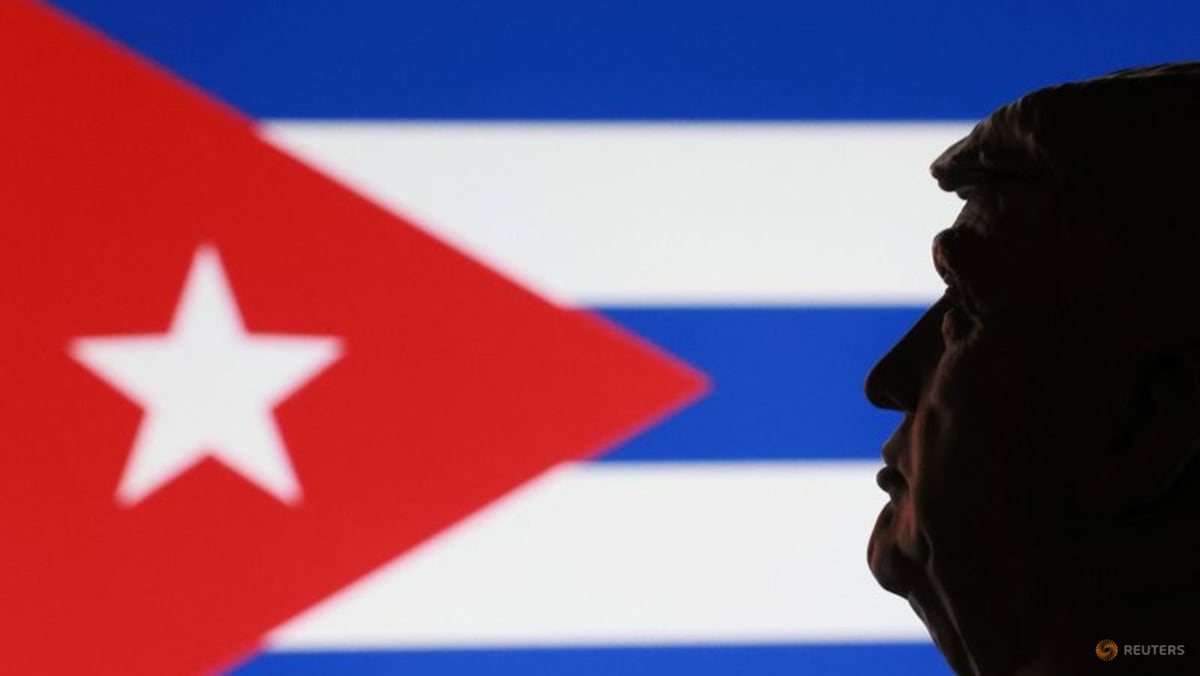
Despite the ongoing Iran War taking up immense levels of American military and economic resources, President Donald Trump continues to seek new states to antagonise and mark as potential targets for his increasingly aggressive and imperialistic foreign policy. For a while, Cuba has been in his sights, not only because of the island nation’s close geographical proximity to the United States itself, but also because, historically, Cuba has been a much-desired territory for the US to expand its geopolitical influence into. Considering that Cuba is also a communist country – the only one remaining outside of Asia – the idea of the US overthrowing the old communist regime there and replacing it with a pro-American regime would not only be a geopolitical victory for the US, but also a highly symbolic one for the Trump Administration. Since the Cold War, Cuba has long been a bastion for anti-American sentiment and communist sympathisers in the Western World. The imposition of a US-friendly Cuban Government would surely give President Trump a much-needed boost to his plummeting public approval ratings. As is the case with most countries, memories of historical feuds between nations continue to serve as a powerful tool for exploitation for governments wanting to push controversial foreign policies which might otherwise prove unpopular with the people, under normal circumstances.
According to reports by the Reuters news agency, on the 9th March, President Trump had made a statement in which he said that the US State Department were “still focused on Cuba”, and that the US Government were currently in the planning stages of a new foreign policy towards Cuba that “may or may not include a friendly takeover” of the country. Considering the sheer unpredictability – and, recently, aggressiveness – of Trump, this proposed “takeover” of Cuba could include anything from a mere “change” in the ruling Cuban Government’s stance towards a more pro-US nature to something even as extreme as the total annexation of Cuba into the United States of America itself. While such a scenario may once have seemed completely outlandish and almost comical in its dramatics, no one can forget just how determined Trump was to annex a territory as large as Greenland, which itself is an autonomous territory of the Kingdom of Denmark, itself a fellow NATO member state and – now barely – an ally of the United States.
While most would decry Trump as being extremely brash and reckless in his stance towards Cuba, one thing that cannot be denied is his awareness of certain external factors which could potentially make his ambitions somewhat easier to achieve. In the case of Cuba, Trump’s placement of trust in his Secretary of State, Marco Rubio, is one such factor. Rubio himself is the son of Cuban immigrants, so it is largely because of his personal ties to Cuba that Trump has entrusted him to effectively take charge of the United States’ ongoing “dialogue” with Cuba (if it can be accurately referred to as dialogue to begin with). Furthermore, with Rubio’s personal knowledge of Cuban society and cultural mentality, one could argue that Rubio could also potentially tap into these factors to better argue a case for increased US influence in Cuba as a net positive. Such a diplomatic move is not uncommon in geopolitics and international relations. It is not unheard of for states to appoint ambassadors to foreign countries whose own ethnic or racial background aligns with the nation in which they have been appointed ambassadors to. An example of this would be the case of the late Mark Brnović, a US-born ethnic Serb who Trump had previously nominated as a potential US Ambassador to Serbia, prior to his deselection as the ambassadorial candidate in October 2025. Brnović died on the 12th January of this year in Phoenix, Arizona.
The presence of a significant Cuban diaspora in the United States is also a key factor that Trump is likely to exploit. Over the years, hundreds of thousands of Cubans have fled their home country for the United States – specifically Florida, which is 150km (90 miles) north of the island – citing the poor economy, declining standards of living and political repression as the primary reasons for leaving Cuba. The subsequent growing Cuban diaspora in the United States is thus crucial for fellow Cubans in the US Government, such as Marco Rubio, as popular support for their fellow countrymen will undoubtedly make it easier for the Trump Administration to stir up support among the Cuban community for US intervention in Cuba and the overthrowing of its communist regime.
Additional factors in the Trump Administration’s increasingly aggressive stance towards Cuba are the continuing sanctions against the island nation. Already a nation suffering from deep economic instability, the imposition of additional sanctions by the US is a policy purposefully intended to further cripple Cuba, in order to force it to “make a deal” with the US. With Trump, such “deals” more often than not manifest as total geopolitical submission to US interests exclusively, with very little to gain in return.
According to President Trump himself, on Marco Rubio’s role as the US representative in the US-Cuba dialogue:
He [Marco Rubio] is dealing with it [relations with Cuba], and it may be a friendly takeover, it may not be a friendly takeover. Wouldn’t really matter because they’re really down to, as they say, fumes. They have no energy, they have no money…They are going to make either a deal or we’ll do it just as easy anyway…
This language and rhetoric have become a new staple of Trump’s approach to foreign policy – “my way or the highway”, as the old saying goes. In other words, if a nation does not comply with Trump’s demands – however outlandish and extreme they may be – then that nation will suffer whatever consequences Trump has in store. In the past year, we have seen that such consequences are rapidly becoming military in nature, making this second Trump Administration arguably one of the most unpredictable and dangerous US governments in modern history. In fact, Trump had recently spoken publicly about his not-so-subtle growing affinity for military force to achieve his ambitions, as opposed to his previous statements claiming that he was a “President of peace”:
We’ve had tremendous success in so many different ways. I’ve built the military and rebuilt it in my first term, and we’re using it. More than I’d like to use it, to be honest with you, but when we use it, we’ve found out that it certainly did work…When we look at Venezuela, when we look at [Operation] Midnight Hammer in Iran, that set the stage for what we’re doing right now [in Iran]. It’s been pretty amazing.

THE CUBAN HOUSE OF CARDS
In January, the American Wall Street Journal newspaper covered Trump’s plans for Cuba, which also included the Administration getting into contact with officials within the Cuban Government who would be willing to co-operate with the United States in order to force regime change in Cuba and bring about a collapse of its communist government. Cuban exiles and “civic groups” based in Miami and Washington DC were also reportedly “consulted” by the US Government. However, what is also interesting to note is that the Wall Street Journal had also reported – citing anonymous US officials – that Trump had “no concrete plan” for the future of Cuba in the event that regime change did indeed take place. However, despite the lack of a clear and outlined vision for a post-communist Cuba, it had also been reported that the US attack on Venezuela and the kidnapping of President Nicolas Maduro had emboldened Trump to reach the conclusion that “might is right”, and that military force no longer necessarily has to be a final resort, if all other options fail. Instead, Trump very likely now feels that military force can indeed be considered one of the primary options in his foreign policy plans going forward. The ongoing Iran War is but one example of this. In relation to this, Professor Michael Clarke, security and defence analyst for British outlet Sky News, recently compared the wider grand strategies of the United States and Iran, stating that “the Americans have a military strategy, but not a political strategy”, whereas “the Iranians have a political strategy, but not a military strategy”. This comparison can arguably be applied to Trump’s approach to Cuba as well, if we take the Wall Street Journal report into consideration. If Trump indeed has “no concrete plan” for Cuba following a post-communist regime change, then it can be deduced that this Trump’s overall favoured approach to US foreign policy in general – if a “deal” cannot be struck, then a military strategy will be adopted, not a political strategy. With Venezuela, a military strategy was adopted; in Greenland, it was almost adopted (but still unresolved long-term); in Iran, it was also adopted. For the tiny island nation of Cuba, a short, sharp military strategy would almost certainly be on the table for President Trump.
Prior to the US attack on Venezuela and the kidnapping of Nicolas Maduro, Cuba had been receiving much of its oil and other fuel supplies from Venezuela. Now that that crucial supply has been cut off, Cuba has since been facing an ongoing fuel and energy crisis as a result. According to the US Government, it is largely because of this ongoing energy crisis and an often-claimed “economic collapse” that Cuba is allegedly prepared to come to the negotiating table with the United States to discuss a potential “deal”, whichever form that may take. However, Trump had stated on numerous occasions in the past that Cuba was “ready to fall”, but such a scenario had not come to pass. Cuba’s official response, however, has been somewhat mixed. On the one hand, the Cuban Government has denied any reported high-level talks with the US, but on the other hand, it has not denied the existence of what it has referred to as “informal talks”.
THE “DONROE DOCTRINE”
Donald Trump’s new fixation on Cuba – following Venezuela, Greenland and now Iran – is but yet another expansion of his self-labelled “Donroe Doctrine”. Named after the historical Monroe Doctrine, which emphasised the opposition of foreign interference in US affairs in the Western Hemisphere – and was specifically targeted against foreign colonialism in the Americas – the so-called Donroe Doctrine is a more extreme form of this policy. Coined by President Trump himself, the Donroe Doctrine is the ideological manifestation of Trump’s own personal foreign policy, which emphasises American geopolitical supremacy in the Western Hemisphere, and sees any and all opposition to American overseas ambitions as a direct threat to the United States itself. One does not need to look too deeply into the Doctrine to see the evidently imperialistic nature of it.
With the Donroe Doctrine, what started out seemingly as a tongue-in-cheek joke that most did not take seriously whatsoever, due to Trump’s eccentric nature, has ultimately become a very real – and extremely dangerous – core part of Donald Trump’s foreign policy. The sheer unpredictability and aggressive nature of Trump’s foreign policy during his second term in office as President – also supported by equally hawkish members of his Administration – has arguably turned the United States Government as a whole into the most dangerous and imperialistic in the nation’s 250-year-long history. With Trump’s complete disregard for international law – which he had even declared publicly – and his aggressive actions and rhetoric against Venezuela, Greenland and now Iran, it is highly unlikely that he will be forgetting about Cuba anytime soon. If anything, considering Cuba’s small size and crumbling stability as a state, only the most ardent of optimists would claim that Trump would not make Cuba his next target for American expansionism. In fact, once again, Trump himself made it clear that he indeed has Cuba in his sights, once his campaign in Iran is brought to its conclusion:
What’s happening with Cuba is amazing, and we think that we want to finish this one [Iran] first…But that will be just a question of time.
In exactly what shape or form Trump’s ultimate goal in Cuba will eventually manifest as remains to be seen, but what is certain as of now, March 2026, is that the American shadow over Cuba will not be disappearing anytime soon, and that the old Cold War-era feud between Cuba and the United States of America could potentially be reignited into something far more dangerous and destructive once again.