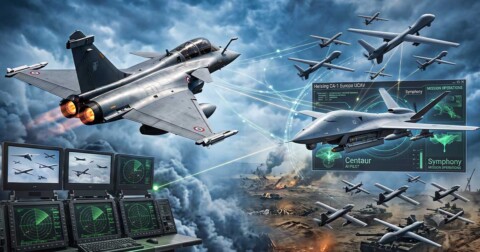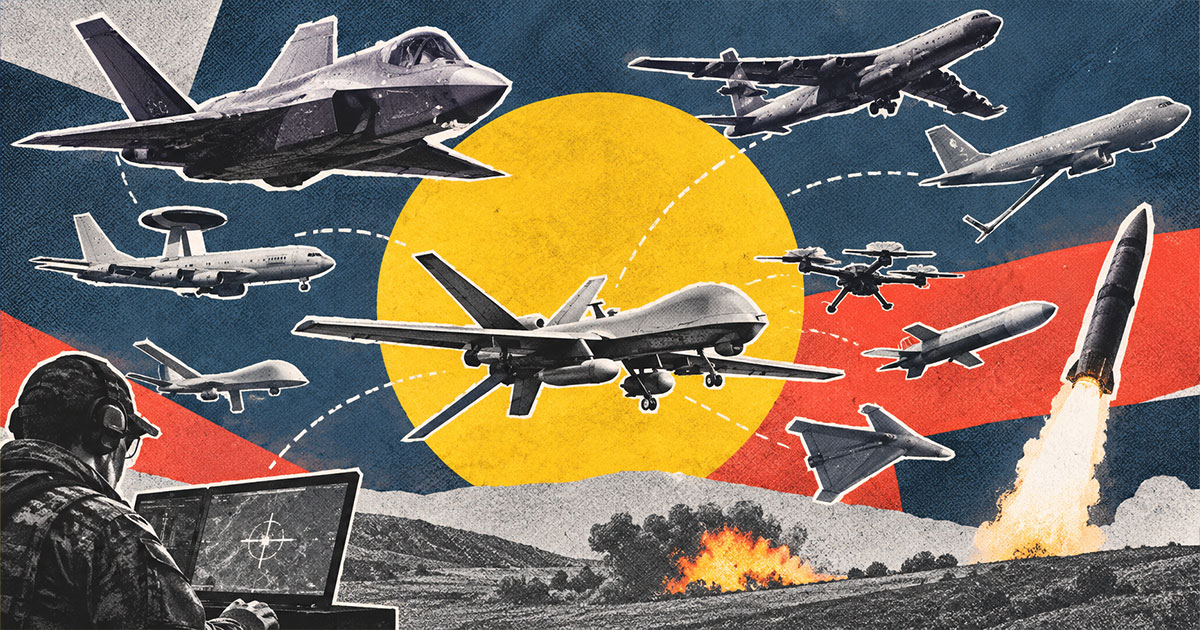
Intensive large-scale military conflicts in recent years have radically transformed the conventional appearance of aerial warfare. In professional circles, this development is often explained by the claim that unmanned aerial vehicles are replacing aircraft. However, the actual reason may lie elsewhere: the range of air-attack systems available for mass production has expanded dramatically, including for countries with low levels of industrialisation and limited manufacturing capabilities.
Today, a single military conflict can simultaneously involve stealth fighters, strategic bombers, aerial refuelling aircraft and electronic warfare platforms, ballistic and cruise missiles, inexpensive one-way attack drones, decoys, reconnaissance UAVs and specialised interceptor drones. As can be seen, the new systems have not eliminated the old ones; rather, they have filled previously almost empty gaps between them in terms of cost, range, complexity and acceptable losses.
AVIATION HAS SURVIVED
The experience of Ukraine and the two campaigns against Iran is particularly interesting in this regard. These conflicts have, in essence, evolved into a prolonged regional confrontation, which is entirely understandable given their scale and character. They provide compelling evidence not of the “death of manned aviation”, a subject extensively debated in military circles around the world, but of the emergence of a new architecture of air warfare.
Expensive aircraft have not been replaced by cheap drones: they have become components of the same system.
The most striking consequence of this change in the structure of air-attack forces is the return of the concept of mass. During the second half of the twentieth century, the development of aerial weaponry was largely focused on reducing the number of weapons required to destroy a single target. A precision-guided bomb or cruise missile could accomplish a mission that had previously required dozens of aircraft and hundreds of unguided munitions. Yet the cyclical nature of military technological development has meant that inexpensive electronics, satellite navigation, commercial components and mass production now once again make it possible to launch hundreds of aerial attack systems, without sacrificing an acceptable level of accuracy.
It should be emphasised that this is not mass in the same form in which the concept was used in the wars of the industrial era. Today, it is highly heterogeneous in terms of both cost and the technical sophistication of the equipment involved. A single attack may simultaneously include cheap and primitive decoys, piston- and jet-powered unmanned aerial vehicles, cruise and ballistic missiles, guided aerial bombs, and the fighter-bombers carrying them.
This heterogeneous mass is, in itself, an unconventional tactical element: it delivers warheads to targets, overloads detection channels that must process large numbers of different targets, forces defensive units to deploy their resources, consumes expensive, scarce and valuable — perhaps the most appropriate description today — surface-to-air missiles, and directs enormous financial and material resources towards establishing at least a minimally acceptable level of air defence.
BOTH A CHEAP DRONE AND AN EXPENSIVE MISSILE
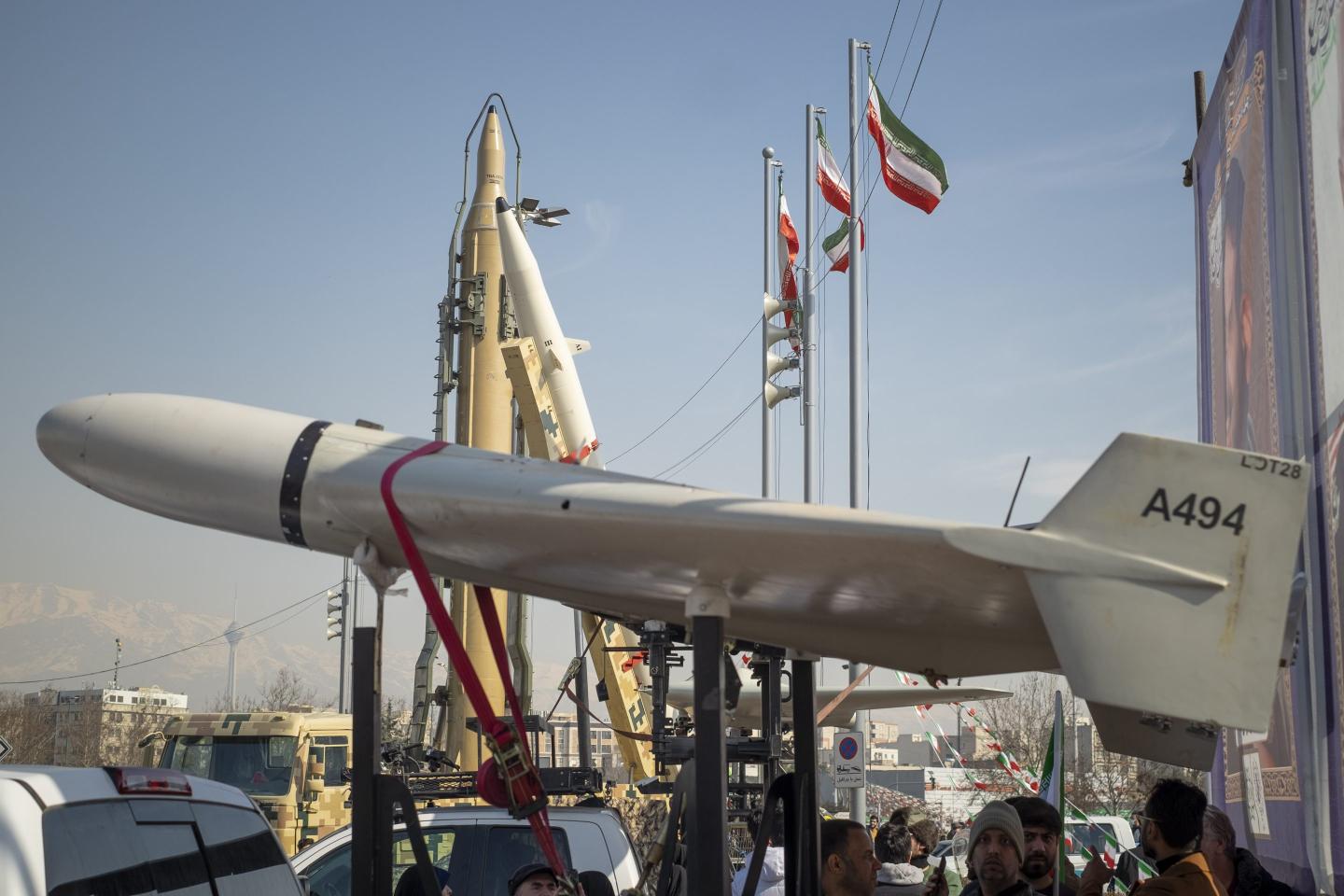
Iran, for example, combines ballistic missiles with one-way attack drones — weapons systems that cannot be compared in terms of speed, cost or destructive power. A cheap drone does not replace a heavy missile: it creates additional pressure on detection and interception systems, leaving expensive weapons for missions requiring high speed and a heavy warhead. Mass distributes the burden across the entire defensive system.
At the same time, we are witnessing the blurring of boundaries between conventional weapons categories. A piston-powered UAV acquires a heavier warhead, more sophisticated navigation, remote control and a jet engine, bringing it closer to an inexpensive cruise missile — as has happened with Russia’s Geran series of attack drones. Similar trends are evident in air defence. FPV drones, which until recently were primitive remotely controlled weapons, have evolved into specialised interceptor drones capable of reaching speeds of around 700 km/h and approaching missile systems in terms of their characteristics.
When analysing a particular type of weapon, its formal classification is becoming increasingly less important. Far more significant are its cost, range, speed, autonomy, payload and the challenge it poses to the adversary.
Taken together, all of this points to another, more profound change.
IRAN’S EXPERIENCE SPEAKS VOLUMES
For a long time, air superiority and the ability to conduct air strikes were closely interconnected. Defeating an enemy’s air force and suppressing its ground-based air defences enabled the stronger side to exercise an almost monopolistic use of the airspace. However, the missile and unmanned components are weakening this connection.
Iran’s experience is particularly revealing in this regard. In 2025, Israel gained considerable freedom of action along selected routes. The Israel Defense Forces described the situation as having achieved “air superiority from western Iran to Tehran”. Israeli aircraft were able to penetrate deep into Iranian airspace, strike exposed air-defence assets and attack a wide range of targets. Nevertheless, the heavy losses suffered by Iran’s air-defence system had little effect on its ability to conduct a missile-and-drone campaign. However obvious it may sound, launching a ballistic missile or an attack UAV does not require the ability to successfully engage enemy fighter aircraft over one’s own territory.
In other words, control of airspace, the ability to conduct strikes through it, and the ability to deprive an adversary of its own aerial attack capabilities have now definitively become separate tasks. This represents a significant departure from the concepts of air dominance developed during the Cold War. The widespread availability of missiles and unmanned aerial vehicles — and, above all, the ability to mass-produce them — makes this distinction particularly important.
DISTANCE STILL MATTERS
The war in Ukraine demonstrates that neither Russia nor Ukraine has achieved lasting, conventional air superiority, even over the airspace along the front line. Nevertheless, both sides conduct extremely intensive aerial attacks against one another. Glide bombs, cruise and ballistic missiles, FPV drones of various classes, and long-range attack UAVs enable hundreds and thousands of attacks per day, despite air defences continuing to impose operational constraints on manned aviation.
Air superiority and the ability to employ air-attack systems are therefore not synonymous, although military theory of the previous century often suggested otherwise. Today, a side that is almost incapable of protecting its own skies can still retain significant offensive capabilities and inflict enormous damage on its adversary through the use of aerial attack systems.
Interestingly, despite the proliferation of long-range precision weapons, the concept of strategic depth has not disappeared as expected. Long-range missiles and drones have created the impression that distance is gradually losing its significance: if it is technically possible to strike a target a thousand kilometres away, what difference does the vast territory of an adversary’s country make? Yet the campaigns against Iran demonstrate that the ability to reach a target and the ability to operate continuously against it are two different things.
A long-range air operation requires more than a technologically advanced combat aircraft with a large operational radius. It requires enormous infrastructure: aerial refuelling aircraft, intermediate airfields, advanced reconnaissance, a reserve of technical personnel, and powerful yet sufficiently compact weaponry. The greater the distance, the longer the cycle of aircraft engagement in an air operation becomes: preparation, take-off, transit, refuelling, operations over the target, return and maintenance.
LET US NOT FORGET GEOGRAPHY AND STRATEGIC DEPTH
During 2025, this simple physical reality, which is often overlooked, constrained the Israeli campaign across Iran’s vast territory even after a significant portion of its air defence had been suppressed. The ability to conduct strikes did not mean that reconnaissance and combat operations could be carried out with the same intensity across the entire country. During 2026, the involvement of US strategic bombers, tactical aviation, reconnaissance platforms and support assets sharply increased the scale of operations, but did not eliminate the constraints imposed by geography and strategic depth. The intensity of reconnaissance-strike operations remained uneven across different directions, allowing Iran to preserve some of its dispersed and mobile military assets.
All of the above leads to a simple but logical conclusion: numerical strength and the purely theoretical characteristics of a particular weapon cannot serve as comprehensive measures of air power. The number of aircraft, missiles and launchers is an important variable, but it does not tell us how effective the system enabling their employment actually is. Fifty fighter aircraft do not mean that fifty aircraft are continuously conducting combat missions over a distant battlefield. Nor is a stockpile of one thousand missiles equivalent to the ability to launch them simultaneously: this requires operational launchers, crews, communications, intelligence and appropriate supply chains.
Consequently, the experiences of the campaigns in Iran and Ukraine point to the need to monitor and assess entirely different indicators of military effectiveness: how many targets a system can detect and track; how many firing engagements it can conduct within 24 hours; how quickly industry can replenish expended ammunition and equipment; and how rapidly tactics, software and the technical configuration of weapon systems can change following the emergence of new countermeasures. Modern air warfare is hardly a competition between individual technological platforms. It increasingly resembles a large-scale contest between complex information, production and logistics systems.
THE TECHNOLOGY HAS BEEN SIMPLIFIED, BUT AIR WARFARE HAS NOT
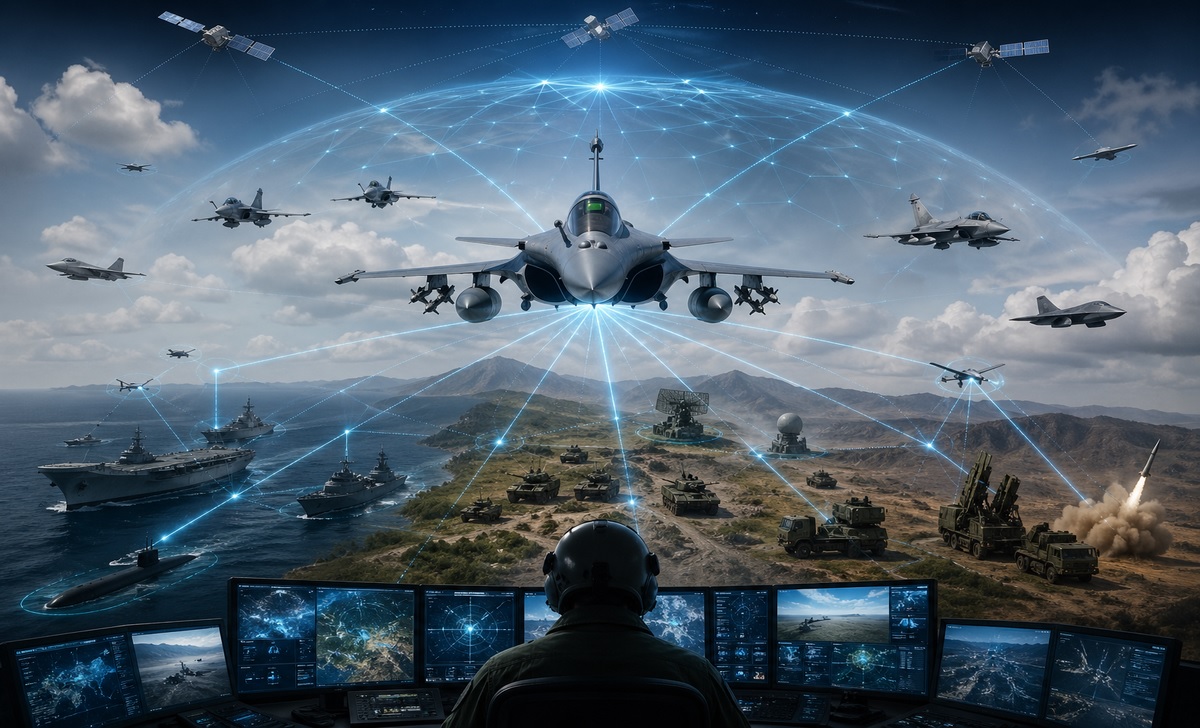
The return of mass and the apparent technical simplification of weapons have not made air warfare any simpler. Only the cost of expendable components has been reduced, while the infrastructure required to make them effective has become more complex. Behind a cheap attack drone or missile lie production, navigation, reconnaissance and planning; at the other end of the spectrum, aircraft and their complex support systems remain indispensable. The visible part of warfare is becoming more numerous and accessible, while its hidden dimension is becoming technologically more complex.
And this is precisely what creates the next problem. If the attacking side can send hundreds of different objects into the air, air defence can no longer respond to each of them in the same uniform and standardised manner, relying, for example, exclusively on missile systems. It must simultaneously solve a technical, informational and economic problem: what exactly is approaching, how dangerous is it, and what means are justified to expend in order to destroy it?
That is why the changing structure of aerial attacks inevitably requires a transformation of air defence itself — a transition from a limited set of expensive specialised systems towards a distributed sensor-and-fire network combining expensive specialised systems with mass-produced, technologically accessible means of detecting and destroying targets.
(To be continued)