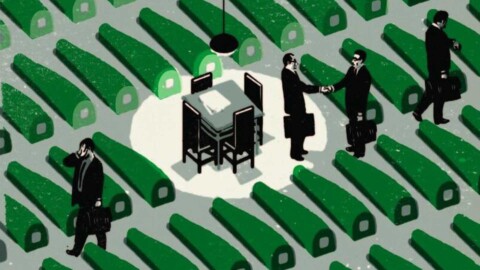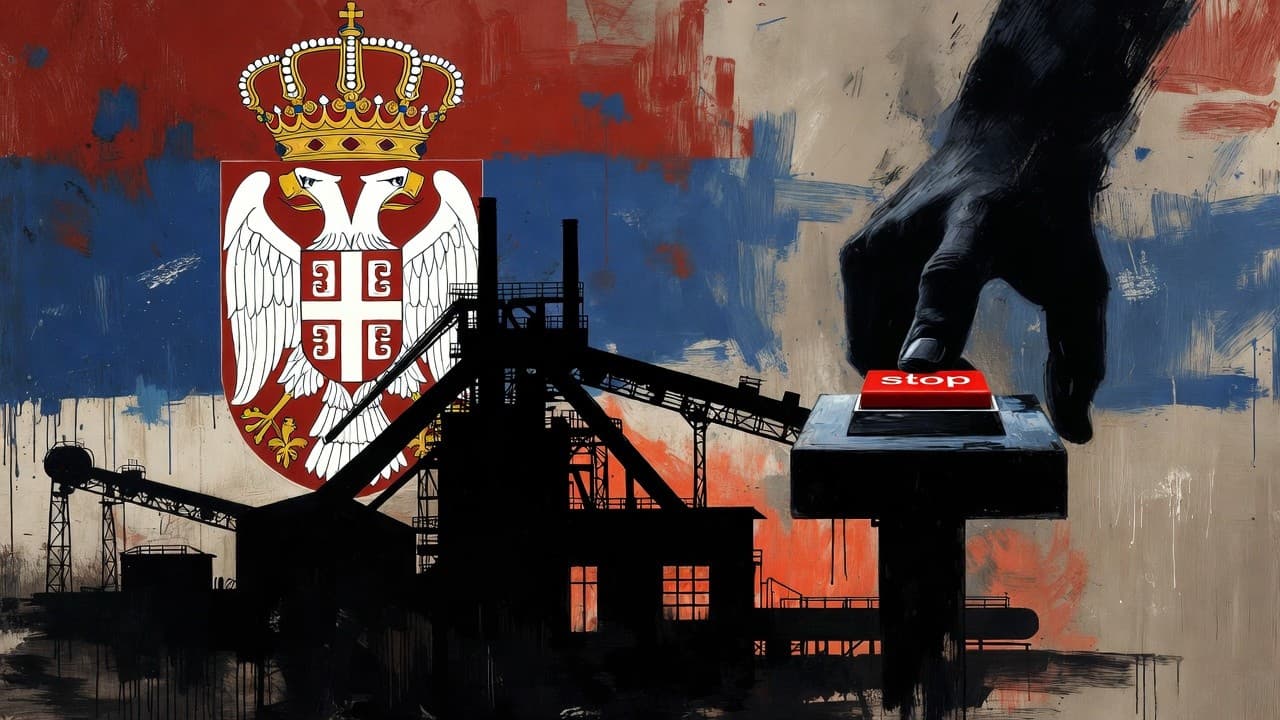
Citing an internal Rio Tinto memorandum, Bloomberg reported on November 13, 2025, that the Serbian Jadar project was being placed under a “care and maintenance” regime. Thus, at least temporarily, the twenty-year saga surrounding Europe’s largest lithium extraction project has come to an end. The project has been stopped three times, each time by different actors.
EVENTS AND ALLOCATION OF RESPONSIBILITIES
In 2004, geologists from the Rio Tinto company discovered a new mineral — jadarite — near Loznica in western Serbia, which contains both lithium and boron. Rio Tinto’s subsidiary, Rio Sava Exploration, had been operating in Serbia since 2001, and on June 8, 2004, the Ministry issued the company its first permit for geological exploration.
In July 2017, the Government of Serbia signed a memorandum of understanding with the company. On behalf of Rio Tinto, the document was signed by Simon Trott, then director of the uranium and borates division. Simon Trott will appear several more times in this story.
By 2020, the project had been elevated to the state level. A working group formed by Prime Minister Ana Brnabić in November 2020 included the head of the Office of the President of Serbia, Ivica Kojić, one of President Aleksandar Vučić’s advisers, while a special government decision also granted the right to participate in the group to Michael Shirayev, the second secretary of the Australian Embassy, as well as Stephen Ndegwa, the World Bank’s Country Manager for Serbia.
In July 2021, Rio Tinto announced an investment worth $2.4 billion. The plan envisaged annual production of 58,000 tonnes of lithium carbonate, or a total of 2.3 million tonnes over the planned 40-year life of the mine.
In September of the same year, outgoing German Chancellor Angela Merkel spoke in Belgrade about Germany’s interest in Serbian lithium.
PROTESTS AHEAD OF THE ELECTIONS
Protests against the mine began in September 2021, and in November the National Assembly adopted amendments to the Law on Expropriation and a new Referendum Law. Opponents of the project believed that these amendments had been prepared in order to enable the implementation of the Rio Tinto project.
From November 27 to December 11, citizens blocked roads across Serbia on three occasions. After the second blockade, both laws were withdrawn; on December 16, the Loznica City Assembly annulled the spatial plan, and on January 20, 2022, the Government of Serbia revoked the spatial plan and all permits that had been issued.
Ana Brnabić stated on that occasion that all demands of the environmental activists had been met and that Rio Tinto had failed to provide sufficient information either to state authorities or to the local population.
Only two and a half months remained until the parliamentary elections.
At the same press conference, Brnabić stated who, according to her, had financed the protests: the Rockefeller Foundation, USAID, the Open Society Foundations, NED, the Westminster Foundation and the British Council.
USAID, the Westminster Foundation, the British Council, Riverwatch and EuroNatur denied these allegations in written statements to Radio Free Europe.
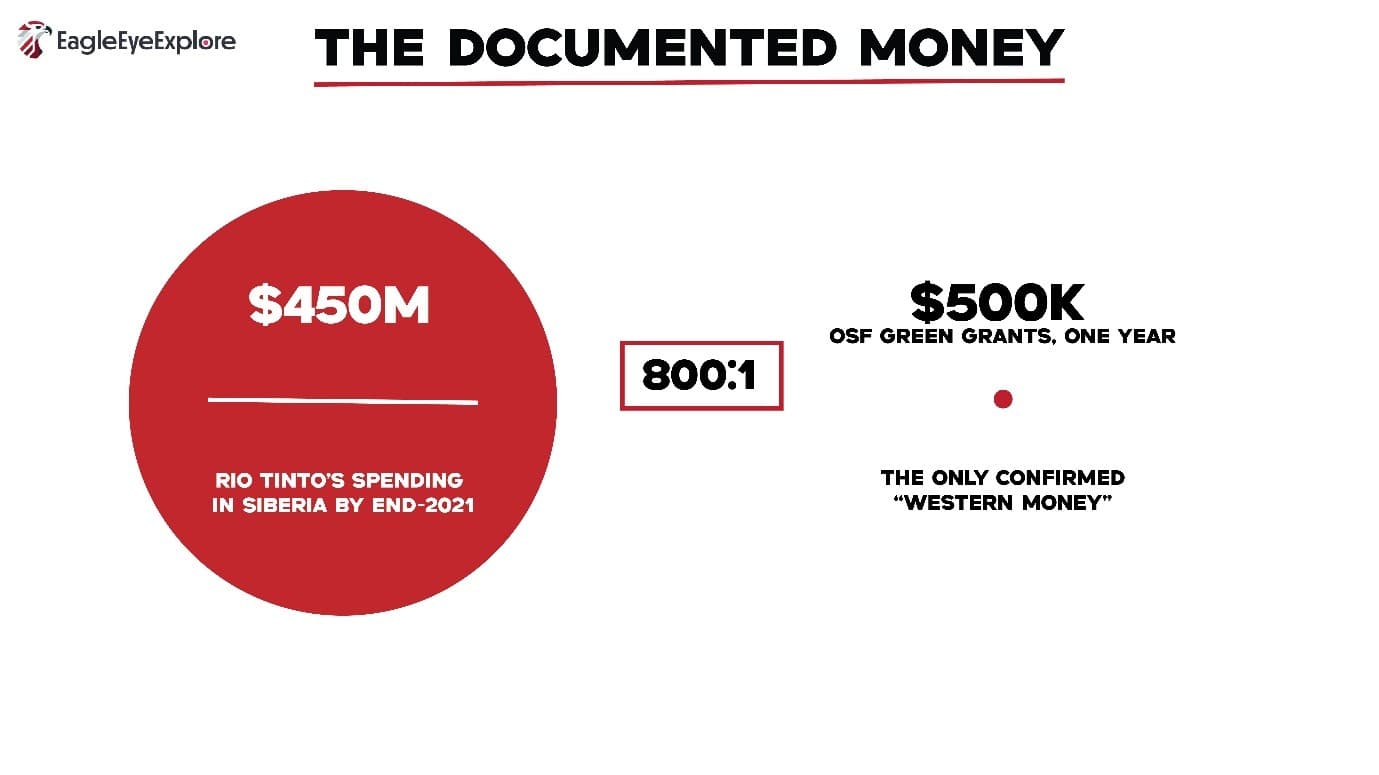
Minister of Internal Affairs Aleksandar Vulin accused the Soros Foundation of financing the activities of the Kreni–Promeni movement. The Foundation responded that it had not financed either the movement or its leader Savo Manojlović, but confirmed that during the year it had provided around €500,000 to Serbian organizations and local governments for environmental programs.
This is the only specific and confirmed amount of so-called “Western money” that appears throughout the entire story.
Rumors that the Rockefeller family was behind the Kreni–Promeni movement began spreading on social media after the first road blockade. Savo Manojlović denied this, while the movement stated that it was financed exclusively through donations, which, as they pointed out, can be verified in the financial reports available through the Serbian Business Registers Agency (APR).
In August 2022, Aleksandar Vučić himself spoke out — but in a completely different tone. He called the decision to abandon the project his biggest mistake and stated that “foreign intelligence services,” by using lies in the media, had forced Serbia to give up its own natural wealth, and that they had even been fighting among themselves over who would take over the deposit. He provided no evidence for these claims.
THE COMPANY ACTUALLY NEVER LEFT
After the official cancellation of the project, Rio Tinto continued purchasing land: according to documents obtained by the BIRN network, plots worth at least €1.2 million in Gornje Nedeljice and Slatina. According to APR data, another company within the group, Rio Tinto Exploration Danube, invested an additional approximately €1 million in exploration. In November 2023, it was revealed that Rio Sava had filed nine lawsuits against the state: four against the Government, two against the Ministry of Agriculture, and three against the Ministry of Finance.
The company also cooperated with the academic community. An agreement with the Faculty of Agriculture in Novi Sad provided for the financing of doctoral studies. A report by the Faculty of Biology at the University of Belgrade on the project’s impact on biodiversity was classified as a trade secret — the faculty later publicly stated that the best way to protect nature in the area was to abandon the project and distanced itself from the conclusions of the draft environmental impact assessment. When a team led by chemist Dragana Đorđević published a paper in the journal Nature Scientific Reports on the risks to groundwater, the company formally asked the journal to retract the paper. During the summer of 2024, the anonymous website “Kopaćemo” published a list of twenty-one “eco-terrorists” — local residents, activists and public opponents of the mine. Who is behind the website remains unknown; Rio Tinto denies any connection.
APPROVED ON PAPER, HALTED IN PRACTICE
On July 11, 2024, the Constitutional Court ruled that the decision to cancel the project in 2022 had been unlawful, finding that the Government had exceeded its powers. Five days later, the decree came back into force, and on July 19, a Memorandum of Understanding on the partnership between Serbia and the European Union in the field of critical raw materials and battery supply chains was signed in Belgrade, in the presence of Olaf Scholz and European Commission Vice-President Maroš Šefčovič. Germany’s State Secretary at the Federal Ministry for Economic Affairs, Franziska Brantner, summed it up simply: the question is not whether Serbia will mine lithium, but who will do it — Rio Tinto together with the Europeans, or China.
A second wave of protests followed: actions were held in more than fifty cities, and on August 10, tens of thousands of people gathered in Belgrade, blocking the railway. Several activists were arrested, while dozens were questioned. The State Department dismissed as untrue claims that the United States was behind the protests.
The National Assembly rejected the Draft Law on Banning Lithium Exploitation by 127 votes to 84, but there was no further progress afterward: no one issued exploitation permits. Then, on November 1, 2024, the canopy of the Railway Station in Novi Sad collapsed, killing sixteen people, and the country entered a prolonged political crisis. In January 2025, Prime Minister Miloš Vučević resigned. In February 2025, police searched organizations that had received USAID funding — CRTA, Civic Initiatives, Trag and the Center for Practical Policy, which in fact had no USAID-funded projects at all. By comparison, over all the previous years, USAID had invested $811 million in Serbia, with the largest recipient of those funds being the state itself. During the same period, Vučić described the events as “the dirtiest color revolution” and promised cooperation with the FBI investigation.
The European Union, meanwhile, raised the stakes further: on June 4, 2025, the European Commission included Jadar on its first list of strategic critical raw materials projects outside the European Union. Around the same time, the company increased its estimated investment value to $2.95 billion, which the project management explained as a result of new European Union requirements in the areas of environmental protection and human rights.
RIO TINTO ITSELF PUT AN END TO IT
A memorandum obtained by Bloomberg put it simply: there had been no progress in the permitting process, the company could not continue spending at the same pace, and the project was moved into care and maintenance mode. This was one of the first decisions made by Rio Tinto’s new CEO — the same Simon Trott who signed the agreement with the Serbian Government in 2017. The reasons were market-driven: due to oversupply, lithium prices had fallen by around 85 percent from their 2022 peak, and following Rio Tinto’s $6.7 billion acquisition of Arcadium Lithium, Argentina became the company’s priority. At the same time, the company emphasizes that it remains in Serbia and that its current goal is to retain its legal rights over the project. The European Commission stated that it remains in contact with the company and that Jadar has not been stripped of its strategic project status. As of August 2026, the project is frozen, while Vučić has announced elections.
WHO REALLY STOPPED THE PROJECT
Belgrade spoke of Western foundations and “foreign intelligence services.” The donor organizations that were accused rejected those allegations, and the authorities never published documents proving the alleged payments. The existence of Western donations to Serbian environmental organizations can be verified in publicly available registers — but that is an entirely different claim: there is a step between stating that “donors have funded environmental organizations for years” and claiming that “donors paid for the protests,” and no one has ever substantiated that step with documents.
Different versions of events were presented both in Belgrade and in the West, but none was supported by documentary evidence — only by statements and analyses of social media. If the protests had been organized by an external power, no one has ever proved it.
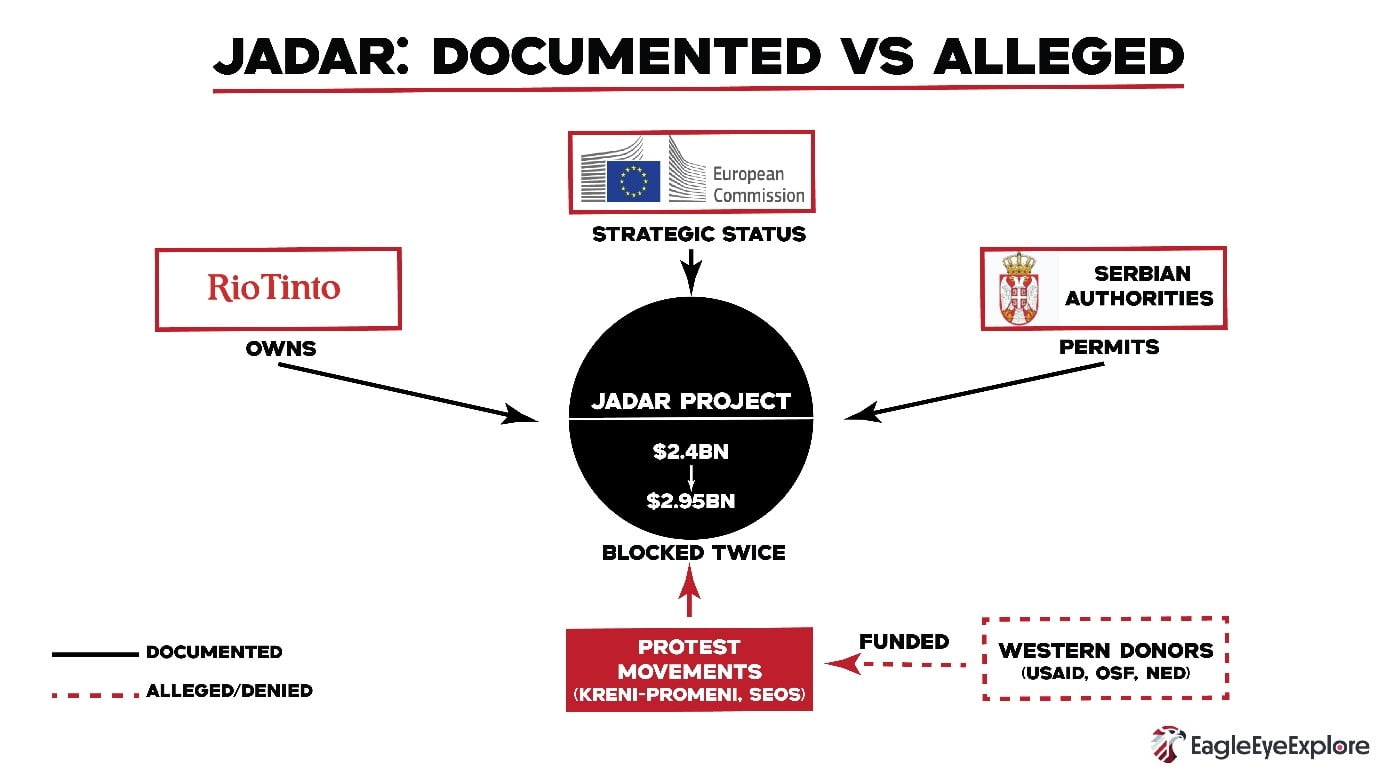
The only influence campaign in this story for which there is a fully documented trail belongs to Rio Tinto itself: by the end of 2021, $450 million had been invested, land was purchased both before and after the “cancellation” of the project, nine lawsuits were filed against the state, agreements were signed with universities, and a scientific journal was asked to retract a research paper. The project itself, meanwhile, was halted by the actions of three different factors, all of which are visible without any conspiracy theories: mass protests ahead of the 2022 elections, the deadlock in the permitting process during 2024 and 2025, which the authorities, amid the political crisis, could not afford to resolve, and the decision by the company’s own management, which revised its spending at a time when the price of lithium had fallen significantly.
From a legal standpoint, the project is still alive: the rights to it still belong to Rio Tinto, the strategic project status remains with the European Commission, and the deposit is still in the ground. For that reason, it cannot be ruled out that after the elections the entire story will be reopened — because all the legal prerequisites for doing so have remained in place.