The arrival of a European Parliament delegation in Serbia on January 23 not only stirred up an unprecedented level of public attention for a visit of this kind from an EU institution, but also revived memories of the ultimatum-like demands that MEPs issued to Serbia at the end of October last year in the form of a Resolution. Namely, the dispatching of an ad hoc mission to Serbia by the European Parliament was announced precisely in that October Resolution, which also defined the mission’s scope of work: “[The European Parliament] supports the swift deployment of an EU ad hoc mission to Serbia, with the participation of the European Parliament, in order to assess on the ground the state of democracy, the ongoing protests, attacks on demonstrators, and the repression directed at students, academics, educators, and public-sector employees.”
THE DANGEROUS MISSION OF THE MEPs
The author of these lines warned immediately after the publication of the European Parliament Resolution about the dangers of receiving and allowing such a mission of MEPs to operate in Serbia:
“Among the new instruments of influence and pressure, the Resolution proposes sending an EU ad hoc mission to Serbia, which would conduct an on-the-spot investigation into the area of repressive policy, implying oversight of the work of the police, intelligence services, the prosecution, and the courts. It would also deal with the ongoing protests and the state of democracy, and in this regard establish contacts with the opposition, student protests, and the university. Accepting such a mission by Serbia would open a true Pandora’s box regarding internal political and electoral processes, and ultimately its actions would lead to further desovereignization of the state and the restriction of its independence.”
TARGETING RUSSIAN INFLUENCE AND THE SERBIAN WORLD
The establishment and deployment of this ad hoc mission to Serbia clearly confirms that the European Parliament—i.e., the European Union—has not abandoned the demands it issued to Serbia in October. Among these demands is the call to suppress so-called Russian “malign propaganda,” as well as to eliminate from the public sphere “nationalist narratives” about the “Serbian World.”
The call to curb Russian influence in Serbia is directed at the authorities in Belgrade. Since, in this European Parliament Resolution—as well as in the 2025 European Commission Report—the so-called civil society organizations are treated as an important actor in Serbia’s internal political life and as one of the key instruments of pressure in the hands of Brussels officials, enjoying special protection and support from the EU, part of the fight against Russian influence and nationalist content in Serbian media has been transferred onto these organizations as well. It is therefore no coincidence that in 2025 there was a visible increase in activity from pro-Western analysts, NGOs, and media outlets focused on analyzing Russian influence and spreading anti-Russian messaging in Serbia.
MILLIONS OF EUROS FOR THE CIVIL SECTOR
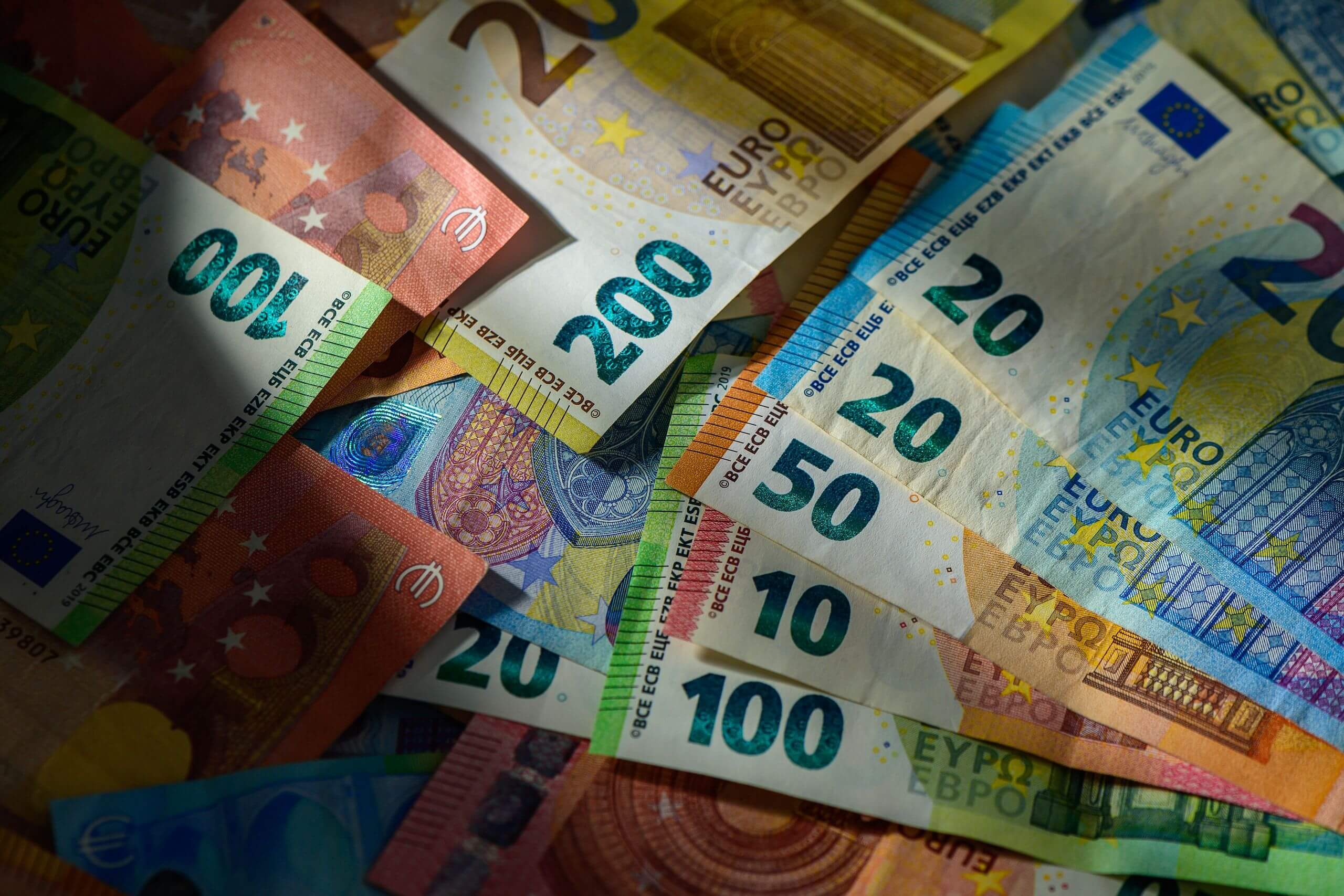
This increased engagement is certainly connected to the constant rise in financial resources that the European Union—and the United Kingdom as well—allocate to pro-Western “non-governmental” organizations and pro-Western media in Serbia. For example, the total EU budget for projects intended for civil society organizations in Serbia for the period 2023–2024 amounted to €6,700,000, and for 2024–2025 it increased to €7,550,000. In the last ten years alone, the European Union has invested as much as €64 million into pro-Western media and civil society organizations.
In October of last year, British Foreign Secretary Yvette Cooper informed the public that the United Kingdom had allocated £4 million to counter “Russian threats” aimed at “destabilizing the Western Balkans region”.
ON THE RUSSIAN DISINFORMATION CAMPAIGN
The intensified anti-Russian campaign in Serbia is certainly connected to the evident dissatisfaction of the EU and NATO over their lack of effectiveness in suppressing pro-Russian, sovereignist, patriotic, and anti-Western narratives—not only in Serbia, but throughout the so-called Western Balkans as well. According to research conducted by the Center for Information, Democracy, and Civil Society at the American University in Bulgaria, Serbia is the main target of the “Russian disinformation campaign,” and the “concentration of disinformation in Serbia is allegedly 6.3 times higher than in EU member states”.
For the needs of the Center for European Policy (CEP), Marko Todorović, a political science graduate from the University of Belgrade’s Faculty of Political Sciences and a holder of a master’s degree in war studies from King’s College London, produced an analytical study last year on Russia’s influence over EU membership candidate countries between 2013 and 2023. The study relies on the so-called External Influence Index—a unique methodological tool that measures the political, economic, and social power that Russia holds in Albania, Bosnia and Herzegovina, Georgia, Kosovo*, Moldova, Montenegro, North Macedonia, Serbia, and Ukraine.
In the study, Serbia—along with Moldova and Georgia—is identified as a country with the highest level of Russian social influence, which continues to grow, unlike economic and political influence. This social influence is described as highly flexible and adaptable to changing international circumstances.
THE POWER OF DECENTRALIZED NETWORKS
Political scientist Bojana Zorić prepared an analysis last year for the European Union Institute for Security Studies on Russian influence in Serbia and the so-called Western Balkans. On the one hand, she expects a decrease in Russian influence in Serbia, driven by two factors — Serbia and the region’s accession to the European Union, and the removal of Russia from Serbia’s energy sector. On the other hand, Zorić also speaks about Russia’s significant social influence in Serbia, identifying the Serbian Orthodox Church as the “main instrument of influence,” because it holds “considerable socio-political power” in countries with a dominant Orthodox population — Serbia, Montenegro, North Macedonia, and Republika Srpska (Bosnia and Herzegovina).
In the information sphere, alongside major Russian media outlets operating in Serbia, a key role in spreading the “Russian disinformation campaign” is played by decentralized social networks and a decentralized network of online media. As one of the measures to curb Russian influence in the societies of the Western Balkans, Zorić recommends even more substantial funding for educational and youth projects, as well as organizing events on EU integration and promoting a “shared European identity.”
PROMOTION OF ANTI-PUTIN POSITIONS
The authorial team of the NGO ISAC Fund (led by Milan Pajevic, former director of the G17 Institute), with financial support from the Friedrich Ebert Foundation, published a detailed report last year on the degree of alignment of Serbia’s foreign policy with the EU’s foreign and security policy for the first six months of 2025. In the report, the Government of Serbia is harshly criticized for not joining all EU sanctions packages against Russia.
Earlier, in 2024, the NGO “Civic Initiatives” published a detailed report on the struggle between Russian and Chinese “soft power” in Serbia against civil society organizations (here). In a co-authored article from early last year by well-known LGBT activist from Belgrade, Dragoslava Barzut, the allegedly repressive attitude of the authorities toward the civil sector during the student–citizen protests was linked to the increased Russian and Chinese influence on the government in Serbia.
With the aim of promoting anti-state and anti-Putin political views of Russians who fled to Serbia, the Belgrade Centre for Security Policy published in February 2025 a study with a symptomatic title — Non-malign influence: What does the Russian community in Serbia think and do?.
RUSSIAN NARRATIVES IN MEDIA UNDER THE CONTROL OF SERBIAN AUTHORITIES?
The monitoring and analysis of pro-Russian narratives in Serbian media are carried out, by their own admission, by Demostat and BIRODI, as well as by Reporters Without Borders. Interestingly, it was Reporters Without Borders that previously published an interview with Raša Nedeljkov, program director of the NGO “CRTA,” on the topic of “malign Russian influence” in Serbian media.
In these analyses, Russian influence is routinely linked to the discrediting of Western liberal democracy, which, according to these claims, simultaneously benefits the “autocratic” authorities in Belgrade — allowing Russian narratives to enter media outlets under the control of the Serbian government. The newspaper Danas also devoted substantial space throughout 2025 to pro-Russian narratives in Serbian media and the efforts to counter them.

REPORT ON EXTREME TELEGRAM CHANNELS
At the end of last year, the Belgrade Centre for Security Policy published a report on “nine extreme right-wing Telegram channels from Serbia,” which, according to this pro-Western NGO, have “significant influence on the spread of nationalist, pro-Russian, and anti-system narratives”. In several of its publications, the Belgrade Centre for Security Policy waged a small-scale war against Chinese investments in Serbia, defending its anti-China discourse through the language of workers’ rights and environmental protection.
The assessments made by this NGO about the “malign” Russian and Chinese influence in Serbia, and the supposedly even more malign “revisionist” project of the “Serbian World,” look quite different when one examines the list of donors of the Belgrade Centre for Security Policy. On that list are, among others: the EU Delegation in Serbia, the Visegrad Fund, the American NED, and the foreign ministries of Italy, the Netherlands, and Norway. In other words, government after government from the Western hemisphere.
This is a snapshot of the overall landscape of pro-Western “non-governmental” organizations in Serbia—something that should always be kept in mind when reading their texts lamenting the suffering of workers in Chinese-owned factories or the supposedly autocratic ideals promoted by Russians in Serbia.
A WAR AGAINST THEIR OWN PEOPLE…
The war that these organizations simultaneously wage against Russian and Chinese influence in Serbia—and against Serbian nationalism and patriotism by labeling them as “extremism”—best demonstrates that this segment of the “non-governmental” sector is, in fact, working against its own people. Everything that strengthens Serbia’s re-sovereignization in foreign policy and foreign economic affairs, as well as the integration of the forcibly divided Serbian national space, automatically becomes a target of well-networked and well-paid NGO activists.