The question is not who initially organizes street protests, nor whether they are justified or not, but who is able, at the right moment, to take control of them, steer them, and ultimately use them for their own goals. The idea of protests, wherever they may take place, is usually understood — like everything else in politics — in a binary way, that is, primitively and simplistically: are we for or against someone, are we for or against what is being conveyed to us by skillfully positioned “mainstream media.”
BANGLADESH, A “CASE STUDY”
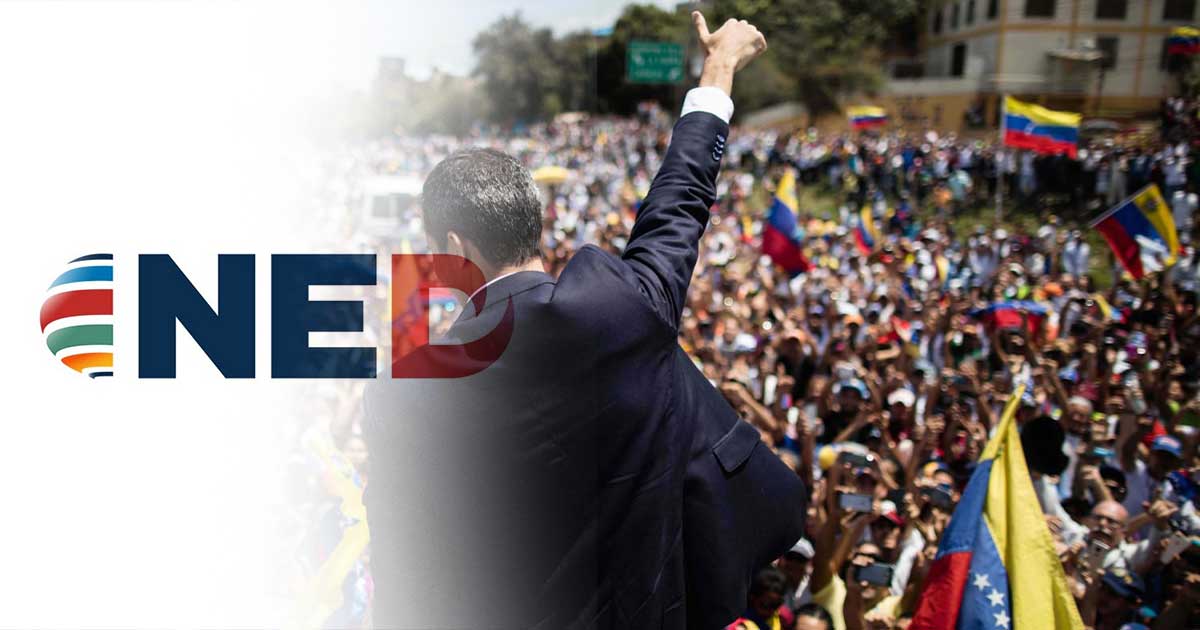
That the matter is far more complex can be seen in the report of the U.S. National Endowment for Democracy (NED) for fiscal year 2025, which, among other things, literally states:
“In Bangladesh, the world’s eighth most populous country, we witnessed the collapse of an authoritarian regime and an unexpected opening of space for civic action, youth engagement, and competitive politics. Since Congress entrusted NED with flexible emergency funds, we were well positioned to rapidly direct resources and help local actors seize the moment, strengthening early efforts to restore civic norms and secure democratic participation.”
The same report states that NED invested $2,953,439 last year in partner organizations and “independent” media in Bangladesh (through direct grants of $1,535,000 and $1,418,439 through American institutes).
NED DID THE JOB IN VENEZUELA AS WELL
The National Endowment for Democracy not only managed, by court decision, to obtain funding from the U.S. budget, contrary to the promises of Donald Trump and his associates, but no longer even feels the need to conceal its involvement in coups around the world.
The report further states:
“In Venezuela, the regime sought to cling to power despite overwhelming evidence of the opposition’s electoral victory, responding with harsh repression that resulted in attacks on civic and political life. Nevertheless, even amid this crisis, NED partners protected independent information, provided protection to at-risk activists, and sustained a peaceful movement for democratic transition.”
“WOMAN, LIFE, FREEDOM…”
Iran is another good example. Although it is an Islamist state that sent its Islamists to Bosnia and Herzegovina to fight alongside the Islamist forces of Alija Izetbegović and ultimately voted in favor of the Srebrenica resolution at the UN, we cannot fail to notice—bearing in mind Iran’s independence as a state—that NED states in the aforementioned report that it operated in that country through the “Woman, Life, Freedom” movement (hence the many images of scantily dressed women said to have enjoyed the freedoms of the former Iran), and that NED partners there ensured that evidence of (alleged) abuses reached the world.
Last year, NED invested $5,018,600 in partner organizations and individuals in Iran.

SERBIA AND THE “BRAVE, YOUNG PEOPLE”
The report goes on to list countries that have found themselves, to a greater or lesser extent, in a similar situation—namely, with demonstrators in the streets: Tanzania, Cameroon, Georgia, and Serbia.
For Georgia and Serbia, the NED report states that “brave young people, independent media, and determined civic watchdogs continued to defend democratic processes, even as backsliding became more pronounced.”
“In countries such as Serbia, Georgia, Bangladesh, and Tunisia—where institutions are under pressure and polarization is pronounced—these tactics” (NED’s reference is to the “authoritarian” regimes in those countries and to the influence of Beijing, Moscow, and Tehran) “can accelerate democratic backsliding and hinder recovery. By supporting partners to expose these dynamics and promote informed action, NED backs communities seeking to build more resilient and accountable systems,” the report states.
BELGRADE IN THE COMPANY OF KYIV, MINSK, AND SARAJEVO
How, according to its own report, did NED operate in Serbia last year?
The report states that NED invested $2,224,000 in partner organizations and media in Serbia during fiscal year 2025. In Eastern Europe, only Ukraine ($10,782,611), Belarus ($2,909,768), and Bosnia and Herzegovina ($2,305,000) received more than Serbia.
To these sums should be added another $5,913,465 that NED spent at the “regional” level in Eastern Europe.
It should be noted that the amount received by NED partner organizations in Serbia refers to Serbia without Kosovo and Metohija. Since NED partner organizations in so-called “Kosovo” separately received $1,060,000, Serbia, in total, is in fact by far the largest recipient of NED grants in Europe, alongside Ukraine.
ESTIMA OR NED MONITORS RUSSIA AND CHINA IN THE BALKANS FROM SKOPJE
As mentioned in the 2025 report, the focus of NED’s interest and activities in the Balkans includes the presence and influence of Russia, China, and Iran.
Monitoring China’s activities in Southeast Europe has been entrusted to a think tank based in North Macedonia called ESTIMA.
“As the Chinese Communist Party (CCP) deepens its presence in Southeast Europe through opaque investments, elite capture, and influence operations in media and academia, civil society has become a critical line of defense. With NED support, the North Macedonia–based think tank ESTIMA helps expose and counter harmful CCP influence across the region through innovative research, public engagement, and policy advocacy. In North Macedonia, ESTIMA’s work directly contributed to the adoption of the country’s first coordinated national strategy toward China—aimed at safeguarding democratic institutions and economic sovereignty. Building on this model, ESTIMA has expanded its activities across Southeast Europe, empowering civil society organizations in Albania, Bosnia and Herzegovina, Montenegro, and Serbia to engage decision-makers, promote transparency, and develop evidence-based measures. In Serbia, ESTIMA’s engagement with the government contributed to tracking donations linked to the Chinese government through a public database, increasing transparency regarding foreign influence in the country. Across the region, ESTIMA’s work lays the groundwork for more strategic and democratic responses to authoritarian influence,” the report states.
WHAT NED FUNDED IN SERBIA
If we analyze the structure of NED grants approved for partner “non-governmental” organizations and “independent” media in Serbia (excluding Kosovo and Metohija), we see that two grants—of $60,000 and $50,000—were allocated for activities in eastern Serbia, presumably due to the presence of the Chinese company Zijin Mining in that area.
For strengthening local media, $107,000 was allocated. Separate from the NED report, it should be noted that the Journalists’ Association of Serbia, in cooperation with the U.S. Embassy, launched a “media incubator” project last year, aimed at establishing local media outlets across the country.
All other grants were awarded in roughly similar amounts, ranging from around $40,000 or $50,000 to about $70,000.
MOST MONEY WENT TO TRAINING POLITICIANS
However, the largest NED grant in fiscal year 2025 in Serbia (excluding Kosovo and Metohija) was approved for the purpose of “strengthening local political parties” in order to “enhance accountability to citizens.” The project was implemented by the National Democratic Institute for International Affairs (NDI), and the grant amounted to $650,000.
The National Democratic Institute is an organ of the U.S. Democratic Party. It was founded in 1983, roughly at the time when what became known worldwide as the “CIA in gloves” began operating—whose most well-known representatives are NED and USAID. These two organizations, along with direct support from the State Department, finance NDI.

ANOTHER $124,000 FOR RESEARCHERS IN SERBIA AND MONTENEGRO
At the “regional” level, it is worth noting that an additional $124,000 was allocated last year to research groups in Serbia and Montenegro to improve media standards.
Serbia also appears in funding (for the aforementioned North Macedonia–based think tank, though its name is not specified in the grant schedule) projects aimed at “countering Chinese influence in Southeast Europe.”
For that purpose, NED invested $75,000 last year.
The grant description states that the funds were allocated to an organization based in North Macedonia to monitor and respond to Chinese influence in Southeast Europe, in cooperation with partners in Albania, Bosnia and Herzegovina, Montenegro, and Serbia, supporting a regional network of organizations conducting research and advancing evidence-based public policies to counter foreign authoritarian influence.
“FORWARD HEELS, BACKWARD TOES…”
Here we come to a serious oxymoron.
If the project is aimed at “countering Chinese influence in Southeast Europe,” how can NED partners gathered around this theme in North Macedonia, Serbia, Albania, Montenegro, and Bosnia and Herzegovina be described as research organizations?
Simply put, if research is truly research, it cannot in advance be predetermined and strictly channeled as “countering something”—in this case, alleged Chinese influence.
Here it would be fitting to quote Hannah Arendt: “When academics become dependent on financial or political interests, their knowledge ceases to be free and becomes a tool for justifying someone else’s power.”
George Bernard Shaw was even more direct: “Money buys many things, but truth is not one of them. It remains inviolable only if no one sells it.”
The line in the subheading of this text can be supplemented with a humorous anecdote on the same theme. The author of these lines personally knows of a case in the 1990s when a local politician brought two thousand German marks to the office of a local historian. He instructed the historian to find, for that sum and as quickly as possible, historical data proving his noble ancestry.
The politician was not joking at all.
“I know I come from noble stock, I’ve felt it for a long time, and we are not distantly related to Jovanka Budisavljević Broz by accident,” he literally told the bewildered historian.
IT IS NOT FUNNY
As far as NED is concerned, however, things are not so amusing. In recent years, Russia has curbed many channels of foreign influence, yet in the last fiscal year NED allocated $11,808,064 for activities related to Russia.
NED allocated even more last year for activities in China: $13,106,125. Of that amount, $9,055,825 was directed toward activities in mainland China, and $516,000 for activities in Hong Kong (https://eagleeyeexplore.com/sr/why-can-only-patriots-govern-hong-kong/). This was followed by Xinjiang (an autonomous region in northwestern China largely inhabited by the Uyghur minority) with $2,059,300 (https://eagleeyeexplore.com/sr/why-can-only-patriots-govern-hong-kong/), and Tibet with $1,475,000.