What would humanity and our everyday life look like if there were no Christianity and other great religions/civilizations? What would the world be without Socrates, Plato, Confucius…? Or if there had been no Mendeleev, Tesla, or Pupin? Life would be unimaginably different had the sail, the compass, gunpowder, the steam engine, electricity, the automobile, and the airplane never been invented. Have we ever asked ourselves how Serbian identity would have been shaped without Saint Sava?
There are those who believe that such thinking is useful, and those who dismiss it as empty “mental gymnastics.” However, in order to encourage critical thinking, creativity, and a strategic approach—rather than rote memorization and the sterile accumulation of facts—talented pupils, students, and participants in various seminars and advanced training programs are often presented with hypotheses that may seem far removed from reality. Only at first glance. It is not uncommon for some of them to be partially or even fully realized in the future.
EXAMPLES OF CHRONOTOPIC ALTERNATIVES
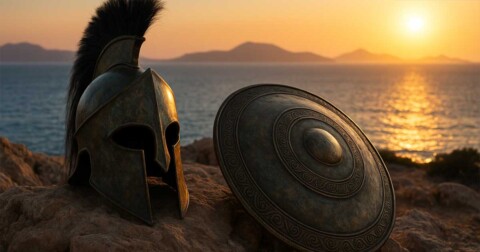
Such a form of scholarly and pedagogical work is most commonly applied in historiography. One or more variables are altered, after which analyses are conducted, conclusions drawn, and forecasts made. If that event had (not) occurred, which developments would have followed and how would subsequent history have unfolded? For example: what if Sparta had prevailed over Athens, and Carthage defeated Rome? What if the Ottomans had failed to conquer Constantinople in 1453—or, conversely, had triumphed in the Vienna War? Or if Napoleon and Hitler had succeeded in subduing Russia?
What if, in 1918, a heterogeneous Yugoslav state had not been created, but instead an expanded, homogeneous so-called “London Serbia”? How would our recent past and present look if, in 1945, it had been in the interest of the “Western Allies” for the true General to prevail rather than the acclaimed Marshal? Among other, far more consequential differences—the Belgrade football derby to this day would not be played between “Red Star” and “Partizan,” but between “Golden Cockade” and “Chetnik.” And not at the JNA Stadium, but at the JVuO Stadium. Where fans would sing entirely different songs.
Since spatial thinking is of multiple importance, a similar encouragement of inventiveness is practiced in geography as well. Outcomes are sought from premises that diverge from reality. For instance, if the Earth were rotated by 90 degrees and the Prime Meridian did not pass through Greenwich but instead the equator—an equator that also ran through what are now the North and South Poles. One can only imagine what kind of climate, beaches, and tourism Greenland, Norway, and Antarctica would then have.
Or if there were a planetary-scale inversion of land and oceans—that is, if continents became oceans and oceans turned into continents. What would the living world be like in such a scenario, and would it even exist under conditions of significantly higher temperatures and reduced humidity? The Balkans would become a vast bay, today’s Caspian Sea would turn into an island, and Greenland would no longer be the world’s largest island, but the largest lake.
What would population density look like, the distribution of megacities, migration flows, transportation corridors, and the political division of a hypothetical Atlantic or Pacific continent? And what of the great powers, their spheres of interest, the world order, and geopolitical processes? Where would the equivalents of the United States, China, or Russia be located?

HYPOTHETICAL GEOPOLITICAL INVERSIONS
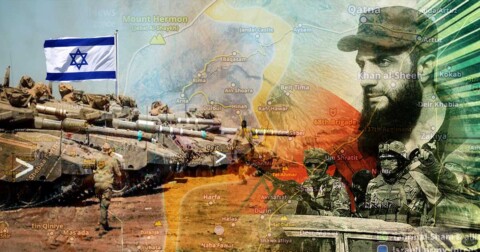
And since we are already speaking of geopolitics—without even reaching far into the past—let us imagine that in 1989 the Berlin Wall had fallen to the western, not the eastern side, and that it was not the United States but the USSR that had won the Cold War. East Germany would have annexed West Germany, not the other way around. Moscow would have promised that the Warsaw Pact would not expand at the expense of the defeated West “not by a vershok.” (A vershok is an old Russian unit of length, approximately 4.5 centimeters.) Instead of the European Community transforming and renaming itself the European Union (EU), the Council for Mutual Economic Assistance (СЕВ – Soviet of Economic Mutual Assistance) would have expanded and evolved into a tighter integration, perhaps under the name Eastern Economic-Political Union (EEPU), headquartered in Berlin, Warsaw, or Prague.
Rather than the expansion of NATO and the EU, we would have witnessed their implosion, while their former “liberated” members would have euphorically expressed the desire to “escape” American hegemony as quickly as possible and rush into Russia’s embrace. Induced Americophobia would have reached unprecedented levels; intelligence service files would have been opened; CIA collaborators would have been lustrated; diligent efforts would have been made to rediscover “connections” with Russian history, politics, culture, science, and art.
American flags would have been torn down and burned en masse; street and square names would have been de-Westernized; monuments demolished; historical facts adjusted to align with the “new reality.” Europeans would have proclaimed Americans occupiers after “D-Day,” rather than liberators from the Nazi boot. Revisionist historians would have labeled Generals Montgomery and Patton as war criminals.
Through an entirely different geoeconomic, geopolitical, and geostrategic prism, the Marshall Plan, the Iron Curtain, the formation of NATO, and the European Coal and Steel Community (the precursor to the EU) would have been interpreted anew. Facts about the prevention of communist victories in Turkey, Greece, and Italy, as well as about numerous subversive operations such as “Gladio,” would have come to light. The image of the Cold War, of the (geo)politics of “containment,” and of the “anaconda strategy” would have appeared entirely different.
In this context, prestigious global awards would have been granted to scholars and writers exposing the criminal anti-Russian background behind the formation of the Rimland along the Eurasian periphery—along with transatlantic and transpacific macro-bridgeheads, pact-mania, and the Non-Aligned Movement serving that purpose. Hundreds of films would have been made—not about evil Russians, the Russian mafia, or rogue Russian generals seizing nuclear weapons—but about global conspiracies, “color revolutions,” and the crimes of American marines, “Green Berets,” “SEALs,” and “Delta” forces around the world.

WHAT WOULD SERBIA’S FATE HAVE BEEN?
Would the end of bipolarity through a hypothetical Russian victory have resulted in the preservation of the Yugoslav state? Or would Russia have done everything to bring about its dissolution, just as the West crucially contributed to it in reality? And would everything have unfolded in more or less the same way?
In the first scenario, one might expect that preserving Yugoslavia in Russia’s geopolitical interest would have required a radical redefinition of its internal political relations. In other words, the Croatian-Slovenian elite installed under Titoism—perceived as pro-Western—would likely have been curtailed, while the Serbian nomenklatura, by definition seen as pro-Russian, would have been favored. Consequently, this would have entailed an internal political-territorial transformation of the country aimed at greater cohesion, including the abolition of its republican-provincial division established according to the postulate that the weaker the Serbian factor, the stronger the Yugoslav construct.
In the second scenario, if Russia had sought the removal of Yugoslavia from the political map—which would not have been surprising, given that in 1918 it had also been formed as an anti-Russian creation—it is logical that this would have been done differently and with opposite geopolitical consequences. Namely, due to the need to have a reliable exponent in the post-Yugoslav Balkans, sharing overlapping civilizational (Orthodox) and geopolitical (tellurocratic) identities, Russia would undoubtedly have built a “symbiosis of interests” with the Serbian factor. It would not have strengthened Serbia’s rivals, nor compressed and fragmented Serbian space by “cementing” Titoist borders and instant nations, as the West did. Quite the opposite: it would have assisted in the creation of an integral Serbian state within its historical-ethnic boundaries.
And a new, entirely meaningful maxim would have applied:
“Complete Serbia – Stable Balkans.”