Historical archives reveal that the men of the Velebit lineage, originating from Zadar and Zagreb, were Yugoslavs and prominent communists whose families preserved the tradition of male descendants marrying Croatian women. Petar Velebit and Vladimir Velebit are among the names remembered in Serbian history as the closest associates of Josip Broz Tito and Koča Popović. In the memory of the Serbian people, these names are synonymous with national betrayal.
After the war, the Velebits—decorated as national heroes—came to Belgrade, where their descendants received their education in the West. Some of them eventually returned to Serbia, continuing in the footsteps of their forefathers. How is this notorious lineage connected to the deep, artificial divisions that have shaken Serbia?
PEOPLE OF THE “THIRD WAY”
The protests—logistically and financially supported by Brussels, London, and the former Democratic administration in the United States—created a vacuum and a space presumed suitable for a third alternative, seemingly acceptable to both sides, while also appealing to the largest, undecided segment of the population that only appears indifferent to political developments.
The much-needed continuity of governance, which for the first time in recent history has proven essential not only for the economy and social order but also for the possibility of shaping future political and ideological strategies of the entire nation—and for the survival of the state itself—has been put into question. Those who caused the chaotic situation, the divisions, and the vacuum now seek to fill that space with individuals who would constitute this so-called “third way.”
“HILL WILL BE THE ONE WHO DECIDES”
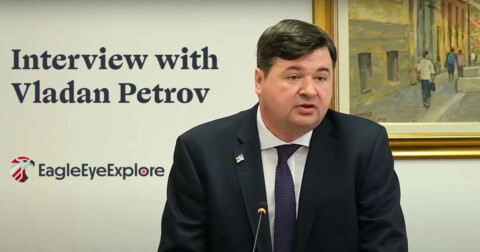
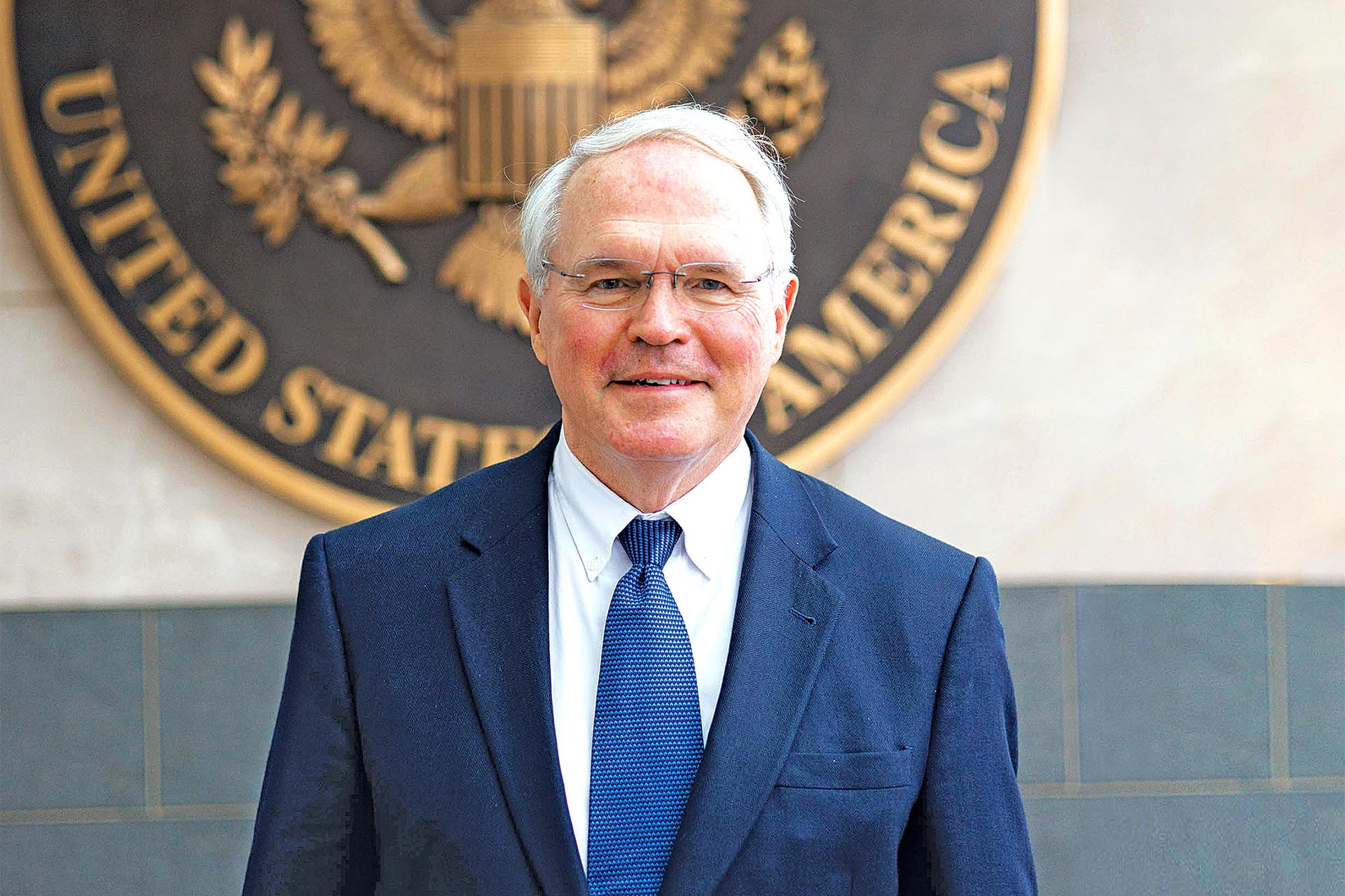
In the middle of last year, the NGO “Pupin Initiative,” founded with the generous assistance of Christopher Hill and financed for years by USAID and other foreign funds, appointed this former U.S. ambassador to Serbia as its special adviser in order, as stated, “to further strengthen relations between Serbia and the United States.”
Although Christopher Hill is part of the previous Democratic U.S. administration, this appointment—emphasized as pro bono and done “for higher interests”—was enthusiastically welcomed by those who for years, with the help of numerous foreign funds, took part in attempts to undermine Serbia.
Thus, Milovan Božinović, a former ambassador from the era of the Democratic administration under Tadić, stated that Hill is a proven friend of Serbia and an authority in Washington on our country and the region—in other words, someone who will have a say, especially on the most delicate issues.
Christopher Hill belongs to the circle of people who actively participate in organizing protests and inciting civil unrest in the United States itself, side by side with George Soros, Rockefeller, and other sponsors of the so-called “No King” organization. His influence is therefore not only questionable but deeply problematic. Still, Božinović was not wrong about one thing: Christopher Hill has indeed been present in the Balkans for decades—but not as a friend of the Serbian people, and certainly not as a benefactor.
FROM “STORM” THROUGH KOSOVO TO NATO
Christopher Hill’s first appearance in the Western Balkans occurred shortly before the breakup of Yugoslavia. According to intelligence sources, Hill actively coordinated the arming of Muslims and Croats. Confidential Hague Tribunal documents also mention him as the person who, together with Richard Holbrooke, at a secret meeting on July 31 with Croatian ambassador Miomir Žužul, and with Petar Šarčević and Siniša Petrović, gave the green light to suspend negotiations with Milošević and launch the criminal military operation “Storm.”
Hill then received an appointment as the U.S. ambassador to the Former Yugoslav Republic of Macedonia, from where he helped form and arm the KLA—an act that served as a prelude to the war in Kosovo and Metohija and eventually NATO’s bombing of Serbia and Montenegro.
Christopher Hill’s advisory role was also welcomed by Sonja Biserko, president of the Helsinki Committee and a pioneer of autochauvinist politics in Serbia.
“One should bear in mind that during his mandate in Belgrade, Hill was extremely engaged in bringing Serbia closer to NATO. Since 2006, Serbia has cooperated closely with the U.S. military, especially with the Ohio National Guard, with whom Hill himself maintained close ties for years. It is also known that he encouraged Serbia to sell weapons to Ukraine. In one of his statements, he emphasized that he was aware of the strong anti-American sentiment in the Serbian public, but that he sees it as his task to change that,” Biserko stated at the time for Danas.
A WOLF IN SHEEP’S CLOTHING
However, it is not only the role of Christopher Hill and his best protégé, Vuk Velebit, that is problematic within this NGO. Everything is problematic, including its entire governing, advisory, and founding board. Although the very concept of this NGO may at first glance appear to represent a conservative current led by intellectuals—often educated abroad and resembling European conservatives who promote key patriotic aspirations, such as the use of the Cyrillic script, issues concerning Kosovo and Metohija, and serious pragmatic politics—what hides behind that mask is a Trojan horse.
One of the founders of the “Serbs for Trump” organization, Mladen Duvnjak, who has lived and worked in the United States for years, states that people like Vuk Velebit, the “Pupin Initiative,” and similar groups not only cannot contribute to improving relations between Serbia and America, but represent a far greater danger than open enemies.
“As tensions flare between the government and the opposition and among students, a buffer zone of voters emerges—those who do not want to side with either camp. In times of major global polarization, the worst option is the one that is ‘for neither side,’ yet is presented as bipartisan (able to work with both). This is where the Pupin Initiative and its leader, Vuk Velebit, appear as yet another Trojan horse. After the locksmith Josip Broz Tito, who came to power in 1945, arrives a successor to communism, but in a different packaging—a generation of evolved communists, leftists disguised as the right. Vuk hides behind the organization he founded, but the only things we here have been able to learn about him are malicious intentions, personal gain, and self-promotion. The Velebit family is well known from the era of communism, a period from which we still suffer trauma. This combination of Šojić and Tito, a true wolf in sheep’s clothing, now presents himself as a ‘great Serb.”
IF PUPIN ONLY KNEW…
Mladen Duvnjak has lived and worked in the United States for many years. As a close associate of the Trump administration, he also commented on Vuk Velebit’s claim that one of the advisors to the “Pupin Initiative” would be Kaush Arha from the Republican ranks.
“Kaush Arha is very similar to Velebit. He is supposedly a Republican, but an anti-Trump one—the faction Trump refers to as RINOs; in other words, enemies of their own state. He is not a congressman, as Serbian media portray him, and he has no real influence. His only task was to channel USAID money toward Velebit—money that, as was the case with Hill, would then be divided at the end.”
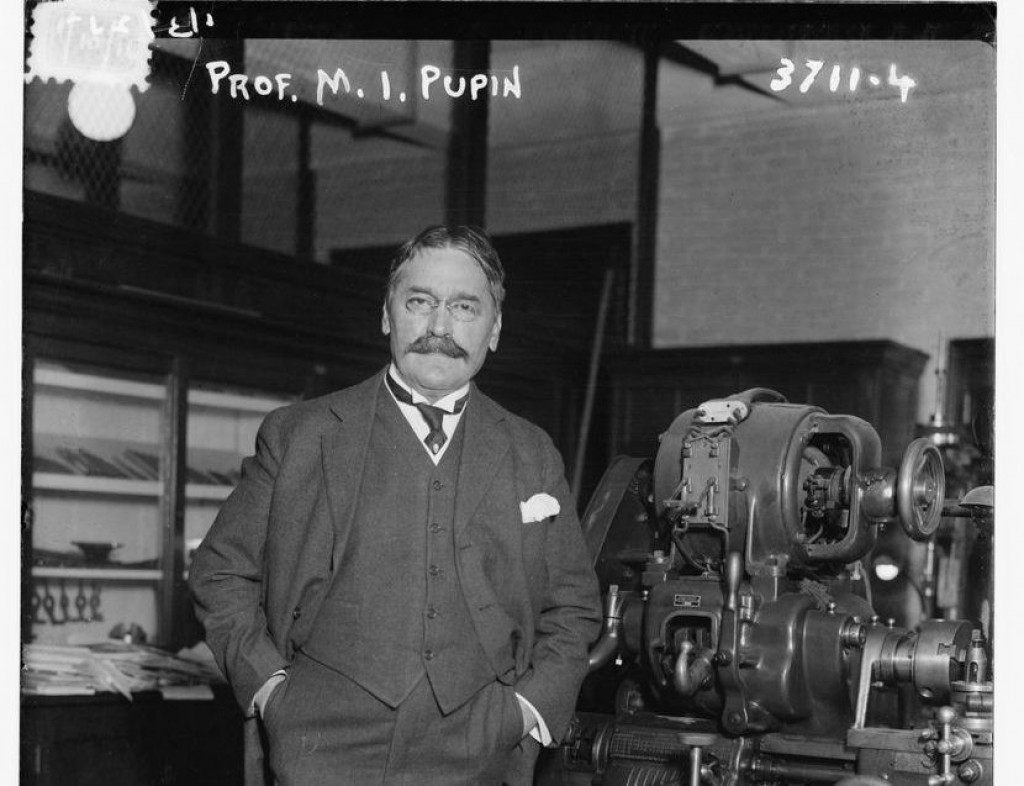
Kaush Arha is being falsely presented as a figure of influence within the Trump administration. The truth is that Arha is an associate of the Atlantic Council and, until Trump abolished the office, he served as a senior advisor for strategic engagement at the United States Agency for International Development (USAID). Unlike Mladen Duvnjak, who achieved success through his own work and professional merits, the group surrounding Velebit—members of the NGO sector—is, according to prominent Serbian voices in the U.S., of such moral and professional quality that even Mihajlo Pupin himself would be appalled to see how his name is being used.
“Pupin is surely turning in his grave at the very thought that a communist stands behind his name—a man with no real work experience who travels and lives lavishly. The question is: who is financing this and who stands behind it? I feel sorry for the bright young people joining this Initiative, unaware that Vuk’s only intention is to use everyone for his personal gain. We worked—and will continue to work—only with Republicans. Vuk himself welcomed the bombing of Serbia. For him, Serbia comes last.”
THE ADVISORY ROLE OF A CONTROVERSIAL MARKETING AGENCY
The same sponsors—the same people who brought Serbia to the brink of civil conflict and, together with Brussels, created the space for “new people” and “new ideas”—are now attempting to promote Vuk Velebit as the future president of Serbia. Serbs in the United States report that Velebit boasts at dinners and various events, mostly within circles tied to the collapsed Democratic administration, that the position is already his, and that Serbia needs a “third way,” a young intellectual force that is, in his words, missing from the current ruling structure.
He does not insist on that message so openly in Serbia, but seated between Christopher Hill and Kaush Arha, as the third advisor of this NGO, is Nataša Filipović, executive director of the marketing agency Ovation BBDO.
Although Ovation BBDO presents itself as part of a global marketing company, domestic media have for years linked the firm to Dragan Đilas. During the recent blockades, Ovation BBDO and its employees were frequently criticized by the media for their active participation in the protests. There is also reasonable suspicion that this company was engaged by a foreign actor to create and profile the so-called “students in blockade,” who coordinated the protests.
Marko Marjanović—known on Twitter as “Kristaj Met Dejmon”—still employed at the company, has been detained multiple times for calling for violent subversion of the social order, inciting violence, and even threatening the assassination of Serbia’s highest state officials. Alongside him, also employed at Ovation BBDO as a Senior Copywriter, is Vanja Bihalj, known on social media as “Koža na štiklama,” who, with over three hundred thousand followers, openly displays her pathological hatred not only toward the state leadership but toward Serbia itself.
None of this seems to bother executive director Nataša Filipović, who in recent years has used Ovation BBDO and the “Pupin Initiative” to build connections with the former U.S. administration. Together with her colleagues and partners, she has been intensively cultivating relationships with the Faculty of Dramatic Arts, the Faculty of Political Sciences, and the Faculty of Philosophy—three institutions that can freely be described as the key pillars of the blockades.
All of this is merely the tip of a large iceberg that has slowly begun to melt, revealing piece by piece not only the visible threatening structure that has spread across the Serbian landscape, but also the far more dangerous one lying dormant within the system itself…