The ability of European nations and governments to correctly assess the international situation and choose the right path is, almost at a genetic level, inadequate.
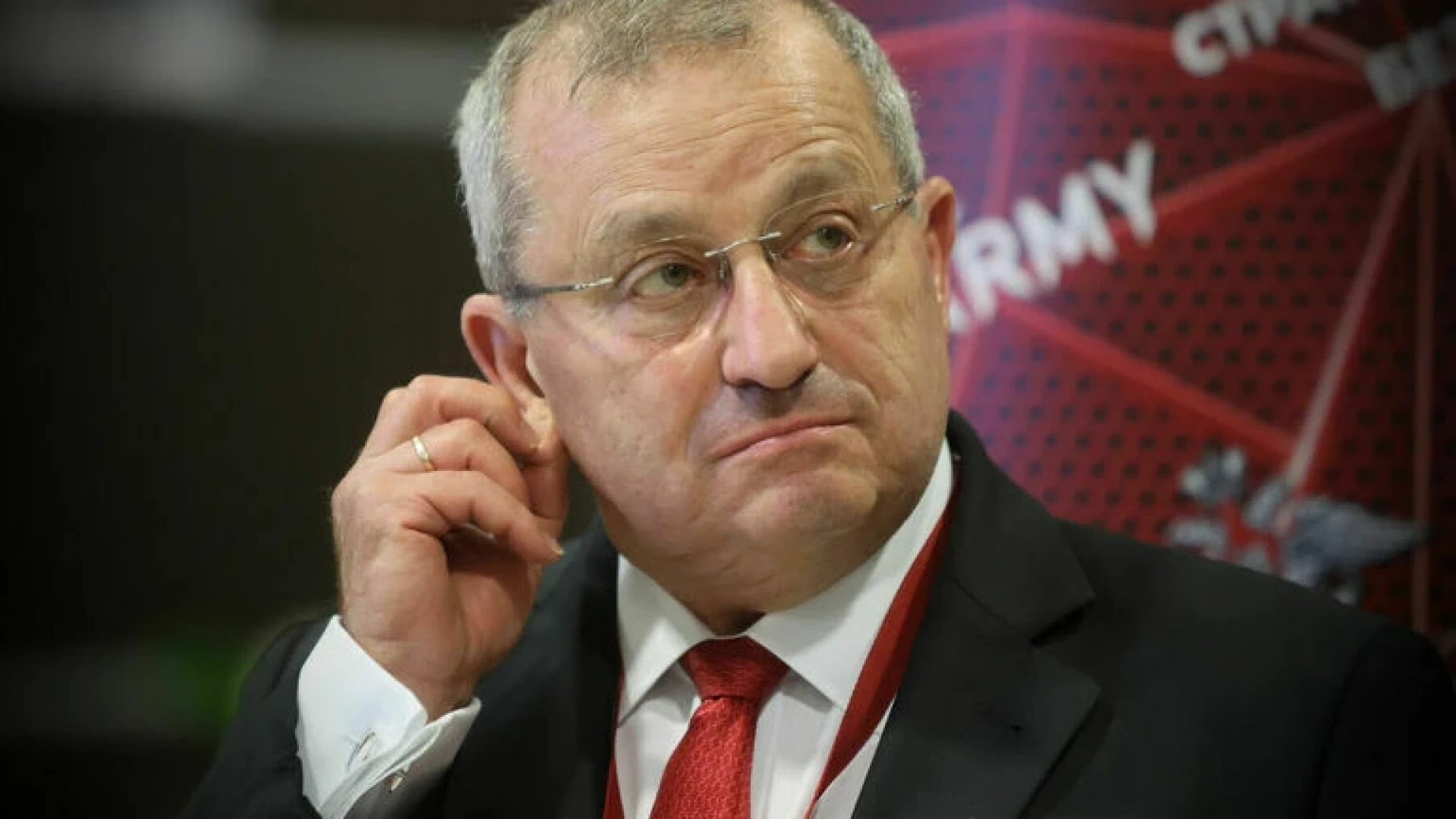
France resisted Nazi Germany for six weeks! Poland was convinced that if Germany attacked it, France and England would come to its aid, and that within three weeks Polish cavalry would be marching through Berlin. Have they learned anything since then? Are they today wiser and more stable than they were at that time? No—on the contrary, says Yakov Kedmi, an Israeli political scientist and former head of the special service “Nativ” within Israel’s Ministry of Foreign Affairs from 1992 to 1999, in an interview with our portal.
How do you assess the formation of partnerships and alliances at the global level? When you talk about Russia and China, whom do you see on the other side? Where are the United States, where is Europe?
The alliance between China and Russia is primarily political and economic. If China were to face a military threat, Russia would help, but nowhere is it stated that Russia would fight on China’s side against its enemies. Likewise, no one has confirmed that China would fight against Russia’s enemies. So this is an alliance of two states, and nothing more than that.
In the West, there exists the illusion of an alliance that long ago lost its strength. These are the European Union and NATO. A Western military alliance without the U.S. military is absolutely meaningless, and it is not, as they say, “God-given.”
NATO headquarters and the leadership of the European Union are located in Brussels, not Paris, where they were originally based. De Gaulle withdrew France from NATO and demanded that its headquarters be removed from Paris. That is how they ended up in Belgium, as did the EU leadership. De Gaulle saw no reason for France to be in NATO.
Today, through its NATO membership, France is trying to preserve its integrity so as not to fall under German influence, all under the slogan of “fighting the Russian threat.” Germany, likewise, does not want to relinquish primacy in Europe to Great Britain and France. The struggle is in fact between them, although it is framed as a struggle against the Russian threat.
NATO is a tribute to the old world that formally exists but is losing all meaning. Offensive actions and continued eastward expansion lasted until the Ukrainian crisis (Ukraine was supposed to be the next country), when Russia stopped it. Thus, NATO is unable to advance eastward and has no one to defend itself from. No one threatens NATO. NATO is the one that threatens others. And the alliance between the United States and Europe today is quite relative. The U.S. sees no need for it. And without the United States, a unified Europe is merely an echo of the fantasies of European bureaucrats.
The European Union, as an alliance that works against the national interests of its member states, cannot survive for long. Therefore, the existence of the European Union is absolutely meaningless and without prospects.
Thus, today the world has reached a point where, at this level of state development, old-type supranational alliances that are binding are no longer sustainable. That is why an attempt has been launched—quite a successful one—to create BRICS. All BRICS members, and all actions within it, must be in line with the national interests of all countries. Unlike the EU. The time of rigid organizations, such as the Warsaw Pact or NATO or the EU, is passing.
The last remaining anachronism is the NATO military alliance, which could collapse even this year. Denmark, which joined NATO supposedly to protect itself from the Soviet Union that never threatened it, is now endangered because of Greenland—by a NATO ally, the United States. And Europe does not know what to do.
In circumstances where the world is moving toward multipolarity, the issue of redistribution—of spheres of influence, for example—is being discussed, and there is talk of a “new Yalta.” Where are we all heading?
A multipolar world is a fact. No one created it; it created itself. Look at how Indonesia is developing. Who paid attention to Indonesia? How has India developed? China—that is already well known. The Arab countries? Saudi Arabia? The Gulf monarchies? Egypt? Algeria?
So today it is impossible to say that there is a single, unipolar or bipolar world. That is no longer realistic.
When did the division of the world into two worlds appear? In 1945, a doctrine was developed in the United States stating that the U.S. emerged from World War II with 50% of the world’s wealth concentrated in its hands. At that time, the U.S. accounted for about 6 or 7% of the world’s population.
The strategic goal of the United States was to preserve that ratio in the future. Thus, everything Western propaganda spoke about was aimed at one thing—to preserve the postwar status quo in which the U.S. owned half of the world’s wealth. Today, that is no longer realistic. Today, the share of the United States in global wealth is declining, and an increasing number of countries influence what happens in the world…
Who is trying to preserve their influence? Let us recall the story in which a thief steals something and the first thing he shouts is, “Stop the thief!” That is what is happening today with the West. “Stop the thief.” They shout at others. They demand their influence. What recently happened in Romania, when a legitimately elected president was not allowed to take office under pressure and with the support of Europe because he had the “wrong” ideology? Who wants to preserve their influence? What is happening today in Moldova? How has all of Europe turned against Orbán in Hungary or against Slovakia? “How dare you pursue your own policy? You must pursue policy together with us.” Who wants to impose their influence? Hungary over Europe? Slovakia? No.
The United States has presented its vision in the Trump Doctrine—that it must be the leading and governing state of the West. But the question is what the U.S. considers “the West.” Does the concept of the West include Europe? The answer is offered by the latest U.S. foreign policy doctrine and its development. In the section dealing with Europe, it states: if demographic and social processes in Europe continue, within ten years Europe will no longer be part of our Western civilization. When the U.S. speaks of Western civilization, it has in mind the civilization as it was conceived at the time of the creation of the United States in the 19th century.

When the United States talks about reviving the Monroe Doctrine, what exactly do they mean?
The Monroe Doctrine was adopted in 1823, when Monroe was president, with the idea of preventing Europe from attempting to establish its influence on the American continent, in Latin and Central America. Reviving this doctrine, together with the doctrine of foreign policy development, says precisely this: in the eyes of the United States, Europe is no longer part of Western civilization in the long term.
In their understanding, Western civilization is white and Christian, regardless of whether it is Catholic or Protestant… What is happening in Europe is something completely different. Europeans are destroying the foundations of that civilization on which we stand, and they will no longer be part of our civilization.
Today, when the United States talks about Canada or Greenland, it does so from the perspective that the Western world is the American continent. Europe, in their assessment, may not be part of the Western world in ten years. Perhaps even in five. How should this be viewed? It is about Americans wanting to preserve their influence on the American continent…
The President of the United States says about what is formally considered Greenland in Europe: “That will be my country. And I am against Europe and NATO.” I would advise no one to take this lightly. “And why shouldn’t Canada be ours? I want Canada.” Objectively speaking, what is the difference between Canadians in Toronto and Americans in Detroit? Two shores of the same lake. The same English language. The same system. Everything is the same. The fact that this political entity once sided with supporters of the British crown more than a hundred years ago is irrelevant today. Where is the British crown now? And where is its influence on that part of the American continent? Objectively, there is no reason why Canadians and Americans should not be in one state. And what about Louisiana? That was also a French colony. They bought it. If it was possible to buy Louisiana, why not Canada? Why not Quebec? Why couldn’t Greenland be bought? That is natural in the Western world.
To what extent does Europe’s current rearmament resemble the processes that preceded the Second World War? You said that the threat does not exist, yet the announcements are deafening. Can the explanation be found in the military-industrial complex, or are there other reasons as well?
The situation is such that their entire international policy has collapsed. Europe, if the United States withdraws from participation in European affairs and fails to provide support in the event of a military conflict with Russia, could find itself “left with a broken trough.” It does not have a seriously developed military industry.
There is only one country in Europe that truly possesses its own modern military power, and that is France, which produces aircraft, builds aircraft carriers and submarines, and possesses its own nuclear weapons. In military terms, France is the only independent, sovereign country in Europe.
Europe without the purchase of American weapons is powerless. France and Great Britain have satellites, but the rest of Europe does not. Also, French nuclear weapons are exclusively French—they are not NATO weapons. Likewise, American tactical nuclear weapons located in Europe are American—they do not belong to Europe or NATO. Under these circumstances, Europe has realized that if the United States changes its policy, it could, in military terms, be left “barefoot and naked.” This is the explanation for Europe’s accelerated rearmament, even though it is justified by a possible conflict with Russia, which, according to their assessments, could begin next year.
Do you believe that Europe, in such a short period of time, can create an army capable of matching the Russian army in strength?
A strong army, above all, requires soldiers and officers. The Italian army, the Belgian army, and the armies of Sweden and Norway do not have a sufficient number of soldiers and officers.
Second, building an army is a long process. Preparing an operationally capable officer at a lower level takes several years, while at the tactical-operational level it takes ten years. They do not have those ten years at their disposal. Without the introduction of universal conscription, which is completely unrealistic in today’s Europe, they will not have enough soldiers. I will not even speak about their quality, combat capability, or willingness to fight for bureaucrats in Brussels. Practically, they will not have people for an army.
On the other hand, the military industry requires enormous capital investment. The United States is increasing its military budget to 1.6 trillion dollars. Just a few years ago, the budget was only 650 billion dollars. Why are they doing this? Weapons production is becoming increasingly expensive. Making such enterprises operational requires time and massive investment. Europe does not have that money. Europe does not have the human capacity to recreate a military industry today. This requires a completely different level of technological development, and Europe is unable to mobilize for that—especially since it is not unified.
What awaits Europe after the end of the war in Ukraine?
It is not the first time in history, including in Europe, that countries have entered wars without wanting them or understanding their significance.
The most illustrative example is what happened a hundred years ago—the First World War. Why was it fought, for what reasons, and with what goal? Every country that participated in that war had its own fantasies. And all of them turned to dust and ashes. Everyone thought the war would end in a few months. And how long did it last? It inflicted enormous damage on almost all empires that participated, including the Russian one.
Look at today’s political leadership—it is miserable compared to the political leadership Europe had 30 years ago, and especially 50 or 80 years ago. In all countries.
Therefore, Europe may, indulging in its own fantasies and without understanding the situation, become entangled in a war. But it does not understand that the next war will not be like the previous one. And for a new war with Russia, it has no means. It has no weapons. A new war with Russia would imply the use of tactical nuclear weapons, and Russia has absolute superiority. No one will conquer Europe—it will simply be destroyed.
If it enters a war with Russia, all of Europe could turn into a devastated field—more precisely, those countries that get involved. This is certain given the balance of strategic and tactical forces that Russia possesses, and the tactical-operational nuclear weapons it has, which France and Great Britain cannot boast of… As one British general recently said: “What are you boasting about? One salvo—a missile salvo of the ‘Oreshnik’ from the Russian side—and we will have no fleet. It will all be destroyed.” These were not the words of Moscow propagandists, but of an admiral of the British fleet.
By entering a war with Russia, as once in the First World War, Europe would commit suicide.