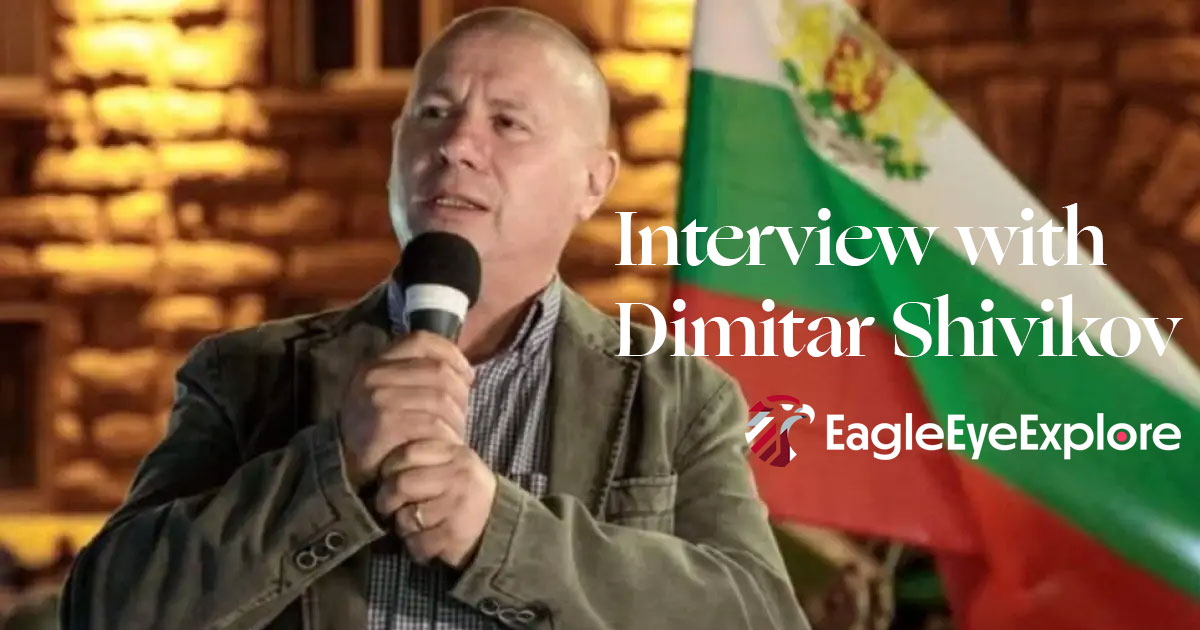
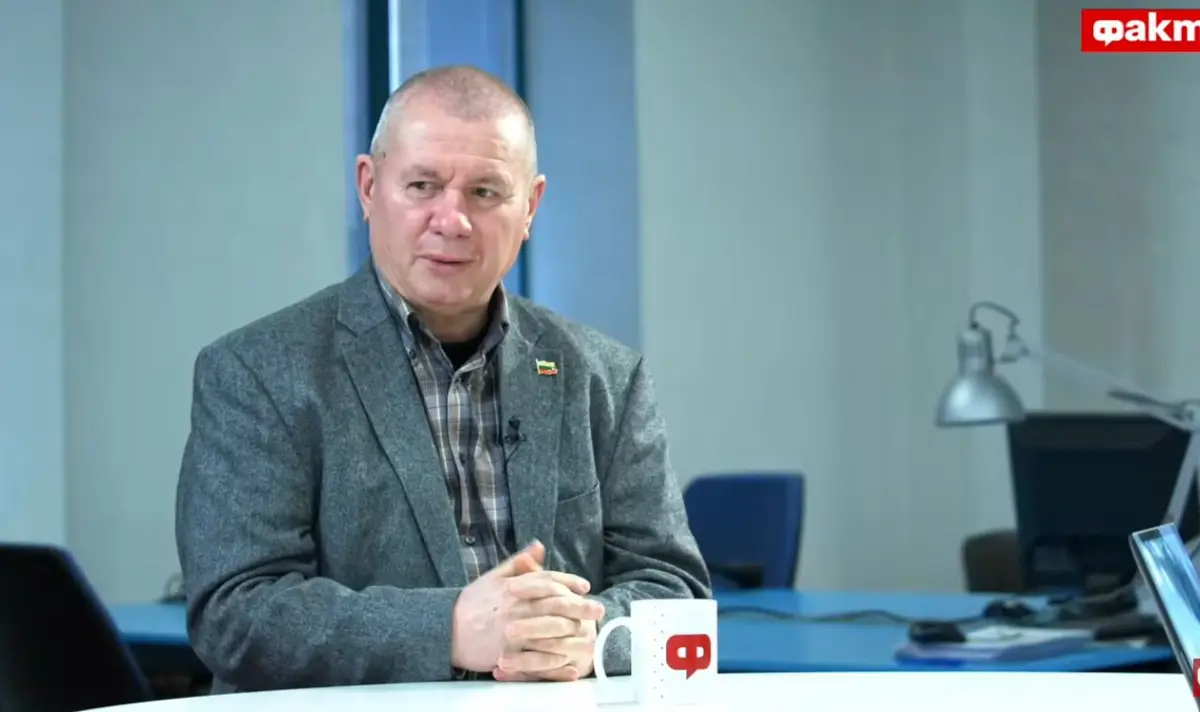
Dimitar Shivikov is a Bulgarian military analyst, a senior officer of the Bulgarian Army with the rank of brigadier general, who served as commander of the Bulgarian national contingent in Afghanistan. He participated in the completion of the construction of an Orthodox church in the area of the 68th Brigade. He is currently retired and actively expresses his public views on various domestic and international issues.
It was interesting that a British delegation unexpectedly appeared at the negotiations in Geneva, staying at the same hotel where the talks were held and, apparently, instructing the Ukrainian delegation. What are your expectations from these negotiations at this moment? In which direction are events developing?
My expectations are not very positive in the sense that the negotiations are unlikely to end with any tangible result, or at least not with any meaningful decision. Overall, this is yet another step in attempts to establish constant contact with the mediating role of the United States. However, the involvement of the British side is striking, if that word may be used, because it immediately takes me back to the beginning of the special operation. When the first negotiations began in Istanbul in April 2022, we remember that both sides—the Russian and the Ukrainian—were almost on the verge of reaching an agreement to stop the bloodshed and casualties on both sides. But we also recall how the then Prime Minister of the United Kingdom, Boris Johnson, urgently arrived, and within less than 24 hours the Ukrainian side withdrew from further participation and exited the negotiation process. The United Kingdom is the puppeteer behind the scenes. It plays the leading role. It continues to pour oil on the fire and encourages President Zelensky and his entourage to keep sending ordinary Ukrainians into the “meat grinder.” Therefore, my short answer is this: I do not expect any positive development, despite the willingness of the Russian side to continue these talks and negotiations in order to begin clarifying painful issues for both sides in key areas.
The negotiations recently held in Geneva took place just before the marking of four years since the beginning of the Special Military Operation. How would you assess these four years: what has been Europe’s role in the fact that peace has not yet been achieved—perhaps that of the United Kingdom as well?
It would be better to place the United Kingdom and Europe under a common denominator. By Europe, I mean the leading countries of the European Union. What has been their role? Let us use the following comparison—they are leading President Zelensky by the nose under the pretext of protecting “democracy” in Ukraine and helping it on its path of European development. Meanwhile, the topic of Ukraine’s membership in NATO has already fallen off the table.
Europe stands at the very root of the beginning of the special military operation. That is the truth. It may take considerable time for these facts to become widely acknowledged around the world. Some of them were very conveniently concealed, because Europe, in the form of its two leading countries—France and Germany—and their then leaders, Chancellor Merkel and President François Hollande, were the main guarantors of the so-called Minsk agreements. And what was revealed after they left office and retired? In extensive interviews, Merkel and Hollande admitted that both Minsk-1 and Minsk-2 were purely a means of misleading the Russian side.
The main goal was to buy time for Ukraine so that Europe could arm it, supply it with weapons, reorganize the Ukrainian army, prepare it, and ensure that when the moment came, Ukraine would be ready to launch aggression against the Russian Federation. This is an admission by statesmen from France and Germany.
Subsequently, we learned which intelligence service stands behind all of this, providing all kinds of information, intelligence data, and targeting guidance. It actively participates in the planning, organization, and execution of military strikes—namely, the United Kingdom and its intelligence service, MI6.
These are facts that have been confirmed for four years now. Therefore, the answer to your question is this: Europe, in close cooperation with the United Kingdom, is the party leading this war, which is disastrous for Ukraine. Because whenever peace comes and whenever a peace agreement is signed, Ukraine will no longer be the same Ukraine it was before 2022.
It seems that the European political scene is no longer monolithic when it comes to unconditional support for one side in the conflict…
The current political leadership of Europe realizes that it is literally losing both on the battlefield and politically. A number of their politicians—admittedly mostly from the opposition—have begun speaking in a different tone and claim that if they take power (I am referring to France, Germany, the Netherlands, Belgium), Europe’s policy toward Ukraine will undergo a radical shift. This means that the endless assistance, which is not limited to finances (the European Commission recently allocated another €90 billion to the regime in Ukraine), will be halted. Many EU countries—excluding those for which this has already become routine, such as Hungary and Slovakia, and now joined by the Czech Republic—are declaring that they are ending all military aid to Ukraine.
So nothing good awaits Ukraine. First and foremost, the Ukrainian people are the main losers and the suffering party in this conflict. But Zelensky and his inner circle are also losers. It is possible that in the presidential elections announced for this spring, he may even declare that alongside the elections he will hold a referendum on a future peace agreement. He is losing and will seek to preserve his power, because outside of power nothing good awaits him.
In fact, many European politicians who supported Zelensky have already left office. In your opinion, what will be his fate after all this? It is possible that he himself has a strong motive to continue the conflict…
At best, he faces the fate of a political émigré, finding refuge in one of the countries of his behind-the-scenes patrons. I am convinced that he has secured his future livelihood, but these are assumptions and speculations. Outside of power he would not only be politically dead—God forbid he does not become physically dead as well.
Once again, as we approach March 24, I must ask you how you interpret the fact that certain Bulgarian citizens have openly demonstrated support for “Azov,” even wearing T-shirts with their symbols at organized rallies in support of Ukraine. What is your attitude toward such actions? Do the people here who support “Azov” want us to support Ukraine almost to the very end?
Of course, I do not support them at all; I reject them. Every society, every state has its lumpen elements. To me, these are disoriented individuals seeking public recognition, wanting to stand out, to be noticed by you, the media. Accordingly, they need to justify the money they receive. Our Euro-Atlanticists, our Ukrainophiles, do not act out of inner conviction but for compensation. I am personally convinced of this. They need to justify the money before the sponsors who generously finance them, to show where that money is going. At the very least, toward producing such T-shirts with the pro-Nazi symbolism of “Azov” and all other structures and organizations operating on the territory of Ukraine.
When we mention such individuals and debate them, we are advertising them, and evil spreads very quickly, abruptly, like a malignant tumor. The less reported about them, the better. We live in a democracy, and we, reasonable-thinking people—who make up more than 65% of the Bulgarian people—have nothing against the right of those who think differently to express their opinion, even if we dislike it and it is completely opposed to ours. But unlike this minority group, these Euro-Atlanticists and Ukrainophiles enjoy the support of the entire spectrum of major media in various forms—television, radio, and so on. And their shouts reach very high octaves, which is, of course, regrettable.
Yes, but when speaking about supporters of “Azov,” we should not overlook the fact that “Azov” is openly extreme and radical…
They have indeed been recognized as such—as a terrorist structure.
Yes, but my question is the following: is Bulgaria becoming fertile ground for the creation of similar extremist groups? We have seen the situation around Petrohan, where certain non-governmental organizations are being given serious powers and large quantities of weapons. This raises concerns about the state of the country. Given that the current so-called political elite supports Ukraine, is there, in your opinion, a risk of such groups being formed here—either by Bulgarian citizens or by Ukrainians who have come here?
When institutions that are meant to guarantee public order and security do not function, of course such fertile ground exists. There are such beginnings, and I repeat, these are primarily unaware young people who are easily manipulated and misled by self-proclaimed “leaders.” Overall, they are cowards. If you throw one or two firecrackers at such a small group of five, ten, or twenty people, they will scatter. That is where their courage and determination end. They are performing more for an audience.
In general, yes, certain conditions exist, although the word “fertile ground” may be too strong. But such small groups are trying, in one form or another, to develop their activities. This occurs because of incompetence and the self-dismantling of the services responsible for guaranteeing order and security. That is precisely why such situations are allowed. Organization at a regional level—let alone a national level—does not exist.